Ultrastable lasers are essential tools in optical frequency metrology enabling unprecedented measurement precision that impacts on fields such as atomic timekeeping, tests of fundamental physics, and geodesy. To characterise an ultrastable laser it needs to be compared with a laser of similar performance, but a suitable system may not be available locally. Here, we report a comparison of two geographically separated lasers, over the longest ever reported metrological optical fibre link network, measuring 2220 km in length, at a state-of-the-art fractional-frequency instability of 7 × 10 −17 for averaging times between 30 s and 200 s. The measurements also allow the short-term instability of the complete optical fibre link network to be directly observed without using a loop-back fibre. Based on the characterisation of the noise in the lasers and optical fibre link network over different timescales, we investigate the potential for disseminating ultrastable light to improve the performance of remote optical clocks.
With GRACE (launched 2002) and GOCE (launched 2009) two very successful missions to measure earth’s gravity field have been in orbit, both leading to a large number of publications. For a potential Next Generation Gravity Mission (NGGM) from ESA a satellite-to-satellite tracking (SST) scheme, similar to GRACE is under discussion, with a laser ranging interferometer instead of a Ka-Band link to enable much lower measurement noise. Of key importance for such a laser interferometer is a single frequency laser source with a linewidth <10 kHz and extremely low frequency noise down to 40 Hz / √Hz in the measurement frequency band of 0.1 mHz to 1 Hz, which is about one order of magnitude more demanding than LISA. On GRACE FO a laser ranging interferometer (LRI) will fly as a demonstrator. The LRI is a joint development between USA (JPL,NASA) and Germany(GFZ,DLR). In this collaboration the JPL contributions are the instrument electronics, the reference cavity and the single frequency laser, while STI as the German industry prime is responsible for the optical bench and the retroreflector. In preparation of NGGM an all European instrument development is the goal.
ESA’s Gravity field and steady-state Ocean Circulation Explorer (GOCE) mission and the American-German Gravity Recovery and Climate Experiment (GRACE) mission map the Earth’s gravity field and deliver valuable data for climate research.
The UK National Quantum Technology Hub in Sensors and Metrology is one of four flagship initiatives in the UK National of Quantum Technology Program. As part of a 20-year vision it translates laboratory demonstrations to deployable practical devices, with game-changing miniaturized components and prototypes that transform the state-ofthe-art for quantum sensors and metrology. It brings together experts from the Universities of Birmingham, Glasgow, Nottingham, Southampton, Strathclyde and Sussex, NPL and currently links to over 15 leading international academic institutions and over 70 companies to build the supply chains and routes to market needed to bring 10–1000x improvements in sensing applications. It seeks, and is open to, additional partners for new application development and creates a point of easy open access to the facilities and supply chains that it stimulates or nurtures.
In scope of the ESA funded "High stability Laser" activity, a single-mode and single-frequency fiber power amplifier with 500 mW output power at 1064 nm wavelength has been developed. It is part of an elegant breadboard (EBB) which consists additionally of an ultra-stable Fabry-Perot reference for frequency stabilization. The monolithic fiber amplifier is seeded by a non-planar ring oscillator (NPRO) with a linewidth below 10 kHz. The amplifier is stabilized in power via pump diode modulation and achieves a RIN performance of <0.01/sqrt(Hz) in the range from 10(-3) Hz to 10 Hz and a polarization extinction ratio of >30 dB.
The order parameter of a quantum-coherent many-body system can include a phase degree of freedom, which, in the presence of an electromagnetic field, depends on the choice of gauge. Because of the relationship between the phase gradient and the velocity, time-of-flight measurements reveal this gradient. Here, we describe such measurements of initially trapped Bose-Einstein condensates (BECs) subject to an artificial magnetic field. Vortices nucleated in the BEC for artificial field strengths above a critical value, which represented a structural phase transition. By comparing to superfluid-hydrodynamic and Gross-Pitaevskii calculations, we confirmed that the transition from the vortex-free state gives rise to a shear in the released BEC's spatial distribution, representing a macroscopic method to measure this transition, distinct from direct imaging of vortex entry. Shear is also affected by an artificial electric field accompanying the artificial magnetic field turn-off, which depends on the details of the physical mechanism creating the artificial fields, and implies a most natural choice of gauge. Measurements of this kind offer opportunities for studying phase in less-well-understood quantum gas systems.
Spin-orbit coupling is an essential ingredient in topological materials, conventional and quantum-gas-based alike. Engineered spin-orbit coupling in ultracold-atom systems-unique in their experimental control and measurement opportunities-provides a major opportunity to investigate and understand topological phenomena. Here we experimentally demonstrate and theoretically analyze a technique for controlling spin-orbit coupling in a two-component Bose-Einstein condensate using amplitude-modulated Raman coupling.
We directly measured the normalized $\it{s}$-wave scattering cross-section of ultracold $^{40}\rm{K}$ atoms across a magnetic-field Feshbach resonance by colliding pairs of degenerate Fermi gases (DFGs) and imaging the scattered atoms. We extracted the scattered fraction for a range of bias magnetic fields, and measured the resonance location to be $B_0 = 20.206(15)$ mT with width $\Delta = 1.0(5)$ mT. To optimize the signal-to-noise ratio of atom number in scattering images, we developed techniques to interpret absorption images in a regime where recoil induced detuning corrections are significant. These imaging techniques are generally applicable to experiments with lighter alkalis that would benefit from maximizing signal-to-noise ratio on atom number counting at the expense of spatial imaging resolution.
We directly measured the normalized s-wave scattering cross-section of ultracold 40K atoms across a magnetic-field Feshbach resonance by colliding pairs of degenerate Fermi gases (DFGs) and imaging the scattered atoms. We extracted the scattered fraction for a range of bias magnetic fields, and measured the resonance location to be B0 = 20.206(15) mT with width Δ = 1.0(5) mT. To optimize the signal-to-noise ratio of atom number in scattering images, we developed techniques to interpret absorption images in a regime where recoil induced detuning corrections are significant. These imaging techniques are generally applicable to experiments with lighter alkalis that would benefit from maximizing signal-to-noise ratio on atom number counting at the expense of spatial imaging resolution.
Zitterbewegung, a force-free trembling motion first predicted for relativistic fermions like electrons, was an unexpected consequence of the Dirac equation's unification of quantum mechanics and special relativity. Though the oscillatory motion's large frequency and small amplitude have precluded its measurement with electrons, zitterbewegung is observable via quantum simulation. We engineered an environment for Rb-87 Bose-Einstein condensates where the constituent atoms behaved like relativistic particles subject to the one-dimensional Dirac equation. With direct imaging, we observed the sub-micrometre trembling motion of these clouds, demonstrating the utility of neutral ultracold quantum gases for simulating Dirac particles.
Ultracold gases of interacting spin-orbit coupled fermions are predicted to display exotic phenomena such as topological superfluidity and its associated Majorana fermions. Here, we experimentally demonstrate a route to strongly-interacting single-component atomic Fermi gases by combining an s-wave Feshbach resonance (giving strong interactions) and spin-orbit coupling (creating an effective p-wave channel). We identify the Feshbach resonance by its associated atomic loss feature and show that, in agreement with our single-channel scattering model, this feature is preserved and shifted as a function of the spin-orbit coupling parameters.
Electronic properties such as current flow are generally independent of the electron's spin angular momentum, an internal degree of freedom possessed by quantum particles. The spin Hall effect, first proposed 40 years ago, is an unusual class of phenomena in which flowing particles experience orthogonally directed, spin-dependent forces--analogous to the conventional Lorentz force that gives the Hall effect, but opposite in sign for two spin states. Spin Hall effects have been observed for electrons flowing in spin-orbit-coupled materials such as GaAs and InGaAs (refs 2, 3) and for laser light traversing dielectric junctions. Here we observe the spin Hall effect in a quantum-degenerate Bose gas, and use the resulting spin-dependent Lorentz forces to realize a cold-atom spin transistor. By engineering a spatially inhomogeneous spin-orbit coupling field for our quantum gas, we explicitly introduce and measure the requisite spin-dependent Lorentz forces, finding them to be in excellent agreement with our calculations. This 'atomtronic' transistor behaves as a type of velocity-insensitive adiabatic spin selector, with potential application in devices such as magnetic or inertial sensors. In addition, such techniques for creating and measuring the spin Hall effect are clear prerequisites for engineering topological insulators and detecting their associated quantized spin Hall effects in quantum gases. As implemented, our system realizes a laser-actuated analogue to the archetypal semiconductor spintronic device, the Datta-Das spin transistor.
For most of the 20th century, atomic physicists used light to probe atoms. Today, scientists use light to manipulate particles with unprecedented control, routinely cooling atoms to a few billionths of a degree above absolute zero. This ability is vital for developing atomic clocks, quantum computing and the use of ultracold quantum gases to study many-body physics. Now, we report that we can use light to modify the interactions between atoms in a new way.
Artificial gauge fields open the possibility to realize quantum many-body systems with ultracold atoms, by engineering Hamiltonians usually associated with electronic systems. In the presence of a periodic potential, artificial gauge fields may bring ultracold atoms closer to the quantum Hall regime. Here, we describe a one-dimensional lattice derived purely from effective Zeeman shifts resulting from a combination of Raman coupling and radio-frequency magnetic fields. In this lattice, the tunneling matrix element is generally complex. We control both the amplitude and the phase of this tunneling parameter, experimentally realizing the Peierls substitution for ultracold neutral atoms.
Measurement techniques based upon the Hall effect are invaluable tools in condensed-matter physics. When an electric current flows perpendicular to a magnetic field, a Hall voltage develops in the direction transverse to both the current and the field. In semiconductors, this behavior is routinely used to measure the density and charge of the current carriers (electrons in conduction bands or holes in valence bands)--internal properties of the system that are not accessible from measurements of the conventional resistance. For strongly interacting electron systems, whose behavior can be very different from the free electron gas, the Hall effect's sensitivity to internal properties makes it a powerful tool; indeed, the quantum Hall effects are named after the tool by which they are most distinctly measured instead of the physics from which the phenomena originate. Here we report the first observation of a Hall effect in an ultracold gas of neutral atoms, revealed by measuring a Bose-Einstein condensate's transport properties perpendicular to a synthetic magnetic field. Our observations in this vortex-free superfluid are in good agreement with hydrodynamic predictions, demonstrating that the system's global irrotationality influences this superfluid Hall signal.
Interactions between particles can be strongly altered by their environment. We demonstrate a technique for modifying interactions between ultracold atoms by dressing the bare atomic states with light, creating an effective interaction of vastly increased range that scatters states of finite relative angular momentum at collision energies where only s-wave scattering would normally be expected. We collided two optically dressed neutral atomic Bose-Einstein condensates with equal, and opposite, momenta and observed that the usual s-wave distribution of scattered atoms was altered by the appearance of d- and g-wave contributions. This technique is expected to enable quantum simulation of exotic systems, including those predicted to support Majorana fermions.
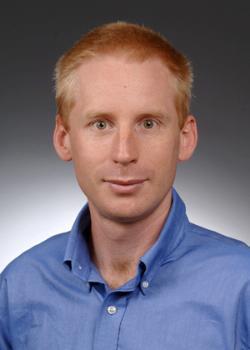 Ian Spielman合作论文数Joint Quantum Institute, University of Maryland;National Institute of Standards and Technology15
 Lindsay Leblanc合作论文数National Institute of Standards and Technology, University of Maryland13
 Matthew Beeler合作论文数Physics Department;Miami University;Physics Department, Miami University13
 Karina Jiménez-García合作论文数National Institute of Standards and Technology, University of Maryland;Departamento de Física, Centro de Investigación y Estudios Avanzados del Instituto Politécnico Nacional, Mexico D.F. 07360, Mexico;National Institute of Standards and Technology, University of Maryland11Abigail R. Perry合作论文数8
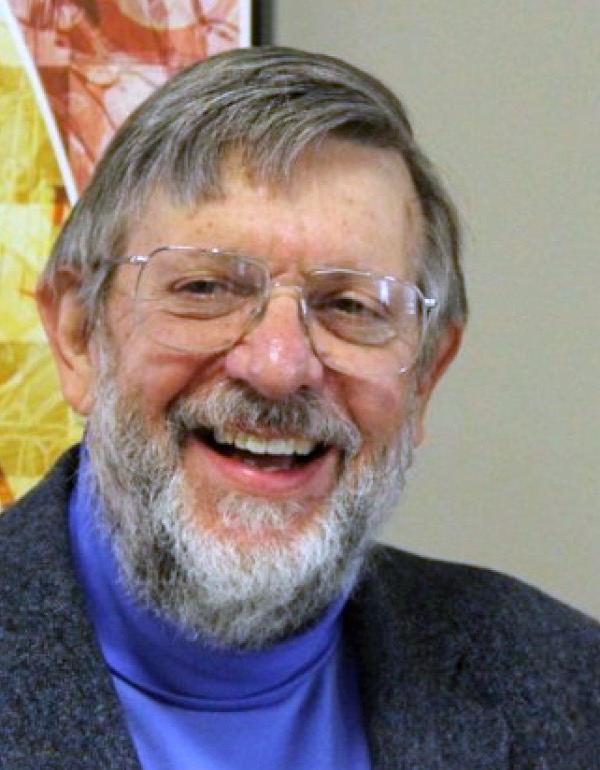 William D. Phillips合作论文数National Institute of Standards and Technology;Institute for Physical Science & Technology, College of Computer, Mathematical, & Natural Sciences, University of Maryland5H. Koegel合作论文数3O. Fitzau合作论文数3M. Giesberts合作论文数3
 Kolja Nicklaus合作论文数3P. Gill合作论文数3G. P. Barwood合作论文数3
 Christopher Foot合作论文数Department of Physics, University of Oxford3S. Al-Assam合作论文数3M. Herding合作论文数2X. Wang合作论文数2Dina Genkina合作论文数National Institute of Standards and Technology, University of Maryland2
 Ian R. Hill合作论文数2Benjamin K. Stuhl合作论文数2T. Legero合作论文数1J. Pedregosa-Gutierrez合作论文数1
 Y.-H. Lien合作论文数1S. Sugawa合作论文数1L. M. Aycock合作论文数1T. Waterholter合作论文数1R. P. Beardsley合作论文数1c a froud合作论文数1P. A. Orr合作论文数1j d alexander合作论文数1H. Alvarez-Martinez合作论文数1S. Koke合作论文数1g r a j nemeth合作论文数1Lauren Aycock合作论文数1A. Rodriguez Blanco合作论文数1A. Stabrawa合作论文数1
 Iszabela Turcu合作论文数1
 Alessia Pasquazi合作论文数1Paul F. Griffin合作论文数1Erling Riis合作论文数1
 Etienne Cantin合作论文数1S Dörscher合作论文数1Jessica Maclean合作论文数1Richard Campion合作论文数1
 Andrew Rushforth合作论文数School of Physics & Astronomy, Faculty of Science, University of Nottingham1Sergei Novikov合作论文数1
 Christopher Mellor合作论文数School of Physics & Astronomy, Faculty of Science, The University of Nottingham1Lucia Hackermueller合作论文数1
 Thomas Fernholz合作论文数School of Physics & Astronomy, Faculty of Science, The University of Nottingham1Matt Brookes合作论文数1




