A measurement of the $ZZ$ production cross section in proton-proton collisions at $\sqrt{s}=7\text{ }\text{ }\mathrm{TeV}$ using data corresponding to an integrated luminosity of $1.02\text{ }\text{ }{\mathrm{fb}}^{\ensuremath{-}1}$ recorded by the ATLAS experiment at the LHC is presented. Twelve events containing two $Z$ boson candidates decaying to electrons and/or muons are observed, with an expected background of $0.3\ifmmode\pm\else\textpm\fi{}0.3(\mathrm{stat}{)}_{\ensuremath{-}0.3}^{+0.4}(\mathrm{syst})$ events. The cross section measured in a phase-space region with good detector acceptance and for dilepton masses within the range 66 to 116 GeV is ${\ensuremath{\sigma}}_{ZZ\ensuremath{\rightarrow}{\ensuremath{\ell}}^{+}{\ensuremath{\ell}}^{\ensuremath{-}}{\ensuremath{\ell}}^{+}{\ensuremath{\ell}}^{\ensuremath{-}}}^{\mathrm{fid}}={19.4}_{\ensuremath{-}5.2}^{+6.3}(\mathrm{stat}{)}_{\ensuremath{-}0.7}^{+0.9}(\mathrm{syst})\ifmmode\pm\else\textpm\fi{}0.7(\mathrm{lumi})\text{ }\text{ }\mathrm{fb}$. The resulting total cross section for on-shell $ZZ$ production, ${\ensuremath{\sigma}}_{ZZ}^{\mathrm{tot}}={8.5}_{\ensuremath{-}2.3}^{+2.7}(\mathrm{stat}{)}_{\ensuremath{-}0.3}^{+0.4}(\mathrm{syst})\ifmmode\pm\else\textpm\fi{}0.3(\mathrm{lumi})\text{ }\text{ }\mathrm{pb}$, is consistent with the standard model expectation of ${6.5}_{\ensuremath{-}0.2}^{+0.3}\text{ }\text{ }\mathrm{pb}$ calculated at the next-to-leading order in QCD. Limits on anomalous neutral triple gauge boson couplings are derived.
A search for contact interactions has been performed using dimuon events recorded with the ATLAS detector in proton-proton collisions at $\sqrt{s}=7\text{ }\text{ }\mathrm{TeV}$. The data sample corresponds to an integrated luminosity of $42\text{ }\text{ }{\mathrm{pb}}^{\ensuremath{-}1}$. No significant deviation from the standard model is observed in the dimuon mass spectrum, allowing the following 95% C.L. limits to be set on the energy scale of contact interactions: $\ensuremath{\Lambda}>4.9\text{ }\text{ }\mathrm{TeV}$ (4.5 TeV) for constructive (destructive) interference in the left-left isoscalar compositeness model. These limits are the most stringent to date for $\ensuremath{\mu}\ensuremath{\mu}qq$ contact interactions.
The ATLAS experiment has measured the production cross-section of events with two isolated photons in the final state, in proton-proton collisions at sqrt(s) = 7 TeV. The full data set acquired in 2010 is used, corresponding to an integrated luminosity of 37 pb^-1. The background, consisting of hadronic jets and isolated electrons, is estimated with fully data-driven techniques and subtracted. The differential cross-sections, as functions of the di-photon mass, total transverse momentum and azimuthal separation, are presented and compared to the predictions of next-to-leading-order QCD.
Jet shapes have been measured in inclusive jet production in proton-proton collisions at √s=7 TeV using 3 pb−1 of data recorded by the ATLAS experiment at the LHC. Jets are reconstructed using the anti-kt algorithm with transverse momentum 30 GeV
This article presents the base-line design and implementation of the ATLAS Rigger and Data Acquisition system, in particular the Data Flow and High Level Rigger components. The status of the installation and commissioning of the system is also presented.
The GridPP Collaboration is building a UK computing Grid for particle physics, as part of the international effort towards computing for the Large Hadron Collider. The project, funded by the UK Particle Physics and Astronomy Research Council (PPARC), began in September 2001 and completed its first phase 3 years later. GridPP is a collaboration of approximately 100 researchers in 19 UK university particle physics groups, the Council for the Central Laboratory of the Research Councils and CERN, reflecting the strategic importance of the project. In collaboration with other European and US efforts, the first phase of the project demonstrated the feasibility of developing, deploying and operating a Grid-based computing system to meet the UK needs of the Large Hadron Collider experiments. This note describes the work undertaken to achieve this goal.
 George Lafferty合作论文数School of Physics and Astronomy, The University of Manchester314
 G. N. Patrick合作论文数269I.P. Duerdoth合作论文数264
 Georges Azuelos合作论文数Department of Physics, Faculty of Arts and Science, Université de Montréal;TRIUMF252
 S J Hillier合作论文数School of Physics and Astronomy, University of Birmingham251D. Lellouch合作论文数250M. Hauschild合作论文数European Organisation for Particle Physics CERN CH-1211 Geneva 23 Switzerland250
 Gideon Alexander合作论文数School of Physics and Astronomy, Tel-Aviv University250A.H. Ball合作论文数248Antony A. Carter合作论文数Queen Mary University of London248
 Richard Batley合作论文数The Cavendish Laboratory, Department of Physics, University of Cambridge246F. K. Loebinger合作论文数246
 Steve Lloyd合作论文数School of Physical and Chemical Sciences, Queen Mary University of London;Institute of Physics, Queen Mary University of London243M.J. Losty合作论文数242G. Mikenberg合作论文数241D. G. Charlton合作论文数240J. Ludwig合作论文数240F. S. Merritt合作论文数239
 Chris Hawkes合作论文数School of Physics and Astronomy, University of Birmingham239P. Sherwood合作论文数238R. Keeler合作论文数238P. M. Watkins合作论文数238T.P. Kokott合作论文数238
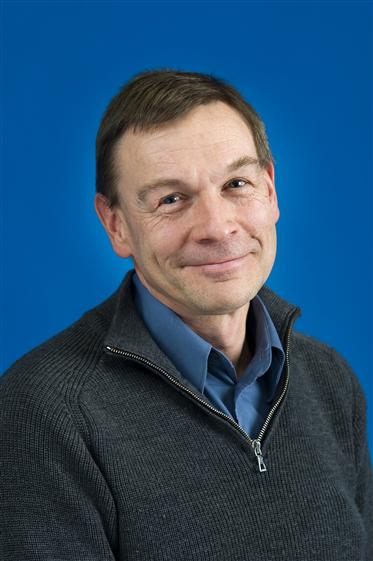 Peter Mättig合作论文数University of Wuppertal236
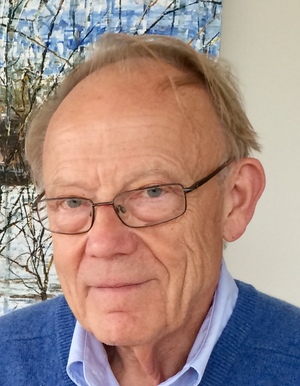 David Axen合作论文数Department of Physics & Astronomy, The University of British Columbia235
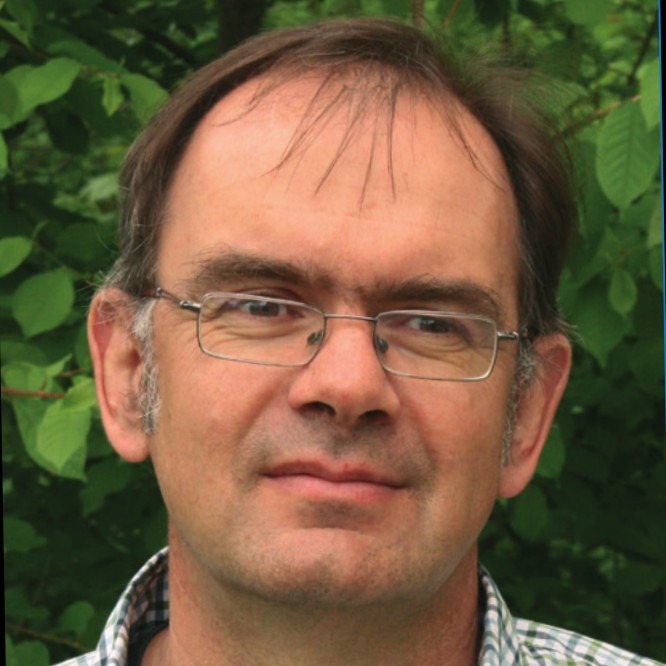 Günter Duckeck合作论文数Faculty of Physics, Ludwig Maximilian University of Munich235L. Levinson合作论文数235H. J. Burckhart合作论文数European Organisation for Particle Physics CERN CH-1211 Geneva 23 Switzerland235O. Runolfsson合作论文数234
 Roger Barlow合作论文数School of Computing and Engineering, University of Huddersfield234
 Gerald Oakham合作论文数Department of Physics, Carleton University234
 Bob Kowalewski合作论文数Victoria Subatomic Physics & Accelerator Research Centre, Department of Physics and Astronomy, Faculty of Science, University of Victoria233
 Paul de Jong合作论文数Institute of Physics, Faculty of Science, Universiteit van Amsterdam;Nikhef232Gabor Bella合作论文数Department of Physics and Astronomy Tel Aviv University 69978 Tel Aviv Israel231S. Dado合作论文数230
 J. Colin Hill合作论文数Department of Physics, Columbia University230N.I. Geddes合作论文数230
 Paul Kyberd合作论文数College of Engineering, Design and Physical Sciences, Brunel University London229B. Poli合作论文数229T. J. Mcmahon合作论文数229P. Igo-Kemenes合作论文数229D. G. Fong合作论文数228
 Gian Piero Siroli合作论文数Dipartimento di Fisica e Astronomia "Augusto Righi", Università di Bologna228O. Schaile合作论文数228R.K. Carnegie合作论文数228A. D. Schaile合作论文数228B.W. Kennedy合作论文数228R.J. Homer合作论文数228J.G. Layter合作论文数228




