We report a measurement of the exclusive B+ meson decay to the D-s(()*K-)(+)pi(+) final state using 657 x 10(6) B (B) over bar pairs collected at the gamma(4S) resonance with the Belle detector at the KEKB asymmetric-energy e(+)e(-) collider. We use D-s* -> D-s(-) -> phi pi(-), (K) over bar*(892)K-0(-) and (KSK-)-K-0 decay modes for D-s(()*()) reconstruction and measure the following branching fractions: B(B+ -> Ds-K+pi(+)) = (1.71(-0.07)(+0.08)(stat)(-0.20)(+0.20)(syst) +/- 0.15(B-int)) x 10(-4) and B(B+ -> D-s*K--(+)pi(+)) = (1.31(-0.12)(+0.13)(stat)(-0.25)(+0.25)(syst) +/- 0.12(B-int)) x 10(-4). The uncertainties are due to statistics, experimental systematic errors, and uncertainties of intermediate branching fractions, respectively.
A measurement of the spin alignment of charged D mesons produced in continuum ee → cc̄ events at √s = 10.5 GeV is presented. This study using 4.72 fb of CLEO II data shows that there is little evidence of any D spin alignment.
We have searched for the effective FCNC decays b → sl+l− using an inclusive method. We set upper limits on the branching ratios B(b → se+e−) < 5.7 × 10⁻⁵, B(b → sμ+μ−) < 5.8 × 10⁻⁵, and B(b → seμ) < 2.2 × 10⁻⁵ (at 90 % C.L.). Combining the di-electron and di-muon decay modes we find: B(b → sl+l−) < 4.2 × 10⁻⁵ (at 90 % C.L.).
The resonant structure of the four pion final state in the decay τ → 3ππντ is analyzed using 4.27 million τ+τ− pairs collected by the CLEO II experiment. We search for second class currents in the decay τ → ωπντ using spin-parity analysis and establish an upper limit on the non-vector current contribution. The mass and width of the ρ resonance are extracted from a fit to the τ → ωπντ spectral function. A partial wave analysis of the resonant structure of the τ → 3ππντ decay is performed; the spectral decomposition of the four pion system is dominated by the ωπ and a1π final states.
A study of charm fragmentation into D∗+ s and D + s in e +e− annihilations at √ s = 10.5 GeV is presented. This study using 4.72±0.05 fb−1 of CLEO II data reports measurements of the cross-sections σ(D∗+ s ) and σ(D + s ) in momentum regions above x = 0.44, where x is the Ds momentum divided by the maximum kinematically allowed Ds momentum. The Ds vector to vector plus pseudoscalar production ratio is measured to be PV (x(D + s ) > 0.44) = 0.44± 0.04.
We report new measurements of the diierential and total branching ratios for inclusive B decay to D 0 , D + and D + and the rst measurement of the same quantities for inclusive B decay to D 0. Here B is the mixture of B d and Bu from (4S) decay. Furthermore, since more than one charm particle (or antiparticle) of the same kind can be produced in B decay, here \inclusive B branching ratio" is used to mean the average number of charm particles and their antiparticles of a certain species produced in B decay. We obtain the following results (the rst error is statistical, the second systematic of this analysis, the third is propagated from other measurements): B(B ! D 0): We also report the rst measurement of the momentum-dependent D 0 polarization and a new measurement of the D + polarization in inclusive B decay. Using these measurements and other CLEO results and making some additional assumptions, we calculate the average number of c and c quarks produced in B decay to be
Based on an a high statistics e + e ? ! cc data sample, we report on the inclusive rate for charmed baryons to decay into particles using charm-event tagging. We select e + e ? ! cc events which have a clear anti-charm tag and measure the content in the hemisphere opposite the tag (charge conjugate modes are implicit). This allows us to determine the product branching fraction: B = B(c ! c X) B((c ! X), where c represents a sum over all charmed baryons produced in e + e ? fragmentation at p s=10.5 GeV, given our speciic tags. We obtain B = (1.87 0.03 0.33)%.
Using the CLEO II detector operating at the CESR e + e ? collider, we have measured the structure functions in the decay ! 0 0 , based on a sample corresponding to 4 10 6 produced-pair events. We determine the integrated structure functions, which depend only on the three pion invariant mass, as well as the structure functions diierential in the Dalitz plot. We extract model independent limits on non-axial-vector contributions from the measured structure functions as less than 16:6% of the total branching fraction, at the 95% conndence level. Separating the non-axial-vector contributions into scalar and vector contributions, we measure that scalars (vectors) contribute with less than 9:4% (7:3%) to the total branching ratio, at the 95% conndence level.
Using data taken with the CLEO II detector, we have studied the decays (0:074 0:010 0:015)% where the rst errors are statistical and the second errors are the estimate of our systematic uncertainty. We also present a new upper limit B(D 0 ! K 0 S K 0 S 0) < 0:059% at the 90% conndence level and the rst measurement of B(D 0 ! K + K ? 0) = (0:14 0:04)%.
We report results from a direct search for ? ! h ? (h ? = ? or K ?) using 3.1 f b ?1 of data collected with the CLEO II detector. We nd model-dependent upper limits on the branching fractions in the range: B(? !
Using data collected with the CLEO II detector at the Cornell Electron Storage Ring, we have studied the decays of tau leptons produced through e + e ? annihilation into nal states containing K 0 S mesons, observed through their decays to + ?. We present branching fractions for decays to ve nal S h ? , where K 0 h ? denotes the sum of the processes involving K 0 ? and K 0 K ? particle combinations. Substructure and mass spectra in these nal states are also addressed.
Using a sample of 3.3×10⁶ B-meson decays collected with the CLEO detector at the Cornell Electron Storage Ring, we have studied B → D0l−ν̄ and B̄0 → D+l−ν̄ decays, where l can be either e or μ. We distinguish B → Dlν from other B semileptonic decays by examining the net momentum and energy of the particles recoiling against D − l pairs. We find Γ(B → Dlν) = (14.1±1.0±1.2) ns−1 and derive branching fractions for B → D0l−ν̄ and B̄0 → D+l−ν̄ of (2.32±0.17±0.20)% and (2.20±0.16±0.19)% respectively, where the uncertainties are statistical and systematic. We also investigate the B → Dlν form factor and the implication of the result for |Vcb|.
We have searched for the charmless hadronic decay of B-0 mesons into two neutral pions. Using 9.13 fb(-1) taken at the Y(4S) with the CLEO detector, we obtain an improved upper limit for the branching fraction B(B-0-->pi(0)pi(0)) < 5.7 x 10(-6) at the 90% confidence level.
We have studied two-body charmless decays of the $B$ meson into the final states $\rho^0 \rho^0$, $K^{*0} \rho^0$, $K^{*0} K^{*0}$, $K^{*0} \bar{K^{*0}}$, $K^{*+} \rho^0$, $K^{*+} \bar{K^{*0}}$, and $K^{*+} K^{*-}$ using only decay modes with charged daughter particles. Using 9.7 million $B \bar{B}$ pairs collected with the CLEO detector, we place 90% confidence level upper limits on the branching fractions, $(0.46-7.0)\times 10^{-5}$, depending on final state and polarization.
We have searched for the charmless hadronic decay of B0 mesons into two neutral pions. Using 9.13fb^-1 taken at the Upsilon(4S) with the CLEO detector, we obtain an improved upper limit for the branching fraction BR(B0-->pi0pi0) < 5.7*10^-6 at the 90% confidence level.
Using 13.7 fb^-1 of data recorded by the CLEO detector at CESR, we investigate the spectrum of charmed baryons which decay into Lambda_c^+ pi^- pi^+ and are more massive than the Lambda_c1 baryons. We find evidence for two new states: one is broad and has an invariant mass roughly 480 MeV above that of the Lambda_c^+; the other is narrow with an invariant mass of 596 +- 1 +- 2 MeV above the Lambda_c^+ mass. These results are preliminary.
 R. Ammar合作论文数283T. Bergfeld Et Al合作论文数282
 Alice L. Bean合作论文数Department of Physics & Astronomy, College of Liberal Arts & Sciences, University of Kansas279
 A. Mahmood合作论文数University at Albany278
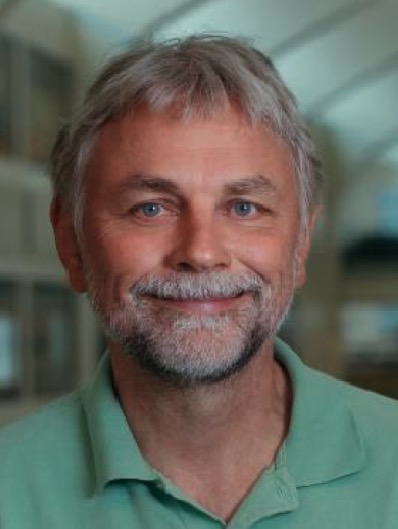 Klaus Honscheid合作论文数Department of Physics, College of Arts and Sciences, The Ohio State University277
 K. K. Gan合作论文数Department of Physics, College of Arts and Sciences, The Ohio State University275
 Ron Poling合作论文数School of Physics and Astronomy, College of Science and Engineering, University of Minnesota274J. Hinson合作论文数273B. Eisenstein合作论文数272C. Bebek合作论文数271Bernard Gittelman合作论文数270M. Selen合作论文数270E. Nordberg合作论文数269
 Vladimir Savinov合作论文数Department of Physics & Astronomy, University of Pittsburgh;The Department of Quantum Reality, University of Pittsburgh268
 David G. Cassel合作论文数Department of Physics, College of Arts & Sciences, Cornell University268
 Marina Artuso合作论文数Department of Physics, College of Art and Sciences, Syracuse University268
 Horst Severini合作论文数Homer L. Dodge Department of Physics and Astronomy, Dodge Family College of Arts and Sciences, The University of Oklahoma;Oklahoma Center for High Energy Physics267d riley合作论文数267K. Mclean合作论文数267L. Gibbons合作论文数266
 Jean Etienne Duboscq合作论文数Cornell University266
 John Yelton合作论文数Department of Physics, College of Liberal Arts and Sciences, University of Florida;Institute for High Energy Physics and Astrophysics, College of Liberal Arts and Sciences, University of Florida265
 David Cinabro合作论文数College of Liberal Arts and Sciences, Wayne State University;U.S. Department of Energy265Jon Urheim合作论文数264P. Gaidarev合作论文数261P. M. Patel合作论文数259S. Kopp合作论文数256M. Lohner合作论文数255A. Sadoff合作论文数255
 Ralf Ehrlich合作论文数AGR254
 Tim Riehle合作论文数University of Minnesota253
 Jina Fast合作论文数Purdue University253
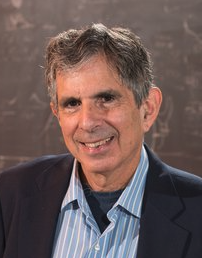 Sheldon Stone合作论文数Department of Physics, College of Arts and Sciences, Syracuse University252N. Kwak合作论文数251
 Persis Drell合作论文数Physics Department, School of Humanities and Sciences, Stanford University;School of Engineering, Stanford University251Kw Edwards合作论文数248S. W. Gray合作论文数247
 Joel Ernst合作论文数Division of Experimental Medicine, Department of Medicine, School of Medicine, University of California San Francisco247C. Prescott合作论文数246K. Berkelman合作论文数246Ei Shibata合作论文数245Dl Kreinick合作论文数245Patrick L. Skubic合作论文数245S. Timm合作论文数245
 Thomas E. Browder合作论文数University of Hawaii245Dl Hartill合作论文数242
 Roy A. Briere合作论文数Department of Physics, Mellon College of Science, Carnegie Mellon University240
 David Asner合作论文数237Gc Moneti合作论文数236




