Spectral crowding of collective motional modes limits the fidelity of entangling interactions in trapped-ion quantum processors by inducing off-resonant coupling to spectator modes. We introduce a geometric-phase entangling interaction driven by a transverse, time-dependent structured-light force. By applying the force in a plane orthogonal to the optical propagation direction, we reduce the effects of spectral crowding while preserving single-ion addressing. The scheme is compatible with arbitrary qubit encodings, provided that the qubit states experience a differential AC Stark shift. We experimentally realise high-fidelity two-qubit gates with error rates below 5×10^-3 in ion crystals containing up to 12 ions confined within a single potential well. These results establish gradient-field light-shift gates as a scalable approach to high-fidelity entangling generation in spectrally crowded trapped-ion systems.
Analog Quantum Simulators offer a route to exploring strongly correlated many-body dynamics beyond classical computation, but their predictive power remains limited by the absence of quantitative error estimation. Establishing rigorous uncertainty bounds is essential for elevating such devices from qualitative demonstrations to quantitative scientific tools. Here we introduce a general framework for bounded-error quantum simulation, which provides predictions for many-body observables with experimentally quantifiable uncertainties. The approach combines Hamiltonian and Lindbladian Learning–a statistically rigorous inference of the coherent and dissipative generators governing the dynamics–with the propagation of their uncertainties into the simulated observables, yielding confidence bounds directly derived from experimental data. We demonstrate this framework on trapped-ion quantum simulators implementing long-range Ising interactions with up to 51 ions, and validate it where classical comparison is possible. We analyze error bounds on two levels. First, we learn an open-system model from experimental data collected in an initial time window of quench dynamics, simulate the corresponding master equation, and quantitatively verify consistency between theoretical predictions and measured dynamics at long times. Second, we establish error bounds directly from experimental measurements alone, without relying on classical simulation–crucial for entering regimes of quantum advantage. The learned models reproduce the experimental evolution within the predicted bounds, demonstrating quantitative reliability and internal consistency. Bounded-error quantum simulation provides a scalable foundation for trusted analog quantum computation, bridging the gap between experimental platforms and predictive many-body physics. The techniques presented here directly extend to digital quantum simulation.
Throughout its history, the theory of quantum error correction has heavily benefited from translating classical concepts into the quantum setting. In particular, classical notions of weight enumerators, which relate to the performance of an error-correcting code, and MacWilliams’ identity, which links enumerators of a code to the ones of its dual, have been generalized to the quantum case. In this work, we establish a relationship between the theoretical machinery of quantum weight enumerators and a seemingly unrelated physics experiment: we prove that Rains’ quantum shadow enumerators—a powerful mathematical tool—arise as probabilities of observing fixed numbers of triplets in a two-copy Bell sampling experiment. This insight allows us to develop here a rigorous framework for the direct measurement of quantum weight enumerators, thus enabling experimental and theoretical studies of the entanglement structure of any quantum error-correcting code or quantum state under investigation. On top of that, we derive concrete sample complexity bounds and physically motivated robustness guarantees against unavoidable experimental imperfections. Finally, we demonstrate the feasibility of experimentally learning weight enumerators on a trapped-ion quantum computer. Our experimental findings are in good agreement with theoretical predictions and illuminate how entanglement theory and quantum error correction cross-fertilize each other once two-copy Bell sampling experiments are combined with the theoretical machinery of quantum weight enumerators.
Holography is a central concept at the intersection of gravity, condensed matter theory, and quantum information, linking the interior bulk of a system to its boundary. A model realizing key features of holographic systems is the holographic pentagon code by Pastawski et al. Here we experimentally implement instances of the holographic pentagon and heptagon codes with trapped ions and test their properties: For the pentagon code, we recover logical bulk qubits from their nearby boundary and test the Ryu-Takayanagi entanglement area law. For the heptagon code, we show that the transversal Hadamard gate native to the constituent Steane codes induces a single-qubit, correctable error in the holographic code. Our implementation paves the way towards the use of holographic quantum codes for quantum information processing.
Determining the conditions under which positive operator-valued measures (POVMs), the most general class of quantum measurements, outperform projective measurements remains a challenging and largely unresolved problem. Of particular interest are projectively simulable POVMs, which can be realized through probabilistic mixtures of projective measurements and therefore offer no advantage over projective schemes. Characterizing the boundary between simulable and non-simulable POVMs is, however, a difficult task, and existing tools either fail to scale efficiently, provide limited experimental feasibility, or work only for specific POVMs. Here, we introduce and demonstrate a general method to certify non-simulability of a POVM by introducing a complete hierarchy of semidefinite programs. It provides upper bounds on the non-simulability measure of critical visibility of arbitrary POVMs, which are tight in many cases and outperform previously known criteria. We experimentally certify the non-simulability of two- and three-dimensional POVMs using a trapped-ion qudit quantum processor by constructing non-simulability witnesses and introducing a modification of our framework that makes them robust against state preparation errors. Finally, we extend our results to the setting where an additional ancilla system is available.
Levitated dipolar scatterers exhibit exceptional performance as optomechanical systems for observing quantum mechanics at the mesoscopic scale. However, their tendency to scatter light in almost any direction poses experimental challenges, in particular limiting light collection efficiencies and, consequently, the information extractable from the system. In this article, we present a setup designed to enhance the information gleaned from optomechanical measurements by constraining the back action to a specific spatial direction. This approach facilitates achieving Heisenberg-limited detection at any given numerical aperture. The setup consists of a hollow hemispherical mirror that controls the light scattered by the dipolar emitter, particularly at high scattering angles, thereby focusing the obtained information. This mirror is compatible with existing setups commonly employed in levitated optomechanics, including confocal lenses and optical resonators.
Quantum computers are now on the brink of outperforming their classical counterparts. One way to demonstrate the advantage of quantum computation is through quantum random sampling performed on quantum computing devices. However, existing tools for verifying that a quantum device indeed performed the classically intractable sampling task are either impractical or not scalable to the quantum advantage regime. The verification problem thus remains an outstanding challenge. Here, we experimentally demonstrate efficiently verifiable quantum random sampling in the measurement-based model of quantum computation on a trapped-ion quantum processor. We create and sample from random cluster states, which are at the heart of measurement-based computing, up to a size of 4 x 4 qubits. By exploiting the structure of these states, we are able to recycle qubits during the computation to sample from entangled cluster states that are larger than the qubit register. We then efficiently estimate the fidelity to verify the prepared states-in single instances and on average-and compare our results to cross-entropy benchmarking. Finally, we study the effect of experimental noise on the certificates. Our results and techniques provide a feasible path toward a verified demonstration of a quantum advantage.
We propose an experimental setup for manipulating the spontaneous emission (SE) of quantum scatterers, based on a spatial light modulator. We discuss this idea in the case of trapped barium ions as quantum emitters. A first novelty is the potential to entangle more than two ions through a single photon detection event with programmable adaptive optics. Additionally, this setup can be used to control the SE of single-photons emitted collectively by spatially distinguished quantum emitters.
A major hurdle for building a large-scale quantum computer is increasing the number of qubits while maintaining connectivity between them. In trapped-ion devices, this connectivity can be achieved by moving subregisters consisting of a few ions across the processor. Here, we focus on an architecture, which we refer to as the Quantum Spring Array (QSA), that is based on a rectangular two-dimensional lattice of linear strings of ions. Connectivity between adjacent ion strings can be controlled by adjusting their separation. This requires control of trapping potentials along two directions, one along the axis of the ion string and one radial to it. In this work, we investigate key elements of the QSA architecture along both directions: We show that the coupling rate between neighboring lattice sites increases with the number of ions per site and the motion of the coupled system can be resilient to electrical noise, both being key requisites for fast and high-fidelity quantum gate operations. The coherence of the coupling is assessed and an entangling gate between qubits stored in radially separated trapping regions is demonstrated. Moreover, we demonstrate control over radio-frequency signals to adjust the radial separation, and thus the coupling rate, between strings. We further present constructions for the implementation of parallelized, transversal gate operations, and map the QSA architecture to code primitives for fault-tolerant quantum error correction, providing a step towards a quantum processor architecture that is optimized for large-scale operation.
We propose an experimental setup for manipulating the spontaneous emission of trapped ions, based on a spatial light modulator. Anticipated novelties include the potential to entangle more than two ions through a single photon detection event and control the visibility for spatially distinguishable emitters. The setup can be adapted to most of the existing ion traps commonly used in quantum technology.
Ion traps are a promising architecture to host a future quantum computer. Several challenges, such as signal-routing, power dissipation, and fabrication quality need to be overcome to scale ion trap devices to hundreds of ions. Currently, ion traps are often fabricated on silicon substrates which result in high power dissipation. Substrates that lead to lower power dissipation are preferred. In this work, we present a multi-metal layer ion trap on a fused silica substrate that is fabricated and tested in an industrial facility. Its design and material-stack are tailored to minimize power dissipation. Furthermore, we characterize the integrated temperature sensors and verify functionality down to 10 K. Moreover, we demonstrate an automated wafer test to validate each trap chip prior to its integration into experimental setups. Subsequently, we characterize electric field noise and electric stray fields using a single trapped-ion as a probe, showing an improvement in trap performance over similar trap designs realized on silicon substrates.
Characterization of noise of a quantum harmonic oscillator is important for many experimental platforms. We experimentally demonstrate motional spin-locking spectroscopy, a method that allows us to directly measure the motional noise spectrum of a quantum harmonic oscillator. We measure motional noise of a single trapped ion in a frequency range from 200 Hz to 5 kHz with a power spectral density that resolves noise over two orders of magnitude. Coherent modulations in the oscillation frequency of the oscillator can be probed with a relative frequency sensitivity at the 10^-6 level.
Particle physics describes the interplay of matter and forces through gauge theories. Yet, the intrinsic quantum nature of gauge theories makes important problems notoriously difficult for classical computational techniques. Quantum computers offer a promising way to overcome these roadblocks. We demonstrate two essential requirements on this path: first, we perform a quantum computation of the properties of the basic building block of two-dimensional lattice quantum electrodynamics, involving both gauge fields and matter. Second, we show how to refine the gauge-field discretization beyond its minimal representation, using a trapped-ion qudit quantum processor, where quantum information is encoded in several states per ion. Such qudits are ideally suited for describing gauge fields, which are naturally high dimensional, leading to reduced register size and circuit complexity. We prepare the ground state of the model using a variational quantum eigensolver and observe the effect of dynamical matter on quantized magnetic fields. By controlling the qudit dimension, we also show how to seamlessly observe the effect of different gauge-field truncations. Finally, we experimentally study the dynamics of pair creation and magnetic energy. Our results open the door for hardware-efficient quantum simulations of gauge theories with qudits in near-term quantum devices.
Encoding information redundantly using quantum error-correcting (QEC) codes allows one to overcome the inherent sensitivity to noise in quantum computers to ultimately achieve large-scale quantum computation. The Steane QEC method involves preparing an auxiliary logical qubit of the same QEC code used for the data register. The data and auxiliary registers are then coupled with a logical CNOT gate, enabling a measurement of the auxiliary register to reveal the error syndrome. This study presents the implementation of multiple rounds of fault-tolerant Steane QEC on a trapped-ion quantum computer. Various QEC codes are employed, and the results are compared to a previous experimental approach utilizing flag qubits. Our experimental findings show improved logical fidelities for Steane QEC. This establishes experimental Steane QEC as a competitive paradigm for fault-tolerant quantum computing.
The oscillating magnetic field produced by unbalanced currents in radio-frequency ion traps induces transition frequency shifts and sideband transitions that can be harmful to precision spectroscopy experiments. Here, we describe a methodology, based on two-photon spectroscopy, for determining both the strength and direction of rf-induced magnetic fields without modifying any DC magnetic bias field or changing any trap RF power. The technique is readily applicable to any trapped-ion experiment featuring narrow linewidth transitions.
We demonstrate a novel experimental tool set that enables irreversible multiqubit operations on a quantum platform. To exemplify our approach, we realize two elementary nonunitary operations: the or and nor gates. The electronic states of two trapped ^{40}Ca^{+} ions encode the logical information, and a cotrapped ^{88}Sr^{+} ion provides the irreversibility of the gate by a dissipation channel through sideband cooling. We measure 87% and 81% success rates for the or and nor gates, respectively. The presented methods are a stepping stone toward other nonunitary operations such as in quantum error correction and quantum machine learning.
The nonequilibrium physics of many-body quantum systems harbors various unconventional phenomena. In this Letter, we experimentally investigate one of the most puzzling of these phenomena-the quantum Mpemba effect, where a tilted ferromagnet restores its symmetry more rapidly when it is farther from the symmetric state compared to when it is closer. We present the first experimental evidence of the occurrence of this effect in a trapped-ion quantum simulator. The symmetry breaking and restoration are monitored through entanglement asymmetry, probed via randomized measurements, and postprocessed using the classical shadows technique. Our findings are further substantiated by measuring the Frobenius distance between the experimental state and the stationary thermal symmetric theoretical state, offering direct evidence of subsystem thermalization.
As quantum devices become more complex and the requirements on these devices become more demanding, it is crucial to be able to verify the performance of such devices in a scalable and reliable fashion. A cornerstone task in this challenge is quantifying how close an experimentally prepared quantum state is to the desired one. Here we present a method to construct an estimator for the quantum state fidelity that is compatible with any measurement protocol. Our method provides a confidence interval on this estimator that is guaranteed to be nearly minimax optimal for the specified measurement protocol. For a well-chosen measurement scheme, our method is competitive in the number of measurement outcomes required for estimation. We demonstrate our method using simulations and experimental data from a trapped-ion quantum computer and compare the results to state-of-the-art techniques. Our method can be easily extended to estimate the expectation value of any observable, such as entanglement witnesses.
With today's quantum processors venturing into regimes beyond the capabilities of classical devices, we face the challenge to verify that these devices perform as intended, even when we cannot check their results on classical computers. In a recent breakthrough in computer science, a protocol was developed that allows the verification of the output of a computation performed by an untrusted quantum device based only on classical resources. Here, we follow these ideas, and demonstrate in a first, proof-of-principle experiment the verification of the output of a quantum computation using only classical means on a small trapped-ion quantum processor. We contrast this to verification protocols, which require trust and detailed hardware knowledge, as in gate-level benchmarking, or additional quantum resources in case we do not have access to or trust in the device to be tested. While our experimental demonstration uses a simplified version of Mahadev's protocol we demonstrate the necessary steps for verifying fully untrusted devices. A scaled-up version of our protocol will allow for classical verification, requiring no hardware access or detailed knowledge of the tested device. Its security relies on post-quantum secure trapdoor functions within an interactive proof. The conceptually straightforward, but technologically challenging scaled-up version of the interactive proofs, considered here, can be used for a variety of additional tasks such as verifying quantum advantage, generating and certifying quantum randomness, or composable remote state preparation.
Ramsey interferometry is a widely used tool for precisely measuring transition frequencies between two energy levels of a quantum system, with applications in time-keeping, precision spectroscopy, quantum optics, and quantum information. Often, the coherence time of the quantum system surpasses the one of the oscillator probing the system, thereby limiting the interrogation time and associated spectral resolution. Correlation spectroscopy overcomes this limitation by probing two quantum systems with the same noisy oscillator for a measurement of their transition frequency difference; this technique has enabled very precise comparisons of atomic clocks. Here, we extend correlation spectroscopy to the case of multiple quantum systems undergoing strong correlated dephasing. We model Ramsey correlation spectroscopy with $N$ particles as a multi-parameter phase estimation problem and demonstrate that multiparticle quantum correlations can assist in reducing the measurement uncertainties even in the absence of entanglement. We derive precision limits and optimal sensing techniques for this problem and compare the performance of probe states and measurement with and without entanglement. Using one- and two-dimensional ion Coulomb crystals with up to 91 qubits, we experimentally demonstrate the advantage of measuring multi-particle quantum correlations for reducing phase uncertainties, and apply correlation spectroscopy to measure ion-ion distances, transition frequency shifts, laser-ion detunings, and path-length fluctuations. Our method can be straightforwardly implemented in experimental setups with globally-coherent qubit control and qubit-resolved single-shot read-out and is thus applicable to other physical systems such as neutral atoms in tweezer arrays.
 Thomas Monz合作论文数Institute for Experimental Physics, University of Innsbruck91
 Christian Roos合作论文数Institute for Experimental Physics, Universität Innsbruck85
 Philipp Schindler合作论文数Quantum Molecules Group, Institut für Experimentalphysik, Universität Innsbruck80
 Jürgen Eschner合作论文数Experimentalphysik - Quanten-Photonik, Universität des Saarlandes62
 M. Riebe合作论文数43
 Peter Zoller (彼得·佐勒)合作论文数Institute for Theoretical Physics, University of Innsbruck;Institute for Quantum Optics and Quantum Information, Austrian Academy of Sciences40
 Hartmut Haeffner合作论文数Department of Physics, University of California, Berkeley37M. Chwalla合作论文数35
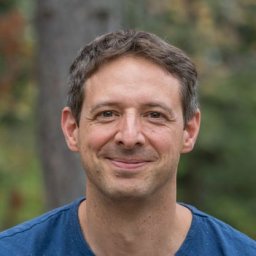 Markus Hennrich合作论文数Max-Planck-Institut fur Quantenoptik33F. Schmidt‐Kaler合作论文数32W. Neuhauser合作论文数30
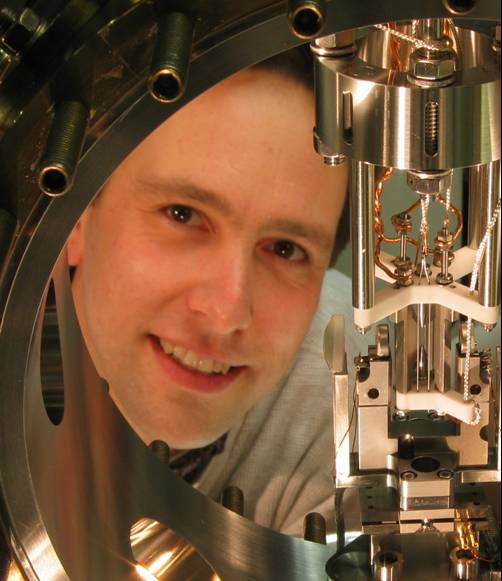 Christoph Becher合作论文数Department of Physics, Faculty of Natural Sciences and Technology, Saarland University24
 Dietrich Leibfried合作论文数National Institute of Standards and Technology24
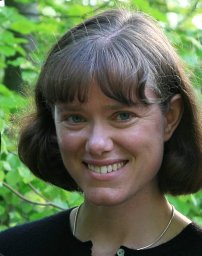 Tracy E. Northup合作论文数Institute for Experimental Physics, University of Innsbruck24j benhelm合作论文数23
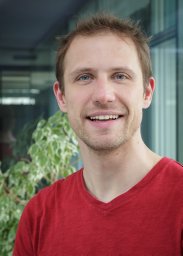 Gerhard Kirchmair合作论文数Institut fur Quantenoptik und Quanteninformation22Wolfgang Hänsel合作论文数21Peter E Toschek合作论文数21
 Martin Ringbauer合作论文数Centre for Eng. Quantum Syst., Univ. of Queensland;c;Centre for Eng. Quantum Syst., Univ. of Queensland20Daniel Nigg合作论文数Institute of Animal Science, Swiss Federal Institute of Technology (ETH),20Lukáš Slodička合作论文数19Meth Michael合作论文数18
 Cornelius Hempel合作论文数Institute for Quantum Electronics, Eidgenössische Technische Hochschule Zürich;Laboratory for Nano- and Quantumtechnology, Quantum Computing Hub, Paul Scherrer Institute, Eidgenössische Technische Hochschule Zürich18Ben P. Lanyon合作论文数Department of Physics;Centre for Quantum Computer Technology;University of Queensland;Centre for Quantum Computer Technology, University of Queensland18S. Gulde合作论文数18
 Manoj Kumar Joshi合作论文数Inst Quantum Opt & Quantum Informat, Austrian Acad Sci17Lukas Postler合作论文数Univ Innsbruck, Inst Expt Phys, Innsbruck, Austria17
 Petar Jurcevic合作论文数Inst Quantenopt & Quanteninformat, Austrian Acad Sci17Carlos Russo合作论文数Institut fur Experimentalphysik;Universitat Innsbruck;Institut fur Experimentalphysik, Universitat Innsbruck17Yves Colombe合作论文数LPL17
 Kihwan Kim (金奇奂)合作论文数Institute for Interdisciplinary Information Sciences, Tsinghua University15
 Markus Müller合作论文数Forschungszentrum Julich;Institute for Quantum Information, RWTH Aachen University;Department of Physics, College of Science, Swansea University15Roman Stricker合作论文数14
 G. Hétet合作论文数ARC COE Quantum Atom Opt, Australian Natl Univ14
 Ferdinand Schmidt-Kaler合作论文数Institut für Physik, Johannes Gutenberg-University Mainz;Helmholtz Institute Mainz13Ingo Siemers合作论文数13Rene Gerritsma合作论文数Institut für Quantenoptik und Quanteninformation13
 A. Kreuter合作论文数13
 Piet O Schmidt合作论文数Institut für Quantenoptik, Leibniz Universität Hannover;Institute for Experimental Quantum Metrology13Julio T. Barreiro合作论文数Department of Physics;University of Illinois at Urbana-Champaign;Department of Physics, University of Illinois at Urbana-Champaign12A.B. Mundt合作论文数11Philip C. Holz合作论文数11H. Rohde合作论文数11Andreas Stute合作论文数Institut für Experimentalphysik, Universität Innsbruck11Bernardo Casabone合作论文数Institut für Experimentalphysik, Universität Innsbruck11
 Hanns-Christoph Nagerl合作论文数Institut fur Experimentalphysik;Universitat Innsbruck;Institut fur Experimentalphysik, Universitat Innsbruck11
 Ivan Pogorelov合作论文数Inst Expt Phys, Innsbruck, Austria10Christoph Raab合作论文数10




