Daniel Nigg, Julio T. Barreiro1,∗ Philipp Schindler, Masoud Mohseni3,† Thomas Monz, Michael Chwalla, Markus Hennrich, and Rainer Blatt Institut fur Experimentalphysik, Universitat Innsbruck, Technikerstrasse 25, A–6020 Innsbruck, Austria Institut fur Quantenoptik und Quanteninformation der Osterreichischen Akademie der Wissenschaften, Technikerstrasse 21a, A–6020 Innsbruck, Austria Research Laboratory of Electronics, Massachusetts Institute of Technology, Massachusetts 02139, USA (Dated: Monday 14 May, 2012)
We report on the implementation of a quantum process tomography technique known as direct characterization of quantum dynamics applied on coherent and incoherent single-qubit processes in a system of trapped (40)Ca(+) ions. Using quantum correlations with an ancilla qubit, direct characterization of quantum dynamics reduces substantially the number of experimental configurations required for a full quantum process tomography and all diagonal elements of the process matrix can be estimated with a single setting. With this technique, the system's relaxation times T(1) and T(2) were measured with a single experimental configuration. We further show the first, complete characterization of single-qubit processes using a single generalized measurement realized through multibody correlations with three ancilla qubits.
In general, a quantum measurement yields an undetermined answer and alters the system to be consistent with the measurement result. This process maps multiple initial states into a single state and thus cannot be reversed. This has important implications in quantum information processing, where errors can be interpreted as measurements. Therefore, it seems that it is impossible to correct errors in a quantum information processor, but protocols exist that are capable of eliminating them if they affect only part of the system. In this work we present the deterministic reversal of a fully projective measurement on a single particle, enabled by a quantum error-correction protocol in a trapped ion quantum information processor. We further introduce an in-sequence, single-species recooling procedure to counteract the motional heating of the ion string due to the measurement.
For scalable quantum computation errors occurring during storage and processing need to be continuously corrected. Here we report on the experimental realization of repetitive quantum error correction with trapped ions.
The computational potential of a quantum processor can only be unleashed if errors during a quantum computation can be controlled and corrected for. Quantum error correction works if imperfections of quantum gate operations and measurements are below a certain threshold and corrections can be applied repeatedly. We implement multiple quantum error correction cycles for phase-flip errors on qubits encoded with trapped ions. Errors are corrected by a quantum-feedback algorithm using high-fidelity gate operations and a reset technique for the auxiliary qubits. Up to three consecutive correction cycles are realized, and the behavior of the algorithm for different noise environments is analyzed.
The control of quantum systems is of fundamental scientific interest and promises powerful applications and technologies. Impressive progress has been achieved in isolating quantum systems from the environment and coherently controlling their dynamics, as demonstrated by the creation and manipulation of entanglement in various physical systems. However, for open quantum systems, engineering the dynamics of many particles by a controlled coupling to an environment remains largely unexplored. Here we realize an experimental toolbox for simulating an open quantum system with up to five quantum bits (qubits). Using a quantum computing architecture with trapped ions, we combine multi-qubit gates with optical pumping to implement coherent operations and dissipative processes. We illustrate our ability to engineer the open-system dynamics through the dissipative preparation of entangled states, the simulation of coherent many-body spin interactions, and the quantum non-demolition measurement of multi-qubit observables. By adding controlled dissipation to coherent operations, this work offers novel prospects for open-system quantum simulation and computation.
We report the creation of Greenberger-Horne-Zeilinger states with up to 14 qubits. By investigating the coherence of up to 8 ions over time, we observe a decay proportional to the square of the number of qubits. The observed decay agrees with a theoretical model which assumes a system affected by correlated, Gaussian phase noise. This model holds for the majority of current experimental systems developed towards quantum computation and quantum metrology.
We report the creation of Greenberger-Horne-Zeilinger states with up to 14 qubits. By investigating the coherence of up to 8 ions over time, we observe a decay proportional to the square of the number of qubits. The observed decay agrees with a theoretical model which assumes a system affected by correlated, Gaussian phase noise. This model holds for the majority of current experimental systems developed towards quantum computation and quantum metrology.
Multiparticle entanglement leads to richer correlations than two-particle entanglement and gives rise to striking contradictions with local realism, inequivalent classes of entanglement, and applications such as one-way or topological quantum computing. When exposed to decohering or dissipative environments, multiparticle entanglement yields subtle dynamical features and access to new classes of states and applications. Here, using a string of trapped ions, we experimentally characterize the dynamics of entanglement of a multiparticle state under the influence of decoherence. By embedding an entangled state of four qubits in a decohering environment (via spontaneous decay), we observe a rich dynamics crossing distinctive domains: Bell-inequality violation, entanglement superactivation, bound entanglement, and full separability. We also develop new theoretical tools for characterizing entanglement in quantum states. Our techniques to control the environment can be used to enable novel quantum-computation, state-engineering, and simulation paradigms based on dissipation and decoherence.
We report on the first absolute transition frequency measurement at the 10;{-15} level with a single, laser-cooled 40Ca+ ion in a linear Paul trap. For this measurement, a frequency comb is referenced to the transportable Cs atomic fountain clock of LNE-SYRTE and is used to measure the 40Ca+ 4s ;{2}S_{1/2}-3d ;{2}D_{5/2} electric-quadrupole transition frequency. After the correction of systematic shifts, the clock transition frequency nu_{Ca;{+}}=411 042 129 776 393.2(1.0) Hz is obtained, which corresponds to a fractional uncertainty within a factor of 3 of the Cs standard. In addition, we determine the Landé g factor of the 3d;{2}D_{5/2} level to be g_{5/2}=1.200 334 0(3).
We report on an absolute frequency measurement with a single Ca-40(+) ion in a linear Paul trap. A frequency comb referenced to the transportable Cs atomic fountain clock of LNE-SYRTE is used to measure the frequency of a laser exciting the Ca-40(+) 4s S-2(1/2) - (3)d D-2(5/2) electric-quadrupole transition. A transition frequency of v(Ca+) = 411042129776393.2(1.0) Hz was obtained, which corresponds to a fractional uncertainty of 2.4 X 10(-15).
We report on the first absolute transition frequency measurement at the ${10}^{\\ensuremath{-}15}$ level with a single, laser-cooled $^{40}\\mathrm{Ca}^{+}$ ion in a linear Paul trap. For this measurement, a frequency comb is referenced to the transportable Cs atomic fountain clock of LNE-SYRTE and is used to measure the $^{40}\\mathrm{Ca}^{+}$ $4s\\text{ }^{2}S_{1/2}\\ensuremath{-}3d\\text{ }^{2}D_{5/2}$ electric-quadrupole transition frequency. After the correction of systematic shifts, the clock transition frequency ${\\ensuremath{\\nu}}_{{\\mathrm{Ca}}^{+}}=411\\text{ }042\\text{ }129\\text{ }776\\text{ }393.2(1.0)\\text{ }\\text{ }\\mathrm{Hz}$ is obtained, which corresponds to a fractional uncertainty within a factor of 3 of the Cs standard. In addition, we determine the Land\\'e $g$ factor of the $3d^{2}D_{5/2}$ level to be ${g}_{5/2}=1.200\\text{ }334\\text{ }0(3)$.
Any residual coupling of a quantum computer to the environment results in computational errors. Encoding quantum information in a so-called decoherence-free subspace provides means to avoid these errors. Despite tremendous progress in employing this technique to extend memory storage times by orders of magnitude, computation within such subspaces has been scarce. Here, we demonstrate the realization of a universal set of quantum gates acting on decoherence-free ion qubits. We combine these gates to realize the first controlled-NOT gate towards a decoherence-free, scalable quantum computer.
We will discuss the implementation of high fidelity entangling operations based on a global interaction of a single laser beam with a string of trapped ions.
Gates acting on more than two qubits are appealing as they can substitute complex sequences of two-qubit gates, thus promising faster execution and higher fidelity. One important multiqubit operation is the quantum Toffoli gate that performs a controlled NOT operation on a target qubit depending on the state of two control qubits. Here we present the first experimental realization of the quantum Toffoli gate in an ion trap quantum computer, achieving a mean gate fidelity of 71(3)%. Our implementation is particularly efficient as the relevant logic information is directly encoded in the motion of the ion string.
With trapped ions quantum information can be encoded in various two-level systems or quantum bits (qubits). Here, we present an overview on qubit encoding with Ca+ and several state-of-the-art operations involving two and three qubits. The use of decoherence-free subspaces and encoding logical qubits using two physical qubits may offer an advantageous route towards implementing scalable quantum information processing.
Entanglement swapping—a protocol for entangling remote quantum systems without the requirement of direct interaction between them—has been implemented in a completely deterministic fashion, allowing to prepare well-defined entangled states on demand. Entanglement—once only a subject of disputes about the foundation of quantum mechanics—has today become an essential issue in the emerging field of quantum information processing, promising a number of applications, including secure communication, teleportation and powerful quantum computation. Therefore, a focus of current experimental work in the field of quantum information is the creation and manipulation of entangled quantum systems. Here, we present our results on entangling two qubits in an ion-trap quantum processor not through a direct interaction of the ion qubits but instead through the action of a protocol known as entanglement swapping1. Our ion-trap system enables us to implement all steps of the entanglement swapping protocol in a fully deterministic way. Thus, two ion qubits can be prepared on demand in a well-defined entangled state. This particular feature may facilitate the implementation of quantum repeaters2 or aid in distributing entangled states in ion-trap quantum computers3.
 Rainer Blatt合作论文数Institut fur Experimentalphysik, Universitat Innsbruck;Institute of Quantum Optics and Quantum Information, Austrian Academy of Science36
 Thomas Monz合作论文数Institute for Experimental Physics, University of Innsbruck30
 Philipp Schindler合作论文数Quantum Molecules Group, Institut für Experimentalphysik, Universität Innsbruck29
 M. Riebe合作论文数26
 Christian Roos合作论文数Institute for Experimental Physics, Universität Innsbruck19
 Markus Hennrich合作论文数Max-Planck-Institut fur Quantenoptik19j benhelm合作论文数15
 Kihwan Kim (金奇奂)合作论文数Institute for Interdisciplinary Information Sciences, Tsinghua University13Wolfgang Hänsel合作论文数13Julio T. Barreiro合作论文数Department of Physics;University of Illinois at Urbana-Champaign;Department of Physics, University of Illinois at Urbana-Champaign12
 Alessandro S. Villar合作论文数Instituto de F ´ õsica;Universidade de Sao Paulo;Instituto de F ´ õsica, Universidade de Sao Paulo11
 Gerhard Kirchmair合作论文数Institut fur Quantenoptik und Quanteninformation9Daniel Nigg合作论文数Institute of Animal Science, Swiss Federal Institute of Technology (ETH),9
 Hartmut Haeffner合作论文数Department of Physics, University of California, Berkeley8
 Rovera, G.D.合作论文数6
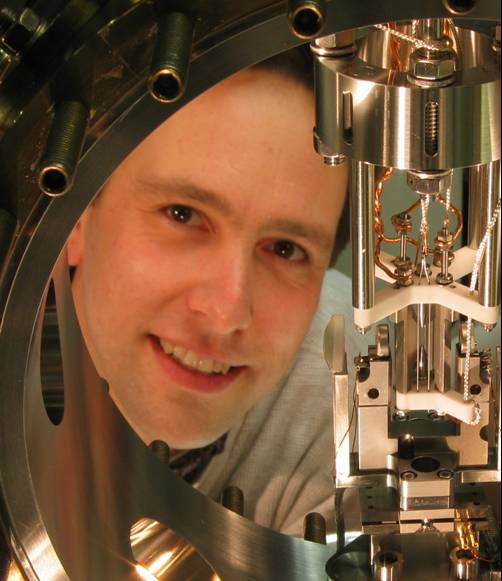 Christoph Becher合作论文数Department of Physics, Faculty of Natural Sciences and Technology, Saarland University6
 Giorgio Santarelli合作论文数Laboratoire Photonique, Numerique et Nanosciences, CNRS6W. Haensel合作论文数5t korber合作论文数5ph laurent合作论文数5
 W. A. Coish合作论文数4
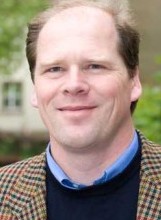 Ferdinand Schmidt-Kaler合作论文数Institut für Physik, Johannes Gutenberg-University Mainz;Helmholtz Institute Mainz4Michel Abgrall合作论文数4
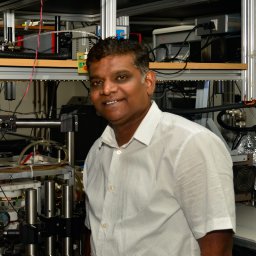 Umakant Rapol合作论文数Department of Physics;Indian Institute of Science;Department of Physics, Indian Institute of Science4
 Otfried Gühne合作论文数University of Siegen4d chekalkar合作论文数3Volckmar Nebendahl合作论文数3
 Esteban Martinez合作论文数Infectious Diseases Unit, Hospital Clínic-IDIBAPS, University of Barcelona3Maximilian Harlander合作论文数3
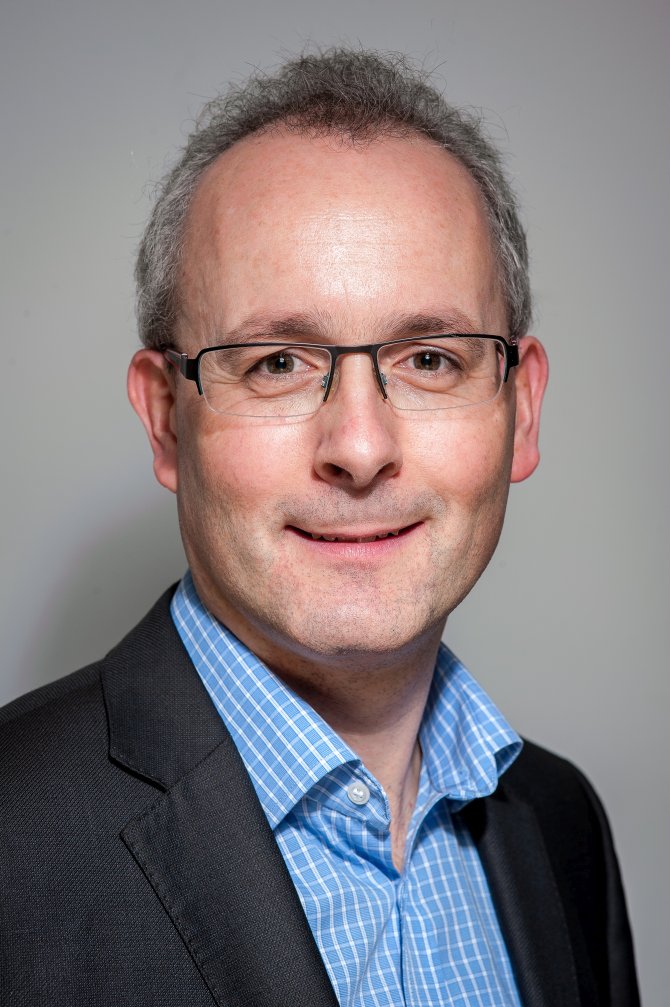 Piet O Schmidt合作论文数Institut für Quantenoptik, Leibniz Universität Hannover;Institute for Experimental Quantum Metrology3
 Wolfgang Dür合作论文数Institut fur Theoretische Physik, University of Innsbruck2G. Lancaster合作论文数2h haeffner合作论文数1Gavin P. T. Lancaster合作论文数1clement roos合作论文数1ES Phillips合作论文数1Matthias Schulz合作论文数1GPT Lancaster合作论文数1
 Stephan Quint合作论文数Saarland Univ, Dept Expt Phys, Campus E2 6, Saarbrucken, Germany1
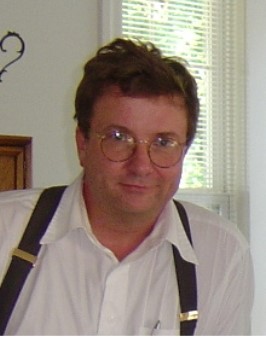 Daniel F.V. James合作论文数Department of Physics, University of Toronto1
 Terry Rudolph合作论文数Department of Physics, Imperial College London1
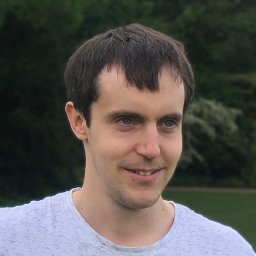 Pusey Matthew F合作论文数Perimeter Institute for Theoretical Physics, 31 Caroline Street North, Waterloo, Ontario N2L 2Y5, Canada.1
 Jürgen Eschner合作论文数Experimentalphysik - Quanten-Photonik, Universität des Saarlandes1
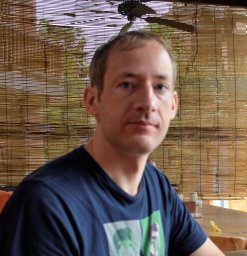 Crepaz Herbert合作论文数National University of Singapore, Nanyang Technological University1Carlos Russo合作论文数Institut fur Experimentalphysik;Universitat Innsbruck;Institut fur Experimentalphysik, Universitat Innsbruck1
 Masoud Mohseni合作论文数Hewlett Packard Enterprise1
 Shannon X. Wang合作论文数Google1




