Scattering experiments with energetic particles, such as free electrons, have been historically used to reveal the quantum structure of matter. However, realizing coherent interactions between free-electron beams and solid-state quantum systems has remained out of reach, owing to their intrinsically weak coupling. Realizing such coherent control would open up opportunities for hybrid quantum platforms combining free electrons and solid-state qubits for coincident quantum information processing and nanoscale sensing. Here, we present a framework that employs negatively charged nitrogen-vacancy centers (NV-) in diamond as quantum sensors of a bunched electron beam. We develop a Lindblad master equation description of the magnetic free-electron-qubit interactions and identify spin relaxometry as a sensitive probe of the interaction. Experimentally, we integrate a confocal fluorescence microscopy setup into a microwave-bunched electron beam line. We monitor charge-state dynamics and assess their impact on key sensing performance metrics (such as spin readout contrast), defining safe operating parameters for quantum sensing experiments. By performing [Formula: see text] relaxometry under controlled electron beam exposure, we do not resolve a measurable reduction in [Formula: see text] within experimental uncertainty, and instead establish an upper bound on the free-electron-spin coupling strength. Our results establish NV- centers as quantitative probes of free electrons, providing a metrological benchmark for free-electron-qubit coupling under realistic conditions, and chart a route toward solid-state quantum control with electron beams.
Quasi-phase matching is a technique for phase matching nonlinear optical interactions in which the relative phase is corrected at regular intervals using a structural periodicity built into the nonlinear medium. The theory of quasi-phase-matched second harmonic generation is presented in both the space domain and the wave vector mismatch domain. Departures from ideal quasi-phase matching in periodicity, wave-length, angle of propagation, and temperature are examined to determine the tuning properties and acceptance bandwidths for second harmonic generation in periodic structures. Numerical examples are tabulated for periodically poled lithium niobate. Various types of errors in the periodicity of these structures are then analyzed to find their effects on the conversion efficiency and on the shape of the tuning curve. This analysis is useful for establishing fabrication tolerances for practical quasi-phase-matched devices. A method of designing structures having desired phase-matching tuning curve shapes is also described which makes use of varying domain lengths to establish a varying effective nonlinear coefficient along the interaction length.
We discuss how photonic control addresses key challenges of dielectric laser accelerators (DLAs) and propose applications using DLAs, i.e., electron pulse compression and quantum sensing of two-level systems.
We demonstrate a silicon-based electron accelerator that uses laser optical near fields to both accelerate and confine electrons over extended distances. Two dielectric laser accelerator (DLA) designs were tested, each consisting of two arrays of silicon pillars pumped symmetrically by pulse front tilted laser beams, designed for average acceleration gradients 35 and 50 MeV/m, respectively. The DLAs are designed to act as alternating phase focusing (APF) lattices, where electrons, depending on the electron-laser interaction phase, will alternate between opposing longitudinal and transverse focusing and defocusing forces. By incorporating fractional period drift sections that alter the synchronous phase between ±60° off crest, electrons captured in the designed acceleration bucket experience half the peak gradient as average gradient while also experiencing strong confinement forces that enable long interaction lengths. We demonstrate APF accelerators with interaction lengths up to 708 μm and energy gains up to 23.7±1.07 keV FWHM, a 25% increase from starting energy, demonstrating the ability to achieve substantial energy gains with subrelativistic DLA.
Magnetars are neutron stars with exceptionally strong dipole magnetic fields which are observed to display a range of x-ray flaring behavior, but the flaring mechanism is not well understood. The third observing run of Advanced LIGO and Virgo extended from April 1, 2019 to March 27, 2020, and contained x-ray flares from known magnetar SGR 1935+2154, as well as the newly-discovered magnetar, Swift J1818-1607. We search for gravitational waves coincident with these magnetar flares with minimally modeled, coherent searches which specifically target both short-duration gravitational waves produced by excited f-modes in the magnetar's core, as well as long-duration gravitational waves motivated by the Quasi-Periodic Oscillations observed in the tails of giant flares. In this paper, we report on the methods and sensitivity estimates of these searches, and the astrophysical implications.
Among the various candidates for dark matter (DM), ultralight vector DM can be probed by laser interferometric gravitational wave detectors through the measurement of oscillating length changes in the arm cavities. In this context, KAGRA has a unique feature due to differing compositions of its mirrors, enhancing the signal of vector DM in the length change in the auxiliary channels. Here we present the result of a search for $U(1)_{B-L}$ gauge boson DM using the KAGRA data from auxiliary length channels during the first joint observation run together with GEO600. By applying our search pipeline, which takes into account the stochastic nature of ultralight DM, upper bounds on the coupling strength between the $U(1)_{B-L}$ gauge boson and ordinary matter are obtained for a range of DM masses. While our constraints are less stringent than those derived from previous experiments, this study demonstrates the applicability of our method to the lower-mass vector DM search, which is made difficult in this measurement by the short observation time compared to the auto-correlation time scale of DM.
Charges as small as 1 pC degrade the performance of high precision inertial reference instruments when accumulated on their test masses (TMs). Non-contact charge management systems are required for the most sensitive of these instruments, with the TMs free-floating, and their charges compensated by photoelectrons in a feedback loop with a TM charge measurement. Three space missions have successfully demonstrated this technique: the Relativity Mission, Gravity Probe-B launched in 2004, the LISA Pathfinder launched in 2015, and the UV-LED mission launched on SaudiSat 4 in 2014; with the first two using the 254 nm Hg discharge line and the last one a set of 255 nm UV-LEDs. UV-LEDs represent a significant improvement over the discharge sources, in terms of reliability, lifetime, switching speeds, power consumption, weight, and volume. Charge management techniques that eliminate the charge measurement and feedback systems, referred henceforth as passive, reduce the complexities and disturbance effects introduced by these systems, and are thus the subject of active research and development work. Passive charge management (PCM) depends critically on the stability and reproducibility of the photoemission properties of a given system. In support of this work, we present comprehensive flight characterization data for a suite of 16 UV-LEDs in various configurations and 255 ± 1 nm center wavelength. Flight data was acquired between December 2014 and December 2015 with the UV-LED instrument flown on SaudiSat 4. We back up our results with ground-based measurements performed in configurations comparable to the flight one between 4 September 2020, and 8 October 2020. All results confirm the excellent reliability of the UV-LEDs in the space environment, are fully consistent with the findings of ground studies, and support the approach of using LEDs for PCM. We find that the equilibrium potential of the TM, under illumination by the 255 nm LEDs, is independent of the UV intensity and reproduceable to about ≅±6 mV, or ±6 fC pF −1 , over periods of up to six months. The value of the equilibrium potential is dependent on the geometry of the electric field between the TM and its enclosure, and thus on the exact configuration of the PCM instrument.
The global network of gravitational-wave observatories now includes five detectors, namely LIGO Hanford, LIGO Livingston, Virgo, KAGRA, and GEO 600. These detectors collected data during their third observing run, O3, composed of three phases: O3a starting in 2019 April and lasting six months, O3b starting in 2019 November and lasting five months, and O3GK starting in 2020 April and lasting two weeks. In this paper we describe these data and various other science products that can be freely accessed through the Gravitational Wave Open Science Center at https://gwosc.org. The main data set, consisting of the gravitational-wave strain time series that contains the astrophysical signals, is released together with supporting data useful for their analysis and documentation, tutorials, as well as analysis software packages.
We present directed searches for continuous gravitational waves from the neutron stars in the Cassiopeia A (Cas A) and Vela Jr. supernova remnants. We carry out the searches in the LIGO data from the first six months of the third Advanced LIGO and Virgo observing run, using the Weave semi-coherent method, which sums matched-filter detection-statistic values over many time segments spanning the observation period. No gravitational wave signal is detected in the search band of 20--976 Hz for assumed source ages greater than 300 years for Cas A and greater than 700 years for Vela Jr. Estimates from simulated continuous wave signals indicate we achieve the most sensitive results to date across the explored parameter space volume, probing to strain magnitudes as low as ~$6.3\times10^{-26}$ for Cas A and ~$5.6\times10^{-26}$ for Vela Jr. at frequencies near 166 Hz at 95% efficiency.
We present a search for dark photon dark matter that could couple to gravitational-wave interferometers using data from Advanced LIGO and Virgo's third observing run. To perform this analysis, we use two methods, one based on cross-correlation of the strain channels in the two nearly aligned LIGO detectors, and one that looks for excess power in the strain channels of the LIGO and Virgo detectors. The excess power method optimizes the Fourier Transform coherence time as a function of frequency, to account for the expected signal width due to Doppler modulations. We do not find any evidence of dark photon dark matter with a mass between $m_{\rm A} \sim 10^{-14}-10^{-11}$ eV/$c^2$, which corresponds to frequencies between 10-2000 Hz, and therefore provide upper limits on the square of the minimum coupling of dark photons to baryons, i.e. $U(1)_{\rm B}$ dark matter. For the cross-correlation method, the best median constraint on the squared coupling is $\sim2.65\times10^{-46}$ at $m_{\rm A}\sim4.31\times10^{-13}$ eV/$c^2$; for the other analysis, the best constraint is $\sim 2.4\times 10^{-47}$ at $m_{\rm A}\sim 5.7\times 10^{-13}$ eV/$c^2$. These limits improve upon those obtained in direct dark matter detection experiments by a factor of $\sim100$ for $m_{\rm A}\sim [2-4]\times 10^{-13}$ eV/$c^2$, and are, in absolute terms, the most stringent constraint so far in a large mass range $m_A\sim$ $2\times 10^{-13}-8\times 10^{-12}$ eV/$c^2$.
We present the first results from an all-sky all-frequency (ASAF) search for an anisotropic stochastic gravitational-wave background using the data from the first three observing runs of the Advanced LIGO and Advanced Virgo detectors. Upper limit maps on broadband anisotropies of a persistent stochastic background were published for all observing runs of the LIGO-Virgo detectors. However, a broadband analysis is likely to miss narrowband signals as the signal-to-noise ratio of a narrowband signal can be significantly reduced when combined with detector output from other frequencies. Data folding and the computationally efficient analysis pipeline, {\tt PyStoch}, enable us to perform the radiometer map-making at every frequency bin. We perform the search at 3072 {\tt{HEALPix}} equal area pixels uniformly tiling the sky and in every frequency bin of width $1/32$~Hz in the range $20-1726$~Hz, except for bins that are likely to contain instrumental artefacts and hence are notched. We do not find any statistically significant evidence for the existence of narrowband gravitational-wave signals in the analyzed frequency bins. Therefore, we place $95\%$ confidence upper limits on the gravitational-wave strain for each pixel-frequency pair, the limits are in the range $(0.030 - 9.6) \times10^{-24}$. In addition, we outline a method to identify candidate pixel-frequency pairs that could be followed up by a more sensitive (and potentially computationally expensive) search, e.g., a matched-filtering-based analysis, to look for fainter nearly monochromatic coherent signals. The ASAF analysis is inherently independent of models describing any spectral or spatial distribution of power. We demonstrate that the ASAF results can be appropriately combined over frequencies and sky directions to successfully recover the broadband directional and isotropic results.
Dielectric laser accelerators (DLAs) are fundamentally based on the interaction of photons with free electrons, where energy and momentum conservation are satisfied by mediation of a nanostructure. In this scheme, the photonic nanostructure induces near-fields which transfer energy from the photon to the electron, similar to the inverse-Smith–Purcell effect described in metallic gratings. This, in turn, may provide ground-breaking applications, as it is a technology promising to miniaturize particle accelerators down to the chip scale. This fundamental interaction can also be used to study and demonstrate quantum photon-electron phenomena. The spontaneous and stimulated Smith–Purcell effect and the photon-induced near-field electron-microscopy (PINEM) effect have evolved to be a fruitful ground for observing quantum effects. In particular, the energy spectrum of the free electron has been shown to have discrete energy peaks, spaced with the interacting photon energy. This energy spectrum is correlated to the photon statistics and number of photon exchanges that took place during the interaction. We give an overview of DLA and PINEM physics with a focus on electron phase-space manipulation.
We present results of an all-sky search for continuous gravitational waves which can be produced by spinning neutron stars with an asymmetry around their rotation axis, using data from the third observing run of the Advanced LIGO and Advanced Virgo detectors. Four different analysis methods are used to search in a gravitational-wave frequency band from 10 to 2048 Hz and a first frequency derivative from $-10^{-8}$ to $10^{-9}$ Hz/s. No statistically-significant periodic gravitational-wave signal is observed by any of the four searches. As a result, upper limits on the gravitational-wave strain amplitude $h_0$ are calculated. The best upper limits are obtained in the frequency range of 100 to 200 Hz and they are ${\sim}1.1\times10^{-25}$ at 95\% confidence-level. The minimum upper limit of $1.10\times10^{-25}$ is achieved at a frequency 111.5 Hz. We also place constraints on the rates and abundances of nearby planetary- and asteroid-mass primordial black holes that could give rise to continuous gravitational-wave signals.
Acceleration of particles in photonic nanostructures fabricated using semiconductor manufacturing techniques and driven by ultrafast solid state lasers is a new and promising approach to developing future generations of compact particle accelerators. Substantial progress has been made in this area in recent years, fueled by a growing international collaboration of universities, national laboratories, and companies. Performance of these micro-accelerator devices is ultimately limited by laser-induced material breakdown limits, which can be substantially higher for optically driven dielectrics than for radio-frequency metallic cavities traditionally used in modern particle accelerators, allowing for 1 to 2 order of magnitude increase in achievable accelerating fields. The lasers required for this approach are commercially available with moderate (micro-Joule class) pulse energies and repetition rates in the MHz regime. We summarize progress to date and outline potential near-term applications and off-shoot technologies.
Particle acceleration in microstructures driven by ultrafast solid state lasers is a rapidly evolving area of advanced accelerator research, leading to a variety of concepts based on planar-symmetric dielectric gratings, hollow core fibers, photonic crystals, and plasmonic meta-surfaces. This approach leverages well-established industrial fabrication capabilities and the commercial availability of tabletop lasers to reduce cost, with demonstrated axial accelerating fields in the GV/m range. Wide-ranging international efforts have significantly improved understanding of gradient limits, structure design, particle focusing and transport, staging, and development of compatible low-emittance electron sources. With a near-term focus on low-current MeV-scale applications for compact scientific and medical instruments, as well as novel diagnostics capabilities, structure-based laser-driven accelerators have several key benefits that warrant consideration for future high-energy physics machines, including low beamstrahlung energy loss, modest power requirements, stability, and readiness of supporting technologies.
We report the results of the first joint observation of the KAGRA detector with GEO600. KAGRA is a cryogenic and underground gravitational-wave detector consisting of a laser interferometer with three-kilometer arms, and located in Kamioka, Gifu, Japan. GEO600 is a British--German laser interferometer with 600 m arms, and located near Hannover, Germany. GEO600 and KAGRA performed a joint observing run from April 7 to 20, 2020. We present the results of the joint analysis of the GEO--KAGRA data for transient gravitational-wave signals, including the coalescence of neutron-star binaries and generic unmodeled transients. We also perform dedicated searches for binary coalescence signals and generic transients associated with gamma-ray burst events observed during the joint run. No gravitational-wave events were identified. We evaluate the minimum detectable amplitude for various types of transient signals and the spacetime volume for which the network is sensitive to binary neutron-star coalescences. We also place lower limits on the distances to the gamma-ray bursts analysed based on the non-detection of an associated gravitational-wave signal for several signal models, including binary coalescences. These analyses demonstrate the feasibility and utility of KAGRA as a member of the global gravitational-wave detector network.
We present two compact ultrafast electron injector designs with integrated focusing that provide high peak brightness of up to 1.9 × 10¹² A/m2 Sr2 with 10’s of electrons per laser pulse using silicon carbide electrodes and silicon nanotip emitters. We demonstrate a few centimeter scale 96 keV immersion lens electron source and a 57 keV immersion lens electron source with a 19 kV/mm average acceleration gradient, nearly double the typical 10 kV/mm used in DC electron sources. The brightness of the electron sources is measured alongside start-to-end simulations including space charge effects. These sources are suitable for dielectric laser accelerator experiments, ultrafast electron diffraction, and other applications, where a compact high brightness electron source is required.
This paper describes the first all-sky search for long-duration, quasi-monochromatic gravitational-wave signals emitted by ultralight scalar boson clouds around spinning black holes using data from the third observing run of Advanced LIGO. We analyze the frequency range from 20~Hz to 610~Hz, over a small frequency derivative range around zero, and use multiple frequency resolutions to be robust towards possible signal frequency wanderings. Outliers from this search are followed up using two different methods, one more suitable for nearly monochromatic signals, and the other more robust towards frequency fluctuations. We do not find any evidence for such signals and set upper limits on the signal strain amplitude, the most stringent being $\approx10^{-25}$ at around 130~Hz. We interpret these upper limits as both an "exclusion region" in the boson mass/black hole mass plane and the maximum detectable distance for a given boson mass, based on an assumption of the age of the black hole/boson cloud system.
A dielectric laser accelerator, operating at optical frequencies and GHz pulse rate, is expected to produce attosec electron bunches with a moderate beam current at high energy. For relativistic electrons, the attosec bunch has a spatial length of a few nanometers, which is well suited for generating high-brightness superradiance in the VUV, EUV, and x-ray spectra. Our study shows that the brilliance of coherent undulator radiation driven by a short-bunch beam with 1~10 fC bunch charge from a dielectric laser accelerator is comparable to or higher than that of a synchrotron in the 0.1 ~ 3 keV photon energy range, even though the beam power of the dielectric laser accelerator is about a million times lower than that of a synchrotron. When the brilliance under comparison is normalized to the electron beam power, the proposed coherent undulator radiation source becomes the brightest source on earth across the whole VUV, EUV, and soft x-ray spectrum.
R. Abbott1, H. Abe2, F. Acernese3,4, K. Ackley 5, N. Adhikari 6, R. X. Adhikari 1, V. K. Adkins7, V. B. Adya8, C. Affeldt9,10, D. Agarwal11, M. Agathos 12,13, K. Agatsuma 14, N. Aggarwal15, O. D. Aguiar 16, L. Aiello 17, A. Ain18, P. Ajith 19, T. Akutsu 20,21, S. Albanesi22,23, R. A. Alfaidi24, A. Allocca 25,4, P. A. Altin 8, A. Amato 26, C. Anand5, S. Anand1, A. Ananyeva1, S. B. Anderson 1, W. G. Anderson 6, M. Ando27,28, T. Andrade29, N. Andres 30, M. Andrés-Carcasona 31, T. Andrić 32, S. V. Angelova33, S. Ansoldi34,35, J. M. Antelis 36, S. Antier 37,38, T. Apostolatos39, E. Z. Appavuravther40,41, S. Appert1, S. K. Apple42, K. Arai 1, A. Araya 43, M. C. Araya 1, J. S. Areeda 44, M. Arène45,
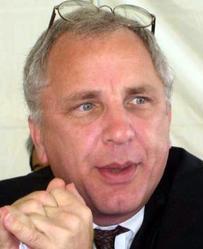 Martin M. Fejer合作论文数Fejer Group, Edward L. Ginzton Laboratory, Stanford University218
 Thomas Corbitt合作论文数Department of Physics & Astronomy, College of Science, Louisiana State University141
 Philip Charlton合作论文数School of Computing, Mathematics and Engineering, Charles Sturt University141
 Laura Cadonati合作论文数School of Physics, College of Sciences, Georgia Institute of Technology141
 Igor Bilenko合作论文数Russian Quantum Center;Faculty of Physics, Lomonosov Moscow State University139
 Garilynn Billingsley合作论文数California Institute of Technology138
 Bryan Barr合作论文数School of Physics & Astronomy, University of Glasgow138
 Alessandra Buonanno合作论文数Max Planck Institute for Gravitational Physics;Department of Physics, University of Maryland, College Park;Humboldt University;Potsdam University138
 Nelson Christensen合作论文数Department of Physics and Astronomy, Carleton College137Joseph (Joe) Betzwieser合作论文数California Institute of Technology137Rolf Bork合作论文数LIGO Lab, California Institute of Technology136J. Brau合作论文数136
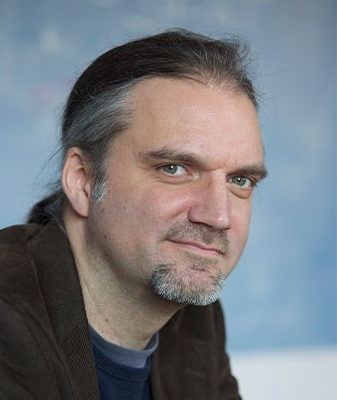 Andreas Freise合作论文数Department of Physics and Astronomy, Vrije Universiteit Amsterdam136
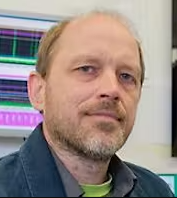 Hartmut Grote合作论文数Gravity Exploration Institute, School of Physics and Astronomy, Cardiff University135
 Kent Blackburn合作论文数135D. Barker合作论文数134
 Daniel DeBra合作论文数Department of Aeronautics and Astronautics, School of Engineering, Stanford University134
 James Hough合作论文数School of Physics & Astronomy, University of Glasgow134
 Karsten Danzmann合作论文数Albert Einstein Institute, Max-Planck-Institut fur Gravitationsphysik;Institute of Gravitational Physics, Faculty of Mathematics and Physics, Leibniz Universität Hannover134M. Fyffe合作论文数133
 Patrick R Brady合作论文数Department of Physics, College of Letters & Science, University of Wisconsin-Milwaukee133
 Richard Abbott合作论文数Laser-Interferometer Gravitational-wave Observatory, California Institute of Technology133R. Gustafson合作论文数132
 J. S. Kissel合作论文数LIGO Hanford Observatory132
 Jolien Creighton合作论文数Department of Physics, College of Letters & Science, University of Wisconsin-Milwaukee132
 Rana Adhikari合作论文数Department of Applied Physics and Materials Science, Division of Engineering and Applied Science, California Institute of Technology132
 Jordan Camp合作论文数Astrophysics Science Division, Goddard Space Flight Center, NASA132Steffen Grunewald合作论文数Max Planck Institute for Gravitational Physics131
 Sukanta Bose合作论文数Department of Physics & Astronomy, College of Arts & Sciences, Washington State University131
 Calum Gray合作论文数School of Physics & Astronomy, University of Glasgow131
 Gregory Harry合作论文数Department of Physics, College of Arts & Sciences, American University131Keita Kawabe合作论文数Laser Interferometer Gravitational-wave Observatory - Hanford Observatory;California Institute of Technology130
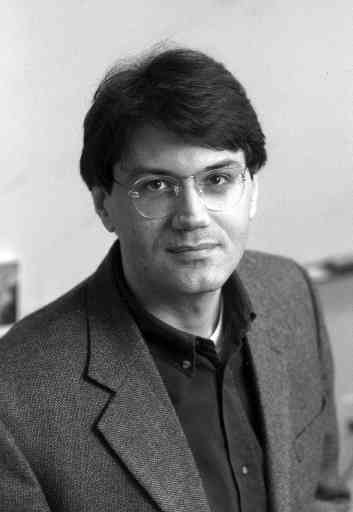 E. C. Katsavounidis合作论文数Department of Physics, Kavli Institute for Astrophysics and Space Research, Massachusetts Institute of Technology;Laser Interferometer Gravitational-wave Observatory, Massachusetts Institute of Technology130
 Vicky Kalogera合作论文数Department of Physics and Astronomy, Weinberg College of Arts & Sciences, Northwestern University;Center for Interdisciplinary Exploration and Research in Astrophysics, Northwestern University.130Sanjeev Dhurandhar合作论文数130A. Grant合作论文数129Eric K. Gustafson合作论文数LIGO, California Institute of Technology129
 Stephen Fairhurst合作论文数Gravity Exploration Institute, School of Physics and Astronomy, Cardiff University129
 Gianpietro Cagnoli合作论文数Institut Lumière Matière, Université Claude Bernard Lyon 1;CNRS128WG Anderson合作论文数128
 Joseph A. Giaime合作论文数Department of Physics & Astronomy, College of Science, Louisiana State University;LIGO Livingston Observatory, California Institute of Technology128
 Stanislav Babak合作论文数Astroparticule et Cosmologie128
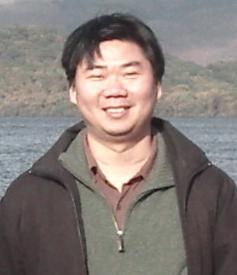 IK Siong Heng合作论文数School of Physics & Astronomy, University of Glasgow127
 Gabriela González合作论文数Department of Physics and Astronomy, College of Science, Louisiana State University126
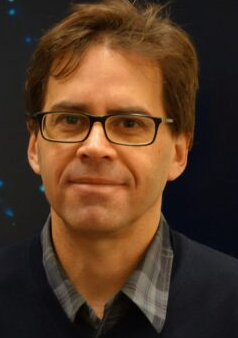 Peter Fritschel合作论文数Kavli Institute for Astrophysics and Space Research, Massachusetts Institute of Technology;Laser Interferometric Gravitational-wave Observatory125S. B. Anderson合作论文数125V. P. Mitrofanov合作论文数Department of Oscillations Physics, Lomonosov Moscow State University125Albert J. Lazzarini合作论文数LIGO Laboratory, California Institute of Technology125
 Szabolcs Márka合作论文数Department of Physics, Columbia University124




