We give a brief, incomplete, and idiosyncratic review of the early years of supergravity in superspace as our contribution to the book Half a Century of Supergravity edited by Anna Ceresole and Gianguido Dall'Agata.
The Large Vector Multiple (LVM) is the relevant gauge multiplet for gauging isometries acting on both the chiral and the twisted chiral fields in a (2, 2) sigma model. Here we show that a recently proposed new gauge multiplet is a constrained or partially dualized version of the LVM. Gauging using this multiplet results in a (2, 2) βγ system interacting with a sigma model.
We investigate a class of Ricci-flat Kähler metrics on generalized conifolds constructed via gauged linear sigma models (GLSMs) with indefinite signature. By introducing shadow coordinates (superfields) entering the sigma model with negative signature kinetic term, we show that these GLSMs yield explicit Ricci-flat metrics on complex cones over products of projective spaces. We provide a general formula for the resulting Kähler potentials, along with detailed examples. Our results suggest new directions for the study of Calabi-Yau metrics and toric geometry, and raise interesting questions about the geometric meaning of indefinite signature models. We also give an interpretation in terms of a novel generalized Kähler gauging.
Twisted four-dimensional supersymmetric Yang-Mills theory famously gives a useful point of view on the Donaldson and Seiberg-Witten invariants of four-manifolds. In this paper we generalize the construction to include a path integral formulation of generalizations of Donaldson invariants for smooth families of four-manifolds. Mathematically these are equivariant cohomology classes for the action of the oriented diffeomorphism group on the space of metrics on the manifold. In principle these cohomology classes should contain nontrivial information about the topology of the diffeomorphism group of the four-manifold. We show that the invariants may be interpreted as the standard topologically twisted path integral of four-dimensional $\mathcal{N}=2$ supersymmetric Yang-Mills coupled to topologically twisted background fields of conformal supergravity.
Abstract We describe the projective superspace approach to supersymmetric models with off-shell (0, 4) supersymmetry in two dimensions. In addition to the usual superspace coordinates, projective superspace has extra bosonic variables — one doublet for each SU(2) in the R-symmetry SU(2) × SU(2) which are interpreted as homogeneous coordinates on CP 1 × CP 1. The superfields are analytic in the CP 1 coordinates and this analyticity plays an important role in our description. For instance, it leads to stringent constraints on the interactions one can write down for a given superfield content of the model. As an example, we describe in projective superspace Witten’s ADHM sigma model — a linear sigma model with non-derivative interactions whose target is R 4 with a Yang-Mills instanton solution. The hyperkähler nature of target space and the twistor description of instantons by Ward, and Atiyah, Hitchin, Drinfeld and Manin are natural outputs of our construction.
We point out that pure supergravity theories in $AdS$ with enough supersymmetry lead, upon taking the large radius limit, to flat space quantum gravities with a nonperturbatively exact global symmetry, and are therefore in the Swampland. The argument applies to any $AdS$ supergravity with gauged R-symmetry group, including truncations of most well known examples, such as $AdS_5$ without the $S^5$ or $AdS_4$ without the $S^7$. This demonstrates that extreme scale separation, at least with enough supersymmetry, is not realizable. Moreover pure $AdS$ theories are also in conflict with some other Swampland principles including the Weak Gravity Conjecture and the (generalized) Distance Conjecture.
We find a geometric description of interacting βγ-systems as a null Kac-Moody quotient of a nonlinear sigma-model for systems with varying amounts of supersymmetry.
We test recently proposed IR dualities and supersymmetry enhancement by studying the supersymmetry on domain walls. In the SU(3) Wess-Zumino model studied in [1, 2], we show that domain walls exhibit supersymmetry enhancement. This model was conjectured to be dual to an N = 2 abelian gauge theory. We show that domain walls on the gauge theory side are consistent with the proposed duality, as they are described by the same effective theory on the wall. In [3], a third model was conjectured to be dual to the same IR theory. We study the phases and domain walls of this model and we show that they also agree. We then consider the analogous SU(5) Wess-Zumino model, and study its mass deformations and phases. We argue that even though one might expect supersymmetry enhancement in this model as well, the analysis of its domain walls shows that there is none. Finally, we study the N = 2 model in [4] which was conjectured to have N = 4 supersymmetry in the IR. In this case we don’t see the supersymmetry enhancement on the domain wall; however, we argue that half-BPS domain walls of the N = 2 algebra are quarter-BPS of the N = 4 algebra. This is then in agreement with the conjectured enhancement, even though it does not show that it takes place. ar X iv :1 90 4. 02 72 2v 2 [ he pth ] 2 4 A pr 2 01 9
We find the T-duality transformation rules for 2-dimensional (2,1) supersymmetric sigma-models in (2,1) superspace. Our results clarify certain aspects of the (2,1) sigma model geometry relevant to the discussion of T-duality. The complexified duality transformations we find are equivalent to the usual Buscher duality transformations (including an important refinement) together with diffeomorphisms. We use the gauging of sigma-models in (2,1) superspace, which we review and develop, finding a manifestly real and geometric expression for the gauged action. We discuss the obstructions to gauging (2,1) sigma-models, and find that the obstructions to (2,1) T-duality are considerably weaker.
We test recently proposed IR dualities and supersymmetry enhancement by studying the supersymmetry on domain walls. In the SU(3) Wess-Zumino model studied in [1, 2], we show that domain walls exhibit supersymmetry enhancement. This model was conjectured to be dual to an $$ \mathcal{N} $$ = 2 abelian gauge theory. We show that domain walls on the gauge theory side are consistent with the proposed duality, as they are described by the same effective theory on the wall. In [3], a third model was conjectured to be dual to the same IR theory. We study the phases and domain walls of this model and we show that they also agree. We then consider the analogous SU(5) Wess-Zumino model, and study its mass deformations and phases. We argue that even though one might expect supersymmetry enhancement in this model as well, the analysis of its domain walls shows that there is none. Finally, we study the $$ \mathcal{N} $$ = 2 model in [4] which was conjectured to have $$ \mathcal{N} $$ = 4 supersymmetry in the IR. In this case we don't see the supersymmetry enhancement on the domain wall; however, we argue that half-BPS domain walls of the $$ \mathcal{N} $$ = 2 algebra are quarter-BPS of the $$ \mathcal{N} $$ = 4 algebra. This is then in agreement with the conjectured enhancement, even though it does not show that it takes place.
A bstract We study gauge theories with $$ \mathcal{N}=1 $$ N = 1 supersymmetry in 2+1 dimensions. We start by calculating the 1-loop effective superpotential for matter in an arbitrary representation. We then restrict ourselves to gauge theories with fundamental matter. Using the 1-loop superpotential, we find a universal form for the phase diagrams of many such gauge theories, which is proven to persist to all orders in perturbation theory using a symmetry argument. This allows us to conjecture new dualities for $$ \mathcal{N}=1 $$ N = 1 gauge theories with fundamental matter. We also show that these dualities are related to results in $$ \mathcal{N}=2 $$ N = 2 supersymmetric gauge theories, which provides further evidence for them.
Abstract We study gauge theories with $$ \mathcal{N}=1 $$ N = 1 supersymmetry in 2+1 dimensions. We start by calculating the 1-loop effective superpotential for matter in an arbitrary representation. We then restrict ourselves to gauge theories with fundamental matter. Using the 1-loop superpotential, we find a universal form for the phase diagrams of many such gauge theories, which is proven to persist to all orders in perturbation theory using a symmetry argument. This allows us to conjecture new dualities for $$ \mathcal{N}=1 $$ N = 1 gauge theories with fundamental matter. We also show that these dualities are related to results in $$ \mathcal{N}=2 $$ N = 2 supersymmetric gauge theories, which provides further evidence for them.
A bstract We study generalized Kähler structures on N = (2 , 2) supersymmetric WessZumino-Witten models; we use the well known case of SU(2) × U(1) as a toy model and develop tools that allow us to construct the superspace action and uncover the highly nontrivial structure of the hitherto unexplored case of SU(3); these tools should be useful for studying many other examples. We find that different generalized Kähler structures on N = (2 , 2) supersymmetric Wess-Zumino-Witten models can be found by T-duality transformations along affine isometries.
We study gauge theories with N=1 supersymmetry in 2+1 dimensions. We start by calculating the 1-loop effective superpotential for matter in an arbitrary representation. We then restrict ourselves to gauge theories with fundamental matter. Using the 1-loop superpotential, we find a universal form for the phase diagrams of many such gauge theories, which is proven to persist to all orders in perturbation theory using a symmetry argument. This allows us to conjecture new dualities for N=1 gauge theories with fundamental matter. We also show that these dualities are related to results in N=2 supersymmetric gauge theories, which provides further evidence for them.
We study gauge theories with 𝒩=1 supersymmetry in 2+1 dimensions. We start by calculating the 1-loop effective superpotential for matter in an arbitrary representation. We then restrict ourselves to gauge theories with fundamental matter. Using the 1-loop superpotential, we find a universal form for the phase diagrams of many such gauge theories, which is proven to persist to all orders in perturbation theory using a symmetry argument. This allows us to conjecture new dualities for 𝒩=1 gauge theories with fundamental matter. We also show that these dualities are related to results in 𝒩=2 supersymmetric gauge theories, which provides further evidence for them.
We consider various \(A_{\infty }\)-algebras of differential (super)forms, which are related to gauge theories and demonstrate explicitly how certain reformulations of gauge theories lead to the transfer of the corresponding \(A_{\infty }\)-structures. In addition, for \(N=2\) 3D space, we construct the homotopic counterpart of the de Rham complex, which is related to the superfield formulation of the \(N=2\) Chern–Simons theory.
Two results regarding Kähler supermanifolds with potential K=A+Cθθ̅ are shown. First, if the supermanifold is Kähler-Einstein, then its base (the supermanifold of one lower fermionic dimension and with Kähler potential A) has constant scalar curvature. As a corollary, every constant scalar curvature Kähler supermanifold has a unique superextension to a Kähler-Einstein supermanifold of one higher fermionic dimension. Second, if the supermanifold is itself scalar flat, then its base satisfies the equation ϕ^j̅iϕ_ij̅=2Δ_0 S_0 + R_0^j̅iR_0ij̅ - S_0^2, where Δ_0 is the Laplace operator, S_0 is the scalar curvature, and R_0ij̅ is the Ricci tensor of the base, and ϕ is some harmonic section on the base. Remarkably, precisely this equation arises in the construction of certain supergravity compactifications. Examples of bosonic manifolds satisfying the equation above are discussed.
We study a broad class of two dimensional gauged linear sigma models (GLSMs) with off-shell N=(2,2) supersymmetry that flow to nonlinear sigma models (NLSMs) on noncompact geometries with torsion. These models arise from coupling chiral, twisted chiral, and semichiral multiplets to known as well as to a new N=(2,2) vector multiplet, the constrained semichiral vector multiplet (CSVM). We discuss three kinds of models, corresponding to torsionful deformations of standard GLSMs realizing Kahler, hyperkahler, and Calabi-Yau manifolds. The (2,2) supersymmetry guarantees that these spaces are generalized Kahler. Our analysis of the geometric structure is performed at the classical level, but we also discuss quantum aspects such as R-symmetry anomalies. We provide an explicit example of a generalized Kahler structure on the conifold.
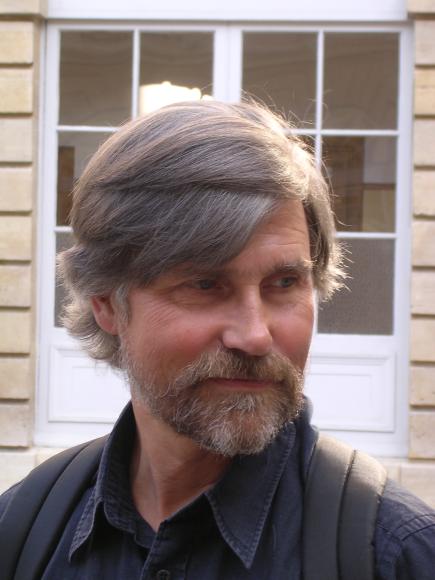 Ulf Lindström合作论文数Department of Physics and Astronomy, Theoretical Physics, Uppsala Universitet61
 Rikard Von Unge合作论文数Institute for Theoretical Physics;Masaryk University20Anders Karlhede合作论文数16
 Warren Siegel合作论文数C. N. Yang Institute For Theoretical Physics, State University of New York Stony Brook14Maxim Zabzine合作论文数10
 Stefan Vandoren合作论文数Institute for Theoretical;Physics and Spinoza Institute;Utrecht University;Physics and Spinoza Institute, Utrecht University8AE VANDEVEN合作论文数6
 Sylvester James Gates, Jr.合作论文数Department of Physics, Brown University6Amit Giveon合作论文数6F. Gonzalez-Rey合作论文数6
 Chris Hull合作论文数Department of Physics, Faculty of Natural Sciences, Imperial College London6Changha Choi合作论文数Kavli Inst Theoret Phys, Univ Calif Santa Barbara5Adar Sharon合作论文数Dept Particle Phys & Astrophys, Weizmann Inst Sci5Itai Ryb合作论文数5
 Ruth M Williams合作论文数4Marcus T. Grisaru合作论文数4Alexander Sevrin合作论文数4R vonUnge合作论文数3Gordon Chalmers合作论文数Department of Physics and Astronomy;University of California at Los Angeles;Department of Physics and Astronomy, University of California at Los Angeles3Thors Hans Hansson合作论文数3
 Cumrun Vafa合作论文数Department of Physics, Harvard University3
 Bernard De Wit合作论文数Utrecht University;Nikhef3
 Gabriele Tartaglino-Mazzucchelli合作论文数School of Physics;University of Western;School of Physics, University of Western3
 Malin Goteman合作论文数Department Physics and Astronomy;Division for Theoretical Physics;Uppsala University;Department Physics and Astronomy, Uppsala University3
 Sergei M. Kuzenko合作论文数School of Physics, Maths and Computing, The University of Western Australia3I. Y. Park合作论文数3B. De Wit合作论文数3
 K. Schoutens合作论文数Institute for Theoretical Physics;University of Amsterdam;Institute for Theoretical Physics, University of Amsterdam3Daniel Robles-Llana合作论文数3
 Leszek Hadasz合作论文数3J. P. Ang合作论文数2ron donagi合作论文数2
 Sahand Seifnashri合作论文数Stony Brook University2Albert Ko合作论文数2
 Konstantinos Roumpedakis合作论文数University of California2Tzanko Ivanov合作论文数Dept Phys, Univ Sofia2Ljudmila Kamenova合作论文数2
 Steven Kivelson合作论文数Department of Physics, Stanford University;Stanford Institute for Materials and Energy Sciences, Stanford University2
 Ashok Das合作论文数Department of Physics and Astronomy, School of Arts & Sciences, University of Rochester2
 Ismail Zahed合作论文数Dept. of Physics & Astronomy, Stony Brook University2S ZHANG合作论文数2
 Changhyun Ahn合作论文数Department of Physics, College of Natural Science, Kyungpook National University2
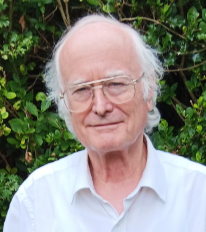 Gary Gibbons合作论文数Department of Applied Mathematics and Theoretical Physics, Faculty of Mathematics, University of Cambridge2Ulrich Theis合作论文数2
 Shoucheng Zhang (张首晟)合作论文数Department of Physics, Stanford University2Mark S. Fischler合作论文数2Frank Saueressig合作论文数2Marc Grisaru合作论文数2




