Genome foundation models hold transformative potential for precision medicine, drug discovery, and understanding complex biological systems. However, existing models are often inefficient, constrained by suboptimal tokenization and architectural design, and biased toward reference genomes, limiting their representation of low-abundance, uncultured microbes in the rare biosphere. To address these challenges, we developed GenomeOcean, a 4-billion-parameter generative genome foundation model trained on over 600 Gbp of high-quality contigs derived from 220 TB of metagenomic datasets collected from diverse habitats across Earth's ecosystems. A key innovation of GenomeOcean is training directly on large-scale co-assemblies of metagenomic samples, enabling enhanced representation of rare microbial species and improving generalizability beyond genome-centric approaches. We implemented a byte-pair encoding (BPE) tokenization strategy for genome sequence generation, alongside architectural optimizations, achieving up to 150× faster sequence generation while maintaining high biological fidelity. GenomeOcean excels in representing microbial species and generating protein-coding genes constrained by evolutionary principles. Additionally, its fine-tuned model demonstrates the ability to discover novel biosynthetic gene clusters (BGCs) in natural genomes and perform zero-shot synthesis of biochemically plausible, complete BGCs. GenomeOcean sets a new benchmark for metagenomic research, natural product discovery, and synthetic biology, offering a robust foundation for advancing these fields.
The Exabiome project seeks to improve the understanding of microbiomes through the development of methods for accelerating metagenomic science using exascale computing. This article gives an overview of scientific impact of the three components of the project: metagenome assembly, protein family detection and comparative analysis of metagenomes. Exabiome developed MetaHipMer, the only metagenome assembler capable of scaling to full exascale systems. MetaHipMer has enabled ground-breaking assemblies on the Frontier supercomputer, with many scientific benefits, such as the discovery of rare species and viral genomes. To investigate protein families, Exabiome developed two exascale tools, PASTIS and HipMCL. Together, these can utilize exascale resources to understand the functional diversity of billions of “dark matter” proteins and novel protein families. For comparative analysis, Exabiome developed kmerprof, a tool that can be used to compare huge metagenomes for many different scientific purposes, for example, grouping human microbiomes according to body location.
Soil microbes are major players in the global carbon cycle, yet we still have little understanding of how the carbon cycle operates in soil communities. A major limitation is that carbon metabolism lacks discrete functional genes that define carbon transformations.
Petabases of reads are being produced by environmental metagenome sequencing. An essential step in analyzing these data is metagenome assembly, the computational reconstruction of genome sequences from microbial communities. “Coassembly” of metagenomic sequence data, in which multiple samples are assembled together, enables more complete detection of microbial genomes in an environment than “multiassembly,” in which samples are assembled individually.
The amount of genetic information being generated and stored has seen a surge in recent years due to current technological improvements. Processing this vast amount of data requires efficient genomic pipelines. Hence, key tasks like sequence alignment between two or more sequences are implement on modern hardware using the Smith-Waterman algorithm for local alignment and the Needleman-Wunsch algorithm for global alignment. However, most current solutions fall short because they offer rigid implementations that are tuned for specific platforms and cannot easily be ported from one hardware to another. In this work, we design a flexible implementation for the key alignment kernels and show that a systematic approach to optimizing both the local and global sequence algorithms can be achieved. In addition, we show that using our approach the high performance implementation of the computation using SIMD instructions can achieve close to peak performance on most modern CPU platforms (from vendors like Intel, AMD and ARM) and across a wide range of SIMD vector lengths.
Metagenome binning is a key step, downstream of metagenome assembly, to group scaffolds by their genome of origin. Although accurate binning has been achieved on datasets containing multiple samples from the same community, the completeness of binning is often low in datasets with a small number of samples due to a lack of robust species co-abundance information. In this study, we exploited the chromatin conformation information obtained from Hi-C sequencing and developed a new reference-independent algorithm, Metagenome Binning with Abundance and Tetra-nucleotide frequencies-Long Range (metaBAT-LR), to improve the binning completeness of these datasets. This self-supervised algorithm builds a model from a set of high-quality genome bins to predict scaffold pairs that are likely to be derived from the same genome. Then, it applies these predictions to merge incomplete genome bins, as well as recruit unbinned scaffolds. We validated metaBAT-LR's ability to bin-merge and recruit scaffolds on both synthetic and real-world metagenome datasets of varying complexity. Benchmarking against similar software tools suggests that metaBAT-LR uncovers unique bins that were missed by all other methods. MetaBAT-LR is open-source and is available at https://bitbucket.org/project-metabat/metabat-lr.
BACKGROUND:The assembly of metagenomes decomposes members of complex microbe communities and allows the characterization of these genomes without laborious cultivation or single-cell metagenomics. Metagenome assembly is a process that is memory intensive and time consuming. Multi-terabyte sequences can become too large to be assembled on a single computer node, and there is no reliable method to predict the memory requirement due to data-specific memory consumption pattern. Currently, out-of-memory (OOM) is one of the most prevalent factors that causes metagenome assembly failures.RESULTS:In this study, we explored the possibility of using Persistent Memory (PMem) as a less expensive substitute for dynamic random access memory (DRAM) to reduce OOM and increase the scalability of metagenome assemblers. We evaluated the execution time and memory usage of three popular metagenome assemblers (MetaSPAdes, MEGAHIT, and MetaHipMer2) in datasets up to one terabase. We found that PMem can enable metagenome assemblers on terabyte-sized datasets by partially or fully substituting DRAM. Depending on the configured DRAM/PMEM ratio, running metagenome assemblies with PMem can achieve a similar speed as DRAM, while in the worst case it showed a roughly two-fold slowdown. In addition, different assemblers displayed distinct memory/speed trade-offs in the same hardware/software environment.CONCLUSIONS:We demonstrated that PMem is capable of expanding the capacity of DRAM to allow larger metagenome assembly with a potential tradeoff in speed. Because PMem can be used directly without any application-specific code modification, these findings are likely to be generalized to other memory-intensive bioinformatics applications.
Evaluating metagenomic software is key for optimizing metagenome interpretation and focus of the Initiative for the Critical Assessment of Metagenome Interpretation (CAMI). The CAMI II challenge engaged the community to assess methods on realistic and complex datasets with long- and short-read sequences, created computationally from around 1,700 new and known genomes, as well as 600 new plasmids and viruses. Here we analyze 5,002 results by 76 program versions. Substantial improvements were seen in assembly, some due to long-read data. Related strains still were challenging for assembly and genome recovery through binning, as was assembly quality for the latter. Profilers markedly matured, with taxon profilers and binners excelling at higher bacterial ranks, but underperforming for viruses and Archaea. Clinical pathogen detection results revealed a need to improve reproducibility. Runtime and memory usage analyses identified efficient programs, including top performers with other metrics. The results identify challenges and guide researchers in selecting methods for analyses.
Bacteria catalyze the formation and destruction of soil organic matter, but the bacterial dynamics in soil that govern carbon (C) cycling are not well understood. Life history strategies explain the complex dynamics of bacterial populations and activities based on tradeoffs in energy allocation to growth, resource acquisition, and survival. Such tradeoffs influence the fate of soil C, but their genomic basis remains poorly characterized. We used multi-substrate metagenomic DNA stable isotope probing to link genomic features of bacteria to their C acquisition and growth dynamics. We identify several genomic features associated with patterns of bacterial C acquisition and growth, notably genomic investment in resource acquisition and regulatory flexibility. Moreover, we identify genomic tradeoffs defined by numbers of transcription factors, membrane transporters, and secreted products, which match predictions from life history theory. We further show that genomic investment in resource acquisition and regulatory flexibility can predict bacterial ecological strategies in soil.
Metagenomic workflows involve studying uncultured microorganisms directly from the environment. These environmental samples when processed by modern sequencing machines yield large and complex datasets that exceed the capabilities of metagenomic software. The increasing sizes and complexities of datasets make a strong case for exascale-capable metagenome assemblers. However, the underlying algorithmic motifs are not well suited for GPUs. This poses a challenge since the majority of next-generation supercomputers will rely primarily on GPUs for computation. In this paper we present the first of its kind GPU-accelerated implementation of the local assembly approach that is an integral part of a widely used large-scale metagenome assembler, MetaHipMer. Local assembly uses algorithms that induce random memory accesses and non-deterministic workloads, which make GPU offloading a challenging task. Our GPU implementation outperforms the CPU version by about 7x and boosts the performance of MetaHipMer by 42% when running on 64 Summit nodes.
Metagenome sequence datasets can contain terabytes of reads, too many to be coassembled together on a single shared-memory computer; consequently, they have only been assembled sample by sample (multiassembly) and combining the results is challenging. We can now perform coassembly of the largest datasets using MetaHipMer, a metagenome assembler designed to run on supercomputers and large clusters of compute nodes. We have reported on the implementation of MetaHipMer previously; in this paper we focus on analyzing the impact of very large coassembly. In particular, we show that coassembly recovers a larger genome fraction than multiassembly and enables the discovery of more complete genomes, with lower error rates, whereas multiassembly recovers more dominant strain variation. Being able to coassemble a large dataset does not preclude one from multiassembly; rather, having a fast, scalable metagenome assembler enables a user to more easily perform coassembly and multiassembly, and assemble both abundant, high strain variation genomes, and low-abundance, rare genomes. We present several assemblies of terabyte datasets that could never be coassembled before, demonstrating MetaHipMer’s scaling power. MetaHipMer is available for public use under an open source license and all datasets used in the paper are available for public download.
Genomic datasets are growing dramatically as the cost of sequencing continues to decline and small sequencing devices become available. Enormous community databases store and share these data with the research community, but some of these genomic data analysis problems require large-scale computational platforms to meet both the memory and computational requirements. These applications differ from scientific simulations that dominate the workload on high-end parallel systems today and place different requirements on programming support, software libraries and parallel architectural design. For example, they involve irregular communication patterns such as asynchronous updates to shared data structures. We consider several problems in high-performance genomics analysis, including alignment, profiling, clustering and assembly for both single genomes and metagenomes. We identify some of the common computational patterns or ‘motifs’ that help inform parallelization strategies and compare our motifs to some of the established lists, arguing that at least two key patterns, sorting and hashing, are missing. This article is part of a discussion meeting issue ‘Numerical algorithms for high-performance computational science’.
We previously reported on MetaBAT, an automated metagenome binning software tool to reconstruct single genomes from microbial communities for subsequent analyses of uncultivated microbial species. MetaBAT has become one of the most popular binning tools largely due to its computational efficiency and ease of use, especially in binning experiments with a large number of samples and a large assembly. MetaBAT requires users to choose parameters to fine-tune its sensitivity and specificity. If those parameters are not chosen properly, binning accuracy can suffer, especially on assemblies of poor quality. Here, we developed MetaBAT 2 to overcome this problem. MetaBAT 2 uses a new adaptive binning algorithm to eliminate manual parameter tuning. We also performed extensive software engineering optimization to increase both computational and memory efficiency. Comparing MetaBAT 2 to alternative software tools on over 100 real world metagenome assemblies shows superior accuracy and computing speed. Binning a typical metagenome assembly takes only a few minutes on a single commodity workstation. We therefore recommend the community adopts MetaBAT 2 for their metagenome binning experiments. MetaBAT 2 is open source software and available at https://bitbucket.org/berkeleylab/metabat.
Current supervised phylogeny-based methods fall short on recognizing species assembled from metagenomic datasets from under-investigated habitats, as they are often incomplete or lack closely known relatives. Here, we report an efficient software suite, “Genome Constellation”, that estimates similarities between genomes based on their k-mer matches, and subsequently uses these similarities for classification, clustering, and visualization. The clusters of reference genomes formed by Genome Constellation closely resemble known phylogenetic relationships while simultaneously revealing unexpected connections. In a dataset containing 1,693 draft genomes assembled from the Antarctic lake communities where only 40% could be placed in a phylogenetic tree, Genome Constellation improves taxa assignment to 61%. It revealed six clusters derived from new bacterial phyla and 63 new giant viruses, 3 of which missed by the traditional marker-based approach. In summary, we demonstrate that Genome Constellation can tackle the computational and algorithmic challenges in large-scale taxonomy analyses in metagenomics.
Background Long read sequencing technologies such as Oxford Nanopore can greatly decrease the complexity of de novo genome assembly and large structural variation identification. Currently Nanopore reads have high error rates, and the errors often cluster into low-quality segments within the reads. The limited sensitivity of existing read-based error correction methods can cause large-scale mis-assemblies in the assembled genomes, motivating further innovation in this area. Results Here we developed a Convolutional Neural Network (CNN) based method, called MiniScrub, for identification and subsequent “scrubbing” (removal) of low-quality Nanopore read segments to minimize their interference in downstream assembly process. MiniScrub first generates read-to-read overlaps via MiniMap2, then encodes the overlaps into images, and finally builds CNN models to predict low-quality segments. Applying MiniScrub to real world control datasets under several different parameters, we show that it robustly improves read quality, and improves read error correction in the metagenome setting. Compared to raw reads, de novo genome assembly with scrubbed reads produces many fewer mis-assemblies and large indel errors. Conclusions MiniScrub is able to robustly improve read quality of Oxford Nanopore reads, especially in the metagenome setting, making it useful for downstream applications such as de novo assembly. We propose MiniScrub as a tool for preprocessing Nanopore reads for downstream analyses. MiniScrub is open-source software and is available at https://bitbucket.org/berkeleylab/jgi-miniscrub .
Metagenome assembly is the process of transforming a set of short, overlapping, and potentially erroneous DNA segments from environmental samples into the accurate representation of the underlying microbiomes's genomes. State-of-the-art tools require big shared memory machines and cannot handle contemporary metagenome datasets that exceed Terabytes in size. In this paper, we introduce the MetaHipMer pipeline, a high-quality and high-performance metagenome assembler that employs an iterative de Bruijn graph approach. MetaHipMer leverages a specialized scaffolding algorithm that produces long scaffolds and accommodates the idiosyncrasies of metagenomes. MetaHipMer is end-to-end parallelized using the Unified Parallel C language and therefore can run seamlessly on shared and distributed-memory systems. Experimental results show that MetaHipMer matches or outperforms the state-of-the-art tools in terms of accuracy. Moreover, MetaHipMer scales efficiently to large concurrencies and is able to assemble previously intractable grand challenge metagenomes. We demonstrate the unprecedented capability of MetaHipMer by computing the first full assembly of the Twitchell Wetlands dataset, consisting of 7.5 billion reads - size 2.6 TBytes.
Long read sequencing technologies such as Oxford Nanopore can greatly de-crease the complexity of de novo genome assembly and large structural variation iden-tification. Currently Nanopore reads have high error rates, and the errors often cluster into low-quality segments within the reads. Many methods for resolving these errors require access to reference genomes, high-fidelity short reads, or reference genomes, which are often not available. De novo error correction modules are available, often as part of assembly tools, but large-scale errors still remain in resulting assemblies, motivating further innovation in this area. We developed a novel Convolutional Neu-ral Network (CNN) based method, called MiniScrub, for de novo identification and subsequent “scrubbing” (removal) of low-quality Nanopore read segments. MiniScrub first generates read-to-read alignments by MiniMap, then encodes the alignments into images, and finally builds CNN models to predict low-quality segments that could be scrubbed based on a customized quality cutoff. Applying MiniScrub to real world con-trol datasets under several different parameters, we show that it robustly improves read quality. Compared to raw reads, de novo genome assembly with scrubbed reads pro-duces many fewer mis-assemblies and large indel errors. We propose MiniScrub as a tool for preprocessing Nanopore reads for downstream analyses. MiniScrub is open-source software and is available at
Virophages are small viruses that co-infect eukaryotic cells alongside giant viruses (Mimiviridae) and hijack their machinery to replicate. While two types of virophages have been isolated, their genomic diversity and ecology remain largely unknown. Here we use time series metagenomics to identify and study the dynamics of 25 uncultivated virophage populations, 17 of which represented by complete or near-complete genomes, in two North American freshwater lakes. Taxonomic analysis suggests that these freshwater virophages represent at least three new candidate genera. Ecologically, virophage populations are repeatedly detected over years and evolutionary stable, yet their distinct abundance profiles and gene content suggest that virophage genera occupy different ecological niches. Co-occurrence analyses reveal 11 virophages strongly associated with uncultivated Mimiviridae, and three associated with eukaryotes among the Dinophyceae, Rhizaria, Alveolata, and Cryptophyceae groups. Together, these findings significantly augment virophage databases, help refine virophage taxonomy, and establish baseline ecological hypotheses and tools to study virophages in nature.
De novo genome assembly is one of the most important and challenging computational problems in modern genomics; further, it shares algorithms and communication patterns important to other graph analytic and irregular applications. Unlike simulations, it has no floating point arithmetic and is dominated by small memory transactions within and between computing nodes. In this work, we introduce MerBench, a compact set of PGAS benchmarks that capture the communication patterns of the parallel algorithms throughout HipMer, a parallel genome assembler pipeline that has been shown to scale to massive concurrencies. We also present results of these microbenchmarks on the Edison supercomputer and illustrate how these empirical results can be used to assess the scaling behavior of the pipeline.
Advances in nanopore sequencing technology have enabled investigation of the full catalogue of covalent DNA modifications. We present the first algorithm for the identification of modified nucleotides without the need for prior training data along with the open source software implementation, nanoraw . Nanoraw accurately assigns contiguous raw nanopore signal to genomic positions, enabling novel data visualization, and increasing power and accuracy for the discovery of covalently modified bases in native DNA. Ground truth case studies utilizing synthetically methylated DNA show the capacity to identify three distinct methylation marks, 4mC, 5mC, and 6mA, in seven distinct sequence contexts without any changes to the algorithm. We demonstrate quantitative reproducibility simultaneously identifying 5mC and 6mA in native E. coli across biological replicates processed in different labs. Finally we propose a pipeline for the comprehensive discovery of DNA modifications in any genome without a priori knowledge of their chemical identities.
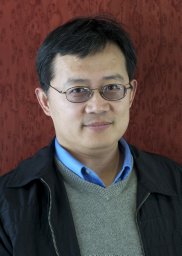 Zhong Wang合作论文数Joint Genome Inst, Dept Energy, Walnut Creek, CA 94598 USA15
 Steven Hofmeyr合作论文数Future Technologies Group, Lawrence Berkeley National Laboratory14
 Leonid Oliker合作论文数Computational Research Division, Lawrence Berkeley National Laboratory13
 Katherine Yelick合作论文数Department of Electrical Engineering and Computer Sciences, University of California, Berkeley;Lawrence Berkeley National Laboratory12
 Aydin Buluç合作论文数NVIDIA;Lawrence Berkeley National Laboratory;Electrical Engineering and Computer Sciences Department, University of California, Berkeley11
 Evangelos Georganas合作论文数Intel Labs, Parallel Computing Lab9
 Dongwan Don Kang合作论文数Gilead Sciences6
 Harrison Ho合作论文数4Froula Jeff L合作论文数4
 Emiley Eloe-Fadrosh合作论文数DOE Joint Genome Institute;Lawrence Berkeley National Laboratory4
 Robert Riley合作论文数Hôpital Raymond Poincarré4
 Marquita Ellis合作论文数University of California, Berkeley3Brian Foster合作论文数DOE Joint Genome Institute,Walnut Creek,USA3
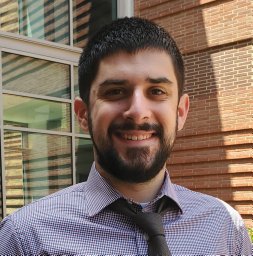 Nathan LaPierre合作论文数Univ Calif Los Angeles, Dept Comp Sci, Los Angeles, CA 90024 USA3
 Muaaz Gul Awan合作论文数Natl Energy Res Sci Comp Ctr, Lawrence Berkeley Natl Lab3
 Tanja Woyke合作论文数Joint Genome Institute, Lawrence Berkeley National Laboratory;School of Natural Sciences, University of California Merced3
 Alexander Sczyrba合作论文数Universität Bielefeld
Technische Fakultät
AG Praktische Informatik3
Alexander Sczyrba合作论文数Universität Bielefeld
Technische Fakultät
AG Praktische Informatik3 Len Pennacchio合作论文数DOE Joint Genome Institute, Lawrence Berkeley National Laboratory;Pennacchio Vineyard3
 Susannah Tringe合作论文数Environmental Genomics and Systems Biology Division, Lawrence Berkeley National Laboratory;DOE Joint Genome Institute3
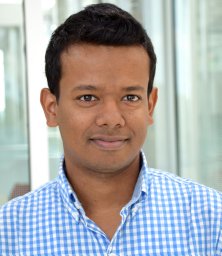 Ariful Azad合作论文数Luddy School of Informatics, Computing, and Engineering, Indiana University3Eugene Goltsman合作论文数3
 Katherine D. McMahon合作论文数Department of Bacteriology, University of Wisconsin-Madison2
 Lizhen Shi合作论文数Florida State Univ, Dept Comp Sci, Tallahassee, FL 32306 USA2Leong-Keat Chan合作论文数DOE Joint Genome Inst, Walnut Creek, CA USA2
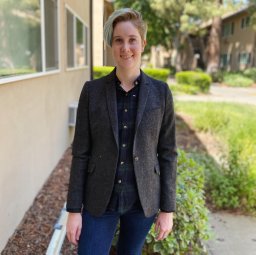 Ashleigh Thomas合作论文数Dept Energy, Joint Genome Inst2
 James B Brown合作论文数Environm Genom & Syst Biol Div, Lawrence Berkeley Natl Lab2
 Giulia Guidi合作论文数Department of Information Engineering, University of Florence2
 Samuel E Barnett合作论文数Cornell Univ, Sch Integrat Plant Sci, Ithaca, NY 14850 USA2
 Roderick I. Mackie合作论文数Animal Sciences Laboratory, College of Agricultural, Consumer and Environmental Sciences, University of Illinois at Urbana-Champaign2
 Matthias Hess合作论文数2Brandon G. Cook合作论文数Lawrence Berkeley Natl Lab2
 Douglas Clark合作论文数Department of Chemical and Biomolecular Engineering, College of Chemistry, University of California, Berkeley;Molecular Biophysics and Integrated Bioimaging Division, Lawrence Berkeley National Laboratory2Alex Copeland合作论文数DOE Joint Genome Institute2
 Wei Wang (王薇)合作论文数Department of Computer Science, University of California at Los Angeles;Department of Computational Medicine, University of California at Los Angeles;Scalable Analytics Institute, University of California at Los Angeles2Feng Chen合作论文数2
 Gary P Schroth合作论文数Cellanome2
 Rachael M. Morgan-Kiss合作论文数Department of Microbiology, Miami University2
 R. Oguz Selvitopi合作论文数Computer Engineering Department, Bilkent University2Alicia Clum合作论文数DOE Joint Genome Institute2
 Simon Roux合作论文数DOE Joint Genome Institute, Lawrence Berkeley National Laboratory2Rex R. Malmstrom合作论文数US DOE, Joint Genome Inst2
 Harshal A. Chokhawala合作论文数University of California Department of Chemistry2
 Axel Visel合作论文数Joint Genome Institute;School of Natural Sciences, University of California, Merced;Environmental Genomics and Systems Biology Division, Lawrence Berkeley National Laboratory2Weimin Wu合作论文数1Richard Coffey合作论文数1Phil Jones合作论文数1Rob Jacob合作论文数1Daniel Gunter合作论文数1Niri Govind合作论文数1




