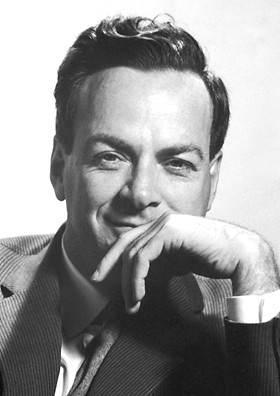
This new volume contains four previously unpublished lectures that Feynman gave to students preparing for exams. With characteristic flair, insight and humor, Feynman discusses topics students struggle with and offers valuable tips on solving physics problems. An illuminating memoir by Matthew Sands -- who originally conceived The Feynman Lectures on Physics -- gives a fascinating insight into the history of Feynman's lecture series and the books that followed. This book is rounded off by relevant exercises and answers by R. B. Leighton and R. E. Vogt, originally developed to accompany the Lectures on Physics.
No twentieth-century American scientist is better known to a wider spectrum of people than Richard P. Feynman (19181988)physicist, teacher, author, and cultural icon. His autobiographies and biographies have been read and enjoyed by millions of readers around the world, while his wit and eccentricities have made him the subject of TV specials and even a theatrical film. The spectacular reception of the book and audio versions of Feynmans Six Easy Pieces (published in 1995) resulted in a worldwide clamor for More Feynman! More Feynman! The outcome is these six additional lectures, drawn from the celebrated three-volume Lectures on Physics. Though slightly more challenging than the first six, these lectures are more focused, delving into the most revolutionary discovery in twentieth-century physics: Einsteins Theory of Relativity. No single breakthrough in twentieth-century physics (with the possible exception of quantum mechanics) changed our view of the world more than that of Einsteins discovery of relativity. The notions that the flow of time is not a constant, that the mass of an object depends on its velocity, and that the speed of light is a constant no matter what the motion of the observer, at first seemed shocking to scientists and laymen alike. But, as Feynman shows so clearly and so entertainingly in the lectures chosen for this volume, these crazy notions are no mere dry principles of physics, but are things of beauty and elegance. No onenot even Einstein himselfexplained these difficult, anti-intuitive concepts more clearly, or with more verve and gusto, than Richard Feynman.
Introduction by Paul Davies Atoms In Motion Introduction Matter Is Made From Atoms Atomic Processes Chemical Reactions Basic Physics Introduction Physics Before Quantum Physics Nuclei and Particles The Relation Of Physics To Other Sciences Introduction Chemistry Biology Astronomy Geology Psychology How Did It Get That Way? Conservation Of Energy What Is Energy? Gravitational Potential Energy Kinetic Energy Other Forms of Energy The Theory Of Gravitation Planetary Motions Keplers Laws Development of Dynamics Newtons Law of Gravitation Universal Gravitation Cavendishs Experiment What Is Gravity? Gravity and Relativity Quantum Behavior Atomic Mechanics An Experiment with Bullets An Experiment with Waves An Experiment with Electrons The Interface of Electron Waves Watching the Electrons First Principles of Quantum Mechanics The Uncertainty Principle.