This document contains a roadmap to the Request for Comments (RFC) documents relating to the Internet's Transmission Control Protocol (TCP). This roadmap provides a brief summary of the documents defining TCP and various TCP extensions that have accumulated in the RFC series. This serves as a guide and quick reference for both TCP implementers and other parties who desire information contained in the TCP-related RFCs. This document obsoletes RFC 4614.
The University of Illinois at Urbana Champaign (Illinois), Pacific Northwest National Labs (PNNL), and the University of Southern California Information Sciences Institute (USC-ISI) consortium is working toward providing tools and expertise to enable collaborative research to improve security and resiliency of cyber physical systems. In this extended abstract we discuss the challenges and the solution space. We demonstrate the feasibility of some of the proposed components through a wide-area situational awareness experiment for the power grid across the three sites.
This extended abstract reports on steps towards an environment for repeatable and scalable experiments on wide-area cyber-physical systems. The cyber-physical systems that underlie the world's critical infrastructure are increasingly vulnerable to attack and failure. Our work has focused on secure and resilient communication technology for the electric power grid, a subset of the general cyber-physical problem. We have demonstrated tools and methodology for experimentation with GridStat, a middleware system designed to provide enhanced communication service for the grid, within the DETERlab cyber-security testbed. Experiment design tools for DETERlab and for GridStat will ease the creation and execution of relatively large experiments, and they should make this environment accessible to users inexperienced with cluster testbeds. This abstract presents brief overviews of DETERLab and of GridStat and describes their integration. It also describes a large scale GridStat/DETERlab experiment.
The decade between 1955 and 1965 brought a revolution to academic computing, both technologically and socially. As core memory replaced electrostatic memory while transistors replaced vacuum tubes, computers advanced from flakey and difficult-to-maintain devices to reliable appliances. At the same time (and partially as a consequence), the academic use of computing expanded rapidly, computing centers became increasingly essential facilities on every campus, and computer science began to gain acceptance as a legitimate academic discipline. This Anecdote recounts the author's experience during this dramatic shift in academic computing at Stanford University during the period between 1960 and 1963. It also records a chapter in the early development of compiler design and programming technology.
Since 2004, the DETER Cybersecurity Testbed Project has worked to create the necessary infrastructure — facilities, tools, and processes-to provide a national resource for experimentation in cyber security. The next generation of DETER envisions several conceptual advances in testbed design and experimental research methodology, targeting improved experimental validity, enhanced usability, and increased size, complexity, and diversity of experiments. This paper outlines the DETER project's status and current R&D directions.
A major class of network emulation testbeds is based on the Utah Emulab design: a local cluster of experimental nodes interconnected through Ethernet switches using VLANs. The VLANs are configured dynamically to create multiple concurrent experimental topologies. This cluster architecture allows deterministic testbed operation and therefore repeatable experiments. This paper explores the inter-experiment isolation problem for such testbeds, and in particular how to make the isolation robust against attacks when the testbed is designed to support the most dangerous cyber security experiments.
Deborah Estrin Computer Science Dept. University of Southern California estrin@usc.edu (213)740-4524 (213)740-7285 (fax) My research interest is quality of service support in LARGE high speed networks, in particular: routing, interaction of routing and resource reservation/management, user incentives/charging model, and simulation techniques, all for very large internetworks. Each of these is described, briefly, below. Several of the papers listed provide more detailed discussions. 1. The increasing speed of underlying transmission media is enabling new, and perhaps more importantly, integrated applications. However, because of the size and decentralized nature of the global internet, we cannot assume that the network will be homogeneously capable of all new services. Therefore, routing must identify routes with specific type-of-service (TOS) capabilities. Moreover, we suggest that TOS-routing for performance-sensitive applications (e.g., real-time video-conference, real-time interaction with high-bandwidth sensor or experimental data) should be sensitive to significant load changes, as well as to topology changes. At the same time, global scale means that we must minimize reliance on global consistency of routing databases and global distribution of dynamic routing information. As a basis for supporting application-specific routing we propose the use of source routing and a limited distribution mechanisms called Reverse Path Update. Source routing allows a wide range of routes to be used in the network without burdening intermediate nodes with agreement on, or precomputation of, all possible routing choices. Source routing also allows us to route without loops even in cases where different network nodes may maintain different (inconsistent) routing databases and criteria. We are exploring a technique called Reverse Path Update (RPU). RPU supports real time requirements, while reducing routing overhead by exploiting locality. It achieves this by distributing status and dynamic-load information only along ‘‘active routes’’. In other words, when an inter-domain connection experiences a change in state (i.e., fails, resumes service, passes a load-threshold), the domain that detects the change distributes the information only to the sources of routes that currently pass through the domain. This does not mean that information is distributed only to sources that pass through the affected physical router; in order to exploit route locality, information is distributed to active routes that pass through any of the border routers belonging to that same domain. The load information distributed indicates long-term load as opposed to short-lived fluctuations. We have documented preliminary results from simulation (see paper below), but many more research questions remain unaddressed, in particular, selection algorithms, load measures, and interaction with resource reservation and flow control mechanisms. (Joint work with L. Breslau (PhD student) and L. Zhang (Xerox)) 2. To support real-time traffic across a heterogeneous internet, resource management and routing must interact in a complementary manner. An obvious example is that stated above: if a particular flow can not be accommodated along a particular path due to insufficient resources (i.e. excessive traffic) then it may be desirable to provide an alternative route. Another routing issue is multicast. We must adapt current IP multicast approaches to interact with resourcereservation mechanism (i.e., what happens when part of a multicast tree does not have sufficient resources to provide the service guarantees required by a flow), and to scale more efficiently (i.e., allow senders to install/define small multicast groups/routes on demand when the entire group is known and is very small compared to the global internet). Beyond the problem of identifying a usable route, is the interaction between resource reservation/management techniques and adaptive routing. Some networks may require explicit flow setup and resource reservation to precede data transmission, and may install flow or flowtype specific state to provide service guarantees. Other networks, ALONG THE SAME sourcedestination path, may be very resource rich with respect to individual flows and may not require flow-specific setup or state. We need an internet protocol that allows individual networks along a path to make independent service guarantees in the presence of diverse network resources,
The DETER testbed provides infrastructure for conducting medium-scale repeatable experiments in computer security, especially experiments that involve malicious code. Built using Utah's EMULAB, the DETER testbed has been configured and extended to provide stronger assurances for isolation and containment. This paper provides information on the capabilities of the DETER testbed and discusses the lessons learned from its deployment. Our strategies for containment are described and future plans discussed.
Current routing services for sensor networks are often designed for specific applications and network conditions, thus have difficulty in adapting to application and network dynamics. This paper proposes an autonomic framework to promote the adaptivity of routing services in sensor networks. The key idea of this framework is to maintain some feature functions that are decoupled from originally-integrated routing services. This separation enables significant service changes to be done by only tuning these functions. Measures including parameterization are taken to save the energy for changing these functions. Further, this framework includes a monitoring module to support a policy-based collaborative adaptation. This paper shows an example autonomic routing service conforming to this framework.
The DETER testbed is shared infrastructure designed for medium-scale repeatable experiments in computer security, especially those experiments that involve malicious code. The testbed provides unique resources and a focus of activity for an open community of academic, industry, and government researchers working toward better defenses against malicious attacks on our networking infrastructure, especially critical infrastructure. This paper presents our experience with the deployment and operation of the testbed, highlights some of the research conducted on the testbed, and discusses our plans for continued development, expansion, and replication of the testbed facility.
The architecture of the Internet is based on a number of principles, including the self-describing datagram packet, the end to end arguments, diversity in technology and global addressing. As the Internet has moved from a research curiosity to a recognized component of mainstream society, new requirements have emerged that suggest new design principles, and perhaps suggest that we revisit some old ones. This paper explores one important reality that surrounds the Internet today: different stakeholders that are part of the Internet milieu have interests that may be adverse to each other, and these parties each vie to favor their particular interests. We call this process "the tussle". Our position is that accommodating this tussle is crucial to the evolution of the network's technical architecture. We discuss some examples of tussle, and offer some technical design principles that take it into account.
Questioning whether layering is still an adequate foundation for networking architectures, this paper investigates non-layered approaches to the design and implementation of network protocols. The goals are greater flexibility and control with fewer feature interaction problems. The paper further proposes a specific non-layered paradigm called role-based architecture .
sloppy This paper describes FARA, a new organization of, network architecture concepts. FARA (Forwarding directive, Association, and Rendezvous Architecture) defines an abstract model with considerable generality and flexibility, based upon the decoupling of end-system names from network addresses. The paper explores the implications of FARA and the range of architecture instantiations that may be derived from FARA . As an illustration, the paper outlines a particular derived architecture, M-FARA, which features support for generalized mobility and multiple realms of network addressing.
This document describes the design of the FARADs prototype in detail. The objective of the prototype was two fold. The first objective was to give a form to the ideas presented in original FARADs architecture document by David Clark [Cla02], and build a platform for experimentation. The second objective was to verify that we indeed get the flexibility and extensibility that was claimed as a benefit of the design. We made several design decisions while instantiating the various components of the architecture primarily due to feasibility and time constraints. We discuss the design in detail, and identify potential future work. The appendix contains the FARADS Programmer’s Manual that discusses the various interfaces, and data structures in more detail.
This paper describes approaches in Active Dynamic Source Routing (ADSR) to improve TCP performance for mobile ad hoc networks. ADSR uses active packets that roam around a network to collect state information about source routes and queue-length. With collected source routes, mobile nodes are able to update their stale routes before TCP packets attempt to use them, thus reducing unnecessary retransmissions. With queue-length information, ADSR identifies potential congested nodes and computes alternate routes to circumvent those nodes. Extensive simulations show that ADSR significantly improves TCP throughput under both non-congestion and congestion conditions.
This paper describes the ASP Execution Environment (EE), a prototype general-purpose active network execution environment that initiates and controls the execution of Java-based active applications.Features of the ASP EE include support for persistent active applications, fine-grained network I/O control, security, resource protection, and timing services.
This paper explores the requirements for a network testbed designed specifically to support research in active networking. It also describes the design of the wide-area active networks testbed named the ABone. The ABone provides a virtual and real network infrastructure for active network experiments, using a diverse set of OS platforms. Its design embodies a trade off among the testbed goals of scalability, availability, security, heterogeneity, and modularity.
This memo resolves a duplication in the assignment of RSVP Message Types, by changing the Message Types assigned by RFC 2747 to Challenge and Integrity Response messages.
: RSVP, a setup protocol to create flow specific reservation state in routers and hosts, is a component of the QoS extensions to the Internet architecture known as Integrated Services. RSVP was designed to provide robust, efficient, flexible, and extensible reservation service for multicast and unicast data flows. This report provides an overview of the development of RSVP, including an analysis of the key design decisions for the protocol as the protocol has evolved.
 Lixia Zhang合作论文数Computer Science Department, University of California, Los Angeles12
 S Berson合作论文数10Sugih Jamin合作论文数CSE Division, Department of Electrical Engineering and Computer Science, University of Michigan7S Herzog合作论文数6
 Terry Benzel合作论文数Networking Cybersecurity Research Division, Information Sciences Institute, University of Southern California5Steven Berson合作论文数5
 David Clark合作论文数Computer Science and Artificial Intelligence Laboratory, Schwarzman College of Computing, Massachusetts Institute of Technology5
 John Wroclawski合作论文数University of Southern California5Shai Herzog合作论文数4Ted Faber合作论文数4
 Deborah Estrin合作论文数Cornell Tech, Cornell University;Weill Cornell Medical College, Cornell University3Keith Sklower合作论文数Computer Science Division, University of California, Berkeley3Venkata K. Pingali合作论文数USC Information Sciences Institute, Marina del Rey, CA3
 Aaron Falk合作论文数BBN Technologies3Theodore Faber合作论文数2P Ford合作论文数2Y. Bernet合作论文数2David A. Borman合作论文数2
 Dongho Kim合作论文数Dongguk Inst Convergence Educ, Dongguk Univ2
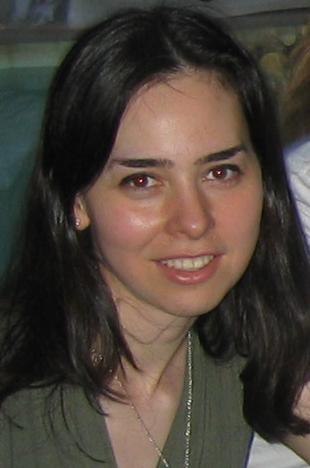 Dina Katabi合作论文数Computer Science & Artificial Intelligence Lab, Massachusetts Institute of Technology;Emerald Innovations, Inc.2
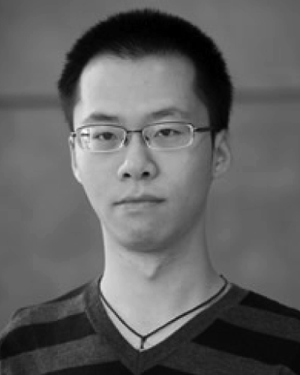 Yu He合作论文数Purdue University2
 Van Jacobson合作论文数University of California, Los Angeles2F. Baker合作论文数2
 Mark Handley合作论文数Department of Computer Science, University College London;OpenAI2
 Scott Shenker合作论文数International Computer Science Institute, University of California, Berkeley;Division of Computer Science, University of California, Berkeley2
 Stephen Schwab合作论文数SPARTA, Inc.2Jeff Kann合作论文数2
 Karen Sollins合作论文数2M. Speer合作论文数2Ron Ostrenga合作论文数1KR Sollins合作论文数1a g fraser合作论文数1Kevin Lahey合作论文数1El Hahne合作论文数1Cr Kalmanek合作论文数1Joanna Kulik合作论文数1R Yavatkar合作论文数1noel j chiappa合作论文数1
 Elwalid, A.I.合作论文数1Laura Tinnel合作论文数1
 Ryan Goodfellow合作论文数1Thomas Edgar合作论文数Pacific Northwest National Laboratory (PNNL),1
 Xiaowei Yang合作论文数Department of Computer Science, Trinity College of Arts & Sciences, Duke University1J. Reynolds合作论文数1L. Zhang合作论文数1
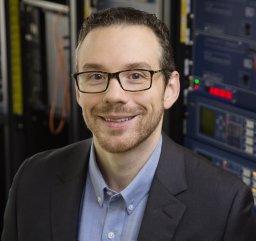 Tim Yardley合作论文数1
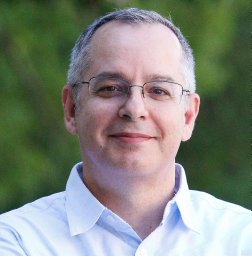 Daniel Zappala合作论文数Department of Computer Science, University of Oregon1
 David G. Messerschmitt合作论文数Dept. of Electrical Engineering and Computer Sciences, University of California at Berkeley1
 William H. Sanders合作论文数Department of Electrical and Computer Engineering, College of Engineering, Carnegie Mellon University;Discovery Partners Institute, University of Illinois System;Department of Electrical and Computer Engineering, University of Illinois Urbana-Champaign;Advanced Digital Sciences Center, University of Illinois Urbana-Champaign;Information Trust Institute, University of Illinois Urbana-Champaign;Coordinated Science Laboratory, University of Illinois Urbana-Champaign;Department of Computer Science, University of Illinois Urbana-Champaign1




