2014 The microstructure of (001) YBa2CU3O7-03B4 and YBa2Cu3-xMxO7-03B4 (M = Zn or Fe) thin films grown by inverted cylindrical magnetron sputtering was investigated by means of electron microscopy. The imperfections present in the films are discussed. Special attention is paid to nanoscale Y2O3 inclusions. The density of [001] Y2O3 precipitates was studied in YBa2CU3-xZnxO7-03B4 and YBa2Cu3-xFexO7-03B4 thin films prepared under identical conditions. The density decreases for increasing Zn-content and is unaffected in case of Fe-substitution. Microsc. Microanal. Microstruct. ’ FEBRUARY 1996, PAGE 17
Resistive transitions of an epitaxial Bi2Sr2CaCu2O8+delta thin film were measured in various magnetic fields (H parallel to c), ranging from 0 to 22.0 T. Rounded curvatures of low resistivity tas are observed in Arrhenius plot, and considered to relate to deviations from plastic barriers. In order to characterize these deviations, an empirical barrier form is developed, which is found to be in good agreement with experimental data and coincide with the plastic barrier form in a limited magnetic field range. Using the plastic barrier predictions and the empirical barrier form, we successfully explain the observed deviations.
By using different times of sputtering and different value of partial pressure of oxygen in sputtering gas, Bi2.1Sr1.9CuOy thin films (Bi:2201) were deposited onto heated single crystal (100) MgO substrates. The temperature dependence of the in-plane resistivity measured on epitaxial c-axis thin films is strongly influenced by the thin films synthesis conditions. Electrical resistivity changes strongly from optimal doping superconducting state to underdoped insulator state with decreasing partial pressure in sputtering gas. The increase of electrical resistance near superconducting transition were analyzed by using some theoretical models.
Irreversibility lines and magnetic relaxation of MgB2 are studied. The large separation between irreversibility line and upper critical magnetic field for T→0 is explained by quantum fluctuations of vortices. Theoretical fits are in good agreement with experimental data. Magnetic relaxation rates of MgB2 are studied. A quantum correction of the relaxation rate is proposed, leading to a simple evaluation of the energy barrier: U0(T,H)∼Uth(T)UH(H)∝(1−T/Tc)α(μ0H)β with α∼1.5 and β∼−2.0.
Bi2.1Sr1.9CuOy thin films (Bi:2201) were deposited onto heated single crystal (100) MgO substrates using inverted cylindrical DC magnetron sputtering with different partial pressures of oxygen in a sputtering gas. The behavior of the normal state resistivity function of temperature is strongly influenced by the composition of sputtering gas used in thin films synthesis. Near the transition to the superconducting state, electrical resistivity changes strongly from "metallic" to insulator (MI). The origin for the increase of electrical resistance was analyzed using some models for the localization of mobile carriers. A good linearity is obtained for ln R as a function of Tα for α = 1/10 and for R as a function of ln T. The last behavior agrees with the pinning and fragmentation of 1D stripes in CuO2 planes.
Magnetic relaxation in a MgB2 superconductor was measured. The temperature dependence of the normalized relaxation rate was determined for three different magnetic fields. By extrapolating these rates to T=0 K, we find that these extrapolations do not approach zero, indicating quantum tunneling of vortices in the superconductor. A quantum correction of the relaxation rate, followed by the correction of the magnetic moment, is proposed. Using the quantum correction, we find that U0 increases with decreasing temperature and approaches a maximum at T=0.
We report on the influence of a strong transverse magnetic field on the current oscillations in semi-insulating GaAs to which a high DC voltage is applied. The oscillations are caused by travelling high-electric-field domains and axe periodic at, zero field. With increasing field they become quasiperiodic, then periodic again, and finally chaotic. This is demonstrated by means of their power spectrum, phase portrait, and the dimension of their attractor. Optical experiments reveal that the lifetime of the high-field domains decreases with increasing magnetic field, which allows us to explain the observed results.
The scaling behavior of the effective activation energy of high-quality epitaxial c-oriented YBa 2( Cu 1-x Zn x)3 O 7-d thin films has been studied as a function of temperature and magnetic field. For all samples, the effective activation energy scales as U(T, μ0H) = U0(1 - T/T c )mHn with exponent m = 1.6 ± 0.02 - 1.3 ± 0.02 and the field scaling 1/μ0H and - ln μ0H for thick films and ultrathin films, respectively. The results are discussed taking account of the influence of the Zn substitution on the flux pinning in epitaxial YBa 2( Cu 1-x Zn x)3 O 7-d thin films.
A Reply to the Comment by L. Miu.Received 6 April 2001DOI:https://doi.org/10.1103/PhysRevLett.87.209704©2001 American Physical Society
The underdoped YBa 2 ( Cu 0.96 Fe 0.04)3 O y superconducting system has been prepared and investigated. The effect of oxygen content and the thermal treatment (fast quenching of underdoped samples from 250 K to 4.5 K) on the electrical resistance were studied. The semiconductor behaviour of electrical resistance after the fast quenching of the samples agree with a model for the stripe formation in Cu(2)O 2 plane. The presence of two resistive transitions (T c 1=18 K and T c2 =36 K ) were evidenced for y=6.75 sample. The disappearance of the low transition after the thermal treatment were analysed in relation with the role of Fe clusters on the order of apical oxygen. The decrease of T c by increasing oxygen deficiency was attributed to the fragmentation and stripe pinning in Cu(2)O 2 planes as a result of the disorder produced by the Fe clusters in Cu(1)O chains.
Magneto-resistivity of a c-axis oriented MgB$_{2}$ thin film was studied in perpendicular and parallel magnetic fields up to $\sim $23 T with temperatures down to 0.38 K. Resistive critical magnetic fields were determined. Large separations between irreversibility lines and upper critical magnetic fields are observed. An effective quantum parameter as a function of temperature is proposed to explain the separations under the theoretical framework of quantum fluctuations, in good agreement with our experimental and previously published experimental data.
Measurements of the ac susceptibility, magnetoresistivity, Seebeck, Nernst, and Hall coefficients in Ni doped (Bi,Pb)2223 superconductors, in magnetic fields between 0 and 5 T, and in the temperature range 5–300 K, are reported. The critical temperatures, the Hall, Nernst and Seebeck coefficients depend strongly on the nickel content. In the mixed state and fluctuation regime these can be explained by Ginsburg - Landau theory. The deviation from linear dependence of μH−1 = f(T2), nH(T) normal sate can be interpreted in the percolative phase separation theory, and S(T) dependence in the frame of the asymmetric narrow-band theory.
The intergranular properties of (Bi1.6Pb0.4)(Sr1.8Ba0.2)(Ca1-xErx)2Cu3Oy ceramics, with x = 0.00; 0.002; 0.005; 0.010; 0.015; 0.020, were studied by using electrical resistivity and ac susceptibility measurements at zero dc magnetic field. The intergranular critical current density was determined from ac susceptibility data by varying the field amplitude Hac in the range from 0.1 Oe to 20 Oe. The results were discussed in terms of SIS-and SNS-type models for granular superconductors. The analysis of the temperature dependencies of the intergranular current densities suggests that the superconducting grains are connected by normal metal interfaces.
Resistive transitions and I–V isotherms of a Bi2Sr2-xLaxCuO6+δ thin film have been measured in magnetic fields up to 5 T. A resistive transition showing a sharp jump to a very small value at a well defined temperature, Tc0(H), is observed. Using a Coulomb-gas (CG) model, we find that Tc0(H) can be considered as characterising a Kosterlitz-Thouless transition temperature, allowing all the resistive tails in different magnetic fields to fall onto a universal transition curve; besides, the scaling process also allows all the α(T, H) curves to fall onto a single α(T, H) scaling curve. These results suggest that Tc0(H) is related to the CG transition temperature above which the CG particles begin to be produced by the thermal unbinding of the vortex couplings.
 Gh Ilonca合作论文数33Mohammad Mehbod合作论文数32Peter Wyder合作论文数29Min Ye合作论文数27Av Pop合作论文数26A.G.M. Jansen合作论文数20Jeannot Schroeder合作论文数19
 Jean-Francois de Marneffe合作论文数14Yz Zhang合作论文数13
 Zhongxian Zhao (赵忠贤)合作论文数Institute of Physics, Chinese Academy of Sciences12Guy Gusman合作论文数11
 Eric Vanlathem合作论文数11
 Hai-Hu Wen (闻海虎)合作论文数Center for Superconducting Physics and Materials, Nanjing University;School of Physics, Nanjing University10Paul-Henri Duvigneaud合作论文数10
 Decebal-Radu Ciurchea合作论文数Faculty of Physics, Babeş-Bolyai University10Paulhenri Duvigneaud合作论文数9Teodor Jurcut合作论文数9Andrei Harabor合作论文数Faculty of Physics, University of Craiova8
 Yueling Qin合作论文数Data Storage Systems Center;Department of Materials Science and Engineering;Carnegie Mellon University;Data Storage Systems Center, Carnegie Mellon University7H. Hancotte合作论文数7alain lanckbeen合作论文数7georges naessens合作论文数6mohammad mehbod合作论文数6Robert Jérôme合作论文数University of Liège6Alain Lanckbeen合作论文数6Dmitri N Davydov合作论文数6
 Frederic Gubbels合作论文数6Claudiu Lung合作论文数Faculty of Physics, Babes-Bolyai University6
 Quivy Alain a合作论文数Laboratório de Novos Materiais Semicondutores, Instituto de Fı́sica da Universidade de São Paulo6
 G. Van Tendeloo合作论文数EMAT, University of Antwerp (RUCA), Groenenborgerlaan 171, B-2020 Antwerp, Belgium5
 Pavel Diko合作论文数Institute of Experimental Physics, Slovak Academy of Sciences5
 V. E. Gasumyants合作论文数St. Petersburg State Polytechnical University5C. Corega合作论文数5
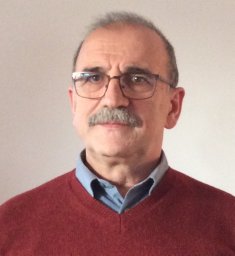 V. Pop合作论文数Fac Phys, Babes Bolyai Univ4Rene Winand合作论文数4
 Francois Brouers合作论文数Institut de Physique, Sart Tilman, Liege 4000, Belgium4Francis Masin合作论文数4
 Iosif G. Deac合作论文数Faculty of Physics, Babes-Bolyai University4Yin-Zi Zhang合作论文数4K Verbist合作论文数4M. Ilonca合作论文数4P. Diko合作论文数3M. Thielemans合作论文数3g tarta合作论文数3Hj Tao合作论文数3
 Diana Benea合作论文数Faculty of Physics, Babes-Bolyai University3Philippe Teyssié合作论文数Universite de Liege3
 Vito Leo合作论文数Faculté des Sciences (C.P. 233), Université Libre de Bruxelles3Marc Audenaert合作论文数3




