Objective: We present a case of using automated algorithms to analyze central-positive complexes (CPCs) and postictal generalized electroencephalographic suppression (PGES) in the context of ECT-induced seizures. Our goal is to characterize peri-ictal EEG changes in ECT-induced seizures to define their unique features as generalized seizures. Background: Generalized seizures induced by electroconvulsive therapy (ECT) have been proposed as a model to study epileptic seizures in humans. We recently described generalized, high-amplitude waveforms with maximum positive voltage over the vertex (CPCs) during ECT-induced seizures. Furthermore, we developed an automated algorithm for detecting postictal PGES, defined as electroencephalographic (EEG) activity of ≤10 mV following a generalized seizure. Design/Methods: This investigation is a secondary analysis of data collected from Reconstructing Consciousness and Cognition Phase 2 study (ClinicalTrials.gov NCT02761330). A 53-year-old female with a diagnosis of major depressive disorder underwent 5 sessions of right unilateral ECT during concurrent 64-channel EEG recordings. Quantitative EEG analysis allowed for assessment of spatiotemporal properties and spectral content during the peri-ictal period. CPC and PGES durations, quantified by automated algorithms, were compared to those derived through visual interpretation by expert epileptologists. Results: CPCs occurred during Phase III of all recorded seizures, with a median duration of 41 seconds. CPC evolved from 4.1 to 3.2 Hz as the seizures progressed. Peak-amplitude CPC scalp topology was consistent across patient's seizures, showing maximal positive polarity over the vertex and surrounding regions and maximal negative polarity over the subocular electrodes. PGES duration lasted 5–45 seconds (median of 22 seconds) following the seizure and the median time to responsiveness after the seizure was 18.3 minutes. The findings using the automated algorithm were comparable to manual visual interpretation. Conclusions: This case presents the utility of automated algorithms to analyze CPCs and PGES characteristics, many of which were comparable to those evaluated through visual EEG interpretation. Disclosure: Dr. Nayak has nothing to disclose. Dr. Kafashan has nothing to disclose. Dr. Nascimento has received personal compensation in the range of $500-$4,999 for serving as a Consultant for Zogenix. The institution of Dr. Nascimento has received personal compensation in the range of $500-$4,999 for serving on a Scientific Advisory or Data Safety Monitoring board for Biocodex. Dr. Nascimento has received personal compensation in the range of $500-$4,999 for serving as an Editor, Associate Editor, or Editorial Advisory Board Member for AAN. The institution of Dr. Nascimento has received research support from Zogenix. The institution of Dr. Nascimento has received research support from Biocodex. The institution of Dr. Nascimento has received research support from Greenwich. Dr. Nascimento has received publishing royalties from a publication relating to health care. Dr. Nascimento has a non-compensated relationship as a Editorial Team Member with Neurology RFS that is relevant to AAN interests or activities. Dr. Nascimento has a non-compensated relationship as a Production Team with Neurology Podcast that is relevant to AAN interests or activities. The institution of Dr. Palanca has received research support from National Institutes of Health. The institution of Dr. Palanca has received research support from McDonnell Center for Systems Neuroscience. The institution of Dr. Palanca has received research support from American Federation for Suicide Prevention. Dr. Palanca has received intellectual property interests from a discovery or technology relating to health care. Dr. Palanca has received personal compensation in the range of $100,000-$499,999 for serving as a Employee with Washington University School of Medicine in St. Louis. Dr. Hogan has received personal compensation in the range of $500-$4,999 for serving as a Consultant for Neurelis. The institution of Dr. Hogan has received research support from Biogen Inc. The institution of Dr. Hogan has received research support from Engage Therapeutics. The institution of Dr. Hogan has received research support from Otsuka Pharmaceuticals. The institution of Dr. Hogan has received research support from Cerevel Therapeutics.
The Illusion of Accountability: Transparency and Representation in American Legislatures. By Justin H. Kirkland and Jeffrey J. Harden. Cambridge, UK: Cambridge University Press, 2022. 279p. $99.99 cloth. - Volume 21 Issue 2
In the United States (U.S.) wide differences exist in the environmental policies that individual states adopt. To better understand the reason for this variation I examine the conditions that shape the roll call voting behavior of state lawmakers on environmental policy proposals. I examine a variety of potential explanatory factors ranging from individual legislator characteristics (e.g., party, ideology and gender) and constituency-level conditions (e.g., citizen ideology, demographic characteristics and industry employment patterns) to indicators of campaign effort (business and pro-environment campaign contributions). Analyses of 22 states across four legislative sessions demonstrate support for many hypothesized effects. Similar to findings at the national level in the U.S. Congress, political party and ideology are identified as strong predictors of voting, but additional factors also have an influence. For example, the political leanings of district voters and activities of environmental interest groups have substantive effects on legislative voting patterns.
Objective: To assess the long term safety of diazepam after repeat intranasal doses of Valtoco™ (NRL-1, diazepam nasal spray), formulated with Intravail® A3, administered to patients with epilepsy who experience frequent breakthrough seizures or Acute Repetitive Seizures (ARS), over 12-months. Background: Valtoco is designed as an easy-to-use, non-invasive treatment by care-partners outside the medical setting for bouts of seizures. Design/Methods: In this repeat dose, open-label trial, Valtoco was administered as needed to treat bouts of diagnosed seizures over a 12-month period of time. Doses were defined as 5 mg, 10 mg, 15 mg, or 20 mg based on the subject’s age and body weight, and were modified by the investigators as needed. Patients diaries documented time and duration of seizures and outcome. Results: Of the 121 patients enrolled to date in this interim analysis, 109 patients (14 40 doses). A single dose was adequate for seizure control in 92% (1457) of seizure episodes. Overall, 67 out of 109 patients (61.5%) had at least one adverse event (AE). Nineteen patients (17.4%) had AEs that were considered treatment-related by the Investigator. The most frequent treatment-related events were nasal discomfort (7 patients, 6.4%), and epistaxis, headache (4 patients, 8.2%). Of the 67 patients experiencing AEs, 18 patients had 30 AEs that were considered serious, none of which was considered treatment-related by the Investigators. Conclusions: Overall, this study demonstrates that Valtoco is safe and well tolerated in subjects with epilepsy who have frequent breakthrough seizures. Relatively few of the reported AEs were treatment related, and these were generally mild or moderate in severity. No SAEs were attributable to Valtoco. Disclosure: Dr. Sperling has received personal compensation for consulting, serving on a scientific advisory board, speaking, or other activities with Medtronic. Dr. Sperling has received research support from Eisai, Medtronic, Neurelis, Pfizer, SK Life Science, Takeda, Sunovion, UCB Pharma and Upsher-Smith. Dr. Hogan has received personal compensation for consulting, serving on a scientific advisory board, speaking, or other activities with SK Chemical. Dr. Hogan has received research support from UCB Pharmaceuticals, Neurelis Pharnaceuticals, Biogen Inc. Dr. Biton has nothing to disclose. Dr. Tarquinio has received personal compensation for consulting, serving on a scientific advisory board, speaking, or other activities with Marinus and Avexis. Dr. Carrazana has received personal compensation for consulting, serving on a scientific advisory board, speaking, or other activities with Neurelis, Marinus, Zogenix, Praxis, Adamas, Ovid, Epalex, Aeromics, Alexza. Dr. Carrazana has received compensation for serving on the Board of Directors of Marinus Pharmaceuticals, Epalex. Dr. Novack has nothing to disclose.
May 7, 2019April 9, 2019Free AccessPharmacokinetic Study of Valtoco™ (NRL-1; diazepam nasal spray) in Patients with Epilepsy Under Ictal and Inter-ictal Conditions – Interim Report (P3.5-009)Robert Hogan, Michael Sperling, Pavel Klein, Eric Segal, and Enrique Carrazana DIAZ 001.04 Study GroupAuthors Info & AffiliationsApril 9, 2019 issue92 (15_supplement)https://doi.org/10.1212/WNL.92.15_supplement.P3.5-009 Letters to the Editor
Objective: Evaluate incidence of neurocognitive adverse events (AEs) with USL255 (Qudexy® XR [topiramate] extended-release capsules) in patients with refractory partial-onset seizures (POS). Background: Two phase 3 studies, PREVAIL (NCT01142193) and PREVAIL open-label extension (PREVAIL OLE; NCT01191086), demonstrated USL255 was well tolerated and efficacious as adjunctive treatment in patients with refractory POS. Topiramate may be associated with long-term neurocognitive-related AEs. Methods: In PREVAIL, adults with POS were randomized to placebo (n=125) or USL255 (n=124), titrated over 3 weeks (50 mg/week), and maintained at 200 mg/day for 8 weeks. During an initial 3-week blinded-conversion phase in the OLE, patients randomized to placebo or USL255 in PREVAIL were titrated to 200 mg/day USL255 (PBO-USL) or maintained treatment (USL-USL), respectively. OLE continued with a 52-week open-label treatment phase, ≤400 mg/day. Incidence of neurocognitive treatment-emergent AEs (TEAEs) were evaluated for the first 11 weeks of USL255 treatment in both studies and for the duration of the OLE. Results: Of the 217 patients who completed the 11-week PREVAIL treatment phase (USL255 n=103; placebo n=114), 96.8[percnt] entered PREVAIL OLE. OLE completion rate was 70[percnt], with 9.5[percnt] of discontinuations due to TEAEs and ≤1[percnt] due to individual neurocognitive TEAEs. During the first 11 weeks of both studies, overall incidence of neurocognitive TEAEs in patients newly-exposed to USL255 was 8.1[percnt] (PREVAIL n=99) and 9.9[percnt] (PREVAIL OLE n=111 [PBO-USL]). Incidence rates were relatively consistent as patients continued treatment, though slightly higher for patients newly exposed to USL255 in PREVAIL OLE (10.1[percnt] for PBO-USL [last 44 weeks] and 6.1[percnt] for USL-USL [55 weeks]). The overall incidence of individual neurocognitive TEAEs was low (<3[percnt], except aphasia [5.2[percnt]]). Conclusions: Results from PREVAIL and the 1-year PREVAIL OLE demonstrate a low incidence of individual neurocognitive AEs following treatment with USL255 in patients with refractory POS. Support: Upsher-Smith Laboratories, Inc. Disclosure: Dr. Blatt has received personal compensation for activities with Upsher-Smith Laboratories, Inc. Dr. Chung has received personal compensation for activities with UCB Pharma, Eisai, Lundbeck, and Sunovion. Dr. Lawson has received personal compensation for activities with Upsher-Smith Laboratories as a consultant Dr. Nguyen has received personal compensation for activities with Upsher-Smith Laboratories. Dr. Yu has received personal compensation for activities with Upsher-Smith Laboratories, Inc., as an employee. Dr. Holmay has received personal compensation for activities with Upsher-Smith Laboratories, Inc. as an employee. Dr. Halvorsen has received personal compensation for activities with Upsher-Smith Laboratories, Inc. as an employee. Dr. Hogan has received personal compensation for activities with Upsher-Smith pharmaceuticals as a consultant. Dr. Hogan has received research support from Eisai Pharmaceuticals and Upsher-Smith Pharmaceuticals.
Objective: Assess efficacy, by refractory status and age, of USL255 (Qudexy® XR [topiramate] extended-release capsules) as an adjunctive treatment in patients with refractory partial-onset seizures (POS). Background: Two phase 3 studies, PREVAIL (NCT01142193) and PREVAIL open-label extension (OLE; NCT01191086), demonstrated once-daily USL255 was well tolerated and efficacious in patients with POS. Methods: Patients who completed the 11-week double-blind treatment from PREVAIL (200 mg/day) were eligible to enroll in the OLE. The OLE consisted of 3-week blinded-conversion and 52-week open-label (OL) phases. Changes in USL255 dosage (50 mg/week; ≤400 mg/day) and concomitant AEDs were allowed after 11 weeks. Post hoc efficacy analyses included median percent reduction from PREVAIL baseline in weekly POS frequency and responder rate (percentage of patients with ≥50[percnt] reduction in POS frequency) analyzed by patient age and drug-resistant status (“highly” [patients with ≥2 concurrent and ≥4 lifetime AEDs] vs “less” [1 concurrent or <4 lifetime AEDs]). Results: Of the 210 patients enrolled, 70[percnt] completed the OLE. In all patients, median percent reduction in POS frequency and responder rate were 56[percnt] and 58[percnt], respectively, during the 55-week OLE (conversion + OL phase). Seizure reduction was observed regardless of drug-resistance status. For highly (n=95) and less (n=115) drug-resistant subgroups, median percent reductions in weekly POS frequency were 48[percnt] and 65[percnt], respectively; responder rates were 48[percnt] and 66[percnt]. Efficacy rates were similar across all ages. Median percent reduction in weekly POS frequency for the 18-<35 years (n=94), 35-<50 years (n=84), and ≥50 years (n=31) subgroups were 64[percnt], 53[percnt], and 52[percnt], respectively; responder rates were 62[percnt], 56[percnt], and 52[percnt]. Conclusions: In this 1-year OLE, ≤400 mg USL255 was an effective adjunctive therapy for refractory POS patients of various ages and drug-resistant status, demonstrating that USL255 is a valuable treatment option for a variety of patients with epilepsy.Support: Upsher-Smith Laboratories, Inc. Disclosure: Dr. Hogan has received personal compensation for activities with Upsher-Smith pharmaceuticals as a consultant. Dr. Hogan has received research support from Eisai Pharmaceuticals and Upsher-Smith Pharmaceuticals. Dr. Blatt has received personal compensation for activities with Upsher-Smith Laboratories, Inc. Dr. Holmay has received personal compensation for activities with Upsher-Smith Laboratories, Inc. as an employee. Dr. Nguyen has received personal compensation for activities with Upsher-Smith Laboratories. Dr. Yu has received personal compensation for activities with Upsher-Smith Laboratories, Inc., as an employee. Dr. Halvorsen has received personal compensation for activities with Upsher-Smith Laboratories, Inc. as an employee. Dr. Chung has received personal compensation for activities with UCB Pharma, Eisai, Lundbeck, and Sunovion.
ObjectiveDo incumbent state legislators who introduce many bills or have high passage rates for their proposals receive an electoral benefit for these efforts? If so, where is such an electoral advantage manifested? Is it a direct effect whereby voters are more likely to recognize and reward a legislator's productivity? Or is the effect more indirect whereby potential candidates are less likely to challenge an active incumbent?MethodsThese questions are addressed in an analysis of legislative elections in 18 states over two election cycles.ResultsWithin the low‐information environment of state legislative elections, there is evidence of both direct and indirect effects of lawmaking activities. Higher rates of bill passage decrease the likelihood that incumbents are challenged in primaries. Bill passage also reduces the likelihood they face well‐financed opponents in the general election. Incumbents who introduce more legislation ultimately receive larger vote shares in general elections.ConclusionsIntroducing and passing legislation can enhance an incumbent's prospects for reelection.
 Ilan Blatt合作论文数9Halvorsen Mark B合作论文数9Holmay Mary合作论文数8Steve Chung合作论文数8Vincent Yu合作论文数7Huy Nguyen合作论文数7
 Bob Anders合作论文数6Enrique Carrazana合作论文数5keith e hamm合作论文数5
 Michael R. Sperling合作论文数Department of Neurology, Sidney Kimmel Medical College, Thomas Jefferson University;Jefferson Comprehensive Epilepsy Center, Thomas Jefferson University Hospital;Clinical Neurophysiology Laboratory, Thomas Jefferson University Hospital5Clark Annie M合作论文数4
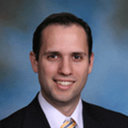 Eric Segal合作论文数3
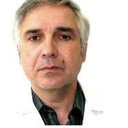 Balduin Lawson合作论文数3
 Tarquinio Daniel C合作论文数3Victor Biton合作论文数Clinical Trials, Inc.3Pavel Klein合作论文数2Frank G Gilliam合作论文数2
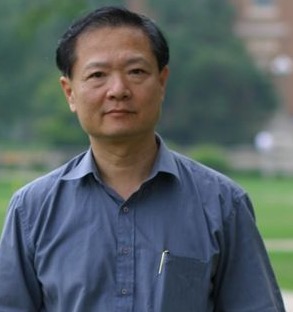 Shao-Shiun Steve Chung (莊紹勳)合作论文数Department of Electronics Engineering, National Yang Ming Chiao Tung University;UMC, National Chiao Tung University2Stephan Arnold合作论文数2Toufic Fakhoury合作论文数2Weldon Mauney合作论文数1Fabio Nascimento e Silvan合作论文数1Mileah Kromer合作论文数1Adrian L Rabinowicz合作论文数1Dennis J. Dlugos合作论文数Department of Neurology, Perelman School of Medicine, University of Pennsylvania1
 James W. Wheless合作论文数Division of Peds Neurology, Department of Pediatrics, College of Medicine, University of Tennessee Health Science Center1
 Mohammadmehdi Kafashan合作论文数1Nagaraddi Venkatesh合作论文数1
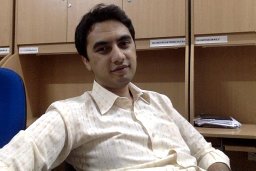 Chetan Sateesh Nayak合作论文数Department of Neurology, National Institute of Mental Health and Neurosciences (NIMHANS),1
 Kimford Meador合作论文数Department of Neurology & Neurological Sciences, School of Medicine, Stanford University1
 Gregory D. Cascino合作论文数Department of Neurology, Mayo Clinic1Jay Desai合作论文数1
 Ben Julian Agustin Palanca合作论文数Sleepy Brain Lab, Department of Anesthesiology, School of Medicine, Washington University1Rhonda L. Wrzenski合作论文数1
 Kore Liow合作论文数1




