Compelling evidence supports the tendencies of people to describe their sensory experiences to themselves at the time they occur, and then, later, to remember those descriptions rather than the experiences themselves. The suffix effect was thought to reflect the fact that subsequent auditory input could mask the contents of this store, leaving peformance more or less what it would have been without the auditory information in the first place. The speech group of subjects was told that these were degraded versions of a female speaking the first four digits, and given practice until they could reliably press the key corresponding to each item, from a random series, 13 times in a row. The stimuli were musical pitches and the subjects were either selected for extensive musical experience or selected so as to exclude appreciable musical experience. The penetration of language into various domains of human memory controversial.
The vast preponderance of our scientific knowledge about human memory comes from experiments on explicit, or direct, memory tests, in which the rememberer consciously recollects events experienced at some earlier time. Explicit tests include the standard procedures of recall, recognition, and reconstruction that underlie such everyday experiences as remembering the name that goes with a particular face, retrieving the gist of last night's news broadcast, and recognizing the voice on the telephone as belonging to a particular old college friend.
This festschrift in honor of Robert G. Crowder presents thought-provoking new research for scientists in the field of memory and cognition. Authors discuss Crowder's far-reaching influence in the field of memory and cognition.
Abstract Probably no concept has been studied as long in the experimental study of memory as that of serial learning-that is, learning a series of items in order. Clearly, recalling things in the proper order is crucial in limited situations, such as remembering telephone numbers or word spellings. More generally, however, any skilled behavior critically depends on the mastery of order. Consider the most distinctively human skill-that of language. At least among adults, information is generally carried not by the use of novel stimuli but by the ordering of long-familiar words and phrases.
We are sympathetic to most of what Glenberg says in his target article, but we consider it common wisdom rather than something radically new. Others have argued persuasively against the idea of abstraction in cognition, for example. On the other hand, Hebbian connectionism cannot get along without the idea of association, at least at the neural level.
It has been proposed that auditory stimuli are more temporally discriminable in memory than visual stimuli. Studies using the continual-distractor paradigm have provided both supporting and contradictory evidence for this hypothesis. The conflicting reports differed, however, in the modality of the interleaved distractor tasks. The present experiments manipulated both word and distractor-task modality. Results showed that aurally presented word lists were more sensitive to temporal schedules of presentation when the distractor task was auditory than when it was visual. The same effect was not consistently found for visually presented word lists. Such an interaction may help explain the previously reported disparate findings and suggests that the auditory modality, in the presence of silent distraction, can reduce participants' use of temporal-distinctiveness information at retrieval.
The serial position function reflects better memory for the first and last few items in a list than for the middle items. Four experiments examined the effects of temporal spacing on the serial position function for five-item lists that took between 0.5 seconds and 1.1 seconds to present. As with recall of far longer-lasting lists, recency and other robust serial position effects were observed with both free and serial recall. We demonstrate that temporal schedules of presentation control recall probability in predictable ways, and conclude that very fleeting lists obey similar. principles as do longer-lasting lists. We compare both sets of findings with predictions from the dimensional distinctiveness framework.
The pitch difference between tones defining the boundaries of a silent interval affects the perceived duration of that interval. In three replications of our experimental task, we found that when subjects compared the durations of the two silent intervals defined by a three- tone "melody," the tones were perceived as having a greater temporal separation if a wide gap in pitch separated the two tones than if a narrow pitch gap separated the tones, even when the objective timing was identical.
This chapter presents a commentary on a study related to faith and skepticism in memory research. In his chapter, Conway writes in the tone of an ecclesiastical historian. Conway's purpose is to suggest a rigidity and orthodoxy among the followers/disciples of Ebbinghaus. By the time Underwood and Schulz published their book Meaningfulness and Verbal Learning (1960) the integration of laboratory habits with what we would now call world knowledge was absolutely central to the dominant theoretical fabric of the times, the interference theory of memory. Conway chooses to designate, who uphold the commonplace standards for any science, as followers of “the verbal learning” (VL) tradition. Conway's derisive preoccupations with the “three commandments” of emerging science are: (1) first, the methods employed must not be ambiguous, (2) second, the findings must be replicable, and (3) the data collected must be quantitative data. The heart of Conway's brief against the effort to develop a natural science of memory is the philosophical problem of “intentionality.” The possibility that human memory, as a field of study, might one day be taken away from intuitive speculation bothered Conway. He finds himself quoting the philosopher Wittgenstein repeatedly. Creationism today is a vestigial trace of that resistance in biology.
Precategorical acoustic store (PAS) explains stimulus suffix effects by assuming that the suffix enters into a precategorical auditory store and interferes with the last item in the list. Two experiments replicate the finding of Ayres, Jonides, Reitman, Egan and Howard (1979) that the potency of a token to function as a suffix depends on the context in which it is interpreted rather than on the structural properties of a hypothesized store. Ss were led to believe that the suffix, the onomatopoetic English word baa, was produced either by a human or by a sheep. Larger suffix effects were obtained when the suffix was labeled as speech rather than nonspeech, despite the fact that the suffix was the same physical token in both cases. Experiment 2 found that while a previously effective suffix could lose its potency if relabeled from speech to nonspeech, the reverse was not observed.
Six experiments investigated the locus of the recency effect in immediate serial recall. Previous research has shown much larger recency for speech as compared to non-speech sounds. We compared two hypotheses: (1) speech sounds are processed differently from non-speech sounds (e.g. Liberman & Mattingly, 1985); and (2) speech sounds are more familiar and more discriminable than non-speech sounds (e.g. Nairne, 1988, 1990). In Experiments 1 and 2 we determined that merely varying the label given to the sets of stimuli (speech or non-speech) had no effect on recency or overall recall. We varied the familiarity of the stimuli by using highly trained musicians as subjects (Experiments 3 and 4) and by instructing subjects to attend to an unpracticed dimension of speech (Experiment 6). Discriminability was manipulated by varying the acoustic complexity of the stimuli (Experiments 3, 5, and 6) or the pitch distance between the stimuli (Experiment 4). Although manipulations of discriminability and familiarity affected overall level of recall greatly, in no case did discriminability or familiarity alone significantly enhance recency. What seems to make a difference in the occurrence of convincing recency is whether the items being remembered are undegraded speech sounds.
Two empirical challenges to the traditional “modal model” of short-term memory are that neither the Brown-Peterson distractor technique nor the recency effect in recall is well accommodated by that position. Additionally, the status of memory stores as such, has declined in response to proceduralist thinking. At the same time, the concept of coding, on which the modal model is silent, is increasingly central to memory theory. People need to remember things in the short term, but a dedicated store does not need to be the agency.
In three experiments, subjects heard alternate versions of naturally spoken sentences that allowed two prosodic realizations (They are FRYING chickens vs They are frying CHICKENS). In Experiment 1, a paraphrase choice task showed that interpretations reliably depended on the prosody used. In Experiment 2, presented sentences were tested for recognition against unfamiliar sentences. Recognition ratings were higher if the sentences were spoken with the same prosody at presentation and test than if two different prosodic versions were presented on these two occasions. This matching effect was not larger for sentences whose prosodies biased listeners toward different syntactic analyses than for sentences whose prosodies effected changes in focus. Experiment 3 showed this integration of prosody and text for nonsense sentences.
Judging by the comments in response to our article ( Banaji & Crowder, September 1989 ), enthusiasts for the everyday memory movement are razor sharp in their reading of titles but a little fuzzy on what follows. Thus, many responded as if our article had been (a) an attack on research set in a naturalistic context and (b) insensitive to the application of research findings. It was not. We distinguished two dimensions in scientific research–the ecological validity of the method that is used and the generality of the conclusions permitted. We thought we made clear our view that the best possible situation is for research to be high in both qualities. To repeat, we believe now and plainly stated then that if research is scientifically sound it is better to use ecologically lifelike rather than contrived methods (p. 1188). On some occasions the ability to exert a great deal of control in real-world settings is possible, and in such instances an ingenious experiment, high on both dimensions of ecological validity and scientific generality, is possible. Nobody in his or her right mind would quarrel with this priority. The only issue for debate arises when one dimension must be sacrificed in favor of the other. We argued for the option that guarantees greater generalizability of findings, sacrificing when we must ecologically valid methods of investigation. We wonder whether our critics really endorse the contrary sacrifice.
 Bruno H. Repp合作论文数6Ian Neath合作论文数Department of Psychology, Memorial University of Newfoundland5
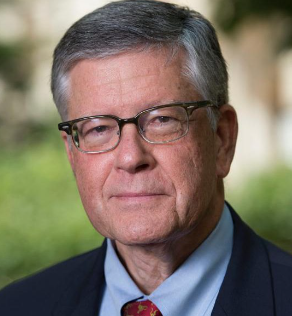 Henry L. Roediger, III合作论文数Memory Lab, Department of Psychological and Brain Sciences, Washington University in St. Louis5Robert L. Greene合作论文数5
 Frank Schab合作论文数4
 Aimée M. Surprenant合作论文数Memorial University of Newfoundland3
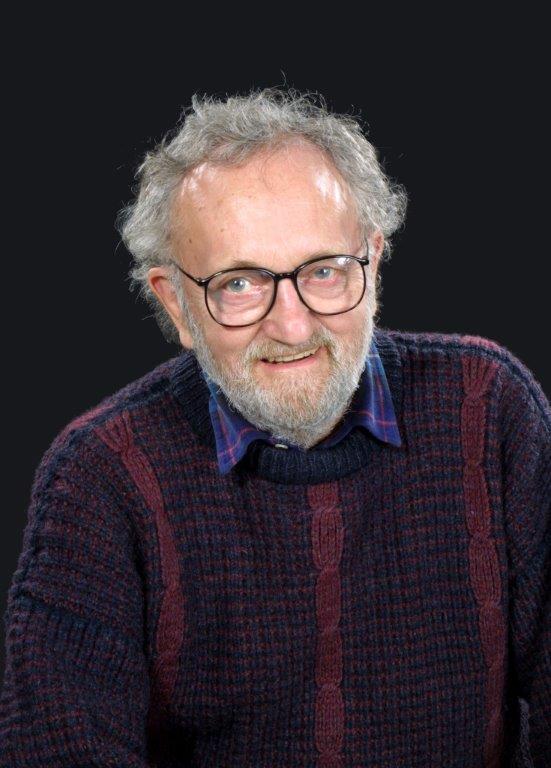 John Morton合作论文数Institute of Cognitive Neuroscience, University College London3ML SERAFINE合作论文数3Af Healy合作论文数2
 Mahzarin R. Banaji合作论文数Department of Psychology, Harvard University2
 Shari Speer合作论文数Department of Linguistics, College of Arts and Sciences, The Ohio State University;Center for Cognitive and Brain Sciences, College of Arts and Sciences, The Ohio State University2Lucinda A. Dewitt合作论文数2Lars Krueger合作论文数1janet e davidson合作论文数1Joseph Paul Stemberger合作论文数1Susan Bovair合作论文数1stephen j eady合作论文数1Charles R. Fletcher合作论文数1alexander j wearing合作论文数1Chao-Ming Cheng合作论文数1Robert J Weber合作论文数1William M Hazelett合作论文数1
 Richard P. Meier合作论文数Department of French and Italian, College of Liberal Arts, University of Texas at Austin1
 Michael Pitt合作论文数1Gm Stephenson合作论文数1Meredyth Daneman合作论文数1J. Steven Reznick合作论文数1
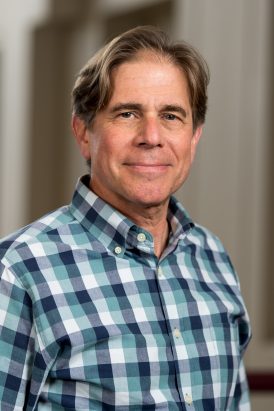 Fred Conrad合作论文数Department of Psychology, College of Literature, Science, and the Arts, University of Michigan-Ann Arbor1
 Carol Krumhansl合作论文数Music Cognition Laboratory, Departments of Psychology, College of Arts & Sciences, Cornell University1
 Daniel G. Morrow合作论文数Department of Educationa, College of Education, University of Illinois Urbana-Champaign1
 Jacques Mehler合作论文数Language, Cognition and Development Lab, International School for Advanced Studies1
 Steve Greenspan合作论文数1
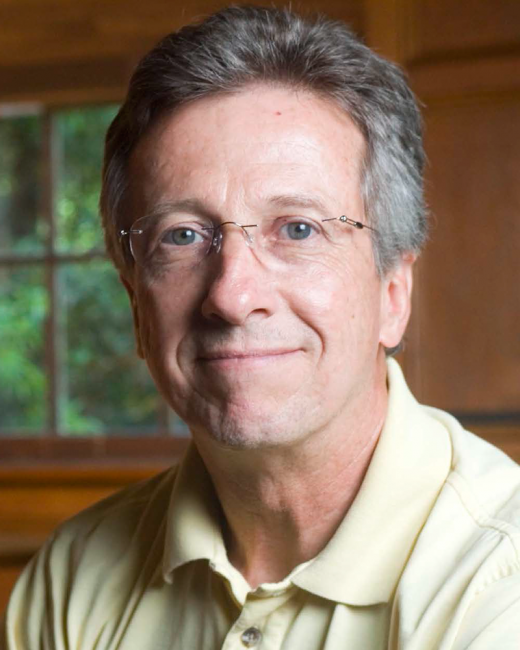 Rick Wagner合作论文数Center Leadership, Research Faculty, Florida State University1
 Michael Masson合作论文数Department of Psychology, Faculty of Social Sciences, University of Victoria1
 Rebecca Treiman合作论文数Department of Education, College of Arts and Sciences, Washington University;Reading and Language Lab, College of Arts and Sciences, Washington University1
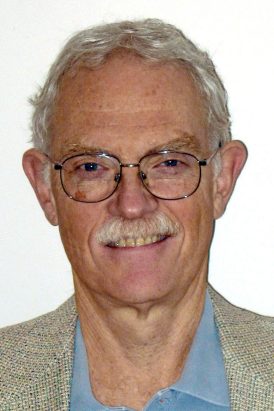 Henry Wellman合作论文数Department of Psychology, College of Literature, Science, and the Arts, University of Michigan;Center for Human Growth and Development, University of Michigan1
 James S. Nairne合作论文数Department of Psychological Sciences, College of Health And Human Sciences, Purdue University1
 Raymond W. Gibbs Jr.合作论文数Department of Psychology, University of California, Santa Cruz1
 Mark McDaniel合作论文数Psychological & Brain Sciences, Washington University1
 Robert J. Sternberg合作论文数Department of Psychology, College of Human Ecology, Cornell University1
 Marta Kutas合作论文数Department of Cognitive Science, University of California, San Diego1
 John Jonides合作论文数Department of Psychology, College of Literature, Science and the Arts, University of Michigan1
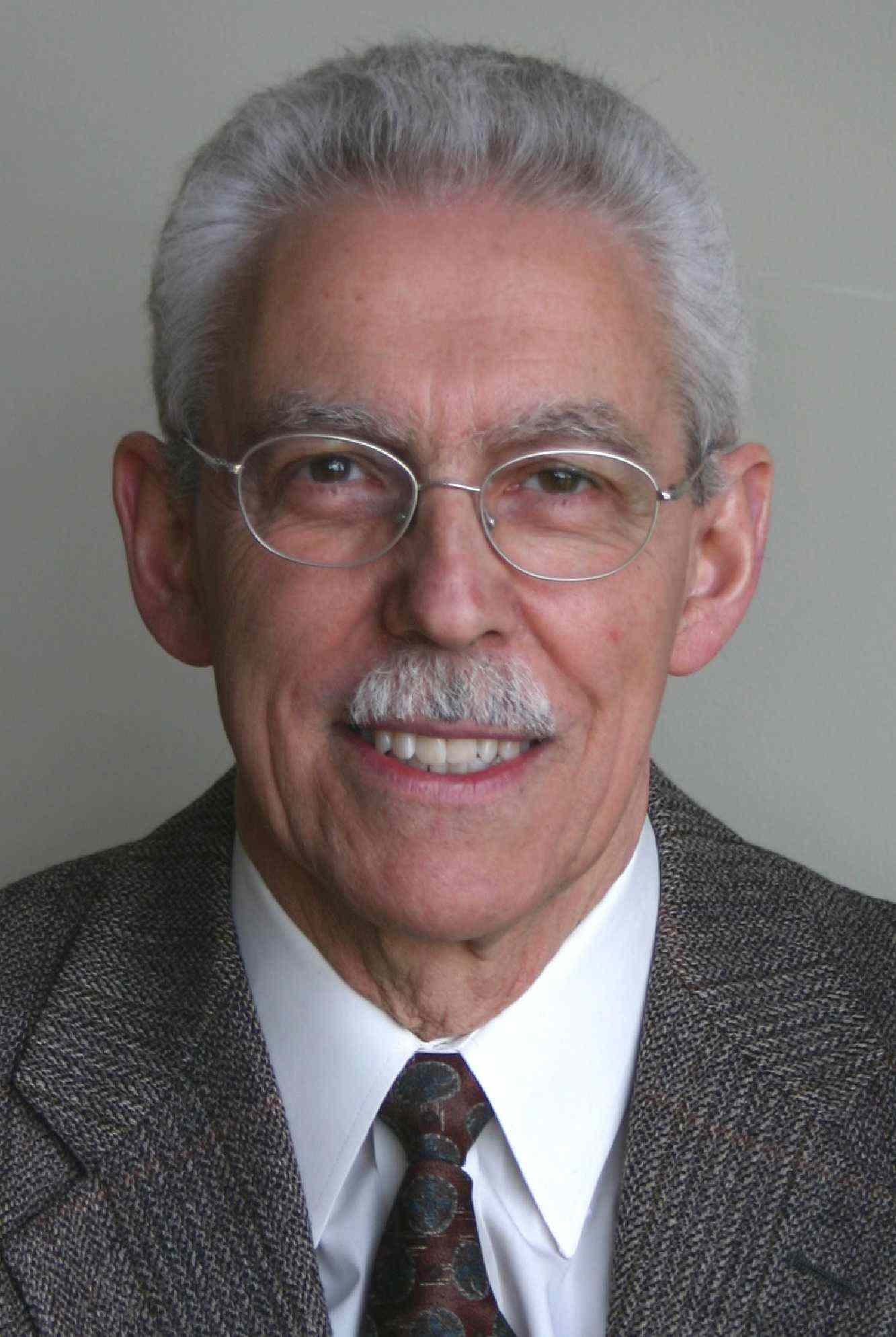 Michael Turvey合作论文数Department of Psychological Sciences, College of Liberal Arts And Sciences, University of Connecticut1
 Mark Pitt合作论文数Department of Psychology, The Ohio State University1
 Gilles O. Einstein合作论文数Department of Psychology, Furman University1
 Lance Rips合作论文数Department of Psychology, Weinberg College of Arts and Sciences, Northwestern University1
 Dennis Norris合作论文数MRC Cognition and Brain Sciences Unit, University of Cambridge1
 Gordon H. Bower合作论文数Department of Psychology, Stanford University1
 Richard K. Wagner合作论文数Florida State University1




