This qualitative case study explores how school counselors support rural Latine International Baccalaureate (IB) students through culturally responsive practices addressing academic and mental health needs. We studied five Latine IB students aged 16-18 using interviews, observations, program documentation, and reflective journals. Analysis revealed four themes: (1) navigating academic pathways through cultural resilience; (2) managing academic stress and mental wellness; (3) leveraging comprehensive school counseling for holistic support; and (4) integrating cultural wealth into support systems. Findings demonstrate the vital intersection of cultural wealth, academic excellence, and mental well-being in supporting rural Latine IB students through comprehensive counseling programs.
This article examines the role of sport as it pertains to Latino male faculty. Specifically, we offer a contribution to the dearth of scholarship at the intersections of sport and how Latino male faculty make sense of their identities and academic journeys. The use of sport as a reference for understanding Latinx faculty identity is for the most part non-existent within education research that is focused on Latino males. Drawing from this context, we offer this piece as a means by which to examine sport with links to family, community, faculty navigation and resistance skills.
Findings from a previous study indicated that a career and college readiness curriculum intervention was less effective for Latinx ninth grade students than for other ethnicity cohorts. Eleven Latinx members of the treatment group in the previous study volunteered for interviews designed to better understand their career and college readiness experiences. Four themes emerged. Three of the themes had not been highlighted in the reviewed professional literature. Recommendations for practice and research are presented.
Numerous national and state endeavors have advocated for approaches, funding, and programs focused on expanding the science, technology, engineering, and mathematics (STEM) workforce of the nation and investing in education to cultivate a more diverse and impactful cohort of students who pursue STEM pathways. Educators, support personnel, and policymakers are in a position to engage in discussions about expanding STEM college readiness (STEM-CR) and participation. However, few are cognizant that STEM-CR is a progression that students strive for in developing skills, behaviors, and attitudes that spans over time. The current study established and validated a measurement model of student STEM-CR in mathematics and science utilizing the High School Longitudinal Study of 2009. The model was created based on a multidimensional and theoretical perspective of college readiness using a confirmatory factor analysis and modeling approach that accounted for measurement invariance. The sample (N = 16,044) comes from a racialized/ethnoracial and socioeconomically diverse high school population in the United States. The findings confirmed that STEM-CR involves four related yet distinct dimensions of Think, Know, Act, and Go. Results also demonstrated soundness of these STEM-CR dimensions by race and gender (key learning skills and techniques/Act). Academic self-efficacy was the strongest dimension of our STEM-CR model and strongly predicted academic achievement and college enrollment. Research and practice implications are discussed.
In this article a social construction framework is used to improve the capacity of school counselors and trainees to work effectively with African American and Latina/o students in urban schools. Three key theoretical tenets of the social construction worldview are presented as a new lens for thinking about the meaning - making process of students in an urban school setting and how school counselors can support it. We offer activities to operationalize this theoretical point of view and implications for school counselor training and practice.
This study evaluated a self-report survey assessing school professionals’ perceptions of school and community mental health supports and services. Based on responses from 560 school professionals, findings provide support for the measure’s internal structure and ability to distinguish low-poverty and high-poverty schools. Practitioners and researchers may consider using this survey to understand perceptions of the quality and availability of mental health services, informing the selection and adaptation of school-based mental health supports and services.
According to the 2020 U.S Census, Latinx origin accounts for 60.6 million people, or 18.5% of the U.S. population (U.S. Census Bureau, 2020), a 2.5% increase from the 2010 Census figures. Today, 1 in 5 children under the age of 18 is Latinx. It is suggested that by 2050, 2 in 5 children under the age of 18 will be Latinx (Cárdenas & Kerby, 2012). This positions Latinx students as the future of this nation; calling for the promotion of the college readiness of Latinx students as one of the most useful contributions by K–12 schools (Martinez et al., 2020). As of 2016, postsecondary enrollment for Latinx students (85%) tends to be public institutions; an overrepresentation in open-access and community colleges, and underrepresented in 4-year institutions. Latinx students also maintain the lowest college graduation rate when compared to other racial groups (Perez Huber et al., 2015). Factors influencing postsecondary enrollment include content knowledge, postsecondary academic preparation, possible student status as first-generation and/ or undocumented immigrant, schoolcentric epistemologies, and patterns of existing disparities among Black, Brown, and Indigenous undergraduate students with regards to college enrollment rates (Acevedo-Gil, 2017; Lukes, 2015; Martinez et al., 2020; Perez Huber et al., 2015). The chapter provides an overview of the unique advising needs of Latinx students and introduces a culturally responsive advising (CRA) framework, as part of the college application completion process.
The extant literature on suicide-related thoughts and behaviors (STB) has highlighted increased patterns of risk among specific minoritized populations, including lesbian, gay, bisexual, transgender, questioning, intersex, two spirit, and queer (LGBTQ+) youth. Compared to their heterosexual and cisgender peers, LGBTQ+ youth are at increased risk for having STB. Identity-specific stressors such as homonegativity and anti-queerness are among the unique factors posited to contribute to this risk and inhibit factors that protect against suicide. The school setting has been a focal point for suicide prevention and intervention and may also play a key role in linking students to care; however, schools also hold the potential to provide supports and experiences that may buffer against risk factors for STB in LGBTQ+ students. This systematic literature review presents findings from 44 studies examining school-related correlates of STB in LGBTQ+ students, informing an ecological approach to suicide prevention for school settings. Findings underscore the importance of school context for preventing STB in LGBTQ+ youth. Approaches that prioritize safety and acceptance of LGBTQ+ youth should span multiple layers of a student's ecology, including district and state level policies and school programs and interventions, such as Gender and Sexuality Alliances and universal bullying prevention programs. Beyond their role as a primary access point for behavioral health services, schools offer a unique opportunity to support suicide prevention by combating minority stressors through promoting positive social relationships and a safe community for LGBTQ+ students.
There are known cultural variations in correlates of and symptoms related to suicide-related thoughts and behaviors; however, the majority of research that informs suicide prevention in school systems has focused on research based on Euro-American/White students. By exploring school-related risk and protective factors in ethnic-racial minoritized students, we expand existing multicultural models of suicide prevention for school settings. Specifically, this systematic literature review identified 33 studies conducted with American Indian and Alaskan Native, Hispanic and Latinx, Black and African American, and Asian American and Pacific Islander students. Findings underscore the importance of building relationships with the school community and fostering a sense of safety for students, the need to approach school-based suicide prevention and intervention with cultural considerations, and the importance of connecting students and families with providers in culturally sensitive and informed ways. Taken together, schools need to build school-family-community partnerships that promote culturally sensitive approaches to suicide prevention.
Researchers in this qualitative study explored the perspectives and experiences of individuals with Deferred Action for Childhood Arrivals (DACA) status or without authorized immigration status in a way that was strengths-based and humanizing, as opposed to critical and blaming. The researchers drew from a community cultural wealth (CCW) theoretical model in order to focus on the resilience and persistence of people who are striving and attempting to thrive in a new receiving area in the southeast U.S. Twelve Latinx participants in new immigrant communities were interviewed. An interpretive phenomenological analysis (IPA) qualitative research design was employed and themes identified. The themes reflected participants experiences (e.g., wanting a chance to contribute, experiencing discrimination, seeking to be acknowledged as human beings, persisting in spite of adversity, being an ambassador to English speaking groups), which were organized post-hoc under the CCW framework. The discussion includes recommendations to recognize and bolster these strengths in the community as well as confronting the structural biases that undermine them. Findings in this study are significant for psychologists and other helping professionals in emerging immigrant communities who may need tools to push back on deficit-based narratives about immigrants.
This participatory action research (PAR) project describes crossover students’ college and career readiness needs in a major west coast urban school district. The paper provided insights from administrator researchers, participants, facilitator, and recommendations for school counselors, educators, and organizations who are thinking of creating more counseling support and educational opportunities for crossover students. The results include the reflections and recommendations of crossover youths (e.g., encourage us, we are worth the rigor). The discussion includes strategies for supporting the academic, career, emotional, and social needs of crossover students.
We examined data from a national sample of 917 school counselors to determine the factor structure of the School Counselor STEM Advocacy Survey. An exploratory and confirmatory factor analysis supported use of the two-factor model. Survey scores demonstrated good internal consistency and convergent validity. We discuss differences between key demographics and school counselors.
A classroom guidance curriculum following the dialectical behavior therapy skills training for emotion problem solving for adolescents (DBT STEPS-A) was evaluated using a pretest–posttest nonequivalent groups quasi-experimental design. Data from 94 ninth-grade students (42 treatment, 52 control) enrolled in a rural high school were analyzed via hierarchical linear modeling. Results indicated a treatment effect on students’ self-reported social resilience and emotion regulation difficulties, indicating potential for the classroom guidance curriculum. Results from exploratory analyses also supported a treatment effect for understanding and acceptance of DBT skills. The findings have direct implications for school counselors and other school-based mental health professionals, highlighting the positive effects of proactively employing universal social and emotional learning interventions targeting the development of adolescent social and emotional skill building. A discussion on future practice and research is also included.
Grounded in Bandura’s (1997) self‐efficacy theory and Savickas’s (2011) career construction theory, this study examined school counselors’ beliefs about whether they can perform specific tasks related to supporting students’ career and college readiness. A national sample of school counselors (N = 2,047) completed the School Counselor Self‐Efficacy for Enhancing Student Career and College Readiness Scale (Baker, Parikh‐Foxx, & Martinez, 2017). Findings from a survey research design indicated that the extent of related training and the challenges associated with implementation of career service delivery were of concern to participants. Recommendations for training, practice, and further research are presented.
Capitalizing on Latinx students’ aspirational, linguistic, social, navigational, familial, resistant, perseverant, and spiritual community cultural wealth (CCW) can help school counselors empower Latinx students. We outline and integrate critical race theory and CCW and demonstrate how communities of color bring assets and protective factors with them to their educational settings. We also examine how school counselors can utilize these eight forms of CCW to promote postsecondary opportunities for Latinx youth.Aprovechar las ventajas que ofrece la riqueza cultural de la comunidad (CCW, por sus siglas en inglés) de estudiantes latinxs y su capital aspiracional, lingüístico, social, familiar, espiritual, de navegación, de resistencia y de perseverancia puede ayudar a los consejeros escolares a empoderar a estudiantes latinxs. Perfilamos e integramos la teoría crítica de la raza y el modelo de CCW y demostramos cómo las comunidades de color aportan recursos y factores de protección a sus entornos educativos. También examinamos cómo los consejeros escolares pueden utilizar estas ocho formas de CCW para potenciar las oportunidades disponibles para jóvenes latinxs después de su educación secundaria.
Through the development and implementation of a trauma-sensitive comprehensive school counseling program, school counselors can be essential in meeting the mental health needs of youth in foster care. The multitiered systems of support (MTSS) framework is one potential strategy in achieving this goal. We offer recommendations on how school counselors might deliver a trauma-informed care approach utilizing the MTSS framework to support the mental health needs of youth in foster care who have experienced trauma.
Intervention research is replete with examples of finely crafted innovations showing initial efficacy in tightly controlled experimental contexts only to fail when they are implemented in typical use settings. While the reasons for such failures are broad, implementation science shows a targeted and judicious use of appropriate competency drivers, such as coaching to innovation providers, increases the likelihood that promising interventions can be used with effectiveness. This article discusses how an implementation coaching framework is used to implement a novel career and university readiness (CCR) program. The SELF CARE program utilizes university residential life community directors to implement a manualized social-emotional learning (SEL) and community and cultural wealth (CCW) curriculum with the purpose of enhancing the protective and thriving skills of growth mind-set, sense of belonging, self-management, self-advocacy, and community and cultural wealth (see Appendix A). SELF CARE targets underserved university students with the goal of supporting their thriving at a predominantly White institution (PWI).
An elementary school counselor and intern delivered a six-session curriculum unit designed to enhance career and college readiness self-efficacy to 47 fourth-grade students. The intervention effect was compared with 48 other fourth-grade students. Ninety percent of the variance was due to ethnicity differences. White students had higher self-efficacy scores at the outset and after the intervention, while Black and Hispanic students in the treatment achieved higher self-efficacy scores than those in the control condition.
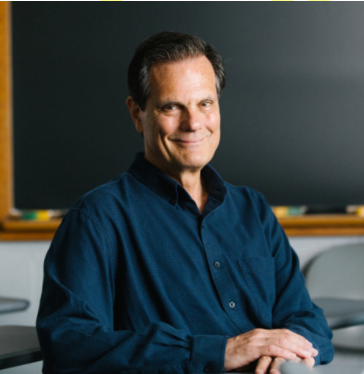 Steve Knotek合作论文数School of Education, The University of North Carolina at Chapel Hill4
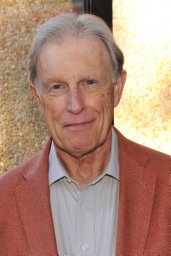 Stanley B. Baker合作论文数Division of Counseling and Educational Psychology, Pennsylvania State University4
 Marisa E. Marraccini合作论文数School of Education, The University of North Carolina at Chapel Hill4
 Juliana L Vanderburg合作论文数3Andrew J. Chin合作论文数2Lacretia Dye合作论文数2Emily N Toole合作论文数2Sejal Parikh Foxx合作论文数2Rebecca Neshkes合作论文数2
 Laura M Gonzalez合作论文数2J. Conor O’Neill合作论文数2
 Shereen Naser合作论文数Cleveland State Univ2
 Grapin Sally L合作论文数2
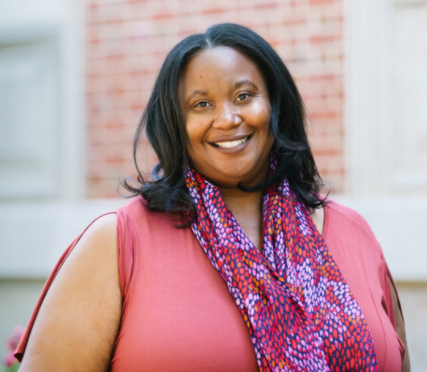 Dana Griffin合作论文数School of Education, The University of North Carolina at Chapel Hill2Stephen D. Kennedy合作论文数1Cari Pittleman合作论文数1maureen shields kurz合作论文数1Tula Hawkins Lacy合作论文数1Julia Rivas合作论文数1Denise Parente Pinheiro Miranda合作论文数1
 Regina Gavin Williams合作论文数North Carolina Central University1Tamara V. Young合作论文数Educ Evaluat & Policy Anal, North Carolina State Univ1
 Mark B. Scholl合作论文数Dept Counseling, Wake Forest Univ1
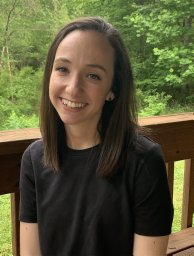 Katherine M. Ingram合作论文数Department of PsychologyUniversity of Florida945 Center DriveGainesvilleFL32611United States1
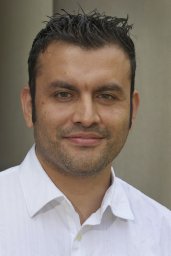 Juan F. Carrillo合作论文数Univ N Carolina1
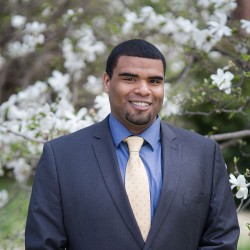 James M. Ellis合作论文数School of Social Work, University of Michigan-Ann Arbor1
 Anthony De Jesús合作论文数1Patrick Akos合作论文数1Jennifer Greif Green合作论文数1




