In the present paper we introduce simultaneous multi-band measurements at sub-6 GHz and two mm-wave bands with the objective of characterizing propagation for multi-band channel modelling purposes in industry scenarios. The marginal power profiles show that the dominant scatterers are common in the different frequencies. In addition, a relation of decreasing average delay and angular spreads with increasing frequency is observed. The different measured parameters are contrasted with the 3GPP model for indoor factories.
In this paper, we present the ray tracing (RT) simulation in the 3D model of one highly dense clutter industrial hall, which is scanned by laser scanner and reconstructed based on accurate point cloud. The whole processing chain from the scanning of the physical environment to running the simulation is presented in detail. To validate the simulation results, the synthetic channel characteristics and large-scale parameters, including delay spread (DS), angular spread (AS) and path loss (PL), are compared with those obtained from channel sounding measurement in both LOS and NLOS cases, at 6.75 GHz, 30 GHz and 60 GHz. The simulation results show that some scatters are significant in all bands and may be well identified and tracked. This indicates that our target to generate a deterministic channel model or a hybrid channel model at multi-band for industrial scenario may be possible.
Due to the great demand of throughput and reliability for multimedia applications in Fifth Generation (5G) networks, many broadcasting systems adopt the Millimeter Wave (mmWave) technology to address the lack of the spectrum resources. As one of 5G-PPP projects, Internet of Radio Light (IoRL) project adopts 40GHz mmWave band to support a high-speed and stable Ultra-High-Definition (UHD) television broadcasting service in the indoor environment. Because of the high frequency property, mmWave bands usually suffers from the high path loss and the penetration loss. Thus, in order to overcome these issues, directional antennas are employed to provide additional power gain while increasing transmission distance. However, the mmWave with directional antennas brings additional problems, such as limited transmission angle and more multipath effects. Therefore, in this paper, for better understanding of impact factors on the signal quality and transmission coverage of the directional 40GHz mmWave band in the indoor environment, a measurement campaign is introduced in detail and the channel characteristics are measured and analysed in varying cases. The mainly concerned characteristics are path loss, shadow fading, average Power Delay Profile (PDP), Root-Mean-Square (RMS) delay spread, arrival rate and coherence bandwidth. All Measured characteristic values are summarised in three tables at the end of this paper. Besides of these, as a reference of channel analysis and a metric of signal quality and effective coverage, Error Vector Magnitude (EVM) of received signal in each case is measured and discussed. Moreover, a simulation is performed based on a statistical channel model to validate the measured results.
The characterization of propagation at mm-waves and THz is obtaining relevance since they are expected to be the frequency bands of the future wireless generations. Hence, measurements conducted all around the world with different equipments need to be comparable by establishing common methodologies and best-practice guidelines. As an example, all measurements are affected by noise, but its estimation and removal are not standardized. Therefore, in the present paper we define a methodology on the estimation of the noise floor and the cut-off margin for its subsequent removal. We firstly analyse the influence of the channel sounder noise floor on the estimation of different propagation parameters directly from the measured channel impulse responses (CIRs), showing the need of its removal before any processing of the measurements. Later, we introduce an algorithm to estimate the noise floor in the presence of signal, and the cut-off margin. Finally, we evaluate its performance empirically with measurements.
This chapter is the perfect introduction to get an overview of THz channel sounder technologies. Additionally, all relevant state of the art and references for the field of THz channel sounding are summarized. The aim of the THz sounder chapter is to create a basic understanding of measurement setups and challenges for the measurement of the electromagnetic wave propagation in the THz range. All necessary principles, from generating the transmit signal over different mixing principles to the THz band and the data acquisition, are compact summarized.
The lower THz bands are foreseen as candidates to achieve the data-rates demanded in the sixth generation (6G) of wireless communications. Hence, multiple measurements for characterization of propagation at these frequencies in different scenarios are being conducted all around the world. This also impulses activities on standardization of measurement equipment and methodologies to define common practices and make measurements from different actors comparable. Therefore, in the present paper we investigate the accuracy of a dual-polarized ultra-wideband channel sounder in the time, angular, and polarization domains by means of a verification methodology based on interferometry.
The potential of broadband THz communication system is not limited to extremely high data rate transmissions up to several TBit/s. Rather, the true application potential of THz systems will be created by the combination of the communication and radar/sensor functionality under the use of the enormous available bandwidth with partially more than 10 GHz. This enables to develop new applications in the areas of 3D imaging radar systems, sensor systems, car-to-car communication in combination with car radar, and security application like private alarm system via Wi-Fi router. The reuse of future standard 3GPP and IEEE802 THz technology will allow the implementation of low-cost THz communication systems, which enable the joint use of THz systems as a high-resolution sensor systems, which optimize themselves by the use of artificial intelligence to provide never-before-achieved resolutions for radar and sensor applications additional to high-speed Tbit/s data transmissions.
Industry 4.0 is the scenario in which the 5G and beyond networks are expected to show all their potential. However, while propagation at sub-6 GHz has been widely investigated in industry environments, mm-waves propagation and channel modelling in those scenarios is still under early research. Therefore, we introduce novel simultaneous multi-band ultra-wideband measurements at 6.75 GHz and 30 GHz in LOS and NLOS with RX below and above clutter level. This unique set-up allows a direct comparison between the sub-6 GHz and mm-wave channel. Results have shown larger specular to dense multi-path components power ratio and shorter large-scale parameters at mm-waves.
The Internet of Radio-Light (IoRL) is a cutting-edge system paradigm to enable seamless 5G service provision in indoor environments, such as homes, hospitals, and museums. The system draws on innovative architectural structure that sits on the synergy between the Radio Access Network (RAN) technologies of millimeter Wave communications (mmWave) and Visible Light Communications (VLC) for improving network throughput, latency, and coverage compared to existing efforts. The aim of this paper is to introduce the IoRL system architecture and present the key technologies and techniques utilised at each layer of the system. Special emphasis is given in detailing the IoRL physical layer (Layer 1) and Medium Access Control layer (MAC, Layer 2) by means of describing their unique design characteristics and interfaces as well as the robust IoRL methods of improving the estimation accuracy of user positioning relying on uplink mmWave and downlink VLC measurements.
As one of the key features in 5G network, Millimeter wave (mmWave) technology can provide the ultra-wide bandwidth to support higher data rate. However, for high frequency band, mmWave signal still suffers from the high pathloss, the multipath fading and the signal blockage issue, especially in the indoor environment. For different application scenarios, the channel conditions and quality of services (QoS) are quite different. Therefore, it is essential to investigate the impact of the mmWave channel on the system performance. This paper investigates and measures the performance of a 60GHz mmWave module that is exploited for the downlink and uplink high data rate transmission in the Internet of Radio-Light (IoRL) project. The coverage area and the throughput of the mmWave module is estimated by measuring the error vector magnitude (EVM) of received signals with different transmitter (TX) and receiver (RX) angles and at different locations in a laboratory. In this paper, the measurement environment and system setup are introduced. After that, the waveform design for the measurement is also discussed. The measurement results show that this 60GHz mmWave module can provide an acceptable performance only in some cases, which restricts its application scenarios.
Development of a comprehensive channel propagation model for high-fidelity design and deployment of wireless communication networks necessitates an exhaustive measurement campaign in a variety of operating environments and with different configuration settings. As the campaign is time-consuming and expensive, the effort is typically shared by multiple organizations, inevitably with their own channel-sounder architectures and processing methods. Without proper benchmarking, it cannot be discerned whether observed differences in the measurements are actually due to the varying environments or to discrepancies between the channel sounders themselves. The simplest approach for benchmarking is to transport participant channel sounders to a common environment, collect data, and compare results. Because this is rarely feasible, this paper proposes an alternative methodology - which is both practical and reliable - based on a mathematical system model to represent the channel sounder. The model parameters correspond to the hardware features specific to each system, characterized through precision, in situ calibration to ensure accurate representation; to ensure fair comparison, the model is applied to a ground-truth channel response that is identical for all systems. Five worldwide organizations participated in the cross-validation of their systems through the proposed methodology. Channel sounder descriptions, calibration procedures, and processing methods are provided for each organization as well as results and comparisons for 20 ground-truth channel responses.
A framework is proposed for developing and evaluating algorithms for extracting multipath propagation components (MPCs) from measurements collected by sounders at millimeter-wave (mmW) frequencies. To focus on algorithmic performance, an idealized model is proposed for the spatial frequency response of the propagation environment measured by a sounder. The input to the sounder model is a pre-determined set of MPC parameters that serve as the “ground truth”. A three-dimensional angle-delay (beamspace) representation of the measured spatial frequency response serves as a natural domain for implementing and analyzing MPC extraction algorithms. Metrics for quantifying the error in estimated MPC parameters are introduced. Initial results are presented for a greedy matching pursuit algorithm that performs a least-squares (LS) reconstruction of the MPC path gains within the iterations. The results indicate that the simple greedy-LS algorithm has the ability to extract MPCs over a large dynamic range, and suggest several avenues for further performance improvement through extensions of the greedy-LS algorithm as well as by incorporating features of other algorithms, such as SAGE and RIMAX.
In the present paper we introduce unique double-directional dual-polarized measurements at 190 GHz in a conference room with the aim of characterizing propagation for channel modelling and beam-forming applications. Assisted by ray-tracing, multiple scatterers have been identified, showing a rich multi-path environment. Investigations have shown that polarization diversity increases spatial diversity and a more deterministic modelling approach in polarization is needed to avoid overestimating polarization diversity gains.
The second-order statistics of indoor directional channels are investigated using millimeter-wave (mmWave) band (30.4-37.1 GHz) ultrawideband (UWB) channel measurements. Considering two main mmWave system assumptions (high bandwidth and high beamforming gain), this paper aims to investigate the validity of the Rayleigh-Rice fading models for the cluster fading envelope. The results from the mmWave band study are compared to an already well-studied lower frequency FCC band (3.4-10.1 GHz). During the measurements, only selective objects (emulated multipath clusters in the propagation channel) are illuminated in a small lecture room. The experiments show that for both UWB channels, the complex received (Rx) signal is a circularly symmetric non-Gaussian random variable with highly correlated inphase (I) and quadrature (Q) components. These properties demonstrate that the intracluster multipath components (MPCs) structure is sparse. Consequently, modeling the cluster fading envelope with Rayleigh-Rice distribution is not realistic. Therefore, the sum-of-cisoids principle is used for intracluster multipath modeling which inherently considers a correlation between I and Q components. It has been established that a reasonably good approximation of the cluster fading envelope can be obtained with N = 3-6 equal amplitude cisoids. However, we remark that Rayleigh-Rice models may become realistic cluster fading envelopes for narrowband mmWave systems.
Radio access at mm-waves has been subject of intensive research in the latest years. However, within the initial deployment of 5G, mm-waves are still relegated and there is a generalized idea that the mm-wave channel for radio access, in comparison to the sub-6 GHz channel, is not only sparse but also troublesome for outdoor applications. In the present paper we introduce simultaneous multi-band measurements comparing the sub-6 GHz with the mm-waves channel at 30 GHz and 60 GHz in street canyon scenarios using the same measurement equipment in Germany and Japan. An analysis on the propagation and radio channel characteristics shows that the mm-waves channel offers similar opportunities as the sub-6 GHz. Consequently, the challenge relies on the design of an adequate radio interface matching the channel characteristics. In that regard, aspects as the location of clusters and spatial consistency gain importance within geometry-based stochastic channel models (GBSCMs). The analysis of the large-scale parameters (LSPs) has shown a large influence of the geometry of the scenario on the channel, encouraging the introduction of deterministic modelling components within GBSCMs targeting these scenarios.
Vehicle-to-vehicle (V2V) channels exhibit unique properties due to the highly dynamic environment and low elevation of the antennas at both ends of the link. Of particular importance for the behavior of V2V channels, and consequent reliability of the communication link, is the severity and dynamics of blockage of both the line-of-sight and other multipath components (MPCs). The characteristics of blockage become more important as the carrier frequency increases, and the ability of the signal to penetrate through objects diminishes. To characterize the effects of vehicle blockage, we performed V2V channel measurements in four different frequency bands (6.75, 30, 60, and 73 GHz) in urban and highway scenarios. We analyzed the impact of the blocker size and position on the received power and fast fading parameters, as well as the frequency dependence of these parameters under blockage. Our results show that there is a strong influence of the size of the blocking vehicle on the blockage loss and the angular/delay spread. The position of the blocker relative to the transmitter and receiver also plays an important role. On the other hand, the frequency dependence is quite limited, with the blockage loss increasing slightly and the number of scattered MPCs reducing slightly as frequency increases. The main conclusion of this paper is that V2V communication will be possible in high (millimeter-wave) frequencies, even in the case of blockage by other vehicles.
In this paper, impact of antenna directivity and bandwidth on the small scale fading statistics have been analyzed for millimeter-wave (mmWave) radio channels. For this purpose, small-scale fading measurements at the mmWave frequency band (58-62 GHz) are carried out using transmit and receive antennas with different antenna directivities (emulated beamforming gains). Measurements emulate a non line-of-sight scenario when the communication between transmit and receive antennas is possible only through a single multipath cluster. In order to compare results, measurements in a line-of-sight scenario with omni-directional antennas are also carried out for reference purpose. Considering two main mmWave system features i.e., high antenna directivity and higher system bandwidth, we report the following results: 1) Randomness/fading in the received signal magnitude vanishes with an increase in bandwidth. 2) The channel impulse response h (t, τ) does not remain a wide-sense stationary (WSS) random process in the slow-time domain i.e., along t, where, the fast-time domain refers to the dimension along τ. 3) Measured channels are WSS in the frequency domain and the coherence bandwidth increases when propagation channels are illuminated with high gain antennas.
In the present paper we introduce the results of simultaneous multi-band ultra-wideband measurements at 6.75, 30, and 60 GHz in a street canyon scenario under LOS in Germany. This is the first part of a street canyon measurements series using the same channel sounder in different parts of the world. The aim of these measurements is to analyse and compare the propagation characteristics with multi-band channel modelling in view. We show that from the propagation perspective, mm-waves offer very similar opportunities than the well known and exploited sub-6 GHz bands.
 Reiner S. Thomä合作论文数Fachgebiet Elektronische Messtechnik und Signalverarbeitung, Fakultät für Elektrotechnik und Informationstechnik, Technische Universität Ilmenau50
 Diego Andres Dupleich合作论文数Technische Universitat Ilmenau43
 Jian Luo合作论文数Eur. Res. Center (ERC),, Huawei Technol. Duesseldorf GmbH;c30
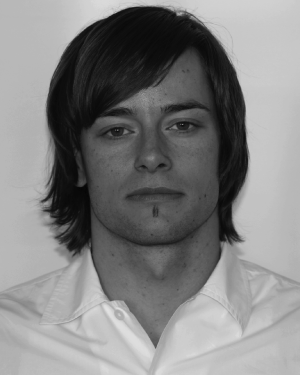 Christian Schneider合作论文数29
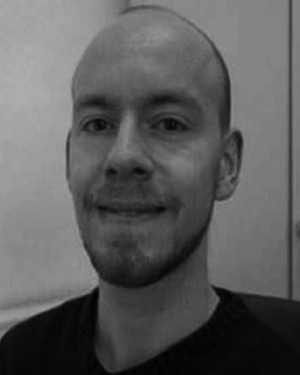 Stephan Häfner合作论文数25
 Giovanni Del Galdo合作论文数Institute for Information Technology Ilmenau, Technische Universität Ilmenau16
 Naveed Iqbal合作论文数13
 Frank Wollenschlager合作论文数10
 Sergii Yuriiovich Skoblikov合作论文数Tech Univ Ilmenau, D-98684 Ilmenau, Germany9
 Alexis Paolo Garcia Ariza合作论文数Ilmenau Univ. of Technol.;c8
 Niu Han合作论文数Technische Universität Ilmenau, Ilmenau, Germany6egon schulz合作论文数5
 Nawar Jawad合作论文数Brunel Univ, Uxbridge, Middx, England5
 Vittorio Degli Esposti合作论文数Department of Electrical, Electronic, and Information Engineering "Guglielmo Marconi", University of Bologna5
 Xun Zhang (张迅)合作论文数LISITE laboratory, Institut Supérieur d’électronique de Paris4Lei Xia合作论文数4
 Yue Zhang合作论文数School of Engineering;Brunel University;School of Engineering, Brunel University4
 Enrico M. Vitucci合作论文数4
 Mate Boban合作论文数Huawei Technol Dusseldorf GmbH4
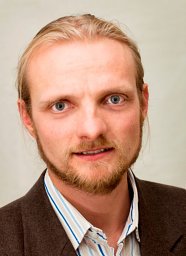 Markus Landmann合作论文数Ilmenau Technical University4Alexander Ebert合作论文数3Jens Müller合作论文数3
 Franco Fuschini合作论文数3
 Guangjian Wang合作论文数3
 Wei Li合作论文数3
 Hequn Zhang合作论文数Department of Research and Technology, Viavi Solutions3
 Zihang Cheng合作论文数University of Southern California, Los Angeles, CA, USA3
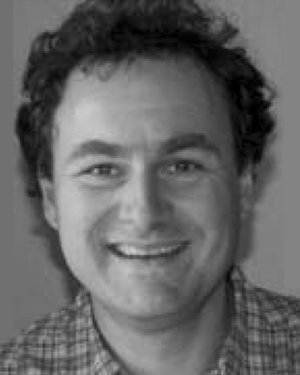 Uwe Trautwein合作论文数3
 Mohamed Elkhouly合作论文数3
 Schulz, A.合作论文数3
 Ozgur Ozdemir合作论文数3Ralf Herrmann合作论文数3
 Gerd Sommerkorn合作论文数3
 David Michelson合作论文数Department of Electrical and Computer Engineering, Faculty of Applied Science, The University of British Columbia3
 Marina Barbiroli合作论文数3
 Ralf Stephan合作论文数Institute for Information Technology;University of Technology3John Cosmas合作论文数Professor of Multimedia Systems,
Multimedia Systems & Parallel Computing Technology Research Group
Objectives of Multimedia Systems Research Group
The "Multimedia System and Parallel Computing Technology" research group develops:3
Ralf Stephan合作论文数Institute for Information Technology;University of Technology3John Cosmas合作论文数Professor of Multimedia Systems,
Multimedia Systems & Parallel Computing Technology Research Group
Objectives of Multimedia Systems Research Group
The "Multimedia System and Parallel Computing Technology" research group develops:3 Jintao Wang (王劲涛)合作论文数Department of Electronic Engineering, Tsinghua University3
 Camillo Gentile合作论文数Wireless Networks Division, Communications Technology Laboratory, National Institute of Standards and Technology3Xiaofeng Lu合作论文数2Israel Koffman合作论文数2Jan Goerlich合作论文数2
 Kareem Ali合作论文数2
 Wahab Ali Gulzar Khawaja合作论文数Dept Elect & Comp Engn, NC State Univ2
 Lina Shi合作论文数Institut supérieur d’électronique de Paris2
 Anuraag Bodi合作论文数National Institute of Standards and Technology, Gaithersburg, MD, USA2
 Anmol Bhardwaj合作论文数NIST, Wireless Networks Div, Gaithersburg, MD 20899 USA2
 Tianxiang Wang合作论文数Huawei Technol Co Ltd, Shanghai R&D Ctr, Commun Technol Lab, Xin Jinqiao Rd 2222, Shanghai 201206, Peoples R China2Jack Chuang合作论文数BAE Systems2




