Climate change and its consequences such as sea-level rise will modify environmental gradients, altering the spatial spread and persistence of plant populations. However, ecosystem engineers can also modify environmental gradients. To quantify the potential interactive effects of climate change and ecosystem engineering on population spread rates, we develop a spatial model that explicitly focuses on feedbacks between coastal vegetation growth and the environmental gradient of marsh elevation. We use the model to determine how sea-level rise could change how ecosystem engineering affects the spread rate of marsh populations. The model demonstrates that low levels of ecosystem engineering can produce the highest population spread rates in the absence of sea-level rise in initially low-elevation marshes. However, higher rates of ecosystem engineering and initially higher elevation marshes produce the highest population spread rates in the presence of sea-level rise. Sea-level rise can therefore reverse the conditions that drive high rates of spatial spread: engineers with low rates of spatial spread prior to sea-level rise may spread faster as sea levels rise. This result suggests that sea-level rise may promote the spread of invasive ecosystem engineers that previously experienced low rates of spatial spread. Moreover, ecosystem engineering can serve as a mechanism for adaptation to climate-driven changes in environmental gradients. Ecosystem engineering has the potential to rescue both native and exotic plant populations from climate-driven decreases in habitat suitability.
Climate-driven habitat shifts pose challenges for dispersal-limited, late-maturing taxa such as trees. Older trees are often the most reproductive individuals in the population, but as habitats shift, these individuals can be left behind in the trailing range edge, generating “zombie forests” that may persist long after the suitable habitat has shifted. Are these zombie forests vestiges of ecosystems past or do they play an ecological role? To understand how zombie forests affect population persistence, we developed a spatially explicit, stage-structured model of tree populations occupying a shifting habitat. Our model shows that seed dispersal from zombie forests to the range core can considerably increase the maximum rate of climate change that a population can withstand. Moreover, the entire core population can ultimately descend from recruitment-limited zombie forests, highlighting their demographic value. Our results suggest that preserving trailing-edge zombie forests can greatly increase population persistence in the face of climate change. ### Competing Interest Statement The authors have declared no competing interest.
The abundant-center hypothesis posits that species density should be highest in the center of the geographic range or climatic niche of a species, based on the idea that the center of either will be the area with the highest demographic performance (e.g., greater fecundity, survival, or carrying capacity). While intuitive, current support for the hypothesis is quite mixed. Here, we discuss the current state of the abundant-center hypothesis, highlighting the relatively low level of support for the relationship. We then discuss the potential reasons for this lack of empirical support, emphasizing the inherent ecological complexity which may prevent the observation of the abundant-center in natural systems. This includes the role of non-equilibrial population dynamics, species interactions, landscape structure, and dispersal processes, as well as variable data quality and inconsistent methodology. The incorporation of this complexity into studies of the distribution of species densities in geographic or niche space may underlie the limited empirical support for the abundant-center hypothesis. We end by discussing potentially fruitful research avenues. Most notably, we highlight the need for theoretical development and controlled experimental testing of the abundant-center hypothesis.
AbstractAlthough dispersal is generally viewed as a crucial determinant for the fitness of any organism, our understanding of its role in the persistence and spread of plant populations remains incomplete. Generalizing and predicting dispersal processes are challenging due to context dependence of seed dispersal, environmental heterogeneity and interdependent processes occurring over multiple spatial and temporal scales. Current population models often use simple phenomenological descriptions of dispersal processes, limiting their ability to examine the role of population persistence and spread, especially under global change. To move seed dispersal ecology forward, we need to evaluate the impact of any single seed dispersal event within the full spatial and temporal context of a plant’s life history and environmental variability that ultimately influences a population’s ability to persist and spread. In this perspective, we provide guidance on integrating empirical and theoretical approaches that account for the context dependency of seed dispersal to improve our ability to generalize and predict the consequences of dispersal, and its anthropogenic alteration, across systems. We synthesize suitable theoretical frameworks for this work and discuss concepts, approaches and available data from diverse subdisciplines to help operationalize concepts, highlight recent breakthroughs across research areas and discuss ongoing challenges and open questions. We address knowledge gaps in the movement ecology of seeds and the integration of dispersal and demography that could benefit from such a synthesis. With an interdisciplinary perspective, we will be able to better understand how global change will impact seed dispersal processes, and potential cascading effects on plant population persistence, spread and biodiversity.
Seed dispersal enables plants to reach hospitable germination sites and escape natural enemies. Understanding when and how much seed dispersal matters to plant fitness is critical for understanding plant population and community dynamics. At the same time, the complexity of factors that determine if a seed will be successfully dispersed and subsequently develop into a reproductive plant is daunting. Quantifying all factors that may influence seed dispersal effectiveness for any potential seed-vector relationship would require an unrealistically large amount of time, materials and financial resources. On the other hand, being able to make dispersal predictions is critical for predicting whether single species and entire ecosystems will be resilient to global change. Building on current frameworks, we here posit that seed dispersal ecology should adopt plant functional groups as analytical units to reduce this complexity to manageable levels. Functional groups can be used to distinguish, for their constituent species, whether it matters (i) if seeds are dispersed, (ii) into what context they are dispersed and (iii) what vectors disperse them. To avoid overgeneralization, we propose that the utility of these functional groups may be assessed by generating predictions based on the groups and then testing those predictions against species-specific data. We suggest that data collection and analysis can then be guided by robust functional group definitions. Generalizing across similar species in this way could help us to better understand the population and community dynamics of plants and tackle the complexity of seed dispersal as well as its disruption.
Seed dispersal enables plants to reach hospitable germination sites and escape natural enemies. Understanding when and how much seed dispersal matters to plant fitness is critical for understanding plant population and community dynamics. At the same time, the complexity of factors that determine if a seed will be successfully dispersed and subsequently develop into a reproductive plant is daunting. Quantifying all factors that may influence seed dispersal effectiveness for any potential seed-vector relationship would require an unrealistically large amount of time, materials and financial resources. On the other hand, being able to make dispersal predictions is critical for predicting whether single species and entire ecosystems will be resilient to global change. Building on current frameworks, we here posit that seed dispersal ecology should adopt plant functional groups as analytical units to reduce this complexity to manageable levels. Functional groups can be used to distinguish, for their constituent species, whether it matters (i) if seeds are dispersed, (ii) into what context they are dispersed and (iii) what vectors disperse them. To avoid overgeneralization, we propose that the utility of these functional groups may be assessed by generating predictions based on the groups and then testing those predictions against species-specific data. We suggest that data collection and analysis can then be guided by robust functional group definitions. Generalizing across similar species in this way could help us to better understand the population and community dynamics of plants and tackle the complexity of seed dispersal as well as its disruption.
A recent comment from Knouft () has suggested that our original article (Dallas et al. ) was an 'inappropriate application of biodiversity data'. Here, we affirm our results, and address the more general point about biodiversity data use.
The pervasive idea that species should be most abundant in the centre of their geographic range or centre of their climatic niche is a key assumption in many existing ecological hypotheses and has been declared a general macroecological rule. However, empirical support for decreasing population abundance with increasing distance from geographic range or climatic niche centre (distance-abundance relationships) remains fairly weak. We examine over 1400 bird, mammal, fish and tree species to provide a thorough test of distance-abundance relationships, and their associations with species traits and phylogenetic relationships. We failed to detect consistent distance-abundance relationships, and found no association between distance-abundance slope and species traits or phylogenetic relatedness. Together, our analyses suggest that distance-abundance relationships may be rare, difficult to detect, or are an oversimplification of the complex biogeographical forces that determine species spatial abundance patterns.
The marginal value theorem models patch departure decisions for foraging animals when resources are unevenly distributed. A key component of these models is the decelerating energy gain function used to represent patch depletion. However, the within-patch gain function has rarely been assessed in marine predators. We evaluated the gain functions in foraging bouts of northern elephant seals, Mirounga angustirostris, using a long-term data set (2004-2012) that included complete foraging trips from 205 individual female northern elephant seals on 303 migrations as revealed by time-depth recorders and satellite tags (Argos System Inc.). Since the majority of putative prey capture attempts are associated with vertical excursions at the bottom of dives, we used vertical excursions to evaluate patch depletion across foraging bouts as defined using dive shapes. Rates of energy gain were measured using changes in mass and body composition across trips. Decelerating gain functions occurred in 83% of 77 820 foraging bouts, with the remainder showing accelerating functions. Rates of patch depletion strongly influenced patch residence times. Despite wide variation between individual patches, mean deceleration exponents did not vary with year or season, suggesting that average rates of patch depletion were relatively stable across the study period. The mean duration and number of dives in foraging bouts showed little annual or seasonal variation; however, the mean rate of vertical excursions during foraging dives varied and predicted rates of energy gain across migrations. The relative mean consistency of individual diving behaviour despite wide variation in geoposition supports the idea that northern elephant seals have evolved a foraging strategy that buffers against short-term variation in prey abundance and optimizes energy acquisition across the duration of the migration. (C) 2017 The Association for the Study of Animal Behaviour. Published by Elsevier Ltd. All rights reserved.
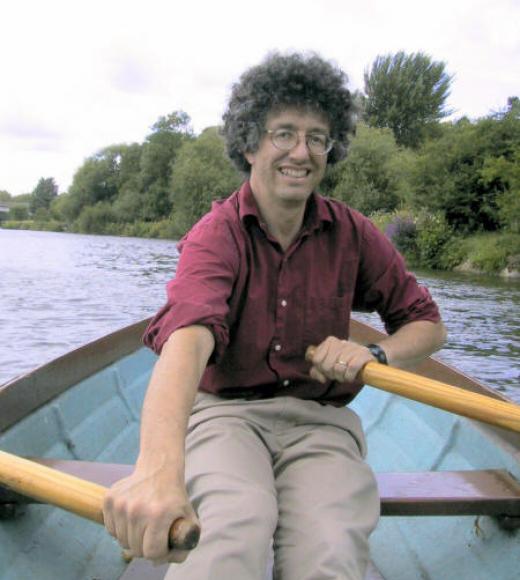 Alan Hastings合作论文数Department of Environmental Science & Policy, University of California, Davis8
 Oleg Kogan合作论文数3Manette E Sandor合作论文数Landscape Conservation Initiative, Northern Arizona University3
 Jenny Zambrano合作论文数Sch Biol Sci, Washington State Univ3Ying Zhou合作论文数Dept Math, Lafayette Coll3
 Sebastian Schreiber合作论文数Department of Evolution and Ecology, College of Biological Sciences, University of California, Davis;Center for Population Biology, University of California, Davis3
 Haldre S Rogers合作论文数Department of BioSciences, Rice University3
 Dallas Tad合作论文数Odum School of Ecology, University of Georgia Athens3
 James Bullock合作论文数UK Centre for Ecology & Hydrology3
 Fricke Evan C合作论文数Department of Biology, University of Washington3
 Christopher Strickland合作论文数Department of Mathematics, Colorado State University3
 John R. Poulsen合作论文数The Nature Conservancy3
 Jeremy S. Johnson合作论文数Broad Institute3
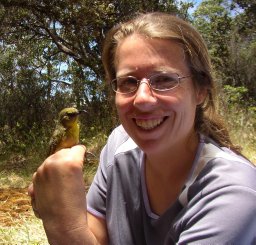 Liba Pejchar合作论文数Department of Environmental Studies, UC Santa Cruz3
 Rebecca S. Snell合作论文数3
 Clare E. Aslan合作论文数Environmental Studies Department, University of California, Santa Cruz3
 Gesine Pufal合作论文数3
 Janneke Hille Ris Lambers合作论文数Department of Environmental Systems Science, ETH Zürich;Department of Biology, College of Arts & Sciences, University of Washington3Jedediah F. Brodie合作论文数3
 Noelle Beckman合作论文数Department of Biology;Lee University;Department of Biology, Lee University3
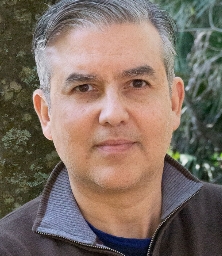 Emilio M. Bruna合作论文数Florida-Brazil Linkage Institute, Center for Latin American Studies, University of Florida;Department of Wildlife Ecology and Conservation, University of Florida3
 Bette Loiselle合作论文数Center for Latin American Studies, University of Florida;Department of Wildlife Ecology and Conservation, College of Agricultural and Life Sciences, University of Florida3Robert Stephen Cantrell合作论文数3
 Damaris Zurell合作论文数Swiss Fed Res Inst WSL3Maria N. Miriti合作论文数University of Illinois at Chicago;Department of Biological Sciences;Smithsonian Tropical Research Institute3
 Katriona Shea合作论文数Department of Biology, Eberly College of Science, Pennsylvania State University3
 Edu Okon Effiom合作论文数2Katie Gurski合作论文数2Geno Schupp合作论文数2Judie Bronstein合作论文数2
 Florian Hartig合作论文数Helmholtz Centre for Environmental Research, UFZ;Department of Ecological Modelling;Department of Ecological Modelling, Helmholtz Centre for Environmental Research2
 Onja Razafindratsima合作论文数Department of Integrative Biology, University of California, Berkeley1
 Houser Dorian S合作论文数Natl Marine Mammal Fdn1
 Eugene W. Schupp合作论文数Department of Wildland Resources, S. J. & Jessie E. Quinney College of Natural Resources, Utah State University1
 Luca Santini合作论文数Charles Darwin Department of Biology and Biotechnologies, University of Rome1
 Daniel P Costa合作论文数Department of Ecology & Evolutionary Biology, University of California Santa Cruz;Institute of Marine Sciences, University of California Santa Cruz1
 Katharine Gurski合作论文数1
 Judith Bronstein合作论文数Department of Entomology, College of Agriculture and Life Sciences, University of Arizona;Department of Ecology and Evolutionary Biology, College of Science, University of Arizona1
 Patrick W. Robinson合作论文数Department of Ecology and Evolutionary Biology, University of California Santa Cruz1
 Michael Neubert合作论文数Biology Department, Woods Hole Oceanographic Institution1
 Marissa L Baskett合作论文数Center for Ecological Analysis and Synthesis, National;University of California , Santa Barbara;National Center for Ecological Analysis and Synthesis, University of California , Santa Barbara1
 Daniel E. Crocker合作论文数Department of Biology, College of Science, Technology, and Business, Sonoma State University1




