This study was carried out to compare the usefulness of electroencephalograph (EEG) and optic nerve sheath diameter (ONSD) in the prediction of outcomes in children undergoing management of hepatic encephalopathy (HE) in the intensive care unit (ICU). Twelve children in the age group 8–14 years with HE and raised intracranial pressure (ICP) were reviewed retrospectively for the prognostication value of EEG and ONSD in their management. The study period was from January 2019 to December 2021. The children were selected consecutively as they were admitted to the ICU. Children admitted to the ICU for the management of acute liver failure, HE, and raised ICP were followed up until recovery or death. Serial recordings of EEG and ONSD were done in twelve children during the management of their critical illness period. ONSD is a physical parameter based on cerebrospinal fluid dynamics while EEG is an electrophysiological measure revealing brain activity. Out of 12 children, ONSD normalized in 4, among these four children, three survived and one expired. Nine children had grade 3 and 4 encephalopathy patterns in their EEGs, and no one survived while three children with EEG grade 1 and 2 encephalopathy, all survived. ONSD values and EEG grades most of the time go together; however, EEG predicted more accurately the survival or death. In addition, seizures were seen in three children. EEG and ONSD are sensitive and useful non-invasive techniques in the prognosis and management of HE, EEG may have an edge over ONSD in predicting outcomes.
Timely diagnosis and management of pediatric acute liver failure (PALF) is of paramount importance to improve survival. The Indian Society of Pediatric Gastroenterology, Hepatology, and Nutrition invited national and international experts to identify and review important management and research questions. These covered the definition, age appropriate stepwise workup for the etiology, non-invasive diagnosis and management of cerebral edema, prognostic scores, criteria for listing for liver transplantation (LT) and bridging therapies in PALF. Statements and recommendations based on evidences assessed using the modified Grading of Recommendations Assessment, Development and Evaluation (GRADE) system were developed, deliberated and critically reappraised by circulation. The final consensus recommendations along with relevant published background information are presented here. We expect that these recommendations would be followed by the pediatric and adult medical fraternity to improve the outcomes of PALF patients.
Lingual seizures (LS) mean isolated seizures of the tongue. They are uncommon, and only a few cases have been reported. Sensory, motor, and autonomic auras or focal manifestations have a localizing value in seizures. LS have been reported with and without focal pathology in the brain. LS must be differentiated from more common conditions, like lingual tremors/dyskinesias. We report a 4-year-and-8-month-old boy with LS.
Background: Seizures are reported in about one-third of patients with severe liver disease in association with acute or chronic liver failure. The majority of the seizures are of focal type. Occasionally generalized tonic-clonic seizures are seen when there is ethanol withdrawal. Not much is known about ictal blinking (IB) in severe liver disease. IB is the rare form of seizures and was reported in severe liver disease recently from this institute. Oculogyric crisis (OGC) is rarely reported in relation to the severe liver disease. OGC was also noted first time in our intensive care unit. Methods: At the Institute of Liver and Biliary Sciences (ILBS), data on patients with IB and OGC were analyzed from October 2018 to January 2023 (52 months). All the patients had video electroencephalograph (video-EEG) recording after proper permission/consent. The patients were followed up later for the course of the illness. Results: A total of 16 (12M:4F) patients were seen. Majority 12 (75%) were IB and 3 OGC. EEG was abnormal in nine (75.0%) of IB patients. Brain imaging had nonspecific findings. The outcome was based on the severity and recovery of the underlying liver disease. Conclusions: Unusual facial movements in the form of IB and OGC are reported, which are most of the time missed. This report highlights the importance of recognition of these events and proper in time management to improve the outcome. ( J CLIN EXP HEPATOL 2023;13:1149-1155)
Purpose: To study the prevalence of back pain in patients of Budd–Chiari syndrome (BCS) with inferior vena cava (IVC) obstruction, and to evaluate the role of IVC recanalization in resolution of back pain. Methods: All patients with BCS and IVC obstruction who underwent IVC recanalization between January 2018 and October 2022 were included. Patients with degenerative spine disease or other identifiable causes for back pain were excluded; remaining patients were assessed for the presence of back pain. In patients with back pain, pain relief was assessed at 24 h following IVC recanalization. Results: Fifty-eight patients with BCS and IVC occlusion were identified, of which six with degenerative spine diseases were excluded. Of the remaining 52 patients, 34 (65.4%) had back pain, with pain score between 3 and 9. Engorged epidural venous plexus on preprocedural imaging (p = 0.002), and degree of luminal narrowing (p = 0.021) had a significant association with back pain. Twenty-nine of thirty-four patients (85.3%) with back pain had pain relief immediately following IVC recanalization, more so in patients with engorged epidural venous plexus on preprocedural imaging (p < 0.001). Conclusion: Back pain is one of the under-reported symptoms of IVC obstruction in BCS. IVC recanalization by IVC angioplasty with or without stenting relieves back pain due to the decompression of engorged epidural veins.
Seizures are not common in cases with chronic liver disease. Overall seizures have been reported in 20-30% of cases in chronic liver disease associated with hepatic encephalopathy. We report two cases of chronic liver disease patients who presented with new-onset refractory focal status epilepticus (SE). Both patients had encephalitis and seizures which responded only when acyclovir was added to the treatment with antiepileptic medication. Herpes encephalitis should be considered as a possible diagnosis in new-onset focal seizures or focal SE in patients with chronic liver disease with or without hepatic encephalopathy, pending further investigations.
Objective Seizures are reported in 20 to 30% of cases with chronic liver disease in association with hepatic encephalopathy. Majority of these are focal seizures. Ictal blinking is reported first time in these patients pre- and post-liver transplant. Methods From November 2018 to October 2021, retrospective data was analyzed in patients with end-stage liver disease and hepatic encephalopathy, both pre- and post-liver transplant. Results Eight patients had ictal blinking, four were pre-transplant and four post-transplant. Five patients (four after liver transplant and one pre-transplant) were seizure free, three died of liver disease and multiorgan dysfunction, and one did not follow-up. Conclusion Ictal blinking in relation to liver disease and hepatic encephalopathy is reported, often missed and requires short duration antiepileptic medications.
Abnormal movements are not uncommon in children. Most of these abnormal movements can be defined by the available criteria. Abnormal movements are easily diagnosed in adults. Most of these abnormal movements are well categorized and diagnosed by the defined characteristics. Sometimes it is difficult to diagnose an unusual movement disorder in children, particularly if it is rare and there are no investigations to prove the diagnosis. Repetitive arm and hand movements (complex motor stereotypy) is one such disorder which is rare and difficult to diagnose unless seen before. In this case report, we described a 6-year-old boy with this disorder, in whom it took 6 years to diagnose.
Abstract Involvement of tongue is uncommon in Wilson's disease (WD) in early stages. This is usually seen late when the patient has an established neurological WD associated with dyskinesia, dystonia, and tremors. In this article, we presented two children with tongue involvement in which there were slow laterotrusion (side to side) and protrusion and retraction movements. In the first child this was the early and only manifestation without any other neurological features while in the second child this was seen in a previously diagnosed WD. Slow tongue movements in any child with or without extrapyramidal features should be investigated to rule out a treatable condition like WD. Tongue involvement is common in children with different neurological/neuromuscular diseases, drugs, and other unknown conditions.
Objectives: To report 2 children with acute hepatic myelopathy after hepatitis A infection who recovered completely after living donor liver transplantation. Methods: All the children admitted into liver intensive care unit (LICU) from November 1st 2018 to 31st October 2019, were evaluated for the neurological features. The data was collected from the admission register of the LICU unit in children below 15 years age. Medical records of these children were reviewed and data collected. Established clinical criteria were used to categorize the various grades of hepatic encephalopathy/myelopathy. Results: 37 children were seen over 1-year period between 6 months to 15 years age. There were 24 male(64.9%) and 13 females. Acute liver failure was seen in 19 (51.3%) and acute on chronic liver failure in 18 (48.7%). There were 10 cases of hepatitis A in acute liver failure group,10 of 19 cases (52.6%), while Wilson’s disease and undetermined etiology group formed the chronic group. 2 cases of hepatic myelopathy were seen in acute liver failure following hepatitis A infection. Both these children underwent live liver donor transplantation and recovered completely. Further in hepatitis A group,3 children had spontaneous recovery, 4 died and 1 child was discharged with end of life care. Overall out of all 37 children with liver failure,20 (54%) were discharged, 6 (16.2%) were advised end of life care and 11 (29.8%) died. Conclusion: Two cases (10.5%) of reversible hepatic myelopathy were seen in acute liver failure group of 19 cases. 18 out of 37 (48.6%) children had residual neurological features at discharge time.
Andermann syndrome, otherwise known as agenesis of the corpus callosum with peripheral neuropathy (ACCPN), is an autosomal recessive motor and sensory neuropathy known to be associated with ACC and mild-to-moderate intellectual disability. We present a 7-year-old girl with infantile-onset hypotonia, mild intellectual disability, and severe motor and sensory demyelinating peripheral neuropathy. Brain magnetic resonance imaging showed intact corpus callosum. Whole exome sequencing showed a novel splice-site pathogenic variant in the SLC12A6 gene. We confirm that ACC is not a mandatory feature and suggest that the term ACCPN may be misleading.
 Al-Futaisi Amna合作论文数Department of Child Health, Sultan Qaboos University Hospital55
 Alexander Chacko合作论文数25
 Shiv Kumar Sarin合作论文数Department of Hepatology, Institute of Liver and Biliary Sciences;Jawaharlal Nehru Center for Advanced Scientific Research12Renjith Mani合作论文数10Rajeev Jain合作论文数9
 Rakhi Maiwall合作论文数9Abdelrahim Rana合作论文数9
 Dilip Sankhla合作论文数9
 Aithala Gururaj合作论文数9Hashim Javad合作论文数8
 Faisal Hamed Al Azri合作论文数Department of Radiology and Molecular Imaging, Sultan Qaboos University Hospital8
 Suman Alam合作论文数JN Medical college, AMU8
 Almundher Al-Maawali合作论文数Department of Genetics, Sultan Qaboos University Hospital;Department of Genetics, Sultan Qaboos University Hospital7
 Al-Thihli Khalid合作论文数Biochemical Diseases Clinical Service, BC Children's Hospital7
 Anuradha Ganesh合作论文数Department of Ophthalmology, Sultan Qaboos University Hospital7S. Razdan合作论文数7MS ELBUALY合作论文数6Anil Motta合作论文数6H Javed合作论文数5P Venugopalan合作论文数5Pamecha Viniyendra合作论文数Department of Hepato-Pancreatico-Biliary and Liver Transplantation Surgery, Institute of Liver and Biliary Sciences5R.Pratap Chand合作论文数5RM JOSHI合作论文数4
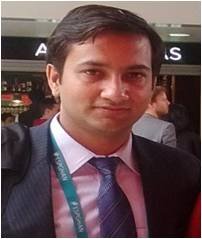 Rajeev Khanna合作论文数4
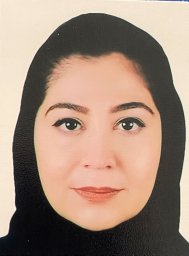 Reem Abdwani合作论文数Muscat4P. C. Jacob合作论文数4Manoj Kumar合作论文数3Rana A Rahim合作论文数3Sushmita Pandey合作论文数3Neha Sharma合作论文数3Vasundhra Bindal合作论文数3Nupur Sharma合作论文数3
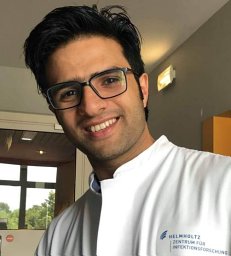 Sadam Bhat合作论文数3
 Babu Mathew合作论文数Department of Molecular and Cellular Medicine, Institute of Liver and Biliary Sciences3Manisha Yadav合作论文数3Adori Csaba合作论文数3Al-Nabhani Susan合作论文数3Surendra Nath Joshi合作论文数3
 Savneet Kaur合作论文数Department of Biochemistry, Kurukshetra University3Kassim Al Riyami合作论文数3
 Nicole I Wolf合作论文数2Z al Lamki合作论文数2Gaurav Tripathi合作论文数2Satyendra Kumar合作论文数2
 Hami Hemati合作论文数2vivek koul合作论文数2Faisal Alzri合作论文数2SHS Al Dhahry合作论文数2Arjun Maria合作论文数2




