We present Movie Gen, a cast of foundation models that generates high-quality, 1080p HD videos with different aspect ratios and synchronized audio. We also show additional capabilities such as precise instruction-based video editing and generation of personalized videos based on a user's image. Our models set a new state-of-the-art on multiple tasks: text-to-video synthesis, video personalization, video editing, video-to-audio generation, and text-to-audio generation. Our largest video generation model is a 30B parameter transformer trained with a maximum context length of 73K video tokens, corresponding to a generated video of 16 seconds at 16 frames-per-second. We show multiple technical innovations and simplifications on the architecture, latent spaces, training objectives and recipes, data curation, evaluation protocols, parallelization techniques, and inference optimizations that allow us to reap the benefits of scaling pre-training data, model size, and training compute for training large scale media generation models. We hope this paper helps the research community to accelerate progress and innovation in media generation models. All videos from this paper are available at https://go.fb.me/MovieGenResearchVideos.
Modern artificial intelligence (AI) systems are powered by foundation models. This paper presents a new set of foundation models, called Llama 3. It is a herd of language models that natively support multilinguality, coding, reasoning, and tool usage. Our largest model is a dense Transformer with 405B parameters and a context window of up to 128K tokens. This paper presents an extensive empirical evaluation of Llama 3. We find that Llama 3 delivers comparable quality to leading language models such as GPT-4 on a plethora of tasks. We publicly release Llama 3, including pre-trained and post-trained versions of the 405B parameter language model and our Llama Guard 3 model for input and output safety. The paper also presents the results of experiments in which we integrate image, video, and speech capabilities into Llama 3 via a compositional approach. We observe this approach performs competitively with the state-of-the-art on image, video, and speech recognition tasks. The resulting models are not yet being broadly released as they are still under development.
Diffusion models are a powerful generative framework, but come with expensive inference. Existing acceleration methods often compromise image quality or fail under complex conditioning when operating in an extremely low-step regime. In this work, we propose a novel distillation framework tailored to enable high-fidelity, diverse sample generation using just one to three steps. Our approach comprises three key components: (i) Backward Distillation, which mitigates training-inference discrepancies by calibrating the student on its own backward trajectory; (ii) Shifted Reconstruction Loss that dynamically adapts knowledge transfer based on the current time step; and (iii) Noise Correction, an inference-time technique that enhances sample quality by addressing singularities in noise prediction. Through extensive experiments, we demonstrate that our method outperforms existing competitors in quantitative metrics and human evaluations. Remarkably, it achieves performance comparable to the teacher model using only three denoising steps, enabling efficient high-quality generation.
Diffusion models have demonstrated remarkable efficacy across various image-to-image tasks. In this research, we introduce Imagine yourself, a state-of-the-art model designed for personalized image generation. Unlike conventional tuning-based personalization techniques, Imagine yourself operates as a tuning-free model, enabling all users to leverage a shared framework without individualized adjustments. Moreover, previous work met challenges balancing identity preservation, following complex prompts and preserving good visual quality, resulting in models having strong copy-paste effect of the reference images. Thus, they can hardly generate images following prompts that require significant changes to the reference image, \eg, changing facial expression, head and body poses, and the diversity of the generated images is low. To address these limitations, our proposed method introduces 1) a new synthetic paired data generation mechanism to encourage image diversity, 2) a fully parallel attention architecture with three text encoders and a fully trainable vision encoder to improve the text faithfulness, and 3) a novel coarse-to-fine multi-stage finetuning methodology that gradually pushes the boundary of visual quality. Our study demonstrates that Imagine yourself surpasses the state-of-the-art personalization model, exhibiting superior capabilities in identity preservation, visual quality, and text alignment. This model establishes a robust foundation for various personalization applications. Human evaluation results validate the model's SOTA superiority across all aspects (identity preservation, text faithfulness, and visual appeal) compared to the previous personalization models.
Object understanding in egocentric visual data is arguably a fundamental research topic in egocentric vision. However, existing object datasets are either non-egocentric or have limitations in object categories, visual content, and annotation granularities. In this work, we introduce EgoObjects, a large-scale egocentric dataset for fine-grained object understanding. Its Pilot version contains over 9K videos collected by 250 participants from 50+ countries using 4 wearable devices, and over 650K object annotations from 368 object categories. Unlike prior datasets containing only object category labels, EgoObjects also annotates each object with an instance-level identifier, and includes over 14K unique object instances. EgoObjects was designed to capture the same object under diverse background complexities, surrounding objects, distance, lighting and camera motion. In parallel to the data collection, we conducted data annotation by developing a multistage federated annotation process to accommodate the growing nature of the dataset. To bootstrap the research on EgoObjects, we present a suite of 4 benchmark tasks around the egocentric object understanding, including a novel instance level- and the classical category level object detection. Moreover, we also introduce 2 novel continual learning object detection tasks. The dataset and API are available at https://github.com/facebookresearch/EgoObjects.
Training text-to-image models with web scale image-text pairs enables the generation of a wide range of visual concepts from text. However, these pre-trained models often face challenges when it comes to generating highly aesthetic images. This creates the need for aesthetic alignment post pre-training. In this paper, we propose quality-tuning to effectively guide a pre-trained model to exclusively generate highly visually appealing images, while maintaining generality across visual concepts. Our key insight is that supervised fine-tuning with a set of surprisingly small but extremely visually appealing images can significantly improve the generation quality. We pre-train a latent diffusion model on $1.1$ billion image-text pairs and fine-tune it with only a few thousand carefully selected high-quality images. The resulting model, Emu, achieves a win rate of $82.9\%$ compared with its pre-trained only counterpart. Compared to the state-of-the-art SDXLv1.0, Emu is preferred $68.4\%$ and $71.3\%$ of the time on visual appeal on the standard PartiPrompts and our Open User Input benchmark based on the real-world usage of text-to-image models. In addition, we show that quality-tuning is a generic approach that is also effective for other architectures, including pixel diffusion and masked generative transformer models.
Continual Learning, also known as Lifelong or Incremental Learning, has recently gained renewed interest among the Artificial Intelligence research community. Recent research efforts have quickly led to the design of novel algorithms able to reduce the impact of the catastrophic forgetting phenomenon in deep neural networks. Due to this surge of interest in the field, many competitions have been held in recent years, as they are an excellent opportunity to stimulate research in promising directions. This paper summarizes the ideas, design choices, rules, and results of the challenge held at the 3rd Continual Learning in Computer Vision (CLVision) Workshop at CVPR 2022. The focus of this competition is the complex continual object detection task, which is still underexplored in literature compared to classification tasks. The challenge is based on the challenge version of the novel EgoObjects dataset, a large-scale egocentric object dataset explicitly designed to benchmark continual learning algorithms for egocentric category-/instance-level object understanding, which covers more than 1k unique main objects and 250+ categories in around 100k video frames.
Many active learning and search approaches are intractable for large-scale industrial settings with billions of unlabeled examples. Existing approaches search globally for the optimal examples to label, scaling linearly or even quadratically with the unlabeled data. In this paper, we improve the computational efficiency of active learning and search methods by restricting the candidate pool for labeling to the nearest neighbors of the currently labeled set instead of scanning over all of the unlabeled data. We evaluate several selection strategies in this setting on three large-scale computer vision datasets: ImageNet, OpenImages, and a de-identified and aggregated dataset of 10 billion publicly shared images provided by a large internet company. Our approach achieved similar mAP and recall as the traditional global approach while reducing the computational cost of selection by up to three orders of magnitude, enabling web-scale active learning.
In this paper, we provide a deep dive into the deployment of inference accelerators at Facebook. Many of our ML workloads have unique characteristics, such as sparse memory accesses, large model sizes, as well as high compute, memory and network bandwidth requirements. We co-designed a high-performance, energy-efficient inference accelerator platform based on these requirements. We describe the inference accelerator platform ecosystem we developed and deployed at Facebook: both hardware, through Open Compute Platform (OCP), and software framework and tooling, through Pytorch/Caffe2/Glow. A characteristic of this ecosystem from the start is its openness to enable a variety of AI accelerators from different vendors. This platform, with six low-power accelerator cards alongside a single-socket host CPU, allows us to serve models of high complexity that cannot be easily or efficiently run on CPUs. We describe various performance optimizations, at both platform and accelerator level, which enables this platform to serve production traffic at Facebook. We also share deployment challenges, lessons learned during performance optimization, as well as provide guidance for future inference hardware co-design.
The disclosed embodiments provide a system for processing data. During operation, the system stores a set of feed updates associated with a set of entities in descending chronological order within a set of resizable blocks. For each entity in the set of entities, the system generates an index containing one or more lists of resizable blocks storing a subset of the feed updates associated with the entity, wherein the one or more lists are sorted in descending chronological order. The system then uses the index to generate a content feed containing a selection of the feed updates for outputting to a viewer.
According to an aspect, an online education platform may be configured to provide an online course over a network to a plurality of computing devices. The online course may provide education content in which learners view and interact with the education content. The online education platform may include an online course analyzer to determine performance data associated with learners' engagement with the education content including an engagement metric indicating a level of engagement of the learners with the education content during a session of the online course, and provide the performance data via an instructor dashboard. The online course analyzer may include a content editor configured to edit the education content based on the performance data including changing at least a portion of the education content based on the performance data before a completion of the online course.
According to an aspect, a system may an online education platform configured to provide an online course over a network to a plurality of computing devices. The online course may provide education content in which learners view and interact with the education content. The online education platform may include a content editor may provide an authoring tool on a computing device associated with an instructor of the online course. The authoring tool may develop or change the education content associated with the online course. The content editor may include an education content converter to receive the education content via the authoring tool in a first format, and the education content converter may convert the first format to a second format. The content editor may be configured to provide the education content having the second format to the plurality of computing devices associated with the learners.
atualizacoes de fluxo de atividade computada em lote a presente invencao refere-se a um sistema que pode receber, pelo menos em parte a partir de um banco de dados atualizado, uma pluralidade de atualizacoes ate uma pluralidade de perfis que descreve individualmente uma pluralidade de usuarios de uma rede social. o sistema pode processar, usando um processador em lote pelo menos alguma pluralidade de atualizacoes para gerar uma atualizacao consolidada indicativa de um status de pelo menos alguma pluralidade de perfis. o sistema pode transmitir a atualizacao consolidada para o banco de dados atualizado. o sistema pode exibir a atualizacao consolidada em um fluxo de atualizacao da rede social que corresponde a pelo menos uma pluralidade de usuarios.
Large-scale websites are predominantly built as a service-oriented architecture. Here, services are specialized for a certain task, run on multiple machines, and communicate with each other to serve a user's request. Reducing latency and improving the cost to serve is quite important, but optimizing this service call graph is particularly challenging due to the volume of data and the graph's non-uniform and dynamic nature. In this paper, we present a framework to detect hotspots in a service-oriented architecture. The framework is general, in that it can handle arbitrary objective functions. We show that finding the optimal set of hotspots for a metric, such as latency, is NP-complete and propose a greedy algorithm by relaxing some constraints. We use a pattern mining algorithm to rank hotspots based on the impact and consistency. Experiments on real world service call graphs from LinkedIn, the largest online professional social network, show that our algorithm consistently outperforms baseline methods.
The use of large-scale data mining and machine learning has proliferated through the adoption of technologies such as Hadoop, with its simple programming semantics and rich and active ecosystem. This paper presents LinkedIn's Hadoop-based analytics stack, which allows data scientists and machine learning researchers to extract insights and build product features from massive amounts of data. In particular, we present our solutions to the ``last mile'' issues in providing a rich developer ecosystem. This includes easy ingress from and egress to online systems, and managing workflows as production processes. A key characteristic of our solution is that these distributed system concerns are completely abstracted away from researchers. For example, deploying data back into the online system is simply a 1-line Pig command that a data scientist can add to the end of their script. We also present case studies on how this ecosystem is used to solve problems ranging from recommendations to news feed updates to email digesting to descriptive analytical dashboards for our members.
 Sam Shah合作论文数Databricks6
 SHAH SAMIR M合作论文数5Jay Kreps合作论文数5
 Peter Vajda合作论文数Meta SuperIntelligence Lab4Mitesh Kumar Singh合作论文数3
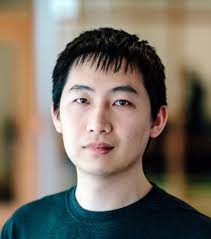 Peizhao Zhang (张培钊)合作论文数Meta Reality Labs, Facebook3
 Vladan Petrovi合作论文数3Haoyu Ma合作论文数2Amy Yang合作论文数2Ce Liu合作论文数2Dingkang Wang合作论文数2Tianhe Li合作论文数2Kiran Jagadeesh合作论文数2Sean Chang Culatana合作论文数2Lawrence Chen合作论文数2Ankit Ramchandani合作论文数2Wenyin Fu合作论文数2
 Mannat Singh合作论文数Meta2Yiwen Song合作论文数2
 Yasmine Babaei合作论文数Meta2
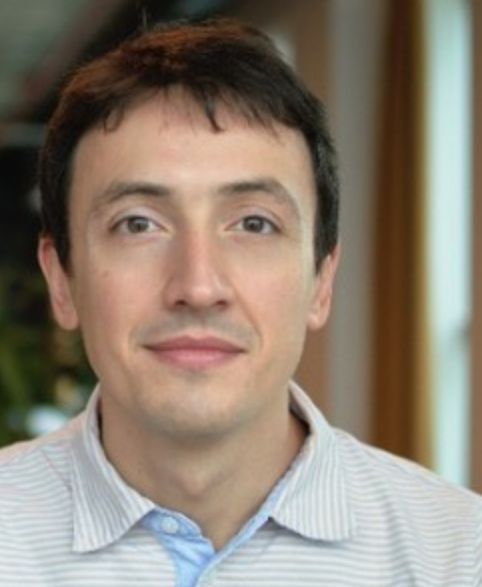 Viktor Kerkez合作论文数Meta2Simran Motwani合作论文数2Summer Deng合作论文数2Lili Wu合作论文数2Hyung Jin Kim合作论文数2Yeon Kim合作论文数2Andres Alvarado合作论文数2Jiecao Yu合作论文数University of Michigan2
 Simon Vandenhende合作论文数Meta2Turadg Aleahmad合作论文数2
 Abhimanyu Dubey合作论文数Massachusetts Institute of Technology2
 Samyak Datta合作论文数Georgia Institute of Technology2
 Kevin Chih-Yao Ma (馬志堯)合作论文数Meta2
 Glaser, T.合作论文数Technion - Israel Inst. of Technol.;c2
 Jongsoo Park合作论文数Parallel Computing Lab, Intel2
 Ishan Misra合作论文数GenAI Research2
 Fanyi Xiao合作论文数Meta AI2
 Rohit Girdhar合作论文数GenAI Research Group, Meta2
 Filip Radenovic合作论文数Facebook AI2
 Edgar Schönfeld合作论文数Meta Reality Labs2
 Jonas Köhler合作论文数Freie Universitat Berlin2
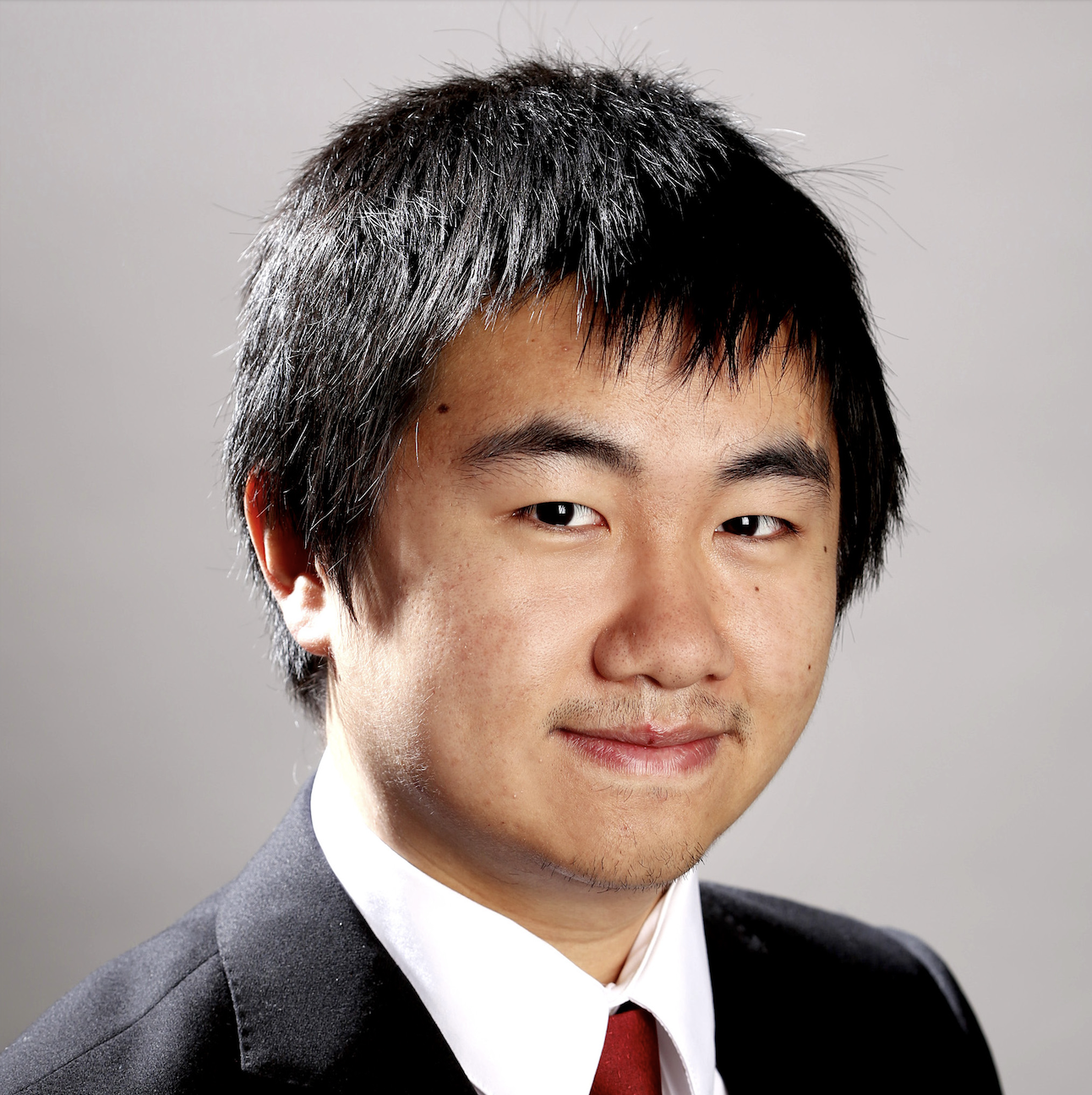 Zecheng He合作论文数Meta GenAI2
 Xiaoliang Dai合作论文数Facebook2
 Chenchen Zhu (诸宸辰)合作论文数Meta AI2
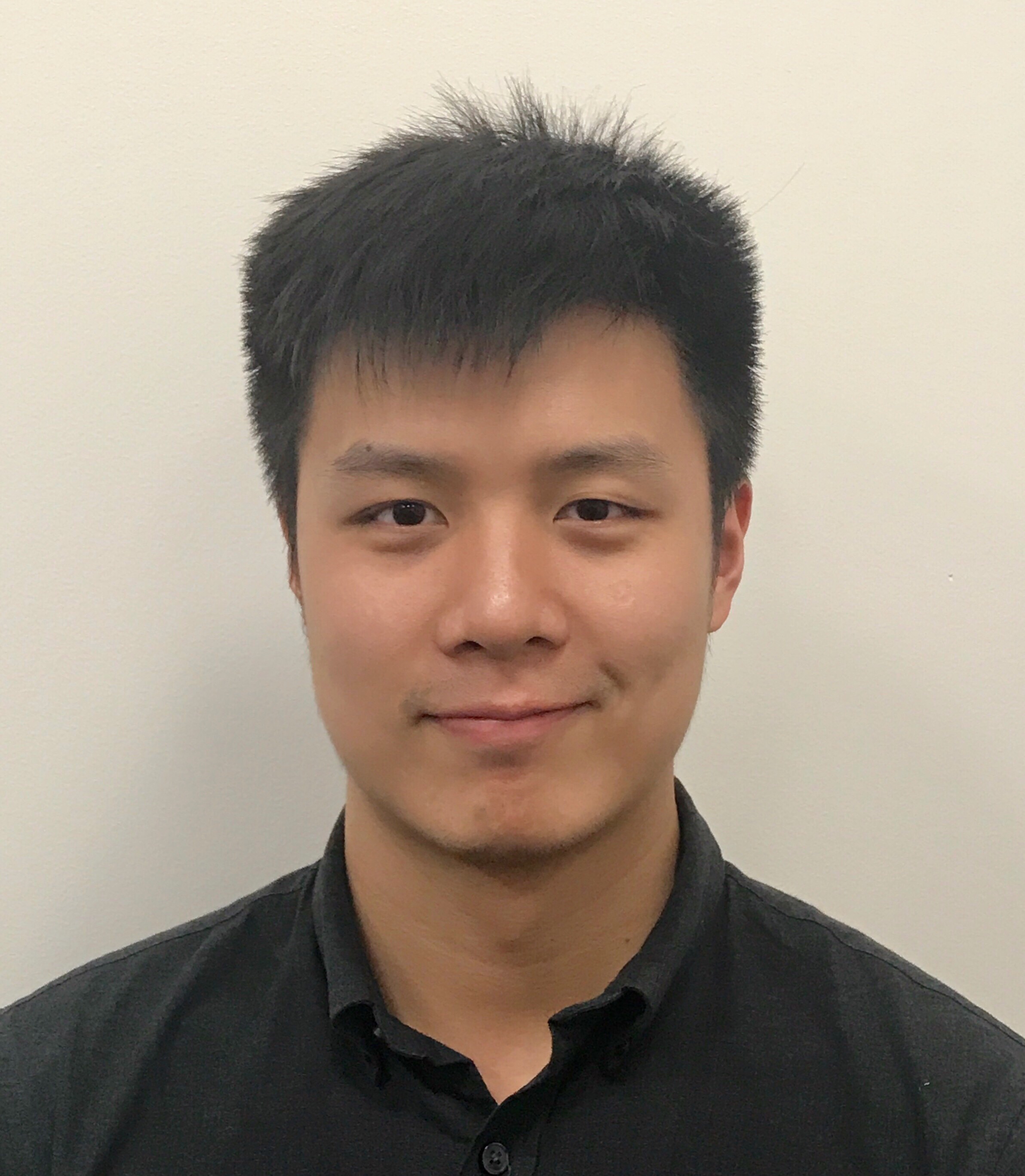 Kunpeng Li合作论文数Meta Generative AI2
 Jialiang Wang合作论文数Meta AI2
 Zijian He合作论文数Reality Laboratories, Meta2
 Zhicheng Yan (严志程)合作论文数Meta2
 Ji Hou (侯骥)合作论文数Technical University of Munich2




