There is limited information on the influence of genetic and environmental variability on soybean protein composition. This study aimed to determine the role of genotype (G), environments (E), and the interrelationship of genotype and environment (G×E) on soybean seed protein. Three sets of nine soybean genotypes were grown in replicated trials at Maryland, South Carolina, and South Dakota. At each location, the nine genotypes were grown with two planting/sowing dates. We applied two-dimensional gel electrophoresis and mass spectrometry to study the variability of soybean storage and allergen proteins. Statistical analysis of 47 storage and 8 allergen proteins, in terms of differentially expressed protein spots significant at the p<0.005 level, was performed. We found more spots that showed statistically significant differences in expression among E compared to G and G×E interaction.
Soybean [ Glycine max (L.) Merr.] is an important oilseed crop which produces about 30 % of the world’s edible vegetable oil. The quality of soybean oil is determined by its fatty acid composition. Soybean oil high in oleic and low in linolenic fatty acids is desirable for human consumption and other uses. The objectives of this study were to identify quantitative trait loci (QTLs) for unsaturated fatty acids and to evaluate the genetic effects of single QTL and QTL combinations in soybean. A population of recombinant inbred lines derived from the cross of SD02-4-59 × A02-381100 was evaluated for fatty acid content in seven environments. In total, 516 polymorphic single nucleotide polymorphism markers, 477 polymorphic simple sequence repeat markers and three GmFAD3 genes were used to genotype the mapping population. By using the composite interval mapping and/or the interval mapping method, a total of 15 QTLs for the three unsaturated fatty acids were detected in more than two environments. Two QTLs for oleic acid on linkage groups G [chromosome (Chr) 18] ( qOLE - G ) and J (Chr 16) ( qOLE - J ), three QTLs for linoleic acid on linkage groups A1 (Chr 5) ( qLLE - A1 ) and G (Chr 18) ( qLLE - G - 1 and qLLE - G - 2 ), and five QTLs for linolenic acid on linkage groups C2 (Chr 6), D1a (Chr 1), D1b (Chr 2), F (Chr 13) and G (Chr 18) were consistently detected in at least three individual environments and the average data over all environments. Significant QTL × QTL interactions were not detected. However, significant QTL × environment interactions were detected for all the QTLs which were repeatedly detected. Some QTLs reported previously were confirmed, and seven new QTLs (two for oleic acid, two for linoleic acid and three for linolenic acid) were identified in this study. Comparisons of two-locus and three-locus combinations indicated that cumulative effects of QTLs were significant for all the three unsaturated fatty acids. QTL pyramiding by molecular marker-assisted breeding would be an appropriate strategy for the improvement of unsaturated fatty acids in soybean.
Soybean (Glycine max (L.) Merr.) is a major source of plant protein for humans and livestock. Deficiency of sulfur-containing amino acids (cysteine and methionine) in soybean protein is a main limitation of soybean meal as an animal feed ingredient. The objectives of this study were to identify and validate quantitative trait loci (QTLs) associated with cysteine and methionine contents in two recombinant inbred line (RIL) populations, and to analyze the genetic effects of individual QTLs and QTL combinations in soybean. Both the mapping population of SD02-4-59 × A02-381100 and validation population of SD02-911 × SD00-1501 were evaluated for cysteine and methionine contents in multiple environments. Correlation analysis indicated that there was a highly positive correlation between cysteine and methionine contents. Significant positive correlations were also observed between the sulfur-containing amino acid contents and protein content. In the mapping population, eight QTLs for both cysteine and methionine contents were consistently detected in any individual environment and the average data over all three environments. Three of these QTLs were confirmed in the validation population. A comparison with the previous studies indicated that most of the genomic regions linked to the QTLs for the sulfur-containing amino acids were also associated with protein content. Cumulative effects of multiple QTLs for the traits were significant in both populations. This information should be useful for the improvement of the levels of protein and amino acids in soybean seeds.
Conventional cultivars with high yield, good seed quality and disease resistance are required for organic farming, soy food production, and some specific markets. Soybean [Glycine max (L.) Merr.] 'Brookings' (Reg. No. CV-512, PI 667735) was developed at South Dakota State University (SDSU), Brookings, SD, and released by the South Dakota Agricultural Experiment Station in 2012, for its high yield potential, good seed quality, and resistance to Phytophthora root rot, as well as adaptability to South Dakota and similar regions. Brookings (experimental line SD05-240) is a maturity group (MG) I cultivar (relative maturity 1.7). It originated from the F-5 progeny of a single F-4 plant derived from the cross of A00-711063 x SD98-595 by a single-pod descent method. Following yield trials within the SDSU soybean breeding program, it was further evaluated for yield and seed quality traits through the USDA Northern Regional Uniform Soybean Preliminary Tests (UPT) in 2008, Uniform Soybean Tests (UT) in 2009 and 2010, and the South Dakota Crop Performance Tests (CPT) in 2009 and 2010. The yield of Brookings in the SD CPT averaged 4257 kg ha(-1), 14.2% higher than the check cultivar Deuel and 8.9% higher than 'MN1410' (P < 0.05). In the MG II UPT (11 locations) and MG I UT tests (29 environments), Brookings exhibited a mean yield comparable to check cultivars IA1022 and MN1410. The average protein concentration of Brookings was higher than IA1022 but lower than MN1410, and its oil content was similar to MN1410 but lower than IA1022. It had the best seed quality among the test entries. In addition, Brookings has the Rps1k allele for resistance to Phytophthora sojae, which is derived from the parent SD98-595, and exhibited resistance to races 4 and 7 of P. sojae. Brookings is a conventional MG I cultivar and thus a good option for producers of non-genetically modified soybeans in South Dakota and similar regions.
Soybean [Glycine max (L.) Merr.] 'Codington' (Reg. No. CV-511, PI 667736) was developed at South Dakota State University (SDSU), Brookings, SD. It was released by the South Dakota Agricultural Experiment Station in April 2013 for high yield, a large seed with high protein and oil content suitable for soy food production. Codington (experimental line SD04CV-611) is a late maturity group (MG) 0 cultivar (relative maturity 1.0). It originated from the F-5 progeny of a single F-4 plant derived from the cross of 'Surge' x A96-591033 by a modified single-seed descent method. Following yield trials within the SDSU soybean breeding program, it was evaluated for yield and quality through the USDA Northern Regional Uniform Soybean Tests (UT) in 2007 to 2010 and South Dakota Crop Performance Tests (CPT) in 2010 to 2012. Over all 36 environments, the yield of Codington averaged 3611.3 kg ha(-1), 1.2% higher than the check cultivar Surge. In the UT tests (24 year-locations), Codington also exhibited an average yield 2.9% higher than the check cultivar Sheyenne. The average protein and oil content of Codington for the UT tests (22 year-locations) was 365.3 and 174.4 g kg(-1) at 13% moisture, compared with Surge (364.0 and 174.4 g kg-1) and Sheyenne (342.0 and 178.2 g kg(-1)). Its 100-seed weight was 21 g. Codington is a conventional, high-yield, high-quality (relatively higher protein and oil concentration as well as good visual seed quality), MG 0 cultivar with large seeds, and thus it is particularly suitable for soy food production in South Dakota and similar regions.
Soybean seeds contain high levels of oil and protein, and are the important sources of vegetable oil and plant protein for human consumption and livestock feed. Increased seed yield, oil and protein contents are the main objectives of soybean breeding. The objectives of this study were to identify and validate quantitative trait loci (QTLs) associated with seed yield, oil and protein contents in two recombinant inbred line populations, and to evaluate the consistency of QTLs across different environments, studies and genetic backgrounds. Both the mapping population (SD02-4-59 × A02-381100) and validation population (SD02-911 × SD00-1501) were phenotyped for the three traits in multiple environments. Genetic analysis indicated that oil and protein contents showed high heritabilities while yield exhibited a lower heritability in both populations. Based on a linkage map constructed previously with the mapping population and using composite interval mapping and/or interval mapping analysis, 12 QTLs for seed yield, 16 QTLs for oil content and 11 QTLs for protein content were consistently detected in multiple environments and/or the average data over all environments. Of the QTLs detected in the mapping population, five QTLs for seed yield, eight QTLs for oil content and five QTLs for protein content were confirmed in the validation population by single marker analysis in at least one environment and the average data and by ANOVA over all environments. Eight of these validated QTLs were newly identified. Compared with the other studies, seven QTLs for seed yield, eight QTLs for oil content and nine QTLs for protein content further verified the previously reported QTLs. These QTLs will be useful for breeding higher yield and better quality cultivars, and help effectively and efficiently improve yield potential and nutritional quality in soybean.
Soybean [Glycine max (L.) Merr.] cultivar Roberts (Reg. No. CV-510, PI 667737) was developed at South Dakota State University (SDSU), Brookings, SD, and released by the South Dakota Agricultural Experiment Station in April 2013. It was released because of its high yield potential, good seed quality, and resistance to Phytophthora root rot (Phytophthora sojae Kaufmann & Gerdemann), as well as adaptability to South Dakota and similar latitudes. Roberts, originally designated as SD03-2154, is a maturity group (MG) 0 cultivar (relative maturity 0.7-0.8). It originated from the F-5 progeny of a single F-4 plant derived from the cross of 'Surge' x A96-492041 with early generations advanced by a modified single-seed descent method. It was initially evaluated for yield and quality in the SDSU soybean breeding program, and advanced testing was further conducted in the USDA Northern Regional Uniform Tests (UTs) and the South Dakota Crop Performance Tests (CPTs) during 2006 to 2012. Over 35 environments, the yield of Roberts averaged 3404.6 kg ha(-1), which was 4.3% higher than the check cultivar Surge (3264.2 kg ha(-1)). In the UTs (23 year-locations), Roberts averaged a 4.3% higher yield than the check cultivar Sheyenne. Average protein and oil concentrations of Roberts were 351.1 and 178.6 g kg(-1) at 13% moisture, compared with Surge (362.0 and 175.9 g kg(-1)) and Sheyenne (339.1 and 178.7 g kg(-1)). In addition, it exhibited resistance to races 4 and 7 of P. sojae. Roberts is a conventional, high-yield, good-quality, MG 0 cultivar with the allele Rps1k for resistance to P. sojae, and thus it is a good replacement for Surge for producers of non-genetically modified soybeans in South Dakota and similar latitudes.
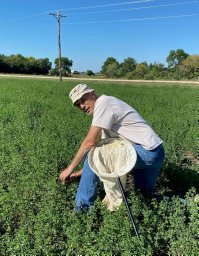
The soybean aphid, Aphis glycines Matsumura, has become a serious pest of soybean [Glycine max (L.) Merr.] in North America, and host-plant resistance is one potential management tool. In the current study, various F2-derived soybean selections with the Rag1 gene for resistance to soybean aphid were evaluated among F2-derived soybean selections without Rag1 and among contemporary soybean lines in a two-year field test. Overall, aphid levels per plant were over tenfold greater in 2006 than in 2005, but lines generally performed similarly relative to one another between years with regard to aphid-infestation levels. In both years, the Rag1 selections ILL4, ILL27, ILL35, ILL37, ILL64RR, ILL76RR, and ILL77RR had the lowest mean number of soybean aphids per plant. In 2005, three putative Rag1 selections—ILL26, ILL67RR, and ILL87—had intermediate aphid infestation levels greater than those of other Rag1 selections, and in 2006 ILL26 and ILL67RR also had intermediate aphid levels that did not differ from all other lines. Irrespective of the Rag1 gene, all soybean lines tested in 2006 had potentially injurious infestations ( 799 soybean aphids per plant) that exceeded action thresholds for this pest. These results show varying levels of resistance among lines homozygous for the Rag1 resistance allele and that protection may be equivocal in years of heavy infestation by soybean aphid. Implications for testing putatively aphid-resistant soybean selections in the field and the potential for field deployment of aphid-resistant lines are discussed.
Resistance to the soybean aphid (Aphis glycines Matsumura) was characterized in segregating populations from crosses of soybean [Glycine max (L.) Merr.] accession PI 71506 to susceptible cultivars, and compared to Rag1 resistance from the cultivar 'Dowling.' Two susceptible adapted cultivars were crossed with PI 71506 or Dowling. In no-choice greenhouse assays, resistance corresponded to a single dominant gene model for both the PI 71506-derived and Dowling-derived populations. Segregation of aphid resistance in SD1111RR x PI 71506 F-2:3 populations in aphid field-cage trials also fit a single-gene model, as did segregation of aphid resistance in the F-2:5 generation. However, other genetic effects may also contribute to aphid resistance from PI 71506. Comparison with Rag1 resistance from Dowling indicated that PI 71506 resistance was weaker than that associated with Rag1, but antixenosis resistance from PI 71506 was effective against an Ohio aphid biotype that has overcome Rag1 resistance.
Breeding of soybeans with improved oil quality has intensified during the past decade. Stability of performance across environments is essential for consistent production of modified fatty acid levels. This study was conducted in 2004 and 2005 to determine fluctuations of modified fatty acid profiles across diverse northern environments, with the main focus on linolenic acid. We studied the fatty acids most likely to fluctuate (palmitic, stearic, oleic and linoleic) with changes in linolenic acid concentrations. The experiment was composed of 38 genotypes (maturity groups 0, I & II), derived from two crosses of South Dakota (SD) high-protein genotypes with two low-linolenic parents. The underlying objective was to combine the low linolenic genes with high-protein and high-yield backgrounds. The study included three high-yielding check cultivars, the two low-linolenic parents and the two high-protein parents. All 45 genotypes were tested in seven eastern SD locations in two years. Combined analysis revealed significant differences among entries for all fatty acids. Location effects were significant for all fatty acids except palmitic acid. Significant entry × location effects were found only for oleic acid. There were significant differences among maturity group means for palmitic, oleic and linoleic acids. Decreases in linolenic acid were accompanied by increases in palmitic acid, indicating the possibility of lowering saturates and linolenic acid simultaneously. Relationships of linolenic acid with oleic acid were negative. Regression coefficients (bi) of genotypes that had less than 4% linolenic acid ranged from −0.85 to 0.78, with mean deviation from regression (S2 d) of −0.39 to −0.07. Low linolenic acid genotypes were highly stable across environments and hence it is possible that the trait can be maintained in northern environments without detrimental effects on other important traits.
ABSTRACT Soybean [Glycine max (L.) Merrill] is a major crop in the world and in the United States. In 2006, soybeans represented 57% of the world oilseed production. Because of oxidation problems upon heating and storage of the oil, and because of health risks related to the production of trans-fatty acids during oil hydrogenation, reducing linolenic acid content in soybean oil below 2% is now an important goal in soybean breeding programs. The current methods for evaluation of the fatty acid content in the oil (fat extraction and gas chromatography-mass spectrometry analysis of the fatty acids) are time consuming and expensive. Our objective was to develop molecular markers that would allow the selection for low linolenic acid lines without the need for analysis of the fatty acid content of the oil. Populations were developed by crossing a low linolenic parent with high-yielding adapted South Dakota lines. We developed a molecular marker that was linked to the low linolenic acid trait in our populations and permitted effective selection for low linolenic acid lines. In the three populations developed for the study, a single backcross proved to be the most effective way to combine the low linolenic acid trait of the donor parent with the high-yielding genes of the recurrent parent.
Soybean 〔Glycine max (L.)Merr.〕 cultivars with smaller area and lanceolate leaves have shown better light distribution through their canopy and a higher photosynthetic rate than those with larger leaf area and oval leaf shape. However, very little information has been published about leaf characteristics in relation to yield potential and inheritance which would assist breeding effects to develop new cultivars with optimum leaf area and leaf shape. Gene action and heritability for leaf area, leaf shape, and other reproductive characteristics were studied in a diallel cross including nine parents with large, medium, and small leaf area. Most progenies from crosses among parents with different leaf areas had larger mean leaf area, longer flowering, and later maturity than the midparent and both parents, suggesting transgressive segregation for these traits. General combining ability (GCA) and specific combining ability (SCA) for leaf area and leaf shape were significant in populations. Ratios of GCA to SCA were 0.96% for leaf shape and 0.89 for leaf area, indicating that GCA effects were more important than SCA. Genetic gain for leaf area and shape may be possible through selections. Narroow sense heritability estimated on the basis of variance components was 43.4% for leaf area, 63.2% for leaf shape, and 29.1% for maturity, which were lower than days to flowering and flowering period due to large error variances (σ2E) caused by field environmental factors. This study indicated that it is possible to optimize leaf area and leaf shape related to photosynthetic rate and subsequently yield, because of relatively large and significant GCA effects for these traits. The predominance of additive effects should improve the effectiveness of selection based on performance of individual cultivars.
Studies have shown no consensus in relationships between seed yield and vigor in soybean [Glycine max (L.) Merrill]. The lack of information regarding the inheritance of seed vigor prompted this study to determine the types of gene action and combining ability estimates for seed vigor and its related traits. Five high and six low seed vigor soybean genotypes were crossed in a diallel, and selfed to produce 55 F2 progenies, which were examined, along with the parents, for seed vigor, yield, and seed weight. Significant genotype and environment effects were found for seed vigor and yield. General combining ability (GCA) effects for seed vigor and seed yield were significant (p≤ 0.01) and larger than specific combining ability (SCA) effects. Significant GCA and SCA effects were found for seed weight, indicating that both additive and non additive genetic effects were involved in conditioning seed weight. The ratios of mean square, 2GCA / (2GCA+SCA), were 0.96 for seed vigor and 0.93 for seed yield. These ratios indicated that additive gene effects were more important than non additive gene effects for seed vigor and seed yield in these crosses. Mean seed vigor(83.8%), as determined by accelerated aging germination, and mean seed yield (2,155 kg ha-1)in high vigor × high vigor crosses were higher than the high vigor × low vigor and low vigor × low vigor crosses. Mean percent accelerated aging germination rates in F2 populations from diallel crosses were significantly related to mid-parent seed vigor(r2 = 0.52**) and midparent seed size (r2 = 0.31**). These results indicated that levels of seed vigor can be improved through breeding, while maintaining high yields because of the predominance of GCA effects in both seed vigor and seed yield.
This study reports the isoflavone contents of 210 soybean cultivars grown in South Dakota and explores possible relations between isoflavone contents and agronomic characteristics. Total isoflavone contents (normalized) ranged from 1161 to 2743 μg/g. A number of agronomic characteristics were documented for each variety including maturity group, hilum color, disease resistance, seed weight, yield, maturity (in days), and plant height. Varieties in maturity group I had significantly higher total isoflavones when compared to maturity group 0. Hilum color was related to differences in genistin, daidzein, and genistein content. No differences in isoflavone content were observed based on disease resistance profiles. Genistein content was found to be negatively correlated with yield, days of maturity, and plant height. Weak but significant correlations also existed between these agronomic characteristics and other isoflavones.
Nearest-neighbor analysis (NNA) adjusts for spatially correlated residuals, with the goal of increasing precision. The magnitude of the block x treatment interaction mean square is commonly used to evaluate the precision of the NNA model. An alternative method of evaluating the precision of the NNA and classical unadjusted (UNADJ) randomized complete block (RCB) analysis would be to use the pooled variance between duplicate treatments within each block. We defined pare error as variation between plots that are treated alike within a block. Within each location, each genotype was randomly assigned to two plots within each block of an RCB design. The pure error of soybean [Glycine max (L.) Merr.] genotypes was evaluated at eight locations. Our objective was to compare the block X treatment and pure error mean squares for yield, physiological maturity, and plant height to determine whether the NNA or UNADJ analysis reduces intrablock variation. The NNA analysis always decreased the magnitude of the block x treatment interaction mean squares, compared with the UNADJ analysis. In some comparisons, the pure error mean square of the NNA analysis was significantly smaller than the pure error of the UNADJ analysis. The magnitude of the block x treatment mean square is not useful for comparing the relative precision of these two analyses. When the pure error mean square was used to measure precision, the NNA was at least as precise as the UNADJ analysis.
 Xianzhi Wang (王贤智)合作论文数云南大学农学院6
 Guoliang Jiang合作论文数Virginia State University6
 Green Marci合作论文数5
 Jiaoping Zhang (张焦平)合作论文数College of Agriculture, Nanjing Agricultural University4Perry B. Cregan合作论文数4
 Siddhi J. Bhusal合作论文数Dept Agron & Plant Genet, Univ Minnesota3Qijian Song合作论文数Soybean Genomics and Improvement Laboratory, USDA-ARS3Youngkoo Cho合作论文数2
 Louis S. Hesler合作论文数Agricultural Research Service, North Central Agricultural Research Laboratory2
 David L. Hyten合作论文数Soybean Genomics and Improvement Laboratory2
 Nicholas Hall合作论文数Department of Neurology/Neurosurgery, Montreal, Quebec, Canada2k e dashiell合作论文数1Emerson Shipe合作论文数1a van nurden合作论文数1Varma Tirumalaraju Sivananda合作论文数1
 Mukhtar Omar Agoub合作论文数Agricultural Research Centre1Kelley J Tilmon合作论文数1K. Glover合作论文数1Deirdre A. Prischmann合作论文数1Khan Farooq合作论文数1Sauer Marie-Laure合作论文数1
 Yang Yen合作论文数Department of Biology and Microbiology, South Dakota State University1Sug Kee Suh合作论文数1James Hammond合作论文数1Wesley M. Garrett合作论文数1David Karki合作论文数1Savithiry Natarajan合作论文数1
 Brian Diers合作论文数Department of Crop Sciences, College of Agricultural, Consumer and Environmental Sciences, University of Illinois at Urbana-Champaign1Marci Sherrard合作论文数1Sukla Lakshman合作论文数1Ho Ki Park合作论文数1Thomas Cheesbrough合作论文数1T. C. Helms合作论文数1Chunyang Wang合作论文数1




