People tend to seek and engage with information that aligns with their pre-existing beliefs rather than challenges them, reinforcing ideological echo chambers and polarization. While prior research has focused on high-level choices (e.g., what people want to read and how they evaluate it), the present study asks whether motivated cognition manifests at the fundamental level of reading. Using eye-tracking, we monitored participants (N=76) - half vegetarian and half non-vegetarian - each reading short factual paragraphs about the positive and negative implications of vegetarianism, resulting in a total of 756 trials (i.e., reads of passages). Consistent with our hypothesis, there was a significant interaction between participants’ stance and the text’s argument on reading behavior: Readers skipped more words when texts opposed rather than aligned with their stance, indicating reduced cognitive engagement with attitude-incongruent content. This attitude-congruency effect emerged in both overall and first-run skipping measures. These findings suggest that motivated cognition operates already during early information intake, revealing a mechanism through which worldview-consistent biases take root.
This research demonstrates that citing scientific sources to correct disinformation can be ineffective or even counterproductive, and offers a potential remedy. Three experiments simulated a WhatsApp conversation about COVID-19 vaccine disinformation, examining corrections in the high-uncertainty context of the early 2021 stage of the pandemic (Studies 1 and 2) and among vaccine skeptics in 2024 (Study 3). A science-based correction backfired during the pandemic and was ineffective among skeptics in 2024. However, a brief, content-agnostic intervention, comprising three simple prompts directing attention to facts and experts, consistently attenuated these patterns. The intervention specifically enhanced the effectiveness of science-based corrections, but not corrections without a source, and it worked even for skeptics who typically distrust science, suggesting it acts by increasing the salience of evidence and expertise. These findings indicate that for science to be an effective antidote to disinformation, individuals may first need a cognitive nudge toward an evidence-oriented mindset.
Under widespread misinformation, deciding which news sources to trust is consequential. Here, we examine the mechanisms people use to form trust in news sources. Across 8 experiments, participants continuously evaluated a sequence of news posts that included one piece of misinformation. Then, they indicated trust in the source. For neutral content (Experiments 1-5), trust tracked the average reliability of the reports, whether the source was a news channel (Experiments 1-3) or an individual (Experiments 4-5). Despite clear detection of misinformation, there was no evidence for a “one strike and you’re out” mechanism. In contrast, for politically charged content (Experiments 6-7), Republicans continued to rely on averaging, whereas Democrats shifted to a mechanism that heavily penalized misinformation, differences that we discuss further. These findings suggest that, for neutral content, trust judgments follow equal-weighting strategy, but political priors can shape not only belief in specific reports, but the process of trusting news.
People tend to seek and engage with information that aligns with their pre-existing beliefs rather than challenges them, reinforcing ideological echo chambers and polarization. While prior research has focused on high-level choices (e.g., what people want to read and how they evaluate it), the present study asks whether motivated cognition manifests at the fundamental level of reading. Using eye-tracking, we monitored participants (N=76) - half vegetarian and half non-vegetarian - each reading short factual paragraphs about the positive and negative implications of vegetarianism, resulting in a total of 756 trials (i.e., reads of passages). Consistent with our hypothesis, there was a significant interaction between participants’ stance and the text’s argument on reading behavior: Readers skipped more words when texts opposed rather than aligned with their stance, indicating reduced cognitive engagement with attitude-incongruent content. This attitude-congruency effect emerged in both overall and first-run skipping measures. This research reveals that existing beliefs don’t just dictate what we read, they change how we read. By reducing engagement with incongruent content, this selective skimming acts as an underlying mechanism that creates a cognitive barrier, preventing new information from being fully processed. These findings suggest that motivated cognition operates already during early information intake, revealing a mechanism through which worldview-consistent biases take root.
Recently, AI models demonstrated a remarkable ability to facilitate opinion change, a notoriously difficult task between human communicators. Here, we focus on the dispositions that characterize message recipients, specifically identifying trust in AI, intellectual humility (IH), and their interplay as key factors in acceptance of counter-attitudinal information. Across two studies with an online British sample (N=294), we replicated findings showing significant attitude change regarding legal immigrants following brief interactions with GPT. Crucially, our findings reveal that opinion change is contingent on higher IH and greater trust in AI, independently and jointly, predicting greater acceptance of counter-attitudinal information. Experimentally capturing the centrality of open-mindedness (IH) and source sensitivity (Trust) highlights how epistemic vigilance constrains AI’s persuasive impact and sheds new light on the persuasion literature by revisiting the role of source credibility. Future research should examine whether these dispositional effects extend to long-term behavioral patterns across broader real-world contexts.
This research demonstrates that citing scientific sources to correct disinformation can be ineffective or even counterproductive, and offers a potential remedy. Three experiments simulated a WhatsApp conversation about COVID-19 vaccine disinformation, examining corrections in the high-uncertainty context of the early 2021 stage of the pandemic (Studies 1 and 2) and among vaccine skeptics in 2024 (Study 3). A science-based correction backfired during the pandemic and was ineffective among skeptics in 2024. However, a brief, content-agnostic intervention (ThinkFRE), comprising three simple statements prompting attention to facts and experts, consistently reversed these negative outcomes. The intervention specifically enhanced science-based corrections, not corrections with no source, and it worked even for skeptics who typically distrust science, suggesting it acts by restoring the importance of evidence and expertise. These findings indicate that for science to be an effective antidote to disinformation, individuals may first need a cognitive nudge toward an evidence-oriented mindset.
Our given name is a social tag associated with us early in life. This study investigates the possibility of a self-fulfilling prophecy effect wherein individuals' facial appearance develops over time to resemble the social stereotypes associated with given names. Leveraging the face-name matching effect, which demonstrates an ability to match adults' names to their faces, we hypothesized that individuals would resemble their social stereotype (name) in adulthood but not in childhood. To test this hypothesis, children and adults were asked to match faces and names of children and adults. Results revealed that both adults and children correctly matched adult faces to their corresponding names, significantly above the chance level. However, when it came to children's faces and names, participants were unable to make accurate associations. Complementing our lab studies, we employed a machine-learning framework to process facial image data and found that facial representations of adults with the same name were more similar to each other than to those of adults with different names. This pattern of similarity was absent among the facial representations of children, thereby strengthening the case for the self-fulfilling prophecy hypothesis. Furthermore, the face-name matching effect was evident for adults but not for children's faces that were artificially aged to resemble adults, supporting the conjectured role of social development in this effect. Together, these findings suggest that even our facial appearance can be influenced by a social factor such as our name, confirming the potent impact of social expectations.
A primary explanation for why individuals believe disinformation is the truth bias, a predisposition to accept information as true. However, this bias is context-dependent, as research shows that rejection becomes the predominant process in a distrust mindset. Consequently, trust and distrust emerge as pivotal factors in addressing disinformation. The current review offers a more nuanced perspective by illustrating that whereas distrust may act as an antidote to the truth bias, it can also paradoxically serve as a catalyst for belief in disinformation. The review concludes that mindsets other than those rooted solely in trust (or distrust), such as an evaluative mindset, may prove to be more effective in detecting and refuting disinformation.
We examined the effect of explicit norm nudge requests for compliance in a field study on workplace dishonesty and three controlled experiments on reciprocity. The requests were presented either with affirmation (e.g., "please pay" and "please remember to pay") or negation (e.g., "please, do not forget to pay") and solicited by either one person or three people who were also the beneficiaries of compliance. We also explored how these requests affected first time and repeated behaviors. We found no effect of the number of people soliciting the requests. However, we did find that for first-time behaviors, any request increased compliance compared with no request, and those worded with affirmation were more effective than those worded with negation. We replicated this pattern in repeated behaviors-both at the group and at the individual level-but only when the initial compliance, before the request, was low. Importantly, no increase emerged when individuals did not receive requests, showing that requests only, and not regression to the mean, explained the effect.
A major reason why some people oppose the COVID-19 vaccine is the influence of misinformation. This study suggests that the cognitive paradox of simultaneously believing known facts less and new, "alternative facts" more is the outcome of a distrust mindset, characterized by spontaneous consideration of alternatives, including misinformation. We captured this paradox and its correlates in a scale that measures individuals' ability to distinguish between the truth value of well-established facts ("Earth rotates eastward around its own axis, completing a full rotation once in about 24 h") and baseless "alternative facts" ("Earth can change its rotation direction and flip its axis, and we will never notice it"). Assuming that an anti-COVID-19 vaccine attitude arises from a chronically distrusting mindset, we sampled participants on Prolific who were pre-screened for their COVID-19 vaccine attitude based on earlier responses. We found that people who rejected COVID-19 vaccines believed well-established facts less, and "alternative facts" more, compared to supporters of the vaccine. Less discernment between truths and falsehoods was correlated with less intellectual humility, more distrust and greater reliance on one's intuition. This observed thought pattern offers insights into theoretical understanding of the antecedents of belief in "alternative facts" and conspiracy theories.
It is still unclear whether moral reminders promote, hinder, or have no effect on behavior. In a field study measuring dishonesty and three experiments on reciprocity, we varied whether the reminder was phrased with an affirmation or a negation and whether it depicted people hurt by dishonesty. We also tested the type of behavior targeted by the reminder being first time or repeated. While depicting people hurt by dishonesty had no effect, affirmative reminders were more effective than negated ones. Crucially, we show that prior behavior is the main predictor of the effectiveness of reminders: While reminders are effective for first time behaviors, in repeated contexts they increase morality only for people who initially don’t comply. Our findings offer insights that may explain inconsistencies in past work and encourage practitioners to consider people’s behavior before implementing any interventions.
The danger of receiving false information is omnipresent, and people might be highly vigilant against being influenced by falsehoods. Yet, as research on misinformation reveals, people are often biased by false information, even when they know the valid alternative. The question is: why? The current research explores the relative encoding strength of 2 opposing alternatives involved in the correction of falsehood: the false concept and the valid concept. These encoding strengths may be critical for what people remember and how they act upon receiving false information. We compared 2 triggers for the correction of falsehood-a sentence consisting of clearly false information (e.g., honey is made by butterflies) and a sentence consisting of an explicit negation of this information (e.g., honey is not made by butterflies). The general pattern of results from 5 experiments demonstrates that the valid concept (e.g., bees) exhibits a weaker presence in memory than the false concept (e.g., butterflies) following the comprehension of evidently false information as compared to its explicit negation. Thus, the current research provides an answer to the riddle of the persistence of false information: False information is less likely to be mentally corrected if it is not explicitly negated. Even when people detect that a sentence is false, they tend to focus on the false concept rather than on the valid concept. These findings shed new light on extant research and offer fresh insights about the processing of false information and related phenomena such as the reliance on misinformation.
A common claim is that people have an easier time accepting information than rejecting it, resulting in gullibility. In this article, I review empirical research demonstrating how the human mind is equipped with successful and spontaneous rejection processes that may protect us from disinformation.
This research explores the consequences of two states of mind on judgment: a subjective state, looking at the world from one's own eyes, and an objective state, in which one thinks of oneself from the imagined perspective of an external observer. In six experiments, we show that judgments people make while they are in a subjective state of mind are more influenced by metacognitive experience compared with judgments people make when they are in an objective state of mind. This is demonstrated in Experiments 1-3, using two different manipulations for the two states of mind and two different fluency tasks. Experiment 4 explores the underlying mechanism and demonstrates that an objective state does not lessen the metacognitive experience itself; rather, it affects the reliance on this experience as a relevant source of information. Finally, in Experiments 5 and 6 we investigate implications of our hypothesis for doing experimental research in psychology. We find that taking part in a laboratory experiment resembles the experimental condition of an objective state of mind, as participants rely less on their metacognition compared with conditions aimed to restore the subjective state of mind within the lab setting. We discuss the theoretical and practical implications of our findings regarding social influences on judgments and decisions in psychology labs and in the real world.
This article suggests a theoretically driven explanation for a replication failure of one of the basic findings in psychology: the facial-feedback effect. According to the facial-feedback hypothesis, the facial activity associated with particular emotional expressions can influence people's affective experiences. Recently, a replication attempt of this effect in 17 laboratories around the world failed to find any support for the effect. We hypothesize that the reason for the failure of replication is that the replication protocol deviated from that of the original experiment in a critical factor. In all of the replication studies, participants were alerted that they would be monitored by a video camera, whereas the participants in the original study were not monitored, observed, or recorded. Previous findings indicate that feeling monitored or observed reduces reliance on internal cues in making judgments. Therefore, we hypothesize that recording the participants in the replication experiments reduced their reliance on the facial-feedback. To test the hypothesis, we replicated the facial-feedback experiment in 2 conditions: one with a video-camera and one without it. The results revealed a significant facial-feedback effect in the absence of a camera, which was eliminated in the camera's presence. These findings suggest that minute differences in the experimental protocol might lead to theoretically meaningful changes in the outcomes. In our view, the theoretical and methodological approach advocated by our study changes failed replications from being the "end of the road" regarding entire fields of study into a new road for growth regarding our understanding of human nature.
Creative exploration is central to science, art and cognitive development. However, research on creative exploration is limited by a lack of high-resolution automated paradigms. To address this, we present such an automated paradigm, the creative foraging game, in which people search for novel and valuable solutions in a large and well-defined space made of all possible shapes made of ten connected squares. Players discovered shape categories such as digits, letters, and airplanes as well as more abstract categories. They exploited each category, then dropped it to explore once again, and so on. Aligned with a prediction of optimal foraging theory (OFT), during exploration phases, people moved along meandering paths that are about three times longer than the shortest paths between shapes; when exploiting a category of related shapes, they moved along the shortest paths. The moment of discovery of a new category was usually done at a non-prototypical and ambiguous shape, which can serve as an experimental proxy for creative leaps. People showed individual differences in their search patterns, along a continuum between two strategies: a mercurial quick-to-discover/quick-to-drop strategy and a thorough slow-to-discover/slow-to-drop strategy. Contrary to optimal foraging theory, players leave exploitation to explore again far before categories are depleted. This paradigm opens the way for automated high-resolution study of creative exploration.
Research demonstrates that facial appearance affects social perceptions. The current research investigates the reverse possibility: Can social perceptions influence facial appearance? We examine a social tag that is associated with us early in life-our given name. The hypothesis is that name stereotypes can be manifested in facial appearance, producing a face-name matching effect, whereby both a social perceiver and a computer are able to accurately match a person's name to his or her face. In 8 studies we demonstrate the existence of this effect, as participants examining an unfamiliar face accurately select the person's true name from a list of several names, significantly above chance level. We replicate the effect in 2 countries and find that it extends beyond the limits of socioeconomic cues. We also find the effect using a computer-based paradigm and 94,000 faces. In our exploration of the underlying mechanism, we show that existing name stereotypes produce the effect, as its occurrence is culture-dependent. A self-fulfilling prophecy seems to be at work, as initial evidence shows that facial appearance regions that are controlled by the individual (e.g., hairstyle) are sufficient to produce the effect, and socially using one's given name is necessary to generate the effect. Together, these studies suggest that facial appearance represents social expectations of how a person with a specific name should look. In this way a social tag may influence one's facial appearance.
The current research suggests that taking self-regulatory mechanisms into account provides insights regarding individuals' responses to threats in social interactions. In general, based on the notion that a prevention focused orientation of self regulation is associated with a need for security and a vigilant tendency to avoid losses and other types of negative events we advocate that a prevention-focused orientation, both as a disposition as well as a situationally induced state, lowers generalized trust, thus hindering cooperation within social interactions that entail threats. Specifically, we found that the more individuals' habitual self-regulatory orientation is dominated by a prevention focus, the less likely they are to score high on a self-report measure of generalized trust (Study 1), and to express trust in a trust game paradigm as manifested in lower sums of transferred money (Studies 2 and 3). Similar findings were found when prevention focus was situationally manipulated (Study 4). Finally, one possible factor underlying the impact of prevention-focused self-regulation on generalized trust was demonstrated as individuals with a special sensitivity to negative information were significantly affected by a subtle prevention focus manipulation (versus control condition) in that they reacted with reduced trust in the trust game (Study 5). In sum, the current findings document the crucial relevance of self-regulatory orientations as conceptualized in regulatory focus theory regarding generalized trust and responses to threats within a social interaction. The theoretical and applied implications of the findings are discussed.
 Yaacov Schul合作论文数Hebrew University11Yonat Zwebner合作论文数Arison Sch Business, Reichman Univ IDC Herzliya3
 Jacob Goldenberg合作论文数Columbia Business School, Columbia University/Departement of Marketing, Arison School of Business, Inter-Disciplinary Center Herzliya3Eugene Burnstein合作论文数3Thekla Schmidt合作论文数2
 Tom Noah合作论文数Dept Psychol, Hebrew Univ Jerusalem2
 Andrea Pittarello合作论文数Ben-Gurion University of the Negev.2
 Siegelman Noam合作论文数Department of Psychology, The Hebrew University2
 Johannes Keller合作论文数Sozialpsychologie, Institut fur Psychologie und Padagogik, Universitat Ulm2
 Anne-Laure Sellier合作论文数Leonard Stern School of Business, New York University2
 Nir Rosenfeld合作论文数The Henry and Marilyn Taub Faculty of Computer Science, Technion2
 Ullrich K H Ecker合作论文数School of Psychology, University of Western Australia2
 Noa Sher合作论文数1
 Rebecca Weil合作论文数Hebrew Univ Jerusalem, Martin Buber Soc Fellows, Jerusalem, Israel1
 Norbert Schwarz合作论文数Department of Psychology, Dornsife College of Letters, Arts and Sciences, University of Southern California;Department of Marketing, Marshall School of Business, University of Southern California;Dornsife Mind & Society Center, University of Southern California1
 Yoni Pertzov合作论文数Dept Psychol, Hebrew Univ Jerusalem1Shidlovski Daniella合作论文数Department of Psychology, Hebrew University1Haran Dafna合作论文数1
 Stephan Lewandowsky合作论文数School of Psychological Science, University of Bristol;Bristol Poverty Institute, University of Bristol1
 Liron Rozenkrantz合作论文数Department of Neurobiology, Weizmann Institute of Science1
 Stefan Pfattheicher合作论文数Institut für Psychologie und Pӓdagogik, University of Ulm Ulm1Rosenthal Meytal合作论文数1Alfasi Dana合作论文数Department of Psychology, The Hebrew University of Jerusalem1
 Andrey Elster合作论文数1
 Uri Alon合作论文数Department of Molecular Cell Biology, Faculty of Biology, Weizmann Institute of Science1Avraham E. Mayo合作论文数1
 Lior Noy合作论文数1Naomi Yahalom合作论文数1
 Nilly Mor合作论文数Department of Psychology;University of Illinois at Chicago;Department of Psychology, University of Illinois at Chicago1
 Avichai Tendler合作论文数Everywhen1
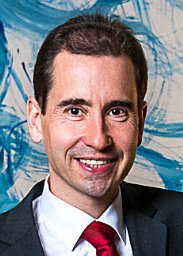 Rainer Greifeneder合作论文数Lehrstuhl für Mikrosoziologie und Sozialpsychologie, Universität Mannheim1Einat Shetreet合作论文数1Tali Kleiman合作论文数Department of Psychology, The Hebrew University of Jerusalem1
 Yuval Hart合作论文数Paulson Sch Engn & Appl Sci, Harvard Univ1




