The High Threshold Cherenkov Counter (HTCC) is one of the detector systems of the CLAS12 spectrometer, and is used to generate a fast trigger signal in electron scattering experiments in the polar angle range from 5°to 35°. The HTCC is installed in front of the drift chambers and introduces a minimal amount of additional material within the acceptance. The HTCC is one unit whose core component is a multifocal mirror that consists of 60 lightweight ellipsoidal mirrors. It is important that the HTCC provides efficient coverage of the CLAS12 forward acceptance with no gaps. In order to achieve this, each sector of the CLAS12 Forward Detector is covered by 2 identical half-sector mirrors that focus Cherenkov light on 8 phototubes. The HTCC has a total of 48 channels with Electron Tubes 9823QKB photomultipliers that have a 5-in quartz face plate to detect Cherenkov light. The system provides rejection of charged π-mesons with momenta below 4.8 GeV for the reliable identification of scattered electrons. In this paper the details of the design, construction, calibration, and performance results of the HTCC are presented.
The CLAS Cherenkov threshold gas detector was instrumental for electron identification in the Hall B 6 GeV era at Jefferson Lab. The detector's scope has been modified for the new CLAS12 spectrometer to identify pi(+) and pi(-) for momenta greater than 3.5 GeV, thus becoming a Low Threshold Cherenkov Counter (LTCC). This was accomplished with a refurbishment of the gas container, its windows, mirrors, Winston light collecting cones, and photomultipliers. The design, construction, and performance of the refurbished LTCC are described. The lightweight mirrors and Winston cones have been re-surfaced with a highly reflective coating, the 5-in photomultiplier tube entrance windows have been treated with p-terphenyl to enhance the ultraviolet response, and the gas volume has been expanded to increase the thickness of the radiator gas and correspondingly the number of photoelectrons in the response signal. The LTCC response calibration has been performed on the single photoelectron signals, and the system efficiencies and response functions have been measured.
For the 12 GeV upgrade of Jefferson Laboratory, a Silicon Vertex Tracker (SVT) has been designed for the CLAS12 spectrometer using single-sided microstrip sensors fabricated by Hamamatsu Photonics. The sensors have a graded angle design to minimize dead areas and a readout pitch of 156 nm, with intermediate strips. Each double-sided SVT module hosts three daisy-chained sensors on each side with a full strip length of 33 cm. There are 512 channels per module, read out by four Fermilab Silicon Strip Readout (FSSR2) chips, featuring data-driven architecture, mounted on a rigid-flex hybrid board. The modules are assembled in a barrel configuration using a unique cantilevered geometry to minimize the amount of material in the tracking volume. This paper is focused on the design, qualification of the performance, and experience in operating and commissioning the tracker during the first year of the data taking.
One of the fundamental goals of nuclear physics is to understand the structure and behavior of strongly interacting nuclei in terms of its basic constituents, quarks and gluons. An important step towards this goal is the characterization of the internal structure of the nucleon; the elastic electric and magnetic form factors of the proton and neutron are key ingredients of this characterization. The elastic electromagnetic form factors are directly related to the charge and current distributions inside the nucleon and are among the basic observables of the nucleon.
A double-target system has been developed for precision measurements of nuclear medium effects in unpolarized electron scattering with 4–5 GeV electron beams. This system allows for a precise comparison of elementary targets such as deuterium and hydrogen to heavy solid targets to study subtle medium effects such as color transparency, transverse momentum broadening, and hadron attenuation. One cryo-target and one solid target were located in the beam simultaneously, separated by 4 cm to minimize acceptance correction differences in the large CLAS spectrometer while maintaining the ability to identify the target event-by-event. Because both targets were positioned in the beam simultaneously, time-dependent systematic effects such as drifting gains or inefficient detector channels cancel in ratios of observables, increasing the precision of the final results. Measurements were performed with hydrogen and deuterium in combination with 3 mm diameter targets of carbon, aluminum, iron, tin, and lead. The solid targets and deuterium target were comparable in thicknesses except for specialized diagnostic runs with ultra-thin aluminum. Switching of the solid targets was performed remotely and required only a few seconds to complete. An ultra-low mass vacuum chamber made from Rohacell® foam provided vacuum isolation of the cryotarget without adding significantly to multiple scattering of final-state particles.
We present design details for drift chambers to be used in the CLAS detector at CEBAF. Novel features include nonparallel endplates fabricated from composite materials, a gas mixture which includes helium to reduce multiple scattering, low wire tension, and a hexagonal cell layout. Magnetic field strength in the active region ranges from 0 to 2 T, and wire length varies from 10 to 300 cm. We discuss specific construction details for the outer drift chambers.
The effect of magnetic field on drift velocity was measured in a wire chamber with an hexagonal cell geometry and an argon-ethane (50:50 by weight) gas mixture. The CLAS (CEBAF large acceptance spectrometer) prototype drift chamber was tested in a magnetic field using cosmic rays. The drift time to distance correlation was studied as a function of magnetic field strength using cosmic ray tracks. Particular attention was paid to the corrections due to differing track entrance angles and differing angles of the magnetic field direction with respect to the wire axis. Spatial resolutions better than 190 mu m were achieved for field strengths up to 1.5 T and angles between wire and field direction ranging from 0 degrees to 30 degrees . An argon-ethane mixture diluted with 60% helium showed less sensitivity to magnetic field effects, and only slightly worse resolution.<>
We briefly describe the drift chamber system for the CLAS detector at CEBAF, concentrating on the method which will be used to calibrate the drift velocity function, We identify key features of the function which should apply to any small-cell drift chamber geometry in which the cathode and anode surfaces are wires. Using these ideas, we describe a simple method to compensate for variations in the drift velocity function due to environmental changes.
Conductivity and permittivity of Type I, II and III cement pastes have been measured during the first 24 h hydration period at 10.0 GHz using the infinite sample method. Correlations between the electrical parameters and the chemical processes are discussed. Conductivity and relative permittivity are shown to be affected by the water-cement ratio and the type of cement. Changes in electrical parameters during the hydration processes coincide with hydration stages as derived from calorimetry measurements.
Conductivity and permittivity of cements were measured during the first 24 h hydration period at 10.0 GHz using front surface reflection methods. Data trends closely followed the hypothesis that the microwave results responded to the transition from free to bound water as hydration proceeded. The results were also compared to measured hydration curves and changes in the slope of the data versus time correlated well with characteristics regions of the hydration curve. The results establish the usefulness of microwave characterization for the study of chemistry and structure during the hydration period and may lead to a non destructive test method for cementitious materials during the early curing period.
The dilepton spectrometer (DLS) at Lawrence Berkeley Laboratory's Bevalac has been designed and constructed to investigate the production of electron-positron pairs with low mass and low transverse momentum in proton-nucleus and nucleus-nucleus collisions for incident-beam kinetic energies of 5 A GeV and less. This article briefly recalls the physics objectives of the program, discusses the methodology of the measurement, presents details of the design of the spectrometer and the detector elements, and reports on their performance. Selected experimental results are given to illustrate the capability of the DLS and to demonstrate the level to which it is possible to realize the physics objectives with the spectrometer.
We report on preliminary results of direct electron pair measurements in p+Be at 4.9 GeV and 2.1 GeV and Ca+Ca at 1.95 GeVA collisions at the Bevalac. The results are compared to existing data in p+Be at 12.1 GeV and ..pi../sup -/p at 15.9 and 16.9 GeV.
 Bonneau Pierre合作论文数3
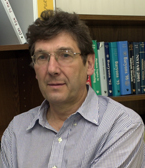 Volker Burkert合作论文数Jefferson Lab3J.F. Gilot合作论文数3Gerard P. Gilfoyle合作论文数3D. Insley合作论文数2D. Tilles合作论文数2F.J. Barbosa合作论文数2G. Roche合作论文数2g claesson合作论文数2A Yegneswaran合作论文数2C Naudet合作论文数2A. Yegneswaran合作论文数2B. A. Mecking合作论文数2LS SCHROEDER合作论文数2
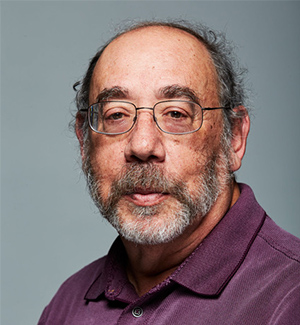 Howard S. Matis合作论文数Nuclear Science Division, Lawrence Berkeley National Laboratory;Silicon Valley Advantage;SensTek;Ashsensors2Gf Krebs合作论文数2
 Rory Miskimen合作论文数Department of Physics, College of Natural Sciences, University of Massachusetts Ambherst2Mark Brodwin合作论文数2P. Kirk合作论文数2Y. Sharabian合作论文数2John Chang合作论文数2George Igo合作论文数2
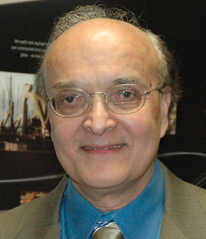 Surendra P. Shah (夏苏鲁)合作论文数Department of Civil and Environmental Engineering, McCormick School of Engineering, Northwestern University2Leon Madansky合作论文数2G. Doolittle合作论文数2
 Mosongo Moukwa合作论文数2M. D. Mestayer合作论文数2J.E. O'Meara合作论文数2G. Landaud合作论文数2T. Mulera合作论文数2W. Tuzel合作论文数2d l hendrie合作论文数2
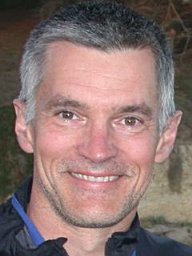 Peter a Seidl合作论文数Lawrence Berkeley National Laboratory2B. Eng合作论文数1S. Boyarinov合作论文数1T. Carstens合作论文数1l y murphy合作论文数1G. Derylo合作论文数1T. Lemon合作论文数1C. Cuevas合作论文数1M. V. Kossov合作论文数1N. Baltzell合作论文数1J. LeRose合作论文数1d kashy合作论文数1S Beedoe合作论文数1D.C. Doughty合作论文数1B. Niczyporuk合作论文数1B. Mecking合作论文数1j b carroll合作论文数1




