We demonstrate the feasibility of probing the charged lepton flavor violating decay $\mu^{+}\!\!\rightarrow \!e^{+} X^{0}$ for the presence of a slow-moving neutral boson $X^{0}$ capable of undergoing gravitational binding to large structures, and as such able to participate in some cosmological scenarios. A short exposure to surface antimuons from beamline M20 at TRIUMF generates a branching ratio limit of $\lesssim 10^{-5}$. This is comparable or better than previous searches for this channel, although in a thus-far unexplored region of $X^{0}$ phase space very close to the kinematic limit of the decay. The future improved sensitivity of the method using a customized p-type point contact germanium detector is described.
The NA62 experiment at CERN, designed to study the ultra-rare decay $K^+ \to \pi^+\nu\overline{\nu}$, has also collected data in beam-dump mode. In this configuration, dark photons may be produced by protons dumped on an absorber and reach a decay volume beginning 80 m downstream. A search for dark photons decaying in flight to $\mu^+\mu^-$ pairs is reported, based on a sample of $1.4 \times 10^{17}$ protons on dump collected in 2021. No evidence for a dark photon signal is observed. A region of the parameter space is excluded at 90% CL, improving on previous experimental limits for dark photon masses between 215 and 550 MeV$/c^2$.
PICO bubble chambers have exceptional sensitivity to inelastic dark matter-nucleus interactions due to a combination of their extended nuclear-recoil energy detection window from a few keV to $O(100\text{ }\text{ }\mathrm{keV})$ or more and the use of iodine as a heavy target. Inelastic dark matter-nucleus scattering is interesting for studying the properties of dark matter, where many theoretical scenarios have been developed. This study reports the results of a search for dark matter inelastic scattering with the PICO-60 bubble chambers. The analysis reported here comprises physics runs from PICO-60 bubble chambers using ${\mathrm{CF}}_{3}\mathrm{I}$ and ${\mathrm{C}}_{3}{\mathrm{F}}_{8}$. The ${\mathrm{CF}}_{3}\mathrm{I}$ run consisted of 36.8 kg of ${\mathrm{CF}}_{3}\mathrm{I}$ reaching an exposure of $3415\text{ }\text{ }\mathrm{kg}\text{\ensuremath{-}}\mathrm{day}$ operating at thermodynamic thresholds between 7 and 20 keV. The ${\mathrm{C}}_{3}{\mathrm{F}}_{8}$ runs consisted of 52 kg of ${\mathrm{C}}_{3}{\mathrm{F}}_{8}$ reaching exposures of 1404 and $1167\text{ }\text{ }\mathrm{kg}\text{\ensuremath{-}}\mathrm{day}$ running at thermodynamic thresholds of 2.45 and 3.29 keV, respectively. The analysis disfavors various scenarios, in a wide region of parameter space, that provide a feasible explanation of the signal observed by the DAMA experiment, assuming an inelastic interaction, considering that the PICO ${\mathrm{CF}}_{3}\mathrm{I}$ bubble chamber used iodine as the target material.
PICO bubble chambers have exceptional sensitivity to inelastic dark matter-nucleus interactions due to a combination of their extended nuclear-recoil energy detection window from a few keV to Oo100 keV thorn or more and the use of iodine as a heavy target. Inelastic dark matter-nucleus scattering is interesting for studying the properties of dark matter, where many theoretical scenarios have been developed. This study reports the results of a search for dark matter inelastic scattering with the PICO-60 bubble chambers. The analysis reported here comprises physics runs from PICO-60 bubble chambers using CF3I and C3F8. The CF3I run consisted of 36.8 kg of CF3I reaching an exposure of 3415 kg-day operating at thermodynamic thresholds between 7 and 20 keV. The C3F8 runs consisted of 52 kg of C3F8 reaching exposures of 1404 and 1167 kg-day running at thermodynamic thresholds of 2.45 and 3.29 keV, respectively. The analysis disfavors various scenarios, in a wide region of parameter space, that provide a feasible explanation of the signal observed by the DAMA experiment, assuming an inelastic interaction, considering that the PICO CF3I bubble chamber used iodine as the target material.
Many compelling models predict dark matter coupling to the electromagnetic current through higher multipole interactions, while remaining electrically neutral. Different multipole couplings have been studied, among them anapole moment, electric and magnetic dipole moments, and millicharge. This study sets limits on the couplings for these photon-mediated interactions using non-relativistic contact operators in an effective field theory framework. Using data from the PICO-60 bubble chamber leading limits for dark matter masses between 2.7 GeV/c$^2$ and 24 GeV/c$^2$ are reported for the coupling of these photon-mediated dark matter-nucleus interactions. The detector was filled with 52 kg of C$_3$F$_8$ operating at thermodynamic thresholds of 2.45 keV and 3.29 keV, reaching exposures of 1404 kg-day and 1167 kg-day, respectively.
The bubble nucleation efficiency of low-energy nuclear recoils in superheated liquids plays a crucial role in interpreting results from direct searches for weakly interacting massive particle (WIMP) dark matter. The PICO collaboration presents the results of the efficiencies for bubble nucleation from carbon and fluorine recoils in superheated C-3 F-8 from calibration data taken with five distinct neutron spectra at various thermodynamic thresholds ranging from 2.1 to 3.9 keV. Instead of assuming any particular functional forms for the nuclear recoil efficiency, a generalized piecewise linear model is proposed with systematic errors included as nuisance parameters to minimize model-introduced uncertainties. A Markov chain Monte Carlo routine is applied to sample the nuclear recoil efficiency for fluorine and carbon at 2.45 and 3.29 keV thermodynamic thresholds simultaneously. The nucleation efficiency for fluorine was found to be >= 50% for nuclear recoils of 3.3 keV (3.7 keV) at a thermodynamic Seitz threshold of 2.45 keV (3.29 keV), and for carbon the efficiency was found to be >= 50% for recoils of 10.6 keV (11.1 keV) at a threshold of 2.45 keV (3.29 keV). Simulated datasets are used to calculate a p value for the fit, confirming that the model used is compatible with the data. The fit paradigm is also assessed for potential systematic biases, which although small, are corrected for. Additional steps are performed to calculate the expected interaction rates of WIMPs in the PICO-60 detector, a requirement for calculating WIMP exclusion limits.
This program encompassed studies of lithographically fabricated “artificial spin ice” arrays of nanometer-scale single-domain ferromagnetic islands in which the array geometry results in frustration of the magnetostatic interactions between the islands. Artificial spin ice offers a wide range of opportunities for studying the mechanism by which nature accommodates frustration and accesses physics associated with frustration in ferromagnetic nanostructures. Since the arrays are created lithographically, we can easily vary the array characteristics, including the geometry of the lattice and the level and type of lattice disorder. We can probe both the local properties of the arrays by imaging individual moments, and we can also probe thousands of moments simultaneously, allowing us to gain insight into the collective properties of the system. The research funded by this program included studies of unusual frustrated lattices, studies of magnetotransport in these systems, studies of perpendicular anisotropy moments, and a range of other related experimental measurements.
While Mott insulators induced by Coulomb interactions are a well-recognized class of metal-insulator transitions, insulators purely driven by spin correlations are much less common, as the reduced energy scale often invites competition from other degrees of freedom. Here, we demonstrate a clean example of a spin-correlation-driven metal-insulator transition in the all-in-all-out pyrochlore antiferromagnet Cd 2 Os 2 O 7 , where the lattice symmetry is preserved by the antiferromagnetism. After the antisymmetric linear magnetoresistance from conductive, ferromagnetic domain walls is removed experimentally, the bulk Hall coefficient reveals four Fermi surfaces of both electron and hole types, sequentially departing the Fermi level with decreasing temperature below the Néel temperature, T N = 227 K. In Cd 2 Os 2 O 7 , the charge gap of a continuous metal-insulator transition opens only at T ~ 10 K << T N . The insulating mechanism parallels the Slater picture, but without a folded Brillouin zone, and contrasts sharply with Mott insulators and spin density waves, where the electronic gap opens above and at T N , respectively.
Although professional boards and engineering employers have emphasized written communication as a key feature of engineering education and practice, a range of challenges—from lack of pedagogical training in writing to large class sizes and heavy content requirements—often prevent science, technology, engineering, and math (STEM) faculty from incorporating writing instruction into classes. This paper focuses on a key theoretical concept from the field of writing studies, writing-as-process, and explores how it has been included by STEM faculty in their teaching. We first review theoretical and empirical work that supports writing-as-process as an effective tool for facilitating student learning. We then illustrate how writing-as-process has been incorporated into varied types of courses, drawing on a multi-year intervention project designed to enhance writing in engineering and STEM. The examples describe reflective, writing-to-learn activities for first-year orientation courses; scaffolded approaches for laboratory and problem-based-learning classes; and directed peer review and response to reviewer comments in middle- and upper-level courses. The paper concludes by addressing the vital role STEM faculty play in socializing their students into ways of thinking, being, and writing in their disciplines and demonstrates how a process orientation to writing instruction can help faculty achieve that goal.
The application of giga-Pascal scale pressures has been widely used as a tool to systematically tune the properties of materials in order to access such general questions as the driving mechanisms underlying phase transitions. While there is a large and growing set of experimental tools successfully applied to high-pressure environments, the compatibility between diamond anvil cells and optical probes offers further potential for examining lattice, magnetic, and electronic states, along with their excitations. Here, we describe the construction of a highly efficient optical Raman spectrometer that enables measurements of magnetic excitations in single crystals down to energies of 9 cm(-1) (1.1 meV or 13 K) at cryogenic temperatures and under pressures of tens of GPa.
The phenomena of antisymmetric magnetoresistance and the planar Hall effect are deeply entwined with ferromagnetism. The intrinsic magnetization of the ordered state permits these unusual and rarely observed manifestations of Onsager's theorem when time reversal symmetry is broken at zero applied field. Here we study two classes of ferromagnetic materials, rare-earth magnets with high intrinsic coercivity and antiferromagnetic pyrochlores with strongly-pinned ferromagnetic domain walls, which both exhibit antisymmetric magnetoresistive behavior. By mapping out the peculiar angular variation of the antisymmetric galvanomagnetic response with respect to the relative alignments of the magnetization, magnetic field, and electrical current, we experimentally distinguish two distinct underlying microscopic mechanisms: namely, spin-dependent scattering of a Zeeman-shifted Fermi surface and anomalous electron velocities. Our work demonstrates that the anomalous electron velocity physics typically associated with the anomalous Hall effect is prevalent beyond the ρxy(Hz) channel, and should be understood as a part of the general galvanomagnetic behavior.
New results are presented for the first time of searches for lepton number violating (LNV) decays K+ → π−e+e+ and K+ → π−μ+μ+ from the NA62 experiment at CERN using a subset of 2017 data. No LNV signals are observed and upper limits are set on the branching ratios, B(K+ → π−e+e+) < 2.2 × 10⁻¹⁰ and B(K+ → π−μ+μ+) < 4.2 × 10⁻¹¹, at 90% confidence level.
Abstract Adopting the Standard Halo Model (SHM) of an isotropic Maxwellian velocity distribution for dark matter (DM) particles in the Galaxy, the most stringent current constraints on their spin-dependent scattering cross-section with nucleons come from the IceCube neutrino observatory and the PICO-60 $$\hbox {C}_3\hbox {F}_8$$ C 3 F 8 superheated bubble chamber experiments. The former is sensitive to high energy neutrinos from the self-annihilation of DM particles captured in the Sun, while the latter looks for nuclear recoil events from DM scattering off nucleons. Although slower DM particles are more likely to be captured by the Sun, the faster ones are more likely to be detected by PICO. Recent N-body simulations suggest significant deviations from the SHM for the smooth halo component of the DM, while observations hint at a dominant fraction of the local DM being in substructures. We use the method of Ferrer et al. (JCAP 1509: 052, 2015) to exploit the complementarity between the two approaches and derive conservative constraints on DM-nucleon scattering. Our results constrain $$\sigma _{\mathrm{SD}} \lesssim 3 \times 10^{-39} \mathrm {cm}^2$$ σ SD ≲ 3 × 10 - 39 cm 2 ( $$6 \times 10^{-38} \mathrm {cm}^2$$ 6 × 10 - 38 cm 2 ) at $$\gtrsim 90\%$$ ≳ 90 % C.L. for a DM particle of mass 1 TeV annihilating into $$\tau ^+ \tau ^-$$ τ + τ - ( $$b\bar{b}$$ b b ¯ ) with a local density of $$\rho _{\mathrm{DM}} = 0.3~\mathrm {GeV/cm}^3$$ ρ DM = 0.3 GeV / cm 3 . The constraints scale inversely with $$\rho _{\mathrm{DM}}$$ ρ DM and are independent of the DM velocity distribution.
The primary advantage of moderately superheated bubble chamber detectors is their simultaneous sensitivity to nuclear recoils from WIMP dark matter and insensitivity to electron recoil backgrounds. A comprehensive analysis of PICO gamma calibration data demonstrates for the first time that electron recoils in C_3F_8 scale in accordance with a new nucleation mechanism, rather than one driven by a hot-spike as previously supposed. Using this semi-empirical model, bubble chamber nucleation thresholds may be tuned to be sensitive to lower energy nuclear recoils while maintaining excellent electron recoil rejection. The PICO-40L detector will exploit this model to achieve thermodynamic thresholds as low as 2.8 keV while being dominated by single-scatter events from coherent elastic neutrino-nucleus scattering of solar neutrinos. In one year of operation, PICO-40L can improve existing leading limits from PICO on spin-dependent WIMP-proton coupling by nearly an order of magnitude for WIMP masses greater than 3 GeV c^-2 and will have the ability to surpass all existing non-xenon bounds on spin-independent WIMP-nucleon coupling for WIMP masses from 3 to 40 GeV c^-2.
The identification of non-signal events is a major hurdle to overcome for bubble chamber dark matter experiments such as PICO-60. The current practice of manually developing a discriminator function to eliminate background events is difficult when available calibration data is frequently impure and present only in small quantities. In this study, several different discriminator input/preprocessing formats and neural network architectures are applied to the task. First, they are optimized in a supervised learning context. Next, two novel semi-supervised learning algorithms are trained, and found to replicate the Acoustic Parameter (AP) discriminator previously used in PICO-60 with a mean of 97% accuracy.
 E. McCliment合作论文数61
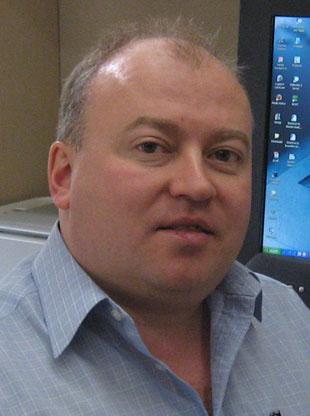 Greg Landsberg合作论文数Department of Physics, Brown University56D. V. Vavilov合作论文数55
 J. Lach合作论文数53
 Jurgen Engelfried合作论文数Universitat Heidelberg;Physikalisches Institut;Physikalisches Institut, Universitat53A. Morelos合作论文数51Np Kuropatkin合作论文数50Aa Vorobyov合作论文数49Martin Breidenbach合作论文数Stanford Linear Accelerator Center48A. Kushnirenko合作论文数48G. Goldhaber合作论文数47Philippe Gouffon合作论文数47A. P. Kozhevnikov合作论文数47W. Koch合作论文数46M. Luksys合作论文数46G. Trilling合作论文数45Sv Petrenko合作论文数44
 Erik Ramberg合作论文数44John Kadyk合作论文数44William Chinowsky合作论文数44Smith J合作论文数43A. G. Atamantchouk合作论文数42Mario Perl合作论文数42Burton Richter合作论文数42
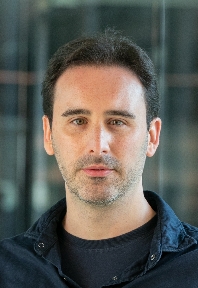 Carlos Escobar合作论文数Department of Experimental Physics, Instituto de Física Corpuscular42
 James Russ合作论文数41G. B. Dzyubenko合作论文数40M. Y. Balatz合作论文数40A. Evdokimov合作论文数40N. F. Bondar合作论文数40Gs Abrams合作论文数40
 Murray Moinester合作论文数School of Physics and Astronomy;Tel Aviv University;School of Physics and Astronomy, Tel Aviv University40Uwe Dersch合作论文数40A. Ocherashvili合作论文数40A. P. Nilov合作论文数39
 Vera Luth合作论文数National Accelerator Laboratory, Stanford Linear Accelerator Center, Stanford University39Pv Neoustroev合作论文数39V. Steiner合作论文数39
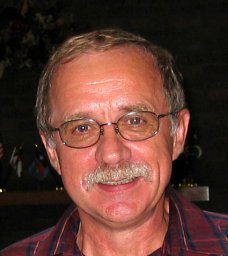 Valery Kubarovsky合作论文数Institute for High Energy Physics39
 Michael Procario合作论文数39Maurizio Iori合作论文数Department of Physics, Sapienza University of Rome39T. Lungov合作论文数39G. V. Davidenko合作论文数39
 Misha Svoiski合作论文数39A. I. Sitnikov合作论文数39A. V. Nemitkin合作论文数38V. A. Victorov合作论文数38L. J. Dauwe合作论文数38V. L. Golovtsov合作论文数38




