Functionally graded-carbon nanotube (FG-CNT) is expected to be a new generation of materials with a wide range of potential applications in technological fields such as aerospace, defense, energy, and structural industries. In this paper, an exact finite strip method for functionally graded-carbon nanotube sandwich plates is developed using first-order shear deformation theory to get the exact natural frequencies of the plates. The face sheets of the plates are made of FG-CNT with continuous and smooth grading based on the power law index. The equations of motion have been generated based on the Hamilton principle. By extracting the exact stiffness matrix for any strip of the sandwich plate as a non-algebraic function of natural frequencies, it is possible to calculate the exact free vibration frequencies. The accuracy and efficiency of the current method is established by comparing its findings to the results of the literature works. Examples are presented to prove the efficiency of the generated method to deal with various problems, such as the influence of the length-to-height ratio, the power law index, and a core-to-face sheet thickness of the single and multi-span sandwich plates with various boundary conditions on the natural frequencies. The exact results obtained from this analysis can check the validity and accuracy of other numerical methods.
Numerous uncertainty sources can influence the intrinsic characteristics of the structures. Among these, the seismic noises and ambient vibrations are seamlessly subsisted in reality. Moreover, the finite element modeling errors are unavoidably occurred in numerical simulations. The aforementioned uncertainty sources can lead to an erroneous analysis of damage detection in structures. Hereupon, to improve the accuracy of structural damage detection, the current research attempts to foster a novel probabilistic approach called “probability of damage existence (PDE).” For this reason, two robust techniques including the Monte Carlo simulation (MCS) in interaction with the HOF-IAS model updating technique are implemented. The MCS technique is employed to build a baseline of the random variables. The model updating technique minimizes the discrepancy of the inherent vibrational characteristics for the damage detection of structure. PDE makes use of the advantages of the model updating technique and compensates its limitations. To assess the efficiency of the proposed approach, four different un-damped benchmark truss and frame structures are evaluated. The obtained results confirm the superiority and reliability of the probabilistic approach over the deterministic ones. Furthermore, in spite of the presence of uncertainty sources, the proposed probabilistic strategy by a high level of PDE not only predicts the damage location accurately but also estimates the damage intensity precisely.
Plates made of laminated composite materials with variable stiffness can have wide applications in various branches of engineering due to such advantages as high strength /stiffness to weight ratio. In these composites, curved fibers are used to reinforce each lamina instead of the straight fibers. In this paper, the application of finite strip method for the buckling analysis of moderately thick composite plates with variable stiffness is investigated. For buckling analysis, a semi-analytical finite strip method based on the first-order shear deformation theory is employed. In this method, all displacements are presumed by the appropriate harmonic shape functions in the longitudinal direction and polynomial interpolation functions in the transverse direction. The minimum potential energy method has been used to develop the stability formulations. This analysis examines the effect of using curved fibers instead of straight fibers on the laminate composites. The critical loads obtained from this analysis are compared with those of other researchers and the efficiency and accuracy of the developed finite strip method are confirmed. Comparison of the analysis results of these plates shows that changing the slope of the fibers can lead to a significant change in the buckling response. Also, increasing the number of the terms of shape functions in the longitudinal direction has a significant effect on the convergence to the desired results.
Diagonal Strap bracing is one of the most applicable lateral bracing systems in light steel framing (LSF). In practice, one or more panels of Gypsum Wall Boards (GWBs) is used for the cladding of strap braced frames. Usually, the effect of these GWBs in modelling and design is neglected by designers, but this effect can affect the seismic performance of the system In this paper, firstly, a simple numerical method is developed to model the monotonic and cyclic behavior of cold-formed strap braced shear walls together with GWBs. Then, the effects of GWB on the lateral characteristics and seismic performance levels of shear walls are evaluated. It is found that neglecting GWB in the lateral design or modeling of LSF is not rational and GWB can increase the dissipation of earthquake energy, lateral strength and stiffness of the walls. Also, the shear wall composed of strap bracing and SWBs reaches a certain performance level in a less drift ratio in comparison to to only strap braced system
PurposeThis paper aims to study the lateral behavior of cold-formed steel walls with K-shaped bracing by finite element modeling.Design/methodology/approachThe braces which have the same section as those for studs and tracks are connected to the frame by screw connections. By pushover analysis, lateral performance of two frame categories, with different dimensions and bracing arrangements, is examined, and the force-displacement diagram and the ultimate strength of walls are extracted. Probable failure modes during lateral loading including distortional buckling of studs, buckling in braces and failure of connections are simulated in the numerical model, and some strengthening suggestions would be offered to prevent brittle failures and, therefore, to increase the lateral strength of the walls.FindingsThe strengthened walls are examined, and their seismic behavior is compared with the original walls. Finally, a parametric study is carried out to evaluate the effect of factors such as thickness of frame members, frame height and yield tension of members on lateral behavior of the shear walls.Originality/valueIn the present research, lateral strength and failure modes of nine types of cold-formed steel shear walls with different arrangements of K-shaped bracing are examined by non-linear finite element analysis, and a parametric study is carried out to extract the effect of the wall frame characteristics on the lateral behavior. Shear walls are classified into two series.
An experimental study on the behavior of cold formed steel (CFS) strap bracing connections is presented in this paper. 75 cold-formed steel strap bracing connections were examined. The connections maximum load capacity and the load-deformation behavior as well as the failure modes of the connections are investigated. The strap bracing connections included 0.55mm and 0.75mm cold-formed G550 steel and four different types of steel strap material. The connections behaviors are discussed and the design capacities calculated from different CFS design standards are compared to the experimental results of the connections. The results show that generally the monotonic tested connections capacities are lower than the cyclic capacities. Also, it is found that although the design provisions predict some of the behaviours of screwed connections, they are not fully suited to accurately predicting the ultimate behaviour of the strap bracing connections. Therefore, the recommended capacities for the strap bracing connections are based on the experimental results.
Cold-formed steel shear walls are commonly used in the housing industry. Generally, the wall stud connections play an important role in the seismic performance of these structures as they should be capable to dissipate the induced energy via the plastic deformation of the shear wall components. The riveted connection between the studs and the tracks is one of the most important components that dictates the behaviour and strength of such panels. In this paper, details of an experimental study on the behaviour and strength of two types of rivets which are applied in riveted wall stud connections under tension and compression monotonic loading are presented. Twenty-four full-scale specimens were taken into account. Two dominant failure modes are identified: rivet head failure and buckling failure of the section away from the connection in tension and compression tests, respectively. The results show that the second rivet type (type O) possesses a higher capacity in both tension and compression; and therefore is recommended to use by CFS designers. In addition, the design capacities of the connections were calculated based on some design codes and compared with the experimental results. It is shown that the codes are too conservative and can be improved considerably.
In this paper, the free vibration analysis of moderately thick rectangular plates axially moving with constant velocity and subjected to uniform in-plane loads is investigated by the spectral finite element method. Two parallel edges of the plate are assumed to be simply supported and the remaining edges have any arbitrary boundary conditions. Using Hamilton’s principle, three equations of motion for the plate are developed based on first-order shear deformation theory. The equations are transformed from the time domain into the frequency domain by assuming harmonic solutions. Then, the frequency-dependent dynamic shape functions obtained from the exact solution of the governing differential equations is used to develop the spectral stiffness matrix. By solving a non-standard eigenvalue problem, the natural frequencies and the critical speeds of the moving plates are obtained. The exactness and validity of the results are verified by comparing them with the results in previous studies. By the developed method some examples for vibration of stationary and moving moderately thick plates with different boundary conditions are presented. The effects of some parameters such as the axially speed of plate motion, the in-plane forces, aspect ratio and length to thickness ratio on the natural frequencies and the critical speeds of the moving plate are investigated. These results can be used as a benchmark for comparing the accuracy and precision of the other analytical and numerical methods.
In the recent years, steel sheet CFS shear wall has been used as a ductile lateral load bearing system for light steel frames.In this study, lateral behavior of this shear wall system is evaluated by finite element modelling of the frame, steel sheet and their connections.The lateral response of the reference wall has been compared to the available experimental data to validate the model.The extended models includes a wide range of the wall parameters such as wall height, steel sheet thickness, spacing of screws, and thickness of the frame members.Also, the influence of these properties of the walls on seismic response modification factor (R) have been investigated.An equal energy concept considering post yielding energy absorption capacity is utilized to evaluate R factor and compare with those calculated according to Newmark and Hall method.This study also aims to realize the failure modes of the steel sheet CFS shear walls and suggest the methods to achieve an appropriate seismic performance.At the end, calculated R factors is compared to those prescribed values in the relevant codes.
This study is an effort to clearly recognize the seismic damages occurred in strap-braced cold formed steel frames. In order to serve this purpose, a detailed investigation was conducted on 9 full scale strap-braced CFS walls and the required data were derived from the results of the experiments. As a consequence, quantitative and qualitative damage indices have been proposed in three seismic performance levels. Moreover, in order to assess seismic performance of the strap-braced CFS frames, a total of 8 models categorized into three types are utilized. Based on the experimental results, structural characteristics are calculated and all frames have been modeled as single degree of freedom systems. Incremental dynamic analysis using OPENSEES software is utilized to calculate seismic demand of the strap-braced CFS walls. Finally, fragility curves are calculated based on three damage limit states proposed by this paper. The results showed that the use of cladding and other elements, which contribute positively to the lateral stiffness and strength, increase the efficiency of strap-braced CFS walls in seismic events.
In the present study, a spectral finite element method is developed for free and forced transverse vibration of Levy-type moderately thick rectangular orthotropic plates based on first-order shear deformation theory. Levy solution assumption was used to convert the two-dimensional problem into a one-dimensional problem. In the first step, the governing out-of-plane differential equations are transformed from time domain into frequency domain by discrete Fourier transform theory. Then, the spectral stiffness matrix is formulated, using frequency-dependent dynamic shape functions which are obtained from the exact solution of the governing differential equations. An efficient numerical algorithm, using drawing method is used to extract the natural frequencies. The frequency domain dynamic responses are obtained from solution of the spectral element equation. Also, the time domain dynamic responses are derived by using inverse discrete Fourier transform algorithm. The accuracy and excellent performance of the spectral finite element method is then compared with the results obtained from closed form solution methods in previous studies. Finally, comprehensive results for out-of-plane natural frequencies and transverse displacement of the moderately thick rectangular plates with six different combinations of boundary conditions are presented. These results can serve as a benchmark to compare the accuracy and precision of the numerical methods used.
In this study, a dynamic stiffness method for free vibration analysis of moderately thick function-ally graded material plates is developed. The elasticity modulus and mass density of the plate are assumed to vary according to a power-law distribution in terms of the volume fractions of the constituents whereas Poisson’s ratio is constant. Due to the variation of the elastic properties through the thickness, the equations of motion governing the in-plane and transverse deformations are initially coupled. Using a new reference plane instead of the mid-plane of the plate, the uncoupled differential equations of motions are derived. The out-of-plane equations of motion are solved by introducing the auxiliary and potential functions and using the separation of variables method. Using the method, the exact natural frequencies of the Functionally Graded Plates (FGPs) are obtained for different boundary conditions. The accuracy of the natural frequencies obtained from the present dynamic stiffness method is evaluated by comparing them with those obtained from the methods suggested by other researchers.
In this article, free vibration analysis of variable stiffness composite laminate (VSCL) plates with flat and folded shapes is studied. In order to consider the concept of variable stiffness, in each layer of these composite laminated plates, the curvilinear fibers are used instead of straight fibers. The analysis is based on a semi-analytical finite strip method which follows classical laminated plate theory (CLPT). Natural frequencies obtained through this analysis for the flat plates are in good agreement with the results obtained through other methods. Finally, the effect of the fiber orientation angle, the folding order, crank angles and boundary conditions on the Natural frequencies is demonstrated.
Reinforced concrete shear wall is an in-plane vertical structural component with an ability to resist both the gravity and lateral forces. It has a good behaviour in resisting the building structures in earthquakes. In tall buildings layout, shear wall configuration generally makes access difficult to the public areas at the base or other floor levels such as the car park area and the entrance to the lifts or staircases. This can be solved by providing an opening in the shear wall structures. Shear walls that is perforated with openings are called coupled walls. The number, location and size of openings are directly affect the behaviour of the shear walls and cause to decrease the strength and stiffness of the structure. This study proposes adding haunches to the corners of rectangular opening as a method of strengthening the shear walls. In order to evaluate the behaviour of the shear wall structure in the presence of haunches, five small scale models of reinforced concrete shear walls with different arrangements of rectangular and octagonal openings were tested under a cyclic static horizontal point load at the top of the structure. Furthermore, theoretical method based on strain compatibility approach and the Total Moment Concept and Nonlinear Finite Element Analysis (NLFEA) with the aid of ABAQUS software have been performed to detailed study and verify the experimental outputs. A simple analytical equation has been proposed to calculate the maximum displacement of shear walls by considering the effective stiffness of cracked sections of shear wall components. The results demonstrated that the haunches caused a delay to the formation of cracks and increased the capacity of coupling beams and enhanced the ultimate strength and stiffness of shear wall structures. The accuracy of suggested maximum displacement equation was assessed and concluded that the results were in good agreement with experiment
Shear wall panels, including cold-formed steel frames and its attached sheathing, are common lateral load resisting systems of cold-founed steel structures. In this paper, the finite element method is used to study the lateral performance of shear wall panels. The finite element model is validated against experimental results of other researchers. Using the validated model, a parametric study is described to determine strength, drift and seismic behavior of the shear wall panels. Based on the results, it is concluded that the initial stiffness and ultimate lateral strength are dramatically affected by the thickness of the frame members, type of sheathing material, edge screw spacing, height of the frame, while some parameters such as field screw spacing have a minor effect on the initial stiffness and the ultimate lateral strength. In addition, this study looks into the earthquake performance of the shear wall panels and presents the corresponding ductility factor and force reduction factor (R-factor) of shear wall panels.
Detailed investigation of the lateral performance of K-braced cold-formed steel structures and their response modification coefficients, R factor, are presented in this paper. A total of 12 full-scale 2.4 × 2.4 m specimens of different configurations are considered, and the responses investigated under a standard cyclic loading regime. Of particular interest are the specimens' maximum lateral load capacity and deformation behavior as well as a rational estimation of the seismic response modification factor. The study also looks at the failure modes of the system and investigates the main factors contributing to the ductile response of the CFS walls in order to suggest improvements so that the shear steel walls respond plastically with a significant drift and without any risk of brittle failure, such as connection failure or stud buckling. A discussion on the calculated response factors in comparison to those suggested in the relevant codes of practice is also presented.
Demand response is an important part of the smart grid technologies. This is a particularly interesting problem with the availability of dynamic energy pricing models. Electricity consumers are encouraged to consume electricity more prudently in order to minimize their electric bill, which is in turn calculated based on dynamic energy prices. In this paper, task scheduling policies that help consumers minimize their electrical energy cost by setting the time of use (TOU) of energy in the facility. Moreover, the utility companies can reasonably expect that their customers reduce their consumption at critical times in response to higher energy prices during those times. These policies target two different scenarios: (i) scheduling with a TOU-dependent energy pricing function subject to a constraint on total power consumption; and (ii) scheduling with a TOU and total power consumption-dependent pricing function for electricity consumption. Exact solutions (based on Branch and Bound) are presented for these task scheduling problems. In addition, a rank-based heuristic and a force directed-based heuristic are presented to efficiently solve the aforesaid problems. The proposed heuristic solutions are demonstrated to have very high quality and competitive performance compared to the exact solutions. Moreover, ability of demand shaping utilizing the aforementioned pricing schemes is demonstrated by the simulation results.
This paper presents the analysis and optimization of a flip-flop while considering the effect of energetic particle hits on its setup and hold times. First it is shown that the particle hit tightens the setup and hold timing constraints imposed on the flip-flop. Next it is shown how to size transistors of a clocked master-slave CMOS flip-flop to make it more robust against single-event timing upsets. Experimental results to assess the effectiveness of transistor sizing step are provided and discussed. (1)
Moving webs can be found in a wide range of industrial applications such as paper handling, textile manufacturing, and magnetic tape recording. The moving web in these applications, which is generally orthotropic, may experience speeds more than critical speed. Critical speed is defined as that axial speed where the system vibration has a vanishing eigenvalue and is subject to a buckling instability. At a supercritical speed, the web may experience types of instabilities and subsequently sever out of plane vibrations. In this paper, based on thin plate theory, the equation of out-of-plane motion is derived for an orthotropic web. Then an exact method is employed to evaluate free vibration of the web in sub- and super-critical speeds. This method is in fact the Levy-type solution of the equation of motion in a stiffness matrix form. The exact vibration eigenvalues which are generally complex values, are the roots of stiffness matrix determinant. Since the terms of the determinant are complex transcendental functions of eigenvalues, classical eigenvalue solver can not be used. So a suitable algorithm is used here to extract eigenvalues in the two-dimensional plane of complex numbers. Using a numerical example, the reliability of the formulation and the solution procedure is shown. The free vibration eigenvalues is extracted for a range of axial speeds. Based on the results, flutter and divergence instabilities of the moving web are studied at supercritical speeds.
 Mojtaba Azhari合作论文数Department of Civil Engineering, Isfahan University of Technology8
 Hamid Reza Ronagh合作论文数Department of Civil Engineering, University of Queensland7
 Mohammad Mehdi Saadatpour合作论文数5
 Ali Afzali-Kusha合作论文数School of Electrical and Computer Engineering, University of Tehran;Low-Power High-Performance Nanosystems and Silicon Intelligence Laboratories, University of Tehran5
 Hossein Ahmadi Noubari合作论文数School of Electrical & Computer Engineering, Control and Intelligent Processing, University of Tehran4
 Mahmoud Kamarei合作论文数School of Electrical and Computer Engineering, College of Engineering, University of Tehran4
 Mehran Zeynalian合作论文数Department of Civil Engineering, University of IsfahanIsfahan3
 Massoud Pedram合作论文数Ming Hsieh Department of Electrical and Computer Engineering, Viterbi School of Engineering, University of Southern California3Shervin Sharifi合作论文数Computer Science and Engineering department at the University of California, San Diego3
 Zainalabedin Navabi合作论文数Worcester Polytechnic Institute2Ali Abbasian合作论文数2
 Majid Bahrami合作论文数School of Mechatronic Systems Engineering, Simon Fraser University2
 Ali Parvaneh合作论文数2Ehsan Atoofian合作论文数Electrical Engineering Department
Lakehead University2Mohammad Alisafaee合作论文数2O Fatemi合作论文数1J. K. Wang合作论文数1H. R. Bahrami合作论文数1Ali Anvar合作论文数1
Ali Parvaneh合作论文数2Ehsan Atoofian合作论文数Electrical Engineering Department
Lakehead University2Mohammad Alisafaee合作论文数2O Fatemi合作论文数1J. K. Wang合作论文数1H. R. Bahrami合作论文数1Ali Anvar合作论文数1 Behnam Daraei合作论文数1S. M. Seyed Sharafy合作论文数1Ahdiyeh Delfan Abazari合作论文数1
 Mehdi Jahangiri合作论文数1Abdolreza Zare合作论文数1
 Milad Jahangiri合作论文数Department of Civil and Environmental Engineering, Shiraz University of TechnologyShiraz1
 Mohammad Ali Hadianfard合作论文数Dept Civil & Environm Engn, Shiraz Univ Technol1
 Eshghi Peyman合作论文数Mofid Children's Hospital, Shahid Beheshti University of Medical Sciences1Dennis R. Ball合作论文数ISDE, Vanderbilt Univ.;c;ISDE, Vanderbilt Univ.1Thiago R. Assis合作论文数1
 M. Yaser Azizi合作论文数1Motavalizadeh, D.合作论文数1
 Kai Ni合作论文数Department of Electrical Engineering, College of Engineering, University of Notre Dame;Department of Electrical and Microelectronic Engineering, Rochester Institute of Technology1
 Lloyd Massengill合作论文数Department of Electrical and Computer Engineering, Vanderbilt University1
 Bharat L. Bhuva合作论文数Dept Elect Engn & Comp Sci, Vanderbilt Univ1
 Mohammad Javad Yazdanpanah合作论文数Control & Intelligent Proc Ctr Excellence, Univ Tehran1Balaji Narasimham合作论文数1
 M. A. Najafgholipour合作论文数Shiraz University1
 Farhang Farahbod合作论文数1
 Caro Lucas合作论文数Center of Excellence for Control and Intelligent Processing, School of Electrical and Computer Engineering, University of Tehran1
 Aliakbar Zare合作论文数Department of Chemistry, Payame Noor University (PNU),1
 Hadi Goudarzi合作论文数Advanced Communication Research Institute, Sharif University of Technology1
 Parham Memarzadeh合作论文数Department of Civil Engineering, Islamic Azad University1
 Jeffrey S. Kauppila合作论文数1
 Reshad Hosseini合作论文数Max Planck Institute for Biological Cybernetics, Spemannstraße 41 72076 Tübingen, Germany1
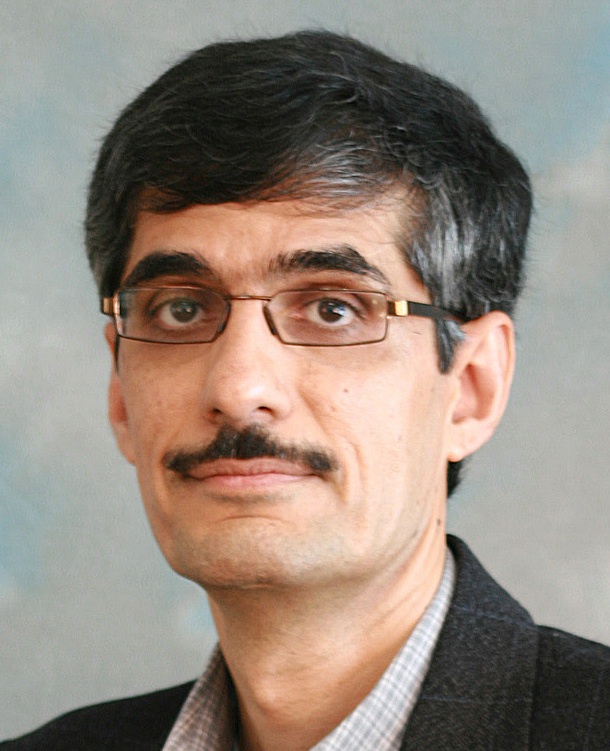 Mehrdad Nourani合作论文数The University of Texas at Dallas;Department of Electrical Engineering1
 Hamed Abrishami合作论文数University of Southern California1
 Shahrokh Hosseini Hashemi合作论文数School of Mechanical Engineering, Iran University of Science & Technology1




