The CREST project is a new realization of the conditions DB with the REST API and JSON support for the ATLAS experiment at the LHC. This project simplifies the conditions data structure and optimizes data access. CREST development requires not only the client C++ library (CrestApi) but also the various tools for testing software and validating data. A command line client enables a quick access to the stored data. A set of the utilities was used to make a dump of the data from CREST to the file system and to test the client library and the CREST server using dummy data. Now CREST software is being tested using the real conditions data converted with the COOL to CREST converter. The Athena code (ATLAS event processing software framework) was modified to operate with the new conditions data source.
As nuclear and particle physics facilities move to higher intensities, the detectors used there must be more radiation tolerant. Diamond is in use at many facilities due to its inherent radiation tolerance and ease of use. In this article we present our radiation tolerance measurements of the highest quality polycrystalline Chemical Vapor Deposition (pCVD) diamond material for irradiations from a range of proton energies, pions and neutrons up to a fluence of 2 x 10(16) particles/cm(2). We have measured the damage constant as a function of energy and particle species and compared it with theoretical models. We also present measurements of the rate dependence of pulse height for non-irradiated and irradiated pCVD diamond pad and pixel detectors, including detectors tested over a range of particle fluxes up to 20 MHz/cm(2) with both pad and pixel readout electronics. Our test beam results indicate a 2% upper limit to the pulse height dependence of unirradiated and neutron irradiated pCVD diamond detectors leading to the conclusion that the pulse height in pCVD diamond detectors is, at most, minimally dependent on the particle flux.
A bstract A search for the exclusive decays of the Higgs and Z bosons to a ϕ or ρ meson and a photon is performed with a pp collision data sample corresponding to an integrated luminosity of up to 35 . 6 fb −1 collected at $$ \sqrt{s}=13 $$ s = 13 TeV with the ATLAS detector at the CERN Large Hadron Collider. These decays have been suggested as a probe of the Higgs boson couplings to light quarks. No significant excess of events is observed above the background, as expected from the Standard Model. Upper limits at 95% confidence level were obtained on the branching fractions of the Higgs boson decays to ϕ γ and ρ γ of 4 . 8 × 10 −4 and 8 . 8 × 10 −4 , respectively. The corresponding 95% confidence level upper limits for the Z boson decays are 0 . 9 × 10 −6 and 25 × 10 −6 for ϕ γ and ρ γ, respectively.
A search for leptoquarks decaying into the bτ final state is performed using Run 2 proton-proton collision data from the Large Hadron Collider, corresponding to an integrated luminosity of 139 fb−1 at √(s) = 13 TeV recorded by the ATLAS detector. The benchmark models considered in this search are vector leptoquarks with electric charge of 2/3e and scalar leptoquarks with an electric charge of 4/3e. No significant excess above the Standard Model prediction is observed, and 95
Diamond is used as detector material in high energy physics experiments due to its inherent radiation tolerance. The RD42 collaboration has measured the radiation tolerance of chemical vapour deposition (CVD) diamond against proton, pion, and neutron irradiation. Results of this study are summarized in this article. The radiation tolerance of diamond detectors can be further enhanced by using a 3D electrode geometry. We present preliminary results of a poly-crystalline CVD (pCVD) diamond detector with a 3D electrode geometry after irradiation and compare to planar devices of roughly the same thickness.
This letter presents a search for narrow, high-mass resonances in the Zγ final state with the Z boson decaying into a pair of electrons or muons. The s=13 TeV pp collision data were recorded by the ATLAS detector at the CERN Large Hadron Collider and have an integrated luminosity of 140 fb−1. The data are found to be in agreement with the Standard Model background expectation. Upper limits are set on the resonance production cross section times the decay branching ratio into Zγ. For spin-0 resonances produced via gluon–gluon fusion, the observed limits at 95% confidence level vary between 65.5 fb and 0.6 fb, while for spin-2 resonances produced via gluon–gluon fusion (or quark–antiquark initial states) limits vary between 77.4 (76.1) fb and 0.6 (0.5) fb, for the mass range from 220 GeV to 3400 GeV.
The first measurement of longitudinal decorrelations of harmonic flow amplitudes v_{n} for n=2-4 in Xe+Xe collisions at sqrt[s_{NN}]=5.44 TeV is obtained using 3 μb^{-1} of data with the ATLAS detector at the LHC. The decorrelation signal for v_{3} and v_{4} is found to be nearly independent of collision centrality and transverse momentum (p_{T}) requirements on final-state particles, but for v_{2} a strong centrality and p_{T} dependence is seen. When compared with the results from Pb+Pb collisions at sqrt[s_{NN}]=5.02 TeV, the longitudinal decorrelation signal in midcentral Xe+Xe collisions is found to be larger for v_{2}, but smaller for v_{3}. Current hydrodynamic models reproduce the ratios of the v_{n} measured in Xe+Xe collisions to those in Pb+Pb collisions but fail to describe the magnitudes and trends of the ratios of longitudinal flow decorrelations between Xe+Xe and Pb+Pb. The results on the system-size dependence provide new insights and an important lever arm to separate effects of the longitudinal structure of the initial state from other early and late time effects in heavy-ion collisions.
Chemical Vapour Deposition (CVD) diamond is being considered as a material for particle detectors in a harsh radiation environment. This article presents beam test results of 3D pixel detectors fabricated with poly-crystalline CVD diamonds. The cells of the devices had a size of 50 mu m x 50 mu m with columns 2.6 mu m in diameter. The cells were ganged in a 3 x 2 and 5 x 1 pattern to match the layouts of the pixel read-out electronics currently used in the CMS and ATLAS experiments at the Large Hadron Collider, respectively. In beam tests, using tracks reconstructed with a high precision tracking telescope, a tracking efficiency of 99.3% was achieved. The efficiency of both devices plateaus at a bias voltage of 30V. Also irradiated poly-crystalline CVD diamond pad detectors were investigated. In high rate beam tests with particle fluxes up to 20 MHz/cm(2) and irradiations up to 8 . 10(15) n/cm(2) it was shown that the pulse height of irradiated poly-crystalline CVD diamonds does not depend on flux to the O(2%).
Diamond is a material in use at many nuclear and high energy facilities due to its inherent radiation tolerance and ease of use. We have characterized detectors based on chemical vapor deposition (CVD) diamond before and after proton irradiation. We present preliminary results of the spatial resolution of unirradiated and irradiated CVD diamond strip sensors. In addition, we measured the pulse height versus particle rate of unirradiated and irradiated polycrystalline CVD (pCVD) diamond pad detectors up to a particle flux of $20\,\mathrm{MHz/cm^2}$ and a fluence up to $4 \times 10^{15}\,n/\mathrm{cm^2}$.
We have measured the radiation tolerance of poly-crystalline and single-crystalline diamonds grown by the chemical vapor deposition (CVD) process by measuring the charge collected before and after irradiation in a 50 mu m pitch strip detector fabricated on each diamond sample. We irradiated one group of sensors with 800 MeV protons, and a second group of sensors with 24 GeV protons, in steps, to (1.34 +/- 0.08 x 10(16)) protons cm(-2) and (1.80 +/- 0.18 x 10(16)) protons cm(-2) respectively. We observe the sum of mean drift paths for electrons and holes for both poly-crystalline CVD diamond and single-crystalline CVD diamond decreases with irradiation fluence from its initial value according to a simple damage curve characterized by a damage constant for each irradiation energy and the irradiation fluence. We find for each irradiation energy the damage constant, for poly-crystalline CVD diamond to be the same within statistical errors as the damage constant for single-crystalline CVD diamond. We find the damage constant for diamond irradiated with 24 GeV protons to be 0.62( -0.01)(+0.01) (stat) (+0.06)(-0.06) (syst) x 10(-18) cm(2) (p mu m)(-1) and the damage constant for diamond irradiated with 800 MeV protons to be 1.04 (+0.02)(-0.02) (stat) (-0.04)(-0.05) (syst) x 10(-18) cm(2) (p mu m)(-1) Moreover, we observe the FWHM/MP pulse height decreases with fluence for poly-crystalline CVD material and within statistical errors does not change with fluence for single-crystalline CVD material for both 24 GeV proton irradiation and 800 MeV proton irradiation. Finally, we have measured the uniformity of each sample as a function of fluence and observed that for poly-crystalline CVD diamond the samples become more uniform with fluence while for single-crystalline CVD diamond the uniformity does not change with fluence.
At present most experiments at the CERN Large Hadron Collider (LHC) are planning upgrades in the next 5-10 years for their innermost tracking layers as well as luminosity monitors to be able to take data as the luminosity increases and CERN moves toward the High Luminosity-LHC (HL-LHC). These upgrades will most likely require more radiation tolerant technologies than exist today. As a result this is one area of intense research, and Chemical Vapour Deposition (CVD) diamond is one such technology. CVD diamond has been used extensively in beam condition monitors as the innermost detectors in the highest radiation areas of all LHC experiments. This talk describes the preliminary radiation tolerance measurements of the highest quality polycrystalline CVD material for a range of proton energies and neutrons obtained with this material with the goal of elucidating the issues that should be addressed for future diamond based detectors. The talk presents the evolution of various semiconductor parameters as a function of dose.
Detectors based on Chemical Vapor Deposition (CVD) diamond have been used extensively and successfully in beam conditions/beam loss monitors as the innermost detectors in the highest radiation areas of Large Hadron Collider (LHC) experiments. The startup of the LHC in 2015 brought a new milestone where the first polycrystalline CVD (pCVD) diamond pixel modules were installed in an LHC experiment and successfully began operation. The RD42 collaboration at CERN is leading the effort to develop polycrystalline CVD diamond as a material for tracking detectors operating in extreme radiation environments. The status of the RD42 project with emphasis on recent beam test results is presented.
The production cross-sections for W +/- and Z bosons are measured using ATLAS data corresponding to an integrated luminosity of 4.0 pb-1 collected at a centre-ofmass energy v s = 2.76 TeV. The deca ...
This change does not have any impact on the measured helicity fractions, but it changes the obtained limits on the anomalous couplings.
This paper reports searches for heavy resonances decaying into ZZ or ZW using data from proton-proton collisions at a centre-of-mass energy of √(s)=13 TeV. The data, corresponding to an integrated luminosity of 36.1 fb −1 , were recorded with the ATLAS detector in 2015 and 2016 at the Large Hadron Collider. The searches are performed in final states in which one Z boson decays into either a pair of light charged leptons (electrons and muons) or a pair of neutrinos, and the associated W boson or the other Z boson decays hadronically. No evidence of the production of heavy resonances is observed. Upper bounds on the production cross sections of heavy resonances times their decay branching ratios to ZZ or ZW are derived in the mass range 300-5000GeV within the context of Standard Model extensions with additional Higgs bosons, a heavy vector triplet or warped extra dimensions. Production through gluon-gluon fusion, Drell-Yan or vector-boson fusion are considered, depending on the assumed model.
Abstract A search for supersymmetry involving the pair production of gluinos decaying via third-generation squarks into the lightest neutralino $$ \left({\tilde{\chi}}_1^0\right) $$ χ ˜ 1 0 is reported. It uses LHC proton-proton collision data at a centre-of-mass energy $$ \sqrt{s}=13 $$ s = 13 TeV with an integrated luminosity of 36.1 fb−1 collected with the ATLAS detector in 2015 and 2016. The search is performed in events containing large missing transverse momentum and several energetic jets, at least three of which must be identified as originating from b-quarks. To increase the sensitivity, the sample is divided into subsamples based on the presence or absence of electrons or muons. No excess is found above the predicted background. For $$ {\tilde{\chi}}_1^0 $$ χ ˜ 1 0 masses below approximately 300 GeV, gluino masses of less than 1.97 (1.92) TeV are excluded at 95% confidence level in simplified models involving the pair production of gluinos that decay via top (bottom) squarks. An interpretation of the limits in terms of the branching ratios of the gluinos into third-generation squarks is also provided. These results improve upon the exclusion limits obtained with the 3.2 fb−1 of data collected in 2015.
This paper presents a search for direct electroweak gaugino or gluino pair production with a chargino nearly mass-degenerate with a stable neutralino. It is based on an integrated luminosity of 36.1 $\mathrm{fb}^{-1}$ of $pp$ collisions at $\sqrt{s} = 13$ TeV collected by the ATLAS experiment at the LHC. The final state of interest is a disappearing track accompanied by at least one jet with high transverse momentum from initial-state radiation or by four jets from the gluino decay chain. The use of short track segments reconstructed from the innermost tracking layers significantly improves the sensitivity to short chargino lifetimes. The results are found to be consistent with Standard Model predictions. Exclusion limits are set at 95% confidence level on the mass of charginos and gluinos for different chargino lifetimes. For a pure wino with a lifetime of about 0.2 ns, chargino masses up to 460 GeV are excluded. For the strong production channel, gluino masses up to 1.65 TeV are excluded assuming a chargino mass of 460 GeV and lifetime of 0.2 ns.
A search for new charged massive gauge bosons, W′, is performed with the ATLAS detector at the LHC. Data were collected in proton–proton collisions at a center-of-mass energy of s=13 TeV and correspond to an integrated luminosity of 36.1 fb−1. This analysis searches for W′ bosons in the W′→tb¯ decay channel in final states with an electron or muon plus jets. The search covers resonance masses between 0.5 and 5.0 TeV and considers right-handed W′ bosons. No significant deviation from the Standard Model (SM) expectation is observed and upper limits are set on the W′→tb¯ cross section times branching ratio and the W′ boson effective couplings as a function of the W′ boson mass. For right-handed W′ bosons with coupling to the SM particles equal to the SM weak coupling constant, masses below 3.15 TeV are excluded at the 95% confidence level. This search is also combined with a previously published ATLAS result for W′→tb¯ in the fully hadronic final state. Using the combined searches, right-handed W′ bosons with masses below 3.25 TeV are excluded at the 95% confidence level. © 2018 The Author(s)
Searches for the exclusive decays of the Higgs and Z bosons into a J/ψ, ψ(2S), or ϒ(nS) (n=1,2,3) meson and a photon are performed with a pp collision data sample corresponding to an integrated luminosity of 36.1fb−1 collected at s=13TeV with the ATLAS detector at the CERN Large Hadron Collider. No significant excess of events is observed above the expected backgrounds, and 95% confidence-level upper limits on the branching fractions of the Higgs boson decays to J/ψγ, ψ(2S)γ, and ϒ(nS)γ of 3.5×10⁻⁴, 2.0×10⁻³, and (4.9,5.9,5.7)×10−4, respectively, are obtained assuming Standard Model production. The corresponding 95% confidence-level upper limits for the branching fractions of the Z boson decays are 2.3×10⁻⁶, 4.5×10⁻⁶ and (2.8,1.7,4.8)×10−6, respectively.
 W. Dabrowski合作论文数112
 K. K. Gan合作论文数Department of Physics, College of Arts and Sciences, The Ohio State University108
 Carlos Lacasta合作论文数Alibava Systems, S.L.;Universitat de València94
 Gregor Kramberger合作论文数Physics at Physics Dept., Faculty of Mathematics and Physics, University of Ljubljana93V. Cindro合作论文数89
 Igor Mandić合作论文数Particle Physics Department, Jožef Stefan Institute88
 Marko Mikuz合作论文数Department of Physics, Faculty of Mathematics and Physics, University of Ljubljana;Particle Physics Department, Jo_ef Stefan Institute87Didier Ferrere合作论文数Département De Physique Nucléaire Et Corpusculaire, Faculty of Science, Université de Genève86
 Phil Allport合作论文数School of Physics and Astronomy, University of Birmingham84
 Richard Bates合作论文数School of Physics and Astronomy, University of Glasgow83
 Andrej Gorišek合作论文数Experimental Particle Physics Department, Jožef Stefan Institute;CERN83
 Bjarne Sandvik Stugu合作论文数Department of Physics and Technology University of Bergen83F. Huegging合作论文数82Steinar Stapnes合作论文数CERN81
 Richard D. Kass合作论文数Department of Physics, College of Arts and Sciences, The Ohio State University81S. Pospisil合作论文数81Y. Ikegami合作论文数81P. Kodys合作论文数80
 Alessandra Ciocio合作论文数Physics Division, Lawrence Berkeley National Laboratory;CERN80
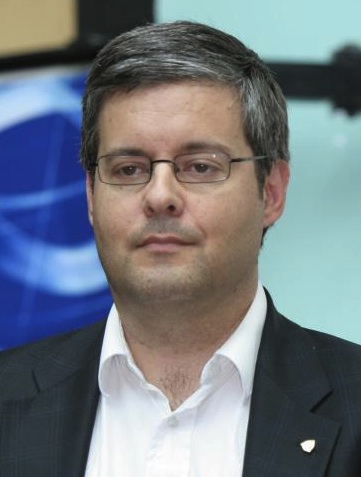 William Trischuk合作论文数Department of Physics, Faculty of Art and Science, University of Toronto80Unno Y.合作论文数79
 Alexander A. Grillo合作论文数Santa Cruz Institute for Particle Physics, University of California Santa Cruz79
 Zdenek Dolezal合作论文数Institute of Particle and Nuclear Physics, Faculty of Mathematics and Physics, Charles University79
 Stefan Koperny合作论文数Faculty of Physics and Applied Computer Science, AGH University of Science and Technology79
 Pavel Řezníček合作论文数Institute of Particle and Nuclear Physics, Faculty of Mathematics and Physics, Charles University79K. Einsweiler合作论文数78F. Djama合作论文数Centre de Recherche Nucléaire, IN2P3 - CNRS/ULP - BP20, F-67037 Strasbourg Cedex, France78A. Sfyrla合作论文数77K. Jakobs合作论文数77B. J. Gallop合作论文数77
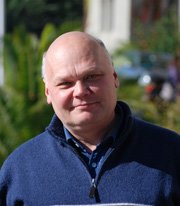 Sergey Kuleshov合作论文数Center for Theoretical and Experimental Particle Physics, Universidad Andres Bello;SAPHIR Millenium Institute for Subatomic Physics at High-Energy Frontier77
 Hans Peter Beck合作论文数Departement für Physik, Universität Fribourg;Physikalischen Institut, Universität Bern77
 Paul Dervan合作论文数Department of Physics, School of Physical Sciences, Faculty of Science and Engineering, University of Liverpool76E. Stanecka合作论文数76
 Paul de Jong合作论文数Institute of Physics, Faculty of Science, Universiteit van Amsterdam;Nikhef76
 Gabriele Chiodini合作论文数Istituto Nazionale di Fisica Nucleare, Sezione di Lecce76
 María José Costa Mezquita合作论文数Instituto de Física Corpuscular, Consejo Superior de Investigaciones Científicas76
 Juan Fuster合作论文数Institute of Corpuscular Physics76
 Hartmut Sadrozinski合作论文数Santa Cruz Institute for Particle Physics, Science Division, University of California Santa Cruz;Physics Department, University of California Santa Cruz76
 Arnulf Quadt合作论文数Faculty of Physics, Georg-August-Universität Göttingen;II. Institute of Physics, Georg-August-Universität Göttingen76R. Nisius合作论文数75O. Røhne合作论文数75
 Davide Costanzo合作论文数School of Mathematical and Physical Sciences, University of Sheffield75
 Gerald Eigen合作论文数Department of Physics and Technology, University of Bergen75
 Norbert Wermes合作论文数Physikalisches Institut, Universitat Bonn75
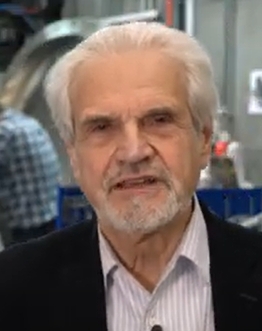 Tord Ekelof合作论文数Department of Physics and Astronomy, Uppsala University75
 Marcin Wolter合作论文数Institute of Nuclear Physics, Polish Academy of Sciences75S. Chouridou合作论文数74F. Vazeille合作论文数74




