The electronic excitation occurring on adsorbates at ultrafast time scales from optical lasers that initiate surface chemical reactions is still an open question. Here, we report the ultrafast temporal evolution of X-ray absorption spectroscopy (XAS) and X-ray emission spectroscopy (XES) of a simple well known adsorbate prototype system, namely carbon (C) atoms adsorbed on a nickel (Ni(100)) surface, following intense laser optical pumping at 400 nm. We observe ultrafast ( 100 fs) changes in both XAS and XES showing clear signatures of the formation of a hot electron-hole pair distribution on the adsorbate. This is followed by slower changes on a few ps time scale, shown to be consistent with thermalization of the complete C/Ni system. Density functional theory spectrum simulations support this interpretation.
We report on carbon monoxide desorption and oxidation induced by 400 nm femtosecond laser excitation on the O/Ru(0001) surface probed by time-resolved x-ray absorption spectroscopy (TR-XAS) at the carbon K-edge. The experiments were performed under constant background pressures of CO (6 × 10⁻⁸ Torr) and O2 (3 × 10⁻⁸ Torr). Under these conditions, we detect two transient CO species with narrow 2π* peaks, suggesting little 2π* interaction with the surface. Based on polarization measurements, we find that these two species have opposing orientations: (1) CO favoring a more perpendicular orientation and (2) CO favoring a more parallel orientation with respect to the surface. We also directly detect gas-phase CO2 using a mass spectrometer and observe weak signatures of bent adsorbed CO2 at slightly higher x-ray energies than the 2π* region. These results are compared to previously reported TR-XAS results at the O K-edge, where the CO background pressure was three times lower (2 × 10⁻⁸ Torr) while maintaining the same O2 pressure. At the lower CO pressure, in the CO 2π* region, we observed adsorbed CO and a distribution of OC-O bond lengths close to the CO oxidation transition state, with little indication of gas-like CO. The shift toward "gas-like" CO species may be explained by the higher CO exposure, which blocks O adsorption, decreasing O coverage and increasing CO coverage. These effects decrease the CO desorption barrier through dipole-dipole interaction while simultaneously increasing the CO oxidation barrier.
We use a pump-probe scheme to measure the time evolution of the C K-edge x-ray absorption spectrum from CO/Ru(0001) after excitation by an ultrashort high-intensity optical laser pulse. Because of the short duration of the x-ray probe pulse and precise control of the pulse delay, the excitation-induced dynamics during the first picosecond after the pump can be resolved with unprecedented time resolution. By comparing with density functional theory spectrum calculations, we find high excitation of the internal stretch and frustrated rotation modes occurring within 200 fs of laser excitation, as well as thermalization of the system in the picosecond regime. The ∼100 fs initial excitation of these CO vibrational modes is not readily rationalized by traditional theories of nonadiabatic coupling of adsorbates to metal surfaces, e.g., electronic frictions based on first order electron-phonon coupling or transient population of adsorbate resonances. We suggest that coupling of the adsorbate to nonthermalized electron-hole pairs is responsible for the ultrafast initial excitation of the modes.
The transient dynamics of carbon monoxide (CO) molecules on a Ru(0001) surface following femtosecond optical laser pump excitation has been studied by monitoring changes in the unoccupied electronic structure using an ultrafast X-ray free-electron laser (FEL) probe. The particular symmetry of perpendicularly chemisorbed CO on the surface is exploited to investigate how the molecular orientation changes with time by varying the polarization of the FEL pulses. The time evolution of spectral features corresponding to the desorption precursor state was well distinguished due to the narrow line-width of the C K-edge in the X-ray absorption (XA) spectrum, illustrating that CO molecules in the precursor state rotated freely and resided on the surface for several picoseconds. Most of the CO molecules trapped in the precursor state ultimately cooled back down to the chemisorbed state, while we estimate that ∼14.5 ± 4.9% of the molecules in the precursor state desorbed into the gas phase. It was also observed that chemisorbed CO molecules diffused over the metal surface from on-top sites toward highly coordinated sites. In addition, a new "vibrationally hot precursor" state was identified in the polarization-dependent XA spectra.
The prototypical photoinduced dissociation of Fe(CO)5 in the gas phase is used to test time-resolved x-ray photoelectron spectroscopy for studying photochemical reactions. Upon one-photon excitation at 266 nm, Fe(CO)5 successively dissociates to Fe(CO)4 and Fe(CO)3 along a pathway where both fragments retain the singlet multiplicity of Fe(CO)5. The x-ray free-electron laser FLASH is used to probe the reaction intermediates Fe(CO)4 and Fe(CO)3 with time-resolved valence and core-level photoelectron spectroscopy, and experimental results are interpreted with ab initio quantum chemical calculations. Changes in the valence photoelectron spectra are shown to reflect changes in the valence-orbital interactions upon Fe-CO dissociation, thereby validating fundamental theoretical concepts in Fe-CO bonding. Chemical shifts of CO 3σ inner-valence and Fe 3p core-level binding energies are shown to correlate with changes in the coordination number of the Fe center. We interpret this with coordination-dependent charge localization and core-hole screening based on calculated changes in electron densities upon core-hole creation in the final ionic states. This extends the established capabilities of steady-state electron spectroscopy for chemical analysis to time-resolved investigations. It could also serve as a benchmark for how charge and spin density changes in molecular dissociation and excited-state dynamics are expressed in valence and core-level photoelectron spectroscopy.
We report on atom-specific activation of CO oxidation on Ru(0001) via resonant X-ray excitation. We show that resonant 1s core-level excitation of atomically adsorbed oxygen in the co-adsorbed phase of CO and oxygen directly drives CO oxidation. We separate this direct resonant channel from indirectly driven oxidation via X-ray induced substrate heating. Based on density functional theory calculations, we identify the valence-excited state created by the Auger decay as the driving electronic state for direct CO oxidation. We utilized the fresh-slice multi-pulse mode at the Linac Coherent Light Source that provided time-overlapped and 30 fs delayed pairs of soft X-ray pulses and discuss the prospects of femtosecond X-ray pump X-ray spectroscopy probe, as well as X-ray two-pulse correlation measurements for fundamental investigations of chemical reactions via selective X-ray excitation.
The dynamics of liquid water feature a variety of time scales, ranging from extremely fast ballistic-like thermal motion, to slower molecular diffusion and hydrogen-bond rearrangements. Here, we utilize coherent X-ray pulses to investigate the sub-100 fs equilibrium dynamics of water from ambient conditions down to supercooled temperatures. This novel approach utilizes the inherent capability of X-ray speckle visibility spectroscopy to measure equilibrium intermolecular dynamics with lengthscale selectivity, by measuring oxygen motion in momentum space. The observed decay of the speckle contrast at the first diffraction peak, which reflects tetrahedral coordination, is attributed to motion on a molecular scale within the first 120 fs. Through comparison with molecular dynamics simulations, we conclude that the slowing down upon cooling from 328 K down to 253 K is not due to simple thermal ballistic-like motion, but that cage effects play an important role even on timescales over 25 fs due to hydrogen-bonding.
We analyze the effects of covalent interactions in Ni 2p3d resonant inelastic X-ray scattering (RIXS) spectra from aqueous Ni2+ ions and find that the relative RIXS intensities of ligand-to-metal charge-transfer final states with respect to the ligand-field final states reflect the covalent mixing between Ni 3d and water orbitals. Specifically, the experimental intensity ratio at the Ni L3-edge allows to determine that the Ni 3d orbitals have on average 5.5% of water character. We propose that 2p3d RIXS at the Ni L3-edge can be utilized to quantify covalency in Ni complexes without the use of external references or simulations.
We prove the hitherto hypothesized sequential dissociation of Fe(CO)5 in the gas phase upon photoexcitation at 266 nm via a singlet pathway with time-resolved valence and core-level photoelectron spectroscopy with an x-ray free-electron laser. Valence photoelectron spectra are used to identify free CO molecules and to determine the time constants of stepwise dissociation to Fe(CO)4 within the temporal resolution of the experiment and further to Fe(CO)3 within 3 ps. Fe 3p core-level photoelectron spectra directly reflect the singlet spin state of the Fe center in Fe(CO)5, Fe(CO)4, and Fe(CO)3 showing that the dissociation exclusively occurs along a singlet pathway without triplet-state contribution. Our results are important for assessing intra- and intermolecular relaxation processes in the photodissociation dynamics of the prototypical Fe(CO)5 complex in the gas phase and in solution, and they establish time-resolved core-level photoelectron spectroscopy as a powerful tool for determining the multiplicity of transition metals in photochemical reactions of coordination complexes.
We utilized femtosecond time-resolved resonant inelastic X-ray scattering and ab initio theory to study the transient electronic structure and the photoinduced molecular dynamics of a model metal carbonyl photocatalyst Fe(CO)5 in ethanol solution. We propose mechanistic explanation for the parallel ultrafast intra-molecular spin crossover and ligation of the Fe(CO)4 which are observed following a charge transfer photoexcitation of Fe(CO)5 as reported in our previous study [Wernet et al., Nature 520, 78 (2015)]. We find that branching of the reaction pathway likely happens in the 1A1 state of Fe(CO)4. A sub-picosecond time constant of the spin crossover from 1B2 to 3B2 is rationalized by the proposed 1B2 → 1A1 → 3B2 mechanism. Ultrafast ligation of the 1B2 Fe(CO)4 state is significantly faster than the spin-forbidden and diffusion limited ligation process occurring from the 3B2 Fe(CO)4 ground state that has been observed in the previous studies. We propose that the ultrafast ligation occurs via 1B2 → 1A1 → 1A′ Fe(CO)4EtOH pathway and the time scale of the 1A1 Fe(CO)4 state ligation is governed by the solute-solvent collision frequency. Our study emphasizes the importance of understanding the interaction of molecular excited states with the surrounding environment to explain the relaxation pathways of photoexcited metal carbonyls in solution.
Thermally driven chemistry as well as materials’ functionality are determined by the potential energy surface of a systems electronic ground state. This makes the potential energy surface a central and powerful concept in physics, chemistry and materials science. However, direct experimental access to the potential energy surface locally around atomic centers and to its long-range structure are lacking. Here we demonstrate how sub-natural linewidth resonant inelastic soft x-ray scattering at vibrational resolution is utilized to determine ground state potential energy surfaces locally and detect long-range changes of the potentials that are driven by local modifications. We show how the general concept is applicable not only to small isolated molecules such as O 2 but also to strongly interacting systems such as the hydrogen bond network in liquid water. The weak perturbation to the potential energy surface through hydrogen bonding is observed as a trend towards softening of the ground state potential around the coordinating atom. The instrumental developments in high resolution resonant inelastic soft x-ray scattering are currently accelerating and will enable broad application of the presented approach. With this multidimensional potential energy surfaces that characterize collective phenomena such as (bio)molecular function or high-temperature superconductivity will become accessible in near future.
The valence-excited states of ferric and ferrous hexacyanide ions in aqueous solution were mapped by resonant inelastic X-ray scattering (RIXS) at the Fe L2,3 and N K edges. Probing of both the central Fe and the ligand N atoms enabled identification of the metal- and ligand-centered excited states, as well as ligand-to-metal and metal-to-ligand charge-transfer excited states. Ab initio calculations utilizing the RASPT2 method were used to simulate the Fe L2,3-edge RIXS spectra and enabled quantification of the covalencies of both occupied and empty orbitals of π and σ symmetry. We found that π back-donation in the ferric complex is smaller than that in the ferrous complex. This is evidenced by the relative amounts of Fe 3d character in the nominally 2π CN(-) molecular orbital of 7% and 9% in ferric and ferrous hexacyanide, respectively. Utilizing the direct sensitivity of Fe L3-edge RIXS to the Fe 3d character in the occupied molecular orbitals, we also found that the donation interactions are dominated by σ bonding. The latter was found to be stronger in the ferric complex, with an Fe 3d contribution to the nominally 5σ CN(-) molecular orbitals of 29% compared to 20% in the ferrous complex. These results are consistent with the notion that a higher charge at the central metal atom increases donation and decreases back-donation.
Ultrafast electronic and structural dynamics of matter govern rate and selectivity of chemical reactions, as well as phase transitions and efficient switching in functional materials. Since x-rays determine electronic and structural properties with elemental, chemical, orbital and magnetic selectivity, short pulse x-ray sources have become central enablers of ultrafast science. Despite of these strengths, ultrafast x-rays have been poor at picking up excited state moieties from the unexcited ones. With time-resolved anti-Stokes resonant x-ray Raman scattering (AS-RXRS) performed at the LCLS, and ab initio theory we establish background free excited state selectivity in addition to the elemental, chemical, orbital and magnetic selectivity of x-rays. This unparalleled selectivity extracts low concentration excited state species along the pathway of photo induced ligand exchange of Fe(CO)5 in ethanol. Conceptually a full theoretical treatment of all accessible insights to excited state dynamics with AS-RXRS with transform-limited x-ray pulses is given—which will be covered experimentally by upcoming transform-limited x-ray sources.
The effects of isotope substitution in liquid water are probed by x-ray absorption spectroscopy at the O K-edge as measured in transmission mode. Confirming earlier x-ray Raman scattering experiments, the D2O spectrum is found to be blue shifted with respect to H2O, and the D2O spectrum to be less broadened. Following the earlier interpretations of UV and x-ray Raman spectra, the shift is related to the difference in ground-state zero-point energies between D2O and H2O, while the difference in broadening is related to the difference in ground-state vibrational zero-point distributions. We demonstrate that the transmission-mode measurements allow for determining the spectral shapes with unprecedented accuracy. Owing in addition to the increased spectral resolution and signal to noise ratio compared to the earlier measurements, the new data enable the stringent determination of blue shift and broadening in the O K-edge x-ray absorption spectrum of liquid water upon isotope substitution. The results are compared to UV absorption data, and it is discussed to which extent they reflect the differences in zero-point energies and vibrational zero-point distributions in the ground-states of the liquids. The influence of the shape of the final-state potential, inclusion of the Franck-Condon structure, and differences between liquid H2O and D2O resulting from different hydrogen-bond environments in the liquids are addressed. The differences between the O K-edge absorption spectra of water from our transmission-mode measurements and from the state-of-the-art x-ray Raman scattering experiments are discussed in addition. The experimentally extracted values of blue shift and broadening are proposed to serve as a test for calculations of ground-state zero-point energies and vibrational zero-point distributions in liquid H2O and D2O. This clearly motivates the need for new calculations of the O K-edge x-ray absorption spectrum of liquid water.
Transition-metal complexes have long attracted interest for fundamental chemical reactivity studies and possible use in solar energy conversion1,2. Electronic excitation, ligand loss from the metal centre, or a combination of both, creates changes in charge and spin density at the metal site3,4,5,6,7,8,9,10,11 that need to be controlled to optimize complexes for photocatalytic hydrogen production8 and selective carbon–hydrogen bond activation9,10,11. An understanding at the molecular level of how transition-metal complexes catalyse reactions, and in particular of the role of the short-lived and reactive intermediate states involved, will be critical for such optimization. However, suitable methods for detailed characterization of electronic excited states have been lacking. Here we show, with the use of X-ray laser-based femtosecond-resolution spectroscopy and advanced quantum chemical theory to probe the reaction dynamics of the benchmark transition-metal complex Fe(CO)5 in solution, that the photo-induced removal of CO generates the 16-electron Fe(CO)4 species, a homogeneous catalyst12,13 with an electron deficiency at the Fe centre14,15, in a hitherto unreported excited singlet state that either converts to the triplet ground state or combines with a CO or solvent molecule to regenerate a penta-coordinated Fe species on a sub-picosecond timescale. This finding, which resolves the debate about the relative importance of different spin channels in the photochemistry of Fe(CO)5 (refs 4, 16,17,18,19 and 20), was made possible by the ability of femtosecond X-ray spectroscopy to probe frontier-orbital interactions with atom specificity. We expect the method to be broadly applicable in the chemical sciences, and to complement approaches that probe structural dynamics in ultrafast processes. Mapping the frontier-orbital interactions with atom specificity using X-ray laser-based femtosecond-resolution spectroscopy reveals that spin crossover and ligation determine the sub-picosecond excited-state dynamics of a transition-metal complex in solution. Transition-metal complexes catalyse many reactions of fundamental and practical importance. Their performance is coupled to charge and spin density changes at the metal site caused by electronic excitation, ligand loss from the metal centre or a combination of both. Philippe Wernet et al. show that femtosecond X-ray spectroscopy and quantum chemical theory can deliver unprecedented molecular-level insight into the dynamics of the benchmark transition-metal complex Fe(CO)5, revealing that light-induced dissociation creates a previously unreported excited singlet species and its subsequent reactions. These insights are enabled by the ability of femtosecond X-ray spectroscopy to probe, with atom specificity, frontier-orbital interactions that lie at the heart of chemical transformation. The method, expected to be widely applicable, complements approaches that probe the structural changes accompanying ultrafast chemical reactions.
X-ray spectroscopy is a powerful tool to study the local charge distribution of chemical systems. Together with the liquid jet it becomes possible to probe chemical systems in their natural environment, the liquid phase. In this work, we present X-ray absorption (XA), X-ray emission (XE) and resonant inelastic X-ray scattering (RIXS) data of pure water and various salt solutions and show the possibilities these methods offer to elucidate the nature of ion-water interaction.
While ubiquitous, the making and breaking of hydrogen bonds in solution is notoriously difficult to study due to the associated complex changes of nuclear and electronic structures. With the aim to reduce the according uncertainty in correlating experimental observables and hydrogen-bond configurations, we combine the information from proximate methods to study the N-H···O hydrogen bond in solution. We investigate hydrogen-bonding of the N-H group of N-methylaniline with oxygen from liquid DMSO and acetone with infrared spectra in the N-H stretching region and X-ray absorption spectra at the N K-edge. We experimentally observe blue shifts of the infrared stretching band and an X-ray absorption pre-edge peak when going from DMSO to acetone. With ab initio molecular dynamics simulations and calculated spectra, we qualitatively reproduce the experimental observables but we do not reach quantitative agreement with experiment. The infrared spectra support the notion of weakening the N-H···O hydrogen bond from DMSO to acetone. However, we fail to theoretically reproduce the measured shift of the X-ray absorption pre-edge peak. We discuss possible shortcomings of the simulation models and spectrum calculations. Common features and distinct differences with the O-H···O hydrogen bond are highlighted, and the implications for monitoring hydrogen-bond breaking in solution are discussed.
The structure of bulk liquid water was recently probed by x-ray scattering below the temperature limit of homogeneous nucleation (TH) of ∼232 K [J. A. Sellberg et al., Nature 510, 381-384 (2014)]. Here, we utilize a similar approach to study the structure of bulk liquid water below TH using oxygen K-edge x-ray emission spectroscopy (XES). Based on previous XES experiments [T. Tokushima et al., Chem. Phys. Lett. 460, 387-400 (2008)] at higher temperatures, we expected the ratio of the 1b1' and 1b1″ peaks associated with the lone-pair orbital in water to change strongly upon deep supercooling as the coordination of the hydrogen (H-) bonds becomes tetrahedral. In contrast, we observed only minor changes in the lone-pair spectral region, challenging an interpretation in terms of two interconverting species. A number of alternative hypotheses to explain the results are put forward and discussed. Although the spectra can be explained by various contributions from these hypotheses, we here emphasize the interpretation that the line shape of each component changes dramatically when approaching lower temperatures, where, in particular, the peak assigned to the proposed disordered component would become more symmetrical as vibrational interference becomes more important.
The ultrahigh peak brilliance available at X-ray free-electron lasers opens the possibility to transfer nonlinear spectroscopic techniques from the optical and infrared into the X-ray regime. Here, we present a conceptual treatment of nonlinear X-ray processes with an emphasis on stimulated resonant X-ray scattering as well as a quantitative estimate for the scaling of stimulated X-ray scattering cross sections. These considerations provide the order of magnitude for the required X-ray intensities to experimentally observe stimulated resonant X-ray scattering for photon energies ranging from the extreme ultraviolet to the soft and hard X-ray regimes. At the same time, the regime where stimulated processes can safely be ignored is identified. With this basis, we discuss prospects and implications for spectroscopy, scattering, and imaging experiments at X-ray free-electron lasers.
 Alexander Föhlisch合作论文数Helmholtz Zentrum Berlin Mat & Energie GmbH, Inst Methods & Instrumentat Synchrotron Radiat Re, D-12489 Berlin, Germany21
 Philippe Wernet合作论文数19
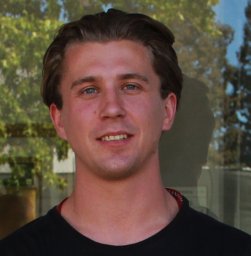 Kristjan Kunnus合作论文数University of Tartu Institute of Physics18
 Martin Beye合作论文数Inst Methods & Instrumentat Synchrotron Radiat Re, Helmholtz Zentrum Berlin Mat & Energie GmbH17
 Simone Techert合作论文数15
 Michael Odelius合作论文数Stockholm University15
 Wilson Quevedo合作论文数14
 Ida Josefsson合作论文数12
 Dennis Nordlund合作论文数SLAC National Accelerator Laboratory, Stanford University11
 Frank de Groot合作论文数Department of Chemistry, Utrecht University;X-ray Spectroscopy in the Debye Institute, Utrecht University;Stanford University11
 William F. Schlotter合作论文数SLAC National Accelerator Laboratory, Stanford University9
 Piter Miedema合作论文数Inst Methods & Instrumentat Synchrotron Radiat Re, Helmholtz Zentrum Berlin Mat & Energie GmbH8
 Brian Kennedy合作论文数8
 Anders Nilsson合作论文数Chemical Physics Division, Department of Physics, Stockholm University8
 Hirohito Ogasawara合作论文数The Institute of Physical and Chemical Research (RIKEN), 2-1 Hirosawa, Wako, Saitama 351-01, Japan8
 Wenkai Zhang (张文凯)合作论文数School of Physics and Astronomy, Beijing Normal University7
 Kelly Gaffney合作论文数SLAC National Accelerator Laboratory, Department of Chemistry, School of Humanities and Sciences, Stanford University7
 Ph. Wernet合作论文数7Ivan Rajkovic合作论文数Department of Structural Dynamics of (Bio)chemical Systems, Max Planck Institute for Biophysical Chemistry6
 Fivos Perakis合作论文数Department of Chemistry, University of Zurich6
 Joshua J. Turner合作论文数Department of Physics, University of Oregon6
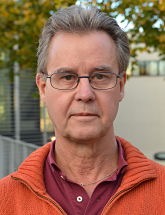 Lars Pettersson合作论文数Department of Physics, Stockholm University6Christian Weniger合作论文数5Matthew Weston合作论文数5
 Sergey Koroidov合作论文数Institutionen för Kemi, Umeå Universitet5
 Jerry Larue合作论文数University of California, University of California5
 Filippo Cavalca合作论文数Technical University of Denmark, Technical Univ of Denmark5
 Hartsock Robert W合作论文数5
 Franz Hennies合作论文数5Boyang Liu合作论文数4P S Miedema合作论文数4Mirko Scholz合作论文数4Elias Diesen合作论文数4
 Jorgen Gladh合作论文数AlbaNova University Center, Stockholm University4Ivaylo Petrov Nikolov合作论文数Laser Laboratory, Elettra Sincrotrone Trieste4Sebastian Gruebel合作论文数Institute for Quantum Electronics, Eidgenössische Technische Hochschule;Paul Scherrer Institut4
 Roberto Costantini合作论文数4
 Wang Hsin-Yi合作论文数School of Chemical and Biomedical Engineering, Nanyang Technological University4
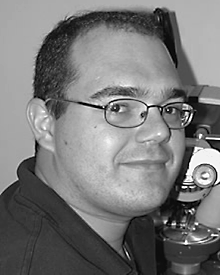 Capotondi Flavio合作论文数Elettra Sincrotrone Trieste4
 Pedersoli Emanuele合作论文数Fermi, Elettra Sincrotrone Trieste4
 Jonas Sellberg合作论文数Division of Biomedical and X-ray Physics, Department of Applied Physics, School of Engineering Sciences, KTH Royal Institute of Technology4
 Denys Naumenko合作论文数4Raimondi Lorenzo合作论文数4M. Dell’Angela合作论文数4
 Johannes Voss合作论文数3Trevor A McQueen合作论文数3
 Chang Liu合作论文数AlbaNova University Center, Stockholm University3s moeller合作论文数3
 Raymond G. Sierra合作论文数SLAC National Accelerator Laboratory, PULSE Institute;SLAC National Accelerator Laboratory, PULSE Institute3




