Aad, G.; et al., [Unknown]; Bentvelsen, S.; Colijn, A.P.; de Jong, P.; de Nooij, L.; Doxiadis, A.D.; Garitaonandia, H.; Geerts, D.A.A.; Gosselink, M.; Kayl, M.S.; Koffeman, E.; Lee, H.; Linde, F.; Mechnich, J.; Mussche, I.; Ottersbach, J.P.; Rijpstra, M.; Ruckstuhl, N.; Tsiakiris, M.; van der Kraaij, E.; van der Leeuw, R.; van der Poel, E.; van Kesteren, Z.; van Vulpen, I.; Vermeulen, J.C.; Vreeswijk, M.
Bose–Einstein correlations of pairs of identical charged pions produced in hadronic Z decays are analyzed in terms of various parametrizations. A good description is achieved using a Lévy stable distribution in conjunction with a model where a particle’s momentum is correlated with its space–time point of production, the τ-model. Using this description and the measured rapidity and transverse momentum distributions, the space–time evolution of particle emission in two-jet events is reconstructed. However, the elongation of the particle emission region previously observed is not accommodated in the τ-model, and this is investigated using an ad hoc modification.
We present results from a study of hadronic event structure in high energy e+e− interactions using the L3 detector at LEP. A new class of event shape distributions are measured at and above the Z boson pole for light quark (u, d, s, c) flavours. Energy flow correlations are studied for all hadronic events. Next-to-leading-log QCD calculations and QCD models with improved leading-log approximations are compared to data and good agreement is found at the Z-pole whereas some discrepancies are observed at higher centre-of-mass energies.
The ATLAS experiment is preparing for data taking at 14 TeV collision energy. A rich discovery physics program is being prepared in addition to the detailed study of Standard Model processes which will be produced in abundance. The ATLAS multi-level trigger system is designed to accept one event in 2 ∣ 105 to enable the selection of rare and unusual physics events. The ATLAS calorimeter system is a precise instrument, which includes liquid Argon electro-magnetic and hadronic components as well as a scintillator-tile hadronic calorimeter. All these components are used in the various levels of the trigger system. A wide physics coverage is ensured by inclusively selecting events with candidate electrons, photons, taus, jets or those with large missing transverse energy. The commissioning of the trigger system is being performed with cosmic ray events and by replaying simulated Monte Carlo events through the trigger and data acquisition system.
The DAQ/HLT system of the ATLAS experiment at CERN, Switzerland, is being commissioned for first collisions in 2009. Presently, the system is composed of an already very large farm of computers that accounts for about one-third of its final event processing capacity. Event selection is conducted in two steps after the hardware-based Level-1 Trigger: a Level-2 Trigger processes detector data based on regions of interest (RoI) and an Event Filter operates on the full event data assembled by the Event Building system. The detector read out is fully commissioned and can be operated at its full design capacity. This places the responsibility on the High-Level Triggers system to select only events of highest physics interest that will finally reach the offline reconstruction farms. This paper brings an overview of the current ATLAS DAQ/HLT implementation and performance based on studies originated from its operation with simulated, cosmic particles and first-beam data. Its built-in event processing parallelism is presented and discussed.
The ATLAS experiment under construction at CERN is due to begin operation at the end of 2007. The detector will record the results of proton-proton collisions at a center-of-mass energy of 14 TeV. The trigger is a three-tier system designed to identify in real-time potentially interesting events that are then saved for detailed offline analysis. The trigger system will select approximately 200 Hz of potentially interesting events out of the 40 MHz bunch-crossing rate (with 109 interactions per second at the nominal luminosity).
 Aleandro Nisati合作论文数Istituto Nazionale di Fisica Nucleare95
 Lamberto Luminari合作论文数Istituto Nazionale di Fisica Nucleare89S. Falciano合作论文数86C. Luci合作论文数85
 Arno Straessner合作论文数Institute of Nuclear and Particle Physics, Faculty of Physics, Technische Universität Dresden85
 Domenico Della Volpe合作论文数Département de Physique Nucléaire et Corpusculaire, Université de Genève;Department of Particle Physics, Université de Genève84
 F. Filthaut (Frank)合作论文数Department of Experimental High Energy Physics, Radboud University83g chiefari合作论文数82Gianpaolo Carlino合作论文数Istituto Nazionale di Fisica Nucleare82A. Aloisio合作论文数82Sotirios Vlachos合作论文数National Technical University of Athens82
 S. Giagu合作论文数INFN Sezione di Roma, Sapienza University81Paolo Bagnaia合作论文数81m biglietti合作论文数80M. Rescigno合作论文数79s patricelli合作论文数77A. Doria合作论文数77
 Mariagrazia Alviggi合作论文数Department of Physics, University of Naples Federico II;Laboratory of Particle Physics, University of Naples Federico II77
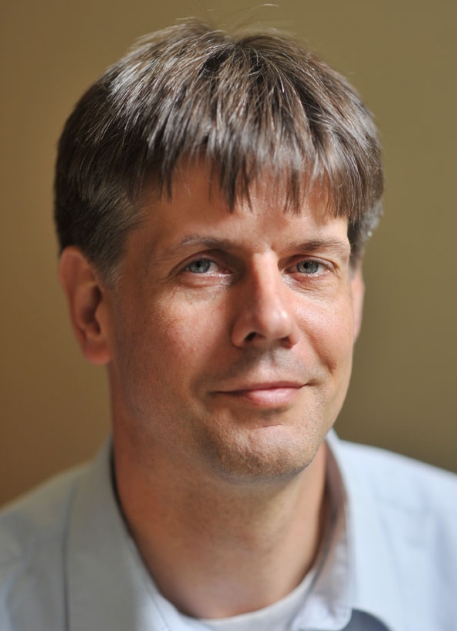 Paul de Jong合作论文数Institute of Physics, Faculty of Science, Universiteit van Amsterdam;Nikhef76
 Simonetta Gentile合作论文数Scuola Di Psicoterapia Consorzio Fortune;Dipartimentale di Psicologia Clinica, Ospedale Pediatrico Bambino76J. Toth合作论文数CPPM, Aix-Marseille Université, CNRS/IN2P3, Marseille, France76C. Dionisi合作论文数75Fl Linde合作论文数75
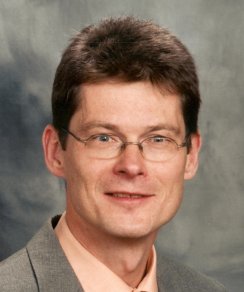 Martin Karl Wilhelm Pohl合作论文数Deutsches Elektronen-Synchrotron DESY;Institut für Physik und Astronomie, University of Potsdam75
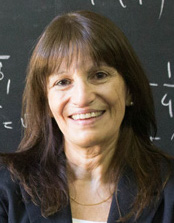 María Teresa Dova合作论文数Physics Department, Faculty of Exact Sciences, National University of La Plata74
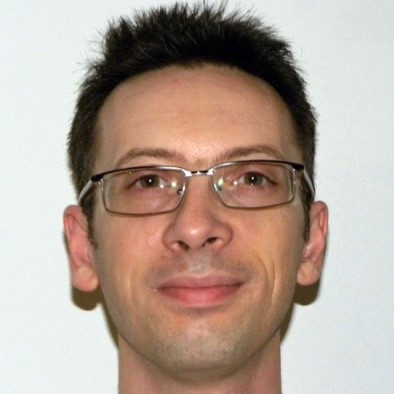 Alessandro De Salvo合作论文数Istituto Nazionale di Fisica Nucleare Sezione di Roma;CERN74Giovanni Mirabelli合作论文数73G. J. Bobbink合作论文数73
 Adriaan König合作论文数Institute for Mathematics, Astrophysics and Particle Physics, Radboud University73Rw Kraemer合作论文数70I. Clare合作论文数70Martin Pohl合作论文数70Peter M. Levtchenko合作论文数70Emanuele Fiandrini合作论文数Humboldt University70
 Dominique Duchesneau合作论文数70Guy G. Coignet合作论文数70L. Baksay合作论文数70M. Capell合作论文数70Hans Fesefeldt合作论文数70Giovanni Passaleva合作论文数70K. Freudenreich合作论文数Eidgenössische Technische Hochschule, ETH Zürich, CH-8093 Zürich, Switzerland70
 Luca Lista合作论文数Dipartimento di Fisica Ettore Pancini, Università degli Studi di Napoli Federico II;Scuola Superiore Meridionale70G. Landi合作论文数70Helmut Vogt合作论文数70S. Wynhoff合作论文数70D. Prokofiev合作论文数70M. Chemarin合作论文数70A. Rosca合作论文数70M. Pedace合作论文数70




