Artificial intelligence (AI) has transformed protein engineering by leveraging deep learning, protein language models, and knowledge graphs to decode relationships between sequence, structure, and function. Models like AlphaFold2 achieve near-experimental accuracy in structure prediction, while transformer-based language models facilitate de novo sequence design under functional constraints. AI enhances therapeutic protein engineering, enzyme catalysis, and synthetic biology, accelerating the transition from in silico design to experimental validation. These advances accelerate experimental validation across healthcare and industrial biotechnology. Despite algorithmic successes, challenges remain in model interpretability, training data biases, and experimental validation rates. This review examines the computational methodologies shaping protein design, benchmarking metrics, and the integration of machine learning with experimental pipelines.
IntroductionThe world’s population is aging at a rapid rate. Nursing homes are needed to care for an increasing number of older adults. Palliative care can improve the quality of life of nursing home residents. Artificial Intelligence can be used to improve palliative care services. The aim of this scoping review is to synthesize research surrounding AI-based palliative care interventions in nursing homes.MethodsA PRISMA-ScR scoping review was carried out using modified guidelines specifically designed for computer science research. A wide range of keywords are considered in searching six databases, including IEEE, ACM, and SpringerLink.ResultsWe screened 3255 articles for inclusion after duplicate removal. 3175 articles were excluded during title and abstract screening. A further 61 articles were excluded during the full-text screening stage. We included 19 articles in our analysis. Studies either focus on intelligent physical systems or decision support systems. There is a clear divide between the two types of technologies. There are key issues to address in future research surrounding palliative definitions, data accessibility, and stakeholder involvement.DiscussionThis paper presents the first review to consolidate research on palliative care interventions in nursing homes. The findings of this review indicate that integrated intelligent physical systems and decision support systems have yet to be explored. A broad range of machine learning solutions remain unused within the context of nursing home palliative care. These findings are of relevance to both nurses and computer scientists, who may use this review to reflect on their own practices when developing such technology.
There is an increasing need to provide care for older adults as Ireland's population ages. We assess the current Irish nursing home landscape using public datasets and machine learning. We attempt to predict future nursing home needs in Ireland in the year 2050. We also analyse the geographical disparities that exist between different healthcare services in Ireland. Using publicly available data, we analyse nursing home deaths, bed-to-population ratios, and geographic disparities in healthcare accessibility. Furthermore, we use machine learning to forecast population growth in Ireland. We also use an interactive mapping tool to aid healthcare professionals and key stakeholders in understanding the available data and to plan for future resource allocation. We find a strong correlation between the population and the number of nursing home beds. We also find that there are significant geographic disparities between nursing homes, hospices, and hospitals in Ireland. We estimate that 1,252 out of 6,066 (20.64%) nursing home residents received specialist palliative care in 2021. We predict a population increase of approximately 785,695 people (72.6%) by 2050. Our mapping tool was helpful in directing analysis. There is a need for strategic expansion of the Irish nursing home sector and a focus on high-quality general palliative care in nursing homes.
Innovations in computational methodologies have significantly transformed the landscape of scientific research, in silico experiments have replaced some of the physical experiments. ChemFlow, a novel proof-of-concept platform introduced in this paper, coalesces these advancements by automating the creation of workflows. Designed specifically for the bioinformatics field, ChemFlow leverages Large Language Models and prompt engineering techniques to interpret natural language descriptions and convert them into executable workflows without the need for manual coding. Our contributions are two-fold: first, we introduce an innovative workflow generation and execution platform with the help of large language models, and second, we introduce a novel set of prompt optimisation strategies that improve both the accuracy and efficiency of the generated workflows. ChemFlow enables researchers to focus on domain-specific challenges rather than computational intricacies, making it a pivotal tool for advancing scientific productivity and innovation.
INTRODUCTION:Many nursing home residents do not receive timely palliative care despite their need and eligibility for such care. Screening tools as well as other methods and guidelines can facilitate early identification of nursing home residents unmet palliative care needs. AIM:To map and summarise the evidence on identifying unmet palliative care needs of nursing home residents. METHODS:Any paper reporting on nursing home residents' unmet palliative care needs were eligible for inclusion. CINAHL, MEDLINE, Embase, Web of Science, APA PsycINFO, and APA PsycArticles and grey literature were systematically searched over two months, February and March 2024. Data were extracted using data extraction forms. Data were synthesised using descriptive analysis and basic content analysis. RESULTS:Forty six records were included in this review. Nineteen methods, five screening tools, and four guidelines related to identifying residents unmet palliative care needs were identified. Most methods such as the Minimum Data Set and Palliative Care Needs Rounds were implemented as part of an intervention. Limited evidence was identified on what methods healthcare professionals use in daily practice. In total, 117 non-disease specific indicators for identifying residents unmet palliative care needs were identified, with physical indicators such as pain and weight loss being the most represented. CONCLUSION:While developments have been made related to the concept of 'unmet palliative care needs', a clear definition is required. Evidence-based standardisation of methods for identifying unmet palliative care needs would ensure timely and equitable access to palliative care for nursing home residents worldwide. Achieving this goal requires incorporating screening for unmet palliative care needs into routine care.
INTRODUCTION:Nursing home residents often have life limiting illnesses in combination with multiple comorbidities, cognitive deficits, and frailty. Due to these complex characteristics, a high proportion of nursing home residents require palliative care. However, many do not receive palliative care relative to this need resulting in unmet care needs. To the best of our knowledge, there have been no literature reviews to synthesise the evidence on how nursing home staff identify unmet palliative care needs and to determine what guidelines, policies, and frameworks on identifying unmet palliative care needs of nursing home residents are available. AIM:The aim of this scoping review is to map and summarise the evidence on identifying unmet palliative care needs of residents in nursing homes. METHODS:This scoping review will be guided by the JBI Manual for Evidence Synthesis. The search will be conducted in CINAHL, MEDLINE, Embase, Web of Science, APA PsycINFO, and APA PsycArticles. A search of grey literature will also be conducted in databases such as CareSearch, Trip, GuidelineCentral, ClinicalTrials.gov, and the National Institute for Health and Care and Excellence website. The search strategy will be developed in conjunction with an academic librarian. Piloting of the screening process will be conducted to ensure agreement among the team on the eligibility criteria. Covidence software will be used to facilitate deduplication, screening, and blind reviewing. Four reviewers will conduct title and abstract screening. Six reviewers will conduct full text screening. Any conflicts will be resolved by a reviewer not involved in the conflict. One reviewer will conduct data extraction using pre-established data extraction tables. Results will be synthesised, and a narrative synthesis will be used to illustrate the findings of this review. Data will be presented visually using tables, figures, and word clouds, as appropriate.
Automated clinical dialogue summarization can help make health professional workflows more efficient. With the advent of large language models, machine learning can be used to provide accurate and efficient summarization tools. Generative Pre-Trained Transformers (GPT) have shown huge promise in this area. While larger GPT models, such as GPT-4, have been used, these models pose their own problems in terms of precision and expense. Fine-tuning smaller models can lead to more accurate results with less computational expense. In this paper, we fine-tune a GPT-3.5 model to summarize clinical dialogue. We use both default hyperparameters along with manual hyperparameters for comparison purposes. We also compare our default model to past work using ROUGE-1, ROUGE-2, ROUGE-L, and BERTScores. We find our model outperforms GPT-4 across all measures. As our fine-tuning process is based on the smaller GPT-3.5 model, we show that fine-tuning leads to more accurate and less expensive results. Informal human observation also reveals our notes to be of acceptable quality.
In the burgeoning field of proteins, the effective analysis of intricate protein data remains a formidable challenge, necessitating advanced computational tools for data processing, feature extraction, and interpretation. This study introduces ProteinFlow, an innovative framework designed to revolutionize feature engineering in protein data analysis. ProteinFlow stands out by offering enhanced efficiency in data collection and preprocessing, along with advanced capabilities in feature extraction, directly addressing the complexities inherent in multidimensional protein data sets. Through a comparative analysis, ProteinFlow demonstrated a significant improvement over traditional methods, notably reducing data preprocessing time and expanding the scope of biologically significant features identified. The framework's parallel data processing strategy and advanced algorithms ensure not only rapid data handling but also the extraction of comprehensive, meaningful insights from protein sequences, structures, and interactions. Furthermore, ProteinFlow exhibits remarkable scalability, adeptly managing large-scale data sets without compromising performance, a crucial attribute in the era of big data.
As the world's population continues to increase rapidly, there is a growing demand for healthcare services. Nursing homes are becoming more and more populated; the demands placed on care staff continue to grow exponentially. New approaches to care, such as palliative techniques, need to be considered to ensure residents are cared for in years to come. Localization can be used to track changes in behaviour and provide new insights into residents' palliative needs. Low-cost, reliable systems can be developed to help nurses monitor resident locations within nursing homes. This paper proposes a Bluetooth Low Energy localization system called “Where Care”. The proposed system uses smartphones and wireless Bluetooth beacons to localize residents in a test facility. A novel beacon placement technique and localization algorithm are used to provide real-time resident locations. Data collected is displayed in a graphical user interface (GUI) for ease of use. Heat maps and graphs are available in the GUI to allow care staff to make location predictions based on historical resident data. Nurses can also configure a notification service within the system interface to ensure resident safety. The system is implemented and tested in an experimental university space. Results show that the “Where Care” tool provides sufficiently accurate real-time localization measurements and data summaries. Overall, feedback indicates that “Where Care” is a useful tool with the potential for future use in busy, over-burdened nursing homes.
Background This article presents medical software-as-a-virtual service platform, a comprehensive telemedicine solution integrating software-as-a-service principles with user-centric features to enhance healthcare service efficiency, accessibility, and patient-provider interaction.Methods Medical software-as-a-virtual service employs a multifaceted approach, incorporating a robust questionnaire system for data collection and an empathetic virtual agent module to facilitate nuanced patient-provider interactions. The platform prioritizes privacy and data security through advanced encryption standard encryption and data anonymization, aligning with Health Insurance Portability and Accountability Act standards.Results The initial deployment of medical software-as-a-virtual service demonstrates significant improvements in data collection efficiency, patient engagement, and healthcare service quality. The platform's adaptability is evidenced by its successful application in specialized fields such as radiology and prolapse. User feedback underscores the system's ease of use and potential for reducing healthcare providers' workload.Discussion Despite its promising outcomes, medical software-as-a-virtual service faces challenges, including the need for in-person treatment and limited virtual agent customization. Short-term improvements aim to enhance appointment scheduling, speech recognition, and agent personalization. Long-term goals include integrating artificial intelligence for diagnostic assistance, Internet of Things for comprehensive remote care, and advanced virtual agents for improved patient interaction.Conclusion Medical software-as-a-virtual service emerges as a transformative telemedicine solution, effectively addressing contemporary healthcare challenges. Its continuous evolution, marked by the integration of advanced technologies and user-centered design, holds the potential to reshape the landscape of remote healthcare delivery. Future research will focus on refining platform features and examining the broader impact on healthcare systems and patient outcomes.
This paper presents some theoretical results on the sphere coverage problem in the n-dimensional space. These results refer to the minimal number of spheres, denoted by Nk(a), to cover a cuboid. The first properties outline some theoretical results for the numbers Nk(a), including sub-additivity and monotony on each variable. We use then these results to establish some lower and upper bounds for Nk(a), as well as for the minimal density of spheres to achieve k-coverage. Finally, a computation is proposed to approximate the Nk(a) numbers, and some tables are produced to show them for 2D and 3D cuboids.
Designing and synthesising proteins with specific physicochemical properties pose significant challenges in biotechnology, environmental sciences, and pharmaceuticals. Recent advancements in machine learning have opened up possibilities but have often been constrained by their focus on limited facets of the multifaceted nature of proteins. This paper presents the Silver Surfer, a new platform utilising a customised genetic algorithm designed to explore the complex space of protein sequences. The Silver Surfer implementation offers a powerful, easily extensible tool to meet diverse scientific needs, operating based on four general-use protein properties: Instability Index, Monoisotopic Mass, Grand Average Hydrophobicity Score, and Isoelectric Point. By harnessing the generative capabilities of genetic algorithms, the Silver Surfer project opens new horizons in protein design.
With the explosive growth of protein-related data, we are confronted with a critical scientific inquiry: How can we effectively retrieve, compare, and profoundly comprehend these protein structures to maximize the utilization of such data resources? PS-GO, a parametric protein search engine, has been specifically designed and developed to maximize the utilization of the rapidly growing volume of protein-related data. This innovative tool addresses the critical need for effective retrieval, comparison, and deep understanding of protein structures. By integrating computational biology, bioinformatics, and data science, PS-GO is capable of managing large-scale data and accurately predicting and comparing protein structures and functions.The engine is built upon the concept of parametric protein design, a computer-aided method that adjusts and optimizes protein structures and sequences to achieve desired biological functions and structural stability. PS-GO utilizes key parameters such as amino acid sequence, side chain angle, and solvent accessibility, which have a significant influence on protein structure and function. Additionally, PS-GO leverages computable parameters, derived computationally, which are crucial for understanding and predicting protein behavior.The development of PS-GO underscores the potential of parametric protein design in a variety of applications, including enhancing enzyme activity, improving antibody affinity, and designing novel functional proteins. This advancement not only provides a robust theoretical foundation for the field of protein engineering and biotechnology but also offers practical guidelines for future progress in this domain.
In the rapidly evolving field of digital health, the use of mobile health apps is increasing, which not only allows patients to be more actively involved in their health management and treatment but also significantly improves the efficiency of healthcare professionals. Yet despite the success of mHealth apps in a large portion of the field, there is room for improvement thrown in the field of pelvic organ prolapse (POP). Pelvic Health Place (PHPlace) is an example of a new mHealth app designed specifically for POP. It aims to improve patient comprehension and healthcare provider efficiency. These features include engaging animated presentations, a groundbreaking algorithm-based scoring system to measure the severity of a condition and versatile medical information management tools. In addition, by effectively localising the application, PHPlace transcends geographic constraints and extends healthcare services globally. Initial user feedback shows an impressive 90
Virtual Reality Exposure Therapy is a method of cognitive behavioural therapy that aids in the treatment of anxiety disorders by making therapy practical and cost-efficient. It also allows for the seamless tailoring of the therapy by using objective, continuous feedback. This feedback can be obtained using biosensors to collect physiological information such as heart rate, electrodermal activity and frontal brain activity. As part of developing our objective feedback framework, we developed a Virtual Reality adaptation of the well-established emotional Stroop Colour–Word Task. We used this adaptation to differentiate three distinct levels of anxiety: no anxiety, mild anxiety and severe anxiety. We tested our environment on twenty-nine participants between the ages of eighteen and sixty-five. After analysing and validating this environment, we used it to create a dataset for further machine-learning classification of the assigned anxiety levels. To apply this information in real-time, all of our information was processed within Virtual Reality. Our Convolutional Neural Network was able to differentiate the anxiety levels with a 75% accuracy using leave-one-out cross-validation. This shows that our system can accurately differentiate between different anxiety levels.
In an epoch where digital innovation is redefining the medical landscape, electronic health records (EHRs) stand out as a pivotal transformative force. Urogynecology, a discipline anchored in intricate patient histories and meticulous follow-ups, is on the brink of profound transformation due to these digital strides. While EHRs have unified patient data, challenges related to data privacy, interoperability, and access persist. In response, we present Pelvic Health Place (PHPlace) - a multilingual, patient-centric application. Purposefully designed to bolster patient engagement, PHPlace provides clinicians with essential pre-consultation insights, streamlines the consent process, vividly delineates surgical pathways, and assures comprehensive long-term monitoring. This platform also establishes a foundation for global data amalgamation, promising to invigorate research and potentially harness artificial intelligence (AI) capabilities. With AI integration, we anticipate a more tailored treatment approach and enriched patient education, signaling a pivotal shift in urogynecology and emphasizing the imperative for ongoing academic inquiry.
In healthcare, machine learning has been increasingly applied to predictive models, but the efficacy of these models is often compromised due to limitations in data quality, diversity, and metrics. In other domains, such as image recognition and natural language processing, data augmentation techniques have been successfully applied to mitigate these challenges, but in healthcare such strategies have not been widely applied. Therefore, our research actively explores how these data augmentation techniques can be applied to machine learning models for predicting the outcome of pelvic organ prolapse surgery. We first performed in-depth data preprocessing and then tried innovative data enhancement techniques such as noise injection and self-sampling. The results show that the application of data enhancement techniques significantly improves the performance of predictive models and effectively addresses data scarcity and quality issues, which opens up new possibilities for wider application of data enhancement techniques in the medical field in the future.
This paper tackles the problem of assembling a jigsaw puzzle, starting only from a picture of the scrambled jigsaw puzzle pieces on a random, textured background. This manuscript discusses previous approaches in dealing with the jigsaw puzzle problem and brings two contributions: an open source tool for creating realistic scrambled jigsaw puzzles meant to serve as a foundation for further research in the field; and an end to end AI based solution taking advantage of the convolutional neural network architecture, capable of solving a scrambled jigsaw puzzle of unknown pictorial and with an unknown, uniformly textured, background. The lessons and techniques learned in engaging with the jigsaw puzzle problem can be further used in approaching the more general and complex problem of Protein-Protein interaction prediction.
Introduction: In the field of bioinformatics and computational biology, protein structure modelling and analysis is a crucial aspect. However, most existing tools require a high degree of technical expertise and lack a user-friendly interface. To address this problem, we developed a protein workstation called PROFASA. Methods: PROFASA is an innovative protein workstation that combines state-of-the-art protein structure visualisation techniques with cutting-edge tools and algorithms for protein analysis. Our goal is to provide users with a comprehensive platform for all protein sequence and structure analyses. PROFASA is designed with the idea of simplifying complex protein analysis workflows into one-click operations, while providing powerful customisation options to meet the needs of professional users. Results: PROFASA provides a one-stop solution that enables users to perform protein structure evaluation, parametric analysis and protein visualisation. Users can use I-TASSER or AlphaFold2 to construct protein models with one click, generate new protein sequences, models, and calculate protein parameters. In addition, PROFASA offers features such as real-time collaboration, note sharing, and shared projects, making it an ideal tool for researchers and teaching professionals. Discussion: PROFASA's innovation lies in its user-friendly interface and one-stop solution. It not only lowers the barrier to entry for protein computation, analysis and visualisation tools, but also opens up new possibilities for protein research and education. We expect PROFASA to advance the study of protein design and engineering and open up new research areas.
Biomolecules, more specifically, proteins are building blocks of the human body and all sorts of creatures all over the world. They constitute structures including hair, skin, nail, bones, cobwebs, etc. They also transport materials and build antibodies to boost the immune system. Due to the importance of proteins, the study on them is beneficial, it contributes to understanding diseases and finding new treatments, as has been pointed out by Dr John Moult of the University of Maryland [1], the structure of proteins plays a significant role. By understanding the three-dimensional (3D) structure of proteins and developing new drugs, infectious or genetic diseases including cancer, dementia, etc. would be preventable. To cultivate the interests and bring more prospective researchers to this protein structure field, teaching protein molecular structure [2] is a good way. Educational tools for learning protein structures can be developed to deliver lectures, laboratory tutorials, demos, workshops, etc. The core part of such a tool is 3D visualization and interaction with protein molecules. Over the years, protein visualization tools such as UnityMol [3] and UCSF Chimera [4] are developed to visualize protein molecules recorded in protein data bank (PDB) files [5]. By studying and researching tools like these, the author of this paper has developed a bio-edutainment game, Pepblock Builder VR [6], which is an educational game for understanding protein structural design that involves drag and drops to combine protein peptides as gameplay. It works on both personal computers (PC) and virtual reality (VR) platforms. Its successor, Schedio-Pro [7], was developed to focus on VR interaction with bend and twist to emulate protein folding as its gameplay. ProMVR developed by the author is one of those tools which builds a virtual protein classroom by integrating virtual reality interaction, remote control and voice chat, protein visualization, etc.
 Tatiana Tabirca合作论文数University College Cork60
 Laurence Tianruo Yang (杨天若)合作论文数School of Computer and Artificial Intelligence, Zhengzhou University;School of Computer Science and Technology, Huazhong University of Science and Technology36
 Daniel C. Doolan合作论文数University College Cork25Mark Tangney合作论文数Mercy University Hospital, University College Cork24
 Tamara Vagg合作论文数Univ Coll Cork, Cork Univ Hosp21
 Barry Plant合作论文数Department of Medicine, University College Cork20
 Corrigan Mark Anthony合作论文数10
 Razvan Bocu合作论文数Department of Computer Science, University Transilvania Brasov10Len Freeman合作论文数Cranfield University10
 Yanlin Mi合作论文数8David Murphy合作论文数8
 Venkata Vamsi Bharadwaj Yallapragada合作论文数8
 Laura Sahm合作论文数School of Pharmacy, University College Cork7Yin Jie Chen合作论文数7E. Lehane合作论文数6Stefan-Bogdan Marcu合作论文数6
 Xuefeng Gao (高雪峰)合作论文数Suzhou Institute of Nano-Tech and Nano-Bionics, Chinese Academy of Sciences6
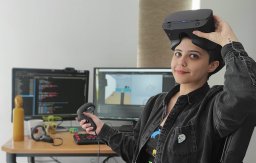 Deniz Mevlevioglu合作论文数University College Cork5l freeman合作论文数5Catherine Costigan合作论文数5
 Mohamad M. Saab合作论文数Sch Nursing & Midwifery, Univ Coll Cork5
 Nicola Cornally合作论文数5D. Morrissy合作论文数4Mairead McCarthy合作论文数4David Morrissy合作论文数4
 Aine Curran合作论文数4Louise Kelly合作论文数4Cathy Shortt合作论文数4M. Mccarthy合作论文数4
 Susan Walsh合作论文数Global Hlth Leadership Off4Mairin O'Mahony合作论文数Univ Coll Cork4
 Claire Fleming合作论文数4Anne-Marie Martin合作论文数St Vincent's Centre4
 Tianshu Xu合作论文数4
 Barry Aidan O'Reilly合作论文数4
 Josephine Hegarty合作论文数Catherine McAuley School of Nursing and Midwifery, University College Cork4Eleonor Ciurea合作论文数Theoretical Computer Science Dept., Transilvania Univ. of Braşov4Laurence Taggart合作论文数School of Nursing;University of Ulster;School of Nursing, University of Ulster4
 Maria Caples合作论文数4
 Elaine Lehane合作论文数Department of Nursing, University College Cork4Y. McCarthy合作论文数3k duggan合作论文数3Joe Eustace合作论文数3John Coulter合作论文数3Ronan Nicola合作论文数3McCarthy Nora合作论文数College of Medicine and Health, University College Cork3Xiaoye Dai合作论文数3Simon Rajendran合作论文数3




