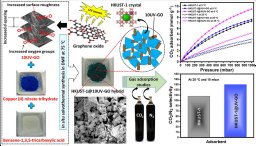
Metal-organic frameworks (MOFs) have emerged as promising candidates for CO2 adsorption due to their ultrahigh-specific surface area and highly tunable pore-surface properties. However, their large-scale application is hindered by processing issues associated with their microcrystalline powder nature, such as dustiness, pressure drop, and poor mass transfer within packed beds. To address these challenges, shaping/structuring micron-sized polycrystalline MOF powders into millimeter-sized structured forms while preserving porosity and functionality represents an effective yet challenging approach. In this study, a facile and versatile strategy was employed to integrate moisture-stable and scalable microcrystalline MOFs (UiO-66 and ZIF-8) into a poly(acrylonitrile) matrix to fabricate readily processable, millimeter-sized hierarchically porous structured adsorbents with ultrahigh MOF loadings (∼90 wt %) for direct industrial carbon capture applications. These structured composite beads retained the physicochemical properties and separation performance of the pristine MOF crystal particles. Structured UiO-66 and ZIF-8 exhibited high specific surface areas of 1130 m2 g-1 and 1431 m2 g-1, respectively. The structured UiO-66 achieved a CO2 adsorption capacity of 2.0 mmol g-1 at 1 bar and a dynamic CO2/N2 selectivity of 17 for a CO2/N2 gas mixture with a 15/85 volume ratio at 25 °C. Furthermore, the structured adsorbents exhibited excellent cyclability in static and dynamic CO2 adsorption studies, making them promising candidates for practical application.
Capture of CO2 from the air offers a promising approach to addressing climate change and achieving carbon neutrality goals1,2. However, the development of a durable material with high capacity, fast kinetics and low regeneration temperature for CO2 capture, especially from the intricate and dynamic atmosphere, is still lacking. Here a porous, crystalline covalent organic framework (COF) with olefin linkages has been synthesized, structurally characterized and post-synthetically modified by the covalent attachment of amine initiators for producing polyamines within the pores. This COF (termed COF-999) can capture CO2 from open air. COF-999 has a capacity of 0.96 mmol g-1 under dry conditions and 2.05 mmol g-1 under 50% relative humidity, both from 400 ppm CO2. This COF was tested for more than 100 adsorption-desorption cycles in the open air of Berkeley, California, and found to fully retain its performance. COF-999 is an exceptional material for the capture of CO2 from open air as evidenced by its cycling stability, facile uptake of CO2 (reaches half capacity in 18.8 min) and low regeneration temperature (60 degrees C). A polyamine-functionalized covalent organic framework, COF-999, can be used as a material for direct air capture of CO2 from open air.
Self-standing 3D-printed gyroid monoliths of zeolite 13X were fabricated for the first time for carbon dioxide adsorption. Gyroid sheet-based triply periodic minimal surface (TPMS) lattices provide high surface area per unit volume, smooth surfaces with no discontinuities, and low pressure drop compared to powder and beads, which are essential in gas adsorption. A photopolymer resin and zeolite 13X powder slurry was 3D-printed by digital light processing followed by debinding to remove the polymer and sintering to diffuse and consolidate the zeolite 13X particles. The sintered adsorbents were mechanically stable, and structural and morphological analyses revealed the interconnected nature of the gyroid cells permitting CO2 molecules to easily diffuse into the printed structure, thus ensuring sufficient adsorbent/adsorbate contact. The gyroid zeolite monoliths reached an equilibrium adsorption capacity of 3.5 mmol g(-1) in 77 min at 25 degrees C and 1 bar, whereas the beads and powder required 96 and 100 min, respectively, while after 20 pressure swing adsorption (PSA) cycles, the zeolite monolith showed sustainable performance compared to the powder. The CO2/N-2 selectivity ranged from 328 (at 50 mbar) to 51 (at 1 bar) at 25 degrees C for the zeolite monolith, whereas the powder exhibited selectivity values in the range of 294 (at 50 mbar) to 33 (at 1 bar). Dynamic breakthrough experiments using CO2/N-2 mixtures confirmed the fast kinetics and separation performance of the monoliths, while the pressure drop was also significantly lower than the powder and the beads. The novel topology of the developed self-standing gyroid zeolite monoliths eliminate the need for structuring of powdered adsorbents and exhibit competitive performance, enhanced kinetics and cyclability, and reduced pressure drop toward large-scale carbon capture application.
Transient uptake curves for propane gas in a bed of HZSM-5 using a volumetric frequency response setup (batch system) were obtained. Thereby, a perturbation, such as a change in volume, was applied to the solid/gas system, and the resulting change in pressure was detected. Two cases of mass transfer limitations (bed diffusion control and micropore diffusion control) were compared, and it was concluded that, in the presented case, micropore diffusion is the rate-determining process. The obtained micropore diffusion coefficient for propane in HZSM-5 was, on average, about 1.2 × 10⁻¹⁰ m2 g−1, which is in good agreement with other frequency response studies shown by literature data. The homemade setup and the modeling presented in this work serve as the basis for ongoing numerical simulations.
The nature of metal in the isomorphous flexible metal-organic frameworks is often reported to influence flexibility and responsivity. A prominent example of such behaviour is the DUT-8(M) family ([M2(2,6-ndc)2(dabco)]n, 2,6-ndc = 2,6-naphthalene dicarboxylate, dabco = 1,4-diazabicyclo-[2.2.2]-octane), where the isostructural compounds with Ni, Zn, Co, and Cu in the paddle wheel cluster are known. The macro-sized crystals of Ni, Co, and Zn based compounds transform to the closed pore (cp) phase under desolvation and show typical gate opening behaviour upon adsorption. The choice of metal, in this case, allows the adjustment of switching kinetics, selectivity in adsorption, and gate-opening pressures. The submicron-sized crystals of of Ni, Co, and Zn based compounds remain in the open pore (op) phase after desolvation. In this contribution, we demonstrate that the presence of Cu in the paddle wheel leads to fundamentally different flexible behaviour. The DUT-8(Cu) desolvation does not lead to the formation of the cp phase, independent of the particle size regime. However, according to in situ powder diffraction analysis, the desolvated, macro-sized crystals of DUT-8(Cu)_op show breathing upon adsorption of CO2 at 195 K. The submicron-sized particles show rigid, nonresponsive behaviour.
Switchable metal-organic frameworks change their structure in time and selectively open their pores adsorbing guest molecules, leading to highly selective separation, pressure amplification, sensing and actuation applications. The three-dimensional engineering of metal-organic frameworks has reached a high level of maturity, but spatiotemporal evolution opens a new perspective towards engineering materials in the 4th dimension (time) by t-axis design, in essence exploiting the deliberate tuning of activation barriers. This work demonstrates the first example in which an explicit temporal engineering of a switchable metal-organic framework (DUT-8, M1M2(ndc)2dabco, ndc = 2,6,-naphthalenedicarboxylate, dabco = 1,4 diazabicyclo[2.2.2]octane, M1 = Ni, M2 = Co) is presented. The temporal response is deliberately tuned by variation of cobalt content. We present a spectrum of advanced analytical methods for analyzing the switching kinetics stimulated by vapor adsorption using in situ time resolved techniques ranging from ensemble adsorption and advanced synchrotron X-ray diffraction experiments to individual crystal analysis. A novel analysis technique based on microscopic observation of individual crystals in a microfluidic channel reveals the lowest limit for adsorption switching reported so far. The time constants for the bulk ensembles range from 2 - 300 s. Differences in spatiotemporal response of crystal ensembles originate from a delay (induction) time that varies statistically and widens characteristically with increasing cobalt content reflecting increasing activation barriers.
Although light is a prominent stimulus for smart materials, the application of photoswitches as light-responsive triggers for phase transitions of porous materials remains poorly explored. Here we incorporate an azobenzene photoswitch in the backbone of a metal-organic framework producing light-induced structural contraction of the porous network in parallel to gas adsorption. Light-stimulation enables non-invasive spatiotemporal control over the mechanical properties of the framework, which ultimately leads to pore contraction and subsequent guest release via negative gas adsorption. The complex mechanism of light-gated breathing is established by a series of in situ diffraction and spectroscopic experiments, supported by quantum mechanical and molecular dynamic simulations. Unexpectedly, this study identifies a novel light-induced deformation mechanism of constrained azobenzene photoswitches relevant to the future design of light-responsive materials.
Lithium−sulfur batteries are promising candidates to satisfy the growing demand for high gravimetric, as well as high volumetric energy density batteries, due to their abundant and cost‐efficient raw‐materials. Consequently, this cell system has become an active subject of academic and industrial research. Therefore, new records for gravimetric, as well as volumetric energy densities have been reported in recent years. To further increase the volumetric energy density of the cells, the electrodes are often densified. Hence, the influence of the cathode density on the performance of lithium−sulfur batteries is still not fully understood. Herein, dry‐processed (DRYtraec) sulfur carbon cathodes with varying electrode densities are tested with ether‐based electrolytes under lean electrolyte (5 μL mg(s)−1) conditions. The electrochemical evaluation reveals that the density does not influence the performance of the cathodes at coin‐cell level as their density is altered upon electrolyte contact due to swelling. To monitor this, dynamic swelling experiments via confocal microscopy are conducted. Subsequently, the findings are transferred to investigate the influence of cathode swelling on the volumetric energy density. The influence of cathode swelling on the volumetric energy density of pouch cells is calculated based on the cathodes investigated at coin‐cell level.
The metal-organic framework (MOF) DUT-S(Ni) [Ni-2(2,6-ndc)(2)(dabco), 2,6-ndc = 2,6-naphthalenedicarboxylate, dabco = 1,4-diazabicyclo[2,2,2]octane] is an important representative of flexible pillared layer MOFs, providing improved performance as an adsorbent in gas delivery and separation applications. To enable electron paramagnetic resonance (EPR) investigations, DUT-8(Ni) was doped with Mn2+, and two variants of the compound were investigated, which differ in crystal size and flexibility. For the rigid variant, an intense EPR signal was observed, which could be assigned to the electron spin S = 3/2 state of Ni2+ -Mn2+ paddle wheel (PW) units. The EPR characteristics of this magnetic Ni2+-Mn2+ PW probe open up a considerably larger temperature range for EPR-detected adsorption investigations, compared to the previously studied Cu2+. and Co2+ doping as paramagnetic probes. As a proof of concept, we measured the EPR signal of Ni2+ -Mn2+ PWs of the flexible variant in situ during CO2 adsorption and desorption at 195 K to monitor the framework responsiveness of this material. In comparison to its rigid variant, the Ni2+-Mn2+ EPR signal was less intense here since a smaller amount of Mn' ions is incorporated into the large crystals of the flexible DUT-8 phase. However, the EPR sensitivity of the Ni2+-Mn2+ PWs was still sufficient to probe in situ the CO2 adsorption-triggered phase transition of the flexible DUT-8 material.
DUT-8(Ni) metal-organic framework (MOF) belongs to the family of flexible pillared layer materials. The desolvated framework can be obtained in the open pore form (op) or in the closed pore form (cp), depending on the crystal size regime. In the present work, we report on the behaviour of desolvated DUT-8(Ni) at elevated temperatures. For both, op and cp variants, heating causes a structural transition, leading to a new, crystalline compound, containing two interpenetrated networks. The state of the framework before transition (op vs. cp) influences the transition temperature: the small particles of the op phase transform at significantly lower temperature in comparison to the macroparticles of the cp phase, transforming close to the decomposition temperature. The new compound, confined closed pore phase (ccp), was characterized by powder X-ray diffraction and spectroscopic techniques, such as IR, EXAFS, and positron annihilation lifetime spectroscopy (PALS). Thermal effects of structural transitions were studied using differential scanning calorimetry (DSC), showing an overall exothermic effect of the process, involving bond breaking and reformation. Theoretical calculations reveal the energetics, driving the observed temperature induced phase transition.
Flexible metal-organic frameworks that show reversible guest-induced phase transitions between closed and open pore phases have enormous potential for highly selective, energy-efficient gas separations. Here, we present the gate-opening process of DUT-8(Ni) that selectively responds to D2, whereas no response is observed for H2 and HD. In situ neutron diffraction directly reveals this pressure-dependent phase transition. Low-temperature thermal desorption spectroscopy measurements indicate an outstanding D2-over-H2 selectivity of 11.6 at 23.3 K, with high D2 uptake. First-principles calculations coupled with statistical thermodynamics predict the isotope-selective gate opening, rationalized by pronounced nuclear quantum effects. Simulations suggest DUT-8(Ni) to remain closed in the presence of HT, while it also opens for DT and T2, demonstrating gate opening as a highly effective approach for isotopolog separation.
In the market for next-generation energy storage, lithium-sulfur (Li-S) technology is one of the most promising candidates due to its high theoretical specific energy and cost-efficient ubiquitous active materials. In this study, this cell system was combined with a cost-efficient sustainable solvent-free electrode dry-coating process (DRYtraec®). So far, this process has been only feasible with polytetrafluoroethylene (PTFE)-based binders. To increase the sustainability of electrode processing and to decrease the undesired fluorine content of Li-S batteries, a renewable, biodegradable, and fluorine-free polypeptide was employed as a binder for solvent-free electrode manufacturing. The yielded sulfur/carbon dry-film cathodes were electrochemically evaluated under lean electrolyte conditions at coin and pouch cell level, using the state-of-the-art 1,2-dimethoxyethane/1,3-dioxolane electrolyte (DME/DOL) as well as the sparingly polysulfide-solvating electrolytes hexylmethylether (HME)/DOL and tetramethylene sulfone/1,1,2,2-tetrafluoroethyl-2,2,3,3-tetrafluoropropyl ether (TMS/TTE). These results demonstrated that the PTFE binder can be replaced by the biodegradable sericin as the cycle stability and performance of the cathodes was retained.
Within the present contribution, we describe solid-state NMR spectroscopic studies of the paddle wheel unit in the prototypic flexible MOF compound DUT-8(M) (M = Ni, Co, Zn). The 13C NMR chemical shift of these carboxylates shows a remarkable behavior. The pure 2,6-H2ndc linker carboxylates as well as DUT-8(Zn) exhibit a13C chemical shift of only about 170 ppm. In contrast, much higher values are observed for DUT-8(Ni) and especially DUT-8(Co). In the open pore state, the shift strongly depends on the solvent polarity in these two latter cases. The present contribution elucidates the reason for this solvent influence. It is concluded that the solvent mainly modifies the isotropic Fermi contact coupling constant for the excited high-spin states in DUT-8(Ni) and DUT-8(Co).
The lithium-sulfur (Li-S) cell system is promising to satisfy the increasing need for cost-efficient energy storage with high theoretical energies due to the enormous theoretical gravimetrical capacity and the abundance of sulfur. Furthermore, the technology readiness level of Li-S batteries increased steadily in recent years due to extensive research, as well as the number of reported prototype cells. However, an often ignored test parameter is the application of external pressure to the cell stack. In this study, the influence of external pressure on the performance of Li-S cells is investigated. Therefore, five-layered pouch cells with solvent-free processed cathodes are assembled. These cells are tested under lean electrolyte conditions (electrolyte to sulfur ratio of 4.5 µ l mg(S) −1 ). To evaluate the influence of the used electrolyte system either the state-of-the-art 1,2-dimethoxyethane/1,3-dioxolane electrolyte or the sparing polysulfide solvating hexyl methyl ether/1,3-dioxolane electrolyte is deployed. The impact of pressure application is evaluated electrochemically as well as by post-mortem focused ion beam-scanning electron microscopy of the cycled electrodes. Moreover, a technique for infiltration of sulfur into the carbon host matrix is presented, discussed, and successfully implemented.
The switchable porosity is unique phenomena that differentiates flexible MOFs from other rigid porous materials. The origin of flexibility of MOFs is divers and can rely on the flexibility of cluster, linker, or displacement of weakly bonded structural elements, but in all cases is directly connected to the coordination chemistry of particular compound. In this chapter, flexible MOFs will be introduced along with advanced in situ characterization tools and some envisioned applications.
A highly porous metal-organic framework (DUT-8(Ni), DUT = Dresden University of Technology) is found to adopt a configurationally-degenerate family of disordered states that respond adaptively to specific guest stimuli. This disorder originates from non-linear carboxylate linkers arranging paddlewheels in closed loops of different local symmetries that in turn propagate as tilings of characteristic complex superstructures. Solvent exchange stimulates the formation of distinct disordered superstructures for specific guest molecules. Electron diffraction by desolvated DUT-8(Ni) nanoparticles demonstrates these superstructures to persist on the nanodomain level. Remarkably, guest exchange stimulates reversible and repeatable switching transitions between distinct disorder states. Deuterium NMR spectroscopy and in situ PXRD studies identify the transformation mechanism as an adaptive singular transformation event.
The pillared layer framework DUT-8(Zn) (Zn2(2,6-ndc)2(dabco),2,6-ndc = 2,6-naphthalenedicarboxylate, dabco =1,4-diazabicyclo-[2.2.2]-octane, DUT = Dresden University of Technology) is a prototypical switchable MOF,showing characteristic adsorption and desorption induced open phase (op) to closed phase (cp) transformation associated with hugechanges in cell volume. We demonstrate switchability strongly depends on aframework-specific critical particle size (dcrit).The solvent removal process (pore desolvation stress contracting the framework)significantly controls the cp/op ratio after desolvation and,subsequently, the adsorption induced switchability characteristics of thesystem. After desolvation, the dense cpphase of DUT-8(Zn) shows no adsorption-induced reopening and therefore isnon-porous for N2 at 77 K and CO2 at 195 K. However,polar molecules with a higher adsorption enthalpy, such as the polar moleculessuch as chloromethane at 249 K and dichloromethane (DCM) at 298 K can reopenthe macro-sized crystals upon adsorption. For macro-sized particles, the outersurface energy is negligible and only the type of metal (Zn, Co, Ni) controlsthe DCM-induced gate opening pressure. The framework stiffness increases fromZn to Ni as confirmed by DFT calculations, X-ray crystal structural analyses,and low frequency Raman spectroscopy. The partial disintegration of the Znbased node hinges produces an overall increased stabilization of cp vs. op phase shifts the critical particle size at which switchabilitystarts to become suppressed to even lower values (dcrit < 200 nm) as compared to the Ni-based system (dcrit ≈ 500 nm). Hence, thethree factors affecting switchability (energetics of the empty host, (Eop-Ecp) (I),particle size (II), and desolvation stress (III)) appear to be of the sameorder of magnitude and should be considered collectively, not individually.
AbstractWir präsentieren neue Werkzeuge für die schnelle Charakterisierung pulverförmiger Proben paramagnetischer MOFs in natürlicher Häufigkeit mittels 1H‐detektierter Festkörper‐NMR‐Spektroskopie. Sehr schnelle MAS‐Raten bei Raumtemperatur und tiefen Temperaturen sowie eine Auswahl maßgeschneiderter Pulssequenzen werden genutzt, um die Beschränkungen hinsichtlich Empfindlichkeit und Auflösung zu beheben, von denen die Charakterisierung neuer MOFs oft begleitet ist. Wir demonstrieren diesen Ansatz an DUT‐8(Ni), einem MOF mit Ni2+‐Schaufelrad‐Einheiten, das in zwei deutlich unterschiedlichen Strukturen existiert. Gut aufgelöste 1H‐ und 13C‐Resonanzen der organischen Linker werden mit nur 1–2 mg Probe in natürlicher Häufigkeit binnen weniger Stunden erhalten, zugeordnet, und genutzt, um schnell Informationen über die Struktur und die lokale interne Dynamik der Verbindungen zu erlangen und um die elektronischen Eigenschaften des Metalls in einem weiten Temperaturbereich aufzuklären.
 Stefan Kaskel合作论文数Faculty of Chemistry and Food Chemistry, Technische Universitat Dresden43
 Irena Senkovska合作论文数Department of Inorganic Chemistry, Dresden University of Technology37
 Volodymyr Bon合作论文数Dept Inorgan Chem, Tech Univ Dresden26
 Evans Jack D合作论文数School of Chemistry and Physics, The University of Adelaide17
 Krause Simon合作论文数10
 Eike Brunner合作论文数Fakultät Chemie und Lebensmittelchemie, Technische Universität Dresden8
 Pascal G. Yot合作论文数6
 Paul Iacomi合作论文数Aix Marseille Univ, CNRS, MADIREL UMR 7246, F-13397 Marseille, France6
 Guillaume Maurin合作论文数Institut Charles Gerhardt Montpellier, Universite de Montpellier;Institut Universitaire de France6
 Philip L Llewellyn合作论文数Unité de Recherche des Matériaux Divisés, Interfaces, Réactivité, Électrochimie, Aix-Marseille Université6
 Petko Petkov合作论文数Faculty of Chemistry, University of Sofia6
 Marcus Rauche合作论文数5Mariia Maliuta合作论文数5
 Leila Abylgazina合作论文数Faculty of Chemistry and Food Chemistry, TU Dresden5
 Matthias Mendt合作论文数Felix Bloch Inst Solid State Phys, Univ Leipzig5
 Dirk Wallacher合作论文数Helmholtz Zentrum Berlin Mat & Energie GmbH, D-14109 Berlin, Germany5
 François Xavier Coudert合作论文数Department of Chemistry, Paris Sciences et Lettres University;Institut de Recherche de Chimie Paris, Universite Paris Sciences et Lettres;Institut de Recherche de Chimie Paris, Centre National de la Recherche Scientifique5Hiroki Miura合作论文数4
 Daniel Többens合作论文数Abteilung Struktur und Dynamik von Energiematerialien, Helmholtz-Zentrum Berlin für Materialien und Energie4
 Manfred Weiss合作论文数Forschergruppe Makromolekulare Kristallographie, Helmholtz-Zentrum Berlin fur Materialien und Energie4Andreas Pöppl合作论文数Fakultät für Physik und Geowissenschaften, Universität Leipzig4Christel Kutzscher合作论文数3Khoa D. Nguyen合作论文数3Florian Schmidt合作论文数3Erik Troschke合作论文数Tech Univ Dresden, Dept Inorgan Chem 1, Bergstr 66, D-01069 Dresden, Germany3Thomas Abendroth合作论文数3
 Susanne Dorfler合作论文数3
 Thomas Heine合作论文数Arbeitsgruppe fur Theoretische Chemie, Faculty of Chemistry, Technische Universitat Dresden;Department of Chemistry, Yonsei University;Institute of Resource Ecology, Helmholtz-Zentrum Dresden-Rossendorf3
 A. S. Krylov合作论文数Siberian Division Akademgorodok, Russian Academy of Sciences Kirensky Institute of Physics3
 A. N. Vtyurin合作论文数Siberian Division Akademgorodok, Russian Academy of Sciences Kirensky Institute of Physics3Holger Althues合作论文数Fraunhofer Institute for Material and Beam Technology3
 Слюсарева Евгения Алексеевна合作论文数Сибирский федеральный университет, Институт инженерной физики и радиоэлектроники3
 Tatiana Gorelik合作论文数Inst Phys Chem, Johannes Gutenberg Univ Mainz3
 Ute Kaiser合作论文数Central Facility for Electron Microscopy, Ulm University3
 Svetlana N Krylova合作论文数Siberian Division Akademgorodok, Russian Academy of Sciences Kirensky Institute of Physics3Felicitas Kolbe合作论文数2Francesco Walenszus合作论文数2
 Alexandra Franz合作论文数2Paul Haertel合作论文数2
 Jan Blahut合作论文数2
 Anish Mathai Varghese合作论文数Center for Catalysis and Separation (CeCaS),, Khalifa University2
 Arthur L. Lejeune合作论文数ENS Lyon, Univ Lyon2Toshiki Wulf合作论文数Helmholtz Zentrum Dresden Rossendorf, Res Site Leipzig2Pascal Freund合作论文数2
 Bin Zheng合作论文数2Wisser Florian M合作论文数2Getzschmann Jürgen合作论文数2
 Emily Reynolds合作论文数2
 Andrew Goodwin合作论文数Department of Chemistry, University of Oxford2




