A hitherto undescribed TMSCl-promoted reaction of thiosemicarbazones was found to give rare N1,N3-disubstituted formamidrazones in fair to excellent yields. The scope of this new reaction was investigated and a plausible mechanism proposed.
An entry from the Cambridge Structural Database, the world’s repository for small molecule crystal structures. The entry contains experimental data from a crystal diffraction study. The deposited dataset for this entry is freely available from the CCDC and typically includes 3D coordinates, cell parameters, space group, experimental conditions and quality measures.
This presentation will discuss approaches to enhance the rate of molecular probe discovery and close the growing knowledge gap between chemical and biological space created by recent advances in systems biology. As such, multi-component reactions are advocated as tools to build proprietary compound collections, founded on the central tenets of efficiency in medicinal chemistry: (1) the potential for increased “iterative speed” around the “hypothesis–synthesis–screening” loop and (2) reduced numbers of required iterations for expedited value chain progression. Front-loading collections, in this respect, have afforded several successful “bench-to-bedside” studies with no required intermediate “scaffold hopping.” Such examples may be viewed as the original “holy grail” of combinatorial chemistry, now enabled by the exponentially increasing MCR-derived “chemical diversity space” made accessible in recent years.
Multi-component and domino reactions are efficient and effective methods in the sustainable and diversity-oriented synthesis of heterocycles. In particular, transition metal-catalyzed multi-component sequences have recently gained considerable interest. Based upon the Sonogashira entry to alkynones, alkenones, and intermediate allenes, we have opened new avenues to the one-pot synthesis of numerous classes of heterocyclic frameworks in an MCR fashion. This methodological approach has now found various applications in one-pot syntheses of functional chromophores, pharmaceutically active compounds, and marine alkaloids and derivatives.
AbstractThe sequential reaction of o‐aminothiophenol with carbonyl compounds and tert‐butyl isocyanide is reinvestigated.
AbstractChemInform is a weekly Abstracting Service, delivering concise information at a glance that was extracted from about 100 leading journals. To access a ChemInform Abstract of an article which was published elsewhere, please select a “Full Text” option. The original article is trackable via the “References” option.
Multicomponent reactions of primary 1,2- and 1,3-diamines with carbonyl compounds and isocyanides resulting in the formation of diverse 2-amino-1,4-diazaheterocycles are described. Lewis acids (LAs) promote the reactions effectively, and chlorotrimethylsilane (TMSCl) has been found to be a promoter of choice. The scope and limitations of the reactions with regard to each of the components are evaluated and discussed. Post-IMCR modifications of the synthesized heterocycles have been elaborated.
The reaction of o-aminothiophenol with carbonyl compounds and t-BuNC was revisited and shown to provide 1-[1,3-benzothiazol-3(2H)-yl]methanimines (not described hitherto) and not the earlier reported 4H-benzo[1,4]thiazine. To isolate the latter using this reaction a due amount of caution and structure scrutiny is warranted. The basis for assignment of the products to both structural classes is provided.
AbstractChemInform is a weekly Abstracting Service, delivering concise information at a glance that was extracted from about 100 leading journals. To access a ChemInform Abstract of an article which was published elsewhere, please select a “Full Text” option. The original article is trackable via the “References” option.
Isocyanide-based multicomponent reaction (IMCR) of 1,3-diaminopropane with carbonyl compounds has been developed as an efficient strategy for the synthesis of 1,4-diazepine-2-amines. Bronsted and Lewis acids are able to promote the reaction, and TMSCl has been found to be the most efficient among them. The IMCR is applicable to a variety of carbonyl compounds and isocyanides. (C) 2009 Elsevier Ltd. All rights reserved.
tert-Butyl amides resulting from Ugi MCR of t-BuNC and 5-substituted-1H-pyrazole-3-carboxylic acids with various aldehydes and amines undergo cyclization into 5,6-dihydropyrazolo[1,5-a]pyrazine-4,7-diones in glacial acetic acid under microwave irradiation. This reaction is a remarkable case of neighboring-group-assisted cleavage of tert-butyl amides and demonstrates utility of t-BuNC as a new convertible isocyanide.
2-Amino[1,3]benzothiazoles can be efficiently used as substrates for the Groebke–Blackburn (GB) reaction using equimolar trimethylsilyl chloride (TMSCl) as a promoter. This finding extends the utility of TMSCl in isocyanide-based multicomponent reactions (MCRs) and expands the scope of reactive 2-aminoazole participants for the GBMCR.
An efficient method is developed to construct drug-like 2,3-dihydropyrazino[1,2-a]indole-1,4-diones from 1H-indole-2-carboxylic acids, ethyl pyruvate, isocyanides, and primary amines via a one-pot, two-step procedure involving Ugi reaction and microwave-assisted cyclization.
tert-Butyl isocyanide can serve as the convertible reagent in Groebke–Blackburn multi-component reactions. The effective removal of the tert-butyl group from the resulting imidazo[1,2-a]azines and -azoles is achieved on a gram scale in two steps without chromatographic purification.
N-Substituted 5-piperazin-1-yl-1,3,4-thiadiazol-2-amines that fail to undergo Groebke–Blackburn type MCR with aldehydes and isocyanides provide fair to good yields of the respective 2-piperazin-1-ylimidazo[2,1-b][1,3,4]thiadiazoles when such reaction is promoted by an equimolar quantity of trimethylsilyl chloride in aprotic medium. These findings further extend the utility of TMSCl as the isocyanide-based MCR promoter, and also demonstrate that this silicon Lewis acid is the actual promoter of the reaction.
AbstractChemInform is a weekly Abstracting Service, delivering concise information at a glance that was extracted from about 200 leading journals. To access a ChemInform Abstract of an article which was published elsewhere, please select a “Full Text” option. The original article is trackable via the “References” option.
AbstractChemInform is a weekly Abstracting Service, delivering concise information at a glance that was extracted from about 200 leading journals. To access a ChemInform Abstract, please click on HTML or PDF.
New trimethylchlorosilane (TMSCl) promoted multicomponent reaction (MCR) of ethylenediamine(s), diverse carbonyl compounds, and isocyanides is proposed for the synthesis of a variety of highly substituted 3,4,5,6-tetrahydropyrazin-2-amines including corresponding spirocyclic compounds.
AbstractChemInform is a weekly Abstracting Service, delivering concise information at a glance that was extracted from about 200 leading journals. To access a ChemInform Abstract, please click on HTML or PDF.
 Alexandre V. Ivachtchenko合作论文数14
 Volodymyr Kysil合作论文数14
 Krasavin Mikhail Y合作论文数12Alexander Khvat合作论文数ChemDiv, Inc.7Mikhail Nikulnikov合作论文数7
 Sergey Tkachenko合作论文数6Dmitry V. Kravchenko合作论文数4Alexey P. Ilyn合作论文数3Marina Churakova合作论文数3Caroline Williams合作论文数3a v ivashchenko合作论文数2Denis A. Zolotarev合作论文数2Yulia S. Mishunina合作论文数2Vladimir V. Kobak合作论文数2Victor V. Potapov合作论文数2dmitry dmitriev合作论文数2andrei trifilenkov合作论文数2elena alexandrovna rizhova合作论文数2Bukhryakov Konstantin V合作论文数KAUST Catalysis Center and Division of Physical Sciences and Engineering, King Abdullah University of Science and Technology2Irina G. Dmitrieva合作论文数2Alexey P. Ilyin合作论文数2Vladimir Yu. Vvedensky合作论文数Irkutsk Institute of Chemistry, Russian Academy of Sciences2sergey yevgenievich tkachenko合作论文数1M. N. Armisheva合作论文数1Andrey S. Trifilenkov合作论文数1Yuri Sandulenko合作论文数1Reva S. Sagitullin合作论文数1Z. T. Niatshina合作论文数1Urvashi Dube合作论文数1E. B. Levandovskaya合作论文数1A. A. Zorina合作论文数1Alexandr V. Nikitin合作论文数1Nataliya A. Fetisova合作论文数1Alexandre M. Shkirando合作论文数1R. A. Vagapov合作论文数1
 Natalia Nailevna Murzakova合作论文数1I. N. Vladimirov合作论文数1Tad A. Holak合作论文数1
 Anna Czarna合作论文数1
 Ali Sharifi合作论文数1Irina D. Kurashvily合作论文数1aleksei petrovich ilyn合作论文数1alexandr sergeevich kyselev合作论文数1Linqi Tian合作论文数1Gevorg G. Danagulyan合作论文数1jin ren合作论文数1
 Ruijie Zhang (张瑞杰)合作论文数Collaborative Innovation Center of Steel Technology, University of Science and Technology Beijing1
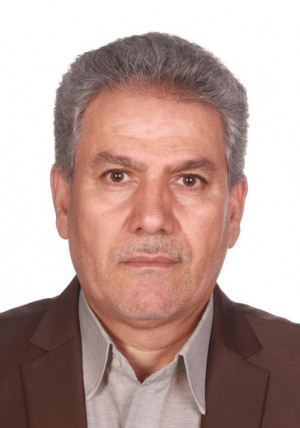 Ahmad Shaabani合作论文数Faculty of Chemistry and Petroleum Sciences, Shahid Beheshti University1
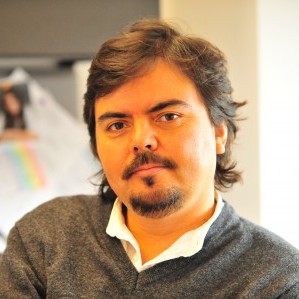 Carlos J. Camacho合作论文数Department of Computational and Systems Biology, University of Pittsburgh1




