Vision Transformers (ViT) have recently demonstrated success across a myriad of computer vision tasks. However, their elevated computational demands pose significant challenges for real-world deployment. While low-rank approximation stands out as a renowned method to reduce computational loads, efficiently automating the target rank selection in ViT remains a challenge. Drawing from the notable similarity and alignment between the processes of rank selection and One-Shot NAS, we introduce FLORA, an end-to-end automatic framework based on NAS. To overcome the design challenge of supernet posed by vast search space, FLORA employs a low-rank aware candidate filtering strategy. This method adeptly identifies and eliminates underperforming candidates, effectively alleviating potential undertraining and interference among subnetworks. To further enhance the quality of low-rank supernets, we design a low-rank specific training paradigm. First, we propose weight inheritance to construct supernet and enable gradient sharing among low-rank modules. Secondly, we adopt low-rank aware sampling to strategically allocate training resources, taking into account inherited information from pre-trained models. Empirical results underscore FLORA's efficacy. With our method, a more fine-grained rank configuration can be generated automatically and yield up to 33% extra FLOPs reduction compared to a simple uniform configuration. More specific, FLORA-DeiT-B/FLORA-Swin-B can save up to 55%/42% FLOPs almost without performance degradtion. Importantly, FLORA boasts both versatility and orthogonality, offering an extra 21%-26% FLOPs reduction when integrated with leading compression techniques or compact hybrid structures. Our code is publicly available at https://github.com/shadowpa0327/FLORA.
In this paper, we develop a novel regularization method for deep neural networks by penalizing the trace of Hessian. This regularizer is motivated by a recent guarantee bound of the generalization error. We explain its benefits in finding flat minima and avoiding Lyapunov stability in dynamical systems. We adopt the Hutchinson method as a classical unbiased estimator for the trace of a matrix and further accel-erate its calculation using a Dropout scheme. Experiments demonstrate that our method outperforms existing regularizers and data augmentation methods, such as Jacobian, Confidence Penalty, Label Smoothing, Cutout, and Mixup. The code is available at https://github.com/Dean-lyc/Hessian-Regularization.(c) 2023 Elsevier B.V. All rights reserved.
Vision Transformers (ViT) have recently been used successfully in various computer vision tasks, but the high computational cost hinders their practical deployment. One of the most well-known methods to alleviate computational burden is low-rank approximation. However, how to automatically search for a low-rank configuration efficiently remains a challenge. In this paper, we propose Trimsformer, an end-to-end automatic low-rank approximation framework based on a neural architecture search scheme, which tackles the inefficiency of searching for a target low-rank configuration out of numerous ones. We propose weight inheritance which encodes enormous rank choices into a single search space. In addition, we share the gradient information among building blocks to boost the convergence of the supernet training. Furthermore, to mitigate the initial performance gap between subnetworks caused by using pre-trained weights, we adopt non-uniform sampling to promote the overall subnetwork performance. Extensive results show the efficacy of our Trimsformer framework. For instance, with our method, Trim-DeiT-B/Trim-Swin-B can save up to 57%/46% FLOPs with 1.1%/0.2% higher accuracy over DeiT-B/Swin-B. Last but not least, Trimsformer exhibits remarkable generality and orthogonality. We can yield extra 21%$\sim$26% FLOPs reductions on top of the popular compression method as well as the compact hybrid structure. Our code will be released.
Vision transformers (ViTs) have gained popularity recently. Even without customized image operators such as convolutions, ViTs can yield competitive performance when properly trained on massive data. However, the computational overhead of ViTs remains prohibitive, due to stacking multi-head self-attention modules and else. Compared to the vast literature and prevailing success in compressing convolutional neural networks, the study of Vision Transformer compression has also just emerged, and existing works focused on one or two aspects of compression. This paper proposes a unified ViT compression framework that seamlessly assembles three effective techniques: pruning, layer skipping, and knowledge distillation. We formulate a budget-constrained, end-to-end optimization framework, targeting jointly learning model weights, layer-wise pruning ratios/masks, and skip configurations, under a distillation loss. The optimization problem is then solved using the primal-dual algorithm. Experiments are conducted with several ViT variants, e.g. DeiT and T2T-ViT backbones on the ImageNet dataset, and our approach consistently outperforms recent competitors. For example, DeiT-Tiny can be trimmed down to 50\% of the original FLOPs almost without losing accuracy. Codes are available online:~\url{https://github.com/VITA-Group/UVC}.
Pruning is an effective method to reduce the memory footprint and FLOPs associated with neural network models. However, existing structured-pruning methods often result in significant accuracy degradation for moderate pruning levels. To address this problem, we introduce a new Hessian Aware Pruning (HAP) method coupled with a Neural Implant approach that uses second-order sensitivity as a metric for structured pruning. The basic idea is to prune insensitive components and to use a Neural Implant for moderately sensitive components, instead of completely pruning them. For the latter approach, the moderately sensitive components are replaced with a low rank implant that is smaller and less computationally expensive than the original component. We use the relative Hessian trace to measure sensitivity, as opposed to the magnitude based sensitivity metric commonly used in the literature. We test HAP for both computer vision tasks and natural language tasks, and we achieve new state-of-the-art results. Specifically, HAP achieves less than 0.1%/0.5% degradation on PreResNet29/ResNet50 (CIFAR-10/ImageNet) with more than 70%/50% of parameters pruned. Meanwhile, HAP also achieves significantly better performance (up to 0.8% with 60% of parameters pruned) as compared to gradient based method for head pruning on transformer-based models. The framework has been open sourced and available online: https://github.com/yaozhewei/HAP.
Existing video frame interpolation methods can only interpolate the frame at a given intermediate time-step, e.g. 1/2. In this paper, we aim to explore a more generalized kind of video frame interpolation, that at an arbitrary time-step. To this end, we consider processing different time-steps with adaptively generated convolutional kernels in a unified way with the help of meta-learning. Specifically, we develop a dual meta-learned frame interpolation framework to synthesize intermediate frames with the guidance of context information and optical flow as well as taking the time-step as side information. First, a content-aware meta-learned flow refinement module is built to improve the accuracy of the optical flow estimation based on the down-sampled version of the input frames. Second, with the refined optical flow and the time-step as the input, a motion-aware meta-learned frame interpolation module generates the convolutional kernels for every pixel used in the convolution operations on the feature map of the coarse warped version of the input frames to generate the predicted frame. Extensive qualitative and quantitative evaluations, as well as ablation studies, demonstrate that, via introducing meta-learning in our framework in such a well-designed way, our method not only achieves superior performance to state-of-the-art frame interpolation approaches but also owns an extended capacity to support the interpolation at an arbitrary time-step.
 Kai-Chiang Wu合作论文数2Chi-Chih Chang合作论文数2Yuan-Yao Sung合作论文数2
 Diana Marculescu合作论文数Chandra Department of Electrical and Computer Engineering, Cockrell School of Engineering, The University of Texas at Austin2
 Yiyang Ma (马逸扬)合作论文数Peking University;DeepSeek-AI1Yucong Liu合作论文数1
 Ji Liu (刘霁)合作论文数Meta1
 Zhewei Yao合作论文数Snowflake1
 Sen Yang合作论文数Snap Inc.1Huan Yuan合作论文数1
 Ning-Chi Huang合作论文数Natl Chiao Tung Univ, Dept Comp Sci, Hsinchu, Taiwan1
 Sehoon Kim合作论文数Berkeley Artificial Intelligence Research Lab, Department of Electrical Engineering and Computer Sciences, University of California, Berkeley;NVIDIA1
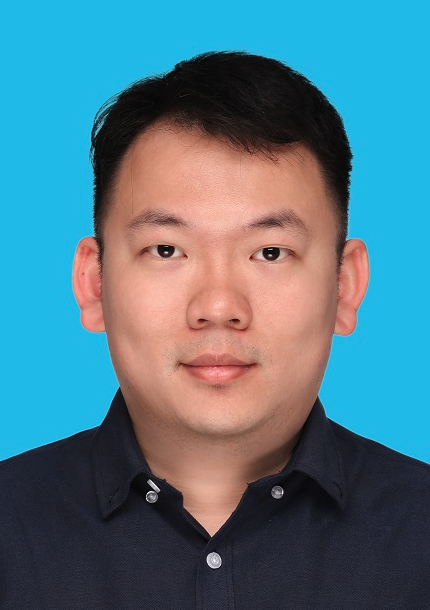 Wenhan Yang (杨文瀚)合作论文数The Distributed High Performance Software Fundamental Research Laboratory, Pengcheng National Lab1
 Zhangyang “Atlas” Wang (汪张扬)合作论文数XTX Markets1
 Amir Gholami合作论文数Institute of Transportation Studies, University of California, Berkeley1
 Jianchao Tan (谈建超)合作论文数Kwai Inc.1Wei Xiang合作论文数School of Electronic Information and Communications, Huazhong University of Science and Technology1
 Zhen Dong合作论文数University of California at Berkeley1
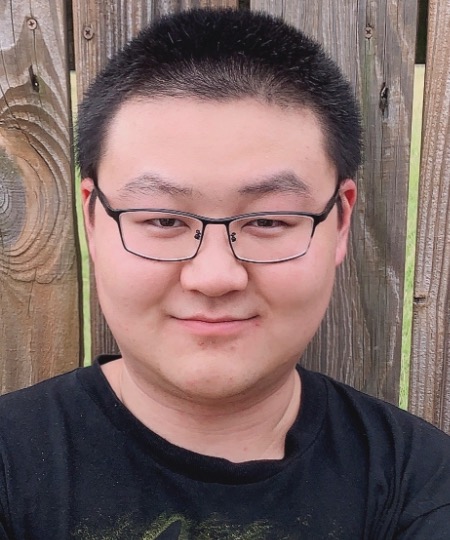 Tianlong Chen (陈天龙)合作论文数UNITES Lab, University of North Carolina at Chapel Hill;Computer Science and Artificial Intelligence Laboratory, Massachusetts Institute of Technology;Broad Institute, Massachusetts Institute of Technology and Havard1
 Tong Lin (林通)合作论文数Key Laboratory of Machine Perception (Ministry of Education), School of Intelligence Science and Technology, Peking University1
 Kurt Keutzer合作论文数Department of Electrical Engineering and Computer Sciences, University of California, Berkeley;Graduate School, University of California, Berkeley1
 Jiaying Liu (刘家瑛)合作论文数Wangxuan Institute of Computer Technology, Peking University1
 Michael Mahoney合作论文数Lawrence Berkeley National Laboratory;International Computer Science Institute1




