Abstract Background Patients waiting for elective cholecystectomy for symptomatic gallstone disease may need admission with biliary symptoms or complications whilst on the waiting list. The longer the length from listing to procedure the higher the risk of symptoms and possible admission with complications. Many elective operations were cancelled or delayed during the pandemic leading to increased waiting times. The trust noticed a significant number of patients presenting to hospital who were already listed for surgery. This study looks at emergency admission data of 100 patients awaiting elective cholecystectomy. Methods Hospital admission data on 100 successive patients from the cholecystectomy waiting list were analysed from Dec 2021-January 2022. Data was collected on when were they added to the list and whether they had presented to hospital in the waiting period before cholecystectomy. Of those that were admitted, reasons for admission, demographics of people who needed admission and length of stay in hospital were recorded. Results Of the 100 patients many had been waiting more than a year with Covid 19 a predominant delaying factor (cholecystectomy is a P3 or P4 procedure and many elective procedures were cancelled or delayed during the pandemic). This cohort of patients had 32 separate presentations to hospital while on the waiting list (some patients presenting multiple times). 9 patients required emergency hospital admission for clinical reasons such as pancreatitis and cholecystitis. This totaled 67 bed days for the admitting hospital, some data was unavailable due to admissions to other hospitals. Conclusions NICE guidelines recommend laparoscopic cholecystectomy within 1 week for patients presenting with acute gallstone disease. Early elective cholecystectomy is recommended for patients with symptomatic gallstones. Delays in elective cholecystectomy operations during Covid 19 have caused delays to definitive treatment and led to excess bed usage during the treatment pathway with the associated financial costs and patient morbidity.
Abstract Background Right iliac fossa pain is a common presenting complaint in males. Ultrasound is a cheap non-invasive investigation, yet results can be non-diagnostic. CT is becoming more accessible and available for patient assessment. Aim Our primary aim is to estimate how many unnecessary US scans are gained prior to CT imaging, thereby delaying surgery, increasing cost and increasing length of stay (LOS). Method We conducted a retrospective analysis of all male patients over the age of 16 admitted to a single unit with RIF pain over 12 months. Outcome and length of stay was recorded. Results 162 male patients were admitted to a single University teaching hospital between 2017 and 2018. 33% (n = 53) of patients having an US scan require further imaging, 40% ( n = 21 ) of these had a surgical pathology, 80% (n = 17) of these requiring appendicectomy. Patients (n = 39) who had an initial CT scan subsequently requiring surgery length of LOS 3.6 days compared with US imaging with additional imaging requiring surgery ( n = 17) LOS 5.8 days. Conclusion Evaluation of practice of males over the age of 16 shows that US is frequently non diagnostic, requiring further investigation with CT or MRI. Imaging initially with CT scan aid diagnosis and decrease length of stay. An education steering committee of surgical trainees, consultants and radiographers has been created to adapt practice in our centre through continued education and training.
Background A number of prominent surgical trials and clinical guidelines regard length of hospital stay and rates of daycase surgery as being of upmost importance following cholecystectomy. However, it is unclear whether these outcomes also matter to patients. This study aimed to identify the factors patients regard as most important when admitted with acute gallstone pathology. Methods A 41-item survey was produced by combining outcomes assessed in recent clinical trials with results from a preliminary patient questionnaire. This was then given out prospectively to patients presenting with acute gallstone pathology, prior to their cholecystectomy. Patients were asked to read an information sheet about laparoscopic cholecystectomy and then complete the survey, scoring each item out of 100 in terms of importance to them. Results Fifty-six patients completed the survey (43 females; median age 51 years). Diagnoses were: cholecystitis (28 patients), biliary colic (13), pancreatitis (10), common bile duct stones (3) and cholangitis (2). The top-scoring survey item was “long-term quality of life after surgery”, with a median value of 97 out of 100. Other high-scoring items included “cleanliness of the ward environment” and “pain control after surgery” (both 96). The lowest-scoring item was “being treated as a daycase” (54). Conclusion Patients with acute gallstone pathology view long-term quality of life after surgery as the most important factor and daycase surgery as the least important. These results should be considered when planning future surgical trials and clinical guidelines.
Achalasia is an uncommon oesophageal motor disorder characterized by failure of relaxation of the lower oesophageal sphincter and muscle hypertrophy, resulting in a loss of peristalsis and a dilated oesophagus. Gastrointestinal symptoms are invariably present in all cases of achalasia observed in adults. We report a case of a 34 year-old female patient with long standing history of asthma-like symptoms, labelled as uncontrolled and steroid resistant asthma with no gastrointestinal manifestations. Thoracic CT scan revealed a massive oesophagus due to achalasia, which caused severe tracheomalacia as a result of tracheal compression. Her symptoms regressed completely after a laparoscopic Heller myotomy surgery intervention.
Background Non-invasive ventilation is part of the standard of care for treatment of respiratory failure in patients with amyotrophic lateral sclerosis (ALS). The NeuRx RA/4 Diaphragm Pacing System has received Humanitarian Device Exemption approval from the US Food and Drug Administration for treatment of respiratory failure in patients with ALS. We aimed to establish the safety and efficacy of diaphragm pacing with this system in patients with respiratory muscle weakness due to ALS.Methods We undertook a multicentre, open-label, randomised controlled trial at seven specialist ALS and respiratory centres in the UK. Eligible participants were aged 18 years or older with laboratory supported probable, clinically probable, or clinically definite ALS; stable riluzole treatment for at least 30 days; and respiratory insufficiency. We randomly assigned participants (1:1), via a centralised web-based randomisation system with minimisation that balanced patients for age, sex, forced vital capacity, and bulbar function, to receive either non-invasive ventilation plus pacing with the NeuRx RA/4 Diaphragm Pacing System or non-invasive ventilation alone. Patients, carers, and outcome assessors were not masked to treatment allocation. The primary outcome was overall survival, defined as the time from randomisation to death from any cause. Analysis was by intention to treat. This trial is registered, ISRCTN number 53817913.Findings Between Dec 5, 2011, and Dec 18, 2013, we randomly assigned 74 participants to receive either non-invasive ventilation alone (n=37) or non-invasive ventilation plus diaphragm pacing (n=37). On Dec 18, 2013, the Data Monitoring and Ethics Committee (DMEC) recommended suspension of recruitment on the basis of overall survival figures. Randomly assigned participants continued as per the study protocol until June 23, 2014, when the DMEC advised discontinuation of pacing in all patients. Follow-up assessments continued until the planned end of the study in December, 2014. Survival was shorter in the non-invasive ventilation plus pacing group than in the non-invasive ventilation alone group (median 11.0 months [95% CI 8.3-13.6] vs 22.5 months [13.6-not reached]; adjusted hazard ratio 2.27, 95% CI 1.22-4.25; p=0.009). 28 (76%) patients died in the pacing group and 19 (51%) patients died in the non-invasive ventilation alone group. We recorded 162 adverse events (5.9 events per person-year) in the pacing group, of which 46 events were serious, compared with 81 events (2.5 events per person-year) in the non-invasive ventilation alone group, of which 31 events were serious.Interpretation Addition of diaphragm pacing to standard care with non-invasive ventilation was associated with decreased survival in patients with ALS. Our results suggest that diaphragmatic pacing should not be used as a routine treatment for patients with ALS in respiratory failure. Copyright (C) DiPALS Study Group Collaborators.
OBJECTIVE. The purpose of this article is to describe the diagnostic pitfalls caused by dropped gallstones left in situ after laparoscopic cholecystectomy.CONCLUSION. Dropped gallstones may rarely become symptomatic, causing recurrent abscesses. Diagnosis is challenging due to unusual clinical presentations, myriad locations, and radiologically occult calculi. Even asymptomatic dropped gallstones may cause diagnostic confusion by masquerading as intraperitoneal neoplastic deposits. Radiologists should be aware of techniques for identifying and retrieving dropped gallstones and be wary of their complications and imitations in patients who have undergone laparoscopic cholecystectomy.
Background: Thiurams, carbamates, mercaptans, amines and thioureas are rubber chemicals used during the manufacturing of both natural rubber latex (NRL) and synthetic rubber gloves.Rubber chemicals can cause type IV allergic reaction.This review describes various aspects of type IV reaction against gloves among healthcare workers (HCWs).Methods: Embase, Medline and Cochrane were searched for records on type IV reactions in NRL or synthetic gloves in HCWs.Data were abstracted and level of evidence was assessed.Results: Through database searching 706 records were identified of which 26 studies were included.Incidence rates of type IV reactions to rubber chemicals in HCWs varied from 3•8% to 21•4%.Incidence of allergy to thiuram-mix (TM) and carba mix (CM) was higher among HCWs than non-HCWs.TM caused the majority of positive patch test reactions in HCWs (48•3%), followed by CM (26•9%), black rubber-mix (11•3%), mercapto mix (7•7%), and thioureas (2•1%).Discordances between patch test results for rubber chemicals and skin tested glove pieces were not rare.NRL gloves seemed to induce type IV reactions more frequently than vinyl gloves, but vinyl gloves were not recommended in high risk situations.NRL gloves provide more comfort, better barrier protection and dexterity compared to nitrile gloves.Incidence of type IV reaction in NRL and other synthetic gloves does not seem to differ but stays largely unknown.Conclusion: Rubber chemicals, especially thiurams and carbamates, are responsible for type IV reactions against gloves.Development of synthetic gloves to replace NRL gloves did not lead to a decrease in type IV allergy among HCWs.Due to their comfort, barrier protection and dexterity, low protein powder-free latex gloves may be considered first choice.
Background: Motor neurone disease (MND) is a devastating illness which leads to muscle weakness and death, usually within 2-3 years of symptom onset. Respiratory insufficiency is a common cause of morbidity, particularly in later stages of MND and respiratory complications are the leading cause of mortality in MND patients. Non Invasive Ventilation (NIV) is the current standard therapy to manage respiratory insufficiency. Some MND patients however do not tolerate NIV due to a number of issues including mask interface problems and claustrophobia. In those that do tolerate NIV, eventually respiratory muscle weakness will progress to a point at which intermittent/overnight NIV is ineffective. The NeuRx RA/4 Diaphragm Pacing System was originally developed for patients with respiratory insufficiency and diaphragm paralysis secondary to stable high spinal cord injuries. The DiPALS study will assess the effect of diaphragm pacing (DP) when used to treat patients with MND and respiratory insufficiency.Method/Design: 108 patients will be recruited to the study at 5 sites in the UK. Patients will be randomised to either receive NIV (current standard care) or receive DP in addition to NIV. Study participants will be required to complete outcome measures at 5 follow up time points (2, 3, 6, 9 and 12 months) plus an additional surgery and 1 week post operative visit for those in the DP group. 12 patients (and their carers) from the DP group will also be asked to complete 2 qualitative interviews.Discussion: The primary objective of this trial will be to evaluate the effect of Diaphragm Pacing (DP) on survival over the study duration in patients with MND with respiratory muscle weakness. The project is funded by the National Institute for Health Research, Health Technology Assessment (HTA) Programme (project number 09/55/33) and the Motor Neurone Disease Association and the Henry Smith Charity. Trial Registration: Current controlled trials ISRCTN53817913. The views and opinions expressed therein are those of the authors and do not necessarily reflect those of the HTA programme, NIHR, NHS or the Department of Health.
 Dayalan Karat合作论文数13
 Mike Bradburn合作论文数13
 Chin Maguire合作论文数13Ealing John合作论文数13Bianchi Stephen M合作论文数13
 John Stradling合作论文数Nuffield Department of Medicine, University of Oxford;Royal College of Physicians13
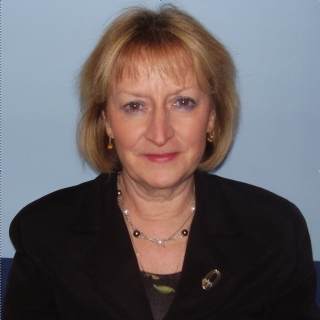 Dame Pamela J Shaw合作论文数School of Medicine and Population Health, University of Sheffield13Simon V. Baudouin合作论文数13
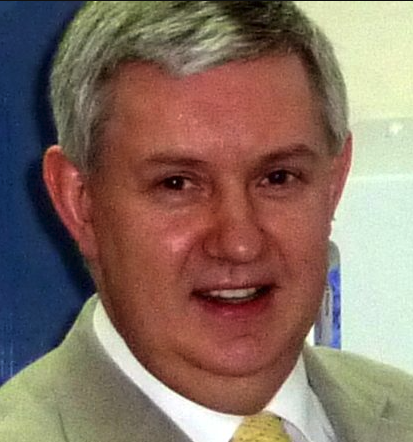 Stephen Bourke合作论文数Faculty of Medical Sciences, Newcastle University13
 Cindy Cooper合作论文数School of Medicine and Population Health, The University of Sheffield;Sheffield Clinical Trials Research Unit, The University of Sheffield13Roger Ackroyd合作论文数13Wendy Baird合作论文数Research Design Service for Yorkshire and the Humber, University of Sheffield13
 Kevin Talbot合作论文数Nuffield Department of Clinical Neurosciences, University of Oxford13Wisia Wedzicha合作论文数12Hisham Hamdalla合作论文数12
 Simon Dixon合作论文数12Roy Darlison合作论文数11Roger Leek合作论文数11Lyn Taylor合作论文数11Hannah Cantrill合作论文数11Patrick Fitzgerald合作论文数11Philip Hughes合作论文数School of Environment, Education and Development, Faculty of Humanities, The University of Manchester11
 Judith A. Cohen合作论文数Center for Traumatic Stress in Children & Adolescents, Allegheny General Hospital;College of Medicine, Drexel University11
 Richard Orrell合作论文数Department of Clinical and Movement Neurosciences, Queen Square Institute of Neurology, University College London11
 Susan K Baxter合作论文数School of Health and Related Research (ScHARR),, University of Sheffield11Ibrahim N Imam合作论文数11Richard G. Berrisford合作论文数11
 Abeezar I Sarela合作论文数11
 Mark Elliott合作论文数St James's University Hospital10
 Anita Simonds合作论文数Airways Disease, National Heart and Lung Institute, Faculty of Medicine, Imperial College London9Nick Maynard合作论文数8
 Martin Turner合作论文数The Babraham Institute8
 Tim Justin Williams合作论文数6
 Andrew Bentley合作论文数for the RECOVERY-RS Collaborators6
 C Oliver Hanemann合作论文数Plymouth Sci Pk, Plymouth Univ5
 Williams Tim L合作论文数5Turner Martin R合作论文数4Andrew Macdonald合作论文数Schulich Sch Med & Dent, Western Univ3Welch Ian合作论文数3Anil Bagul合作论文数2Laura Formela合作论文数2Kate Kinrade合作论文数2Srinivasan Balachandra合作论文数2Emily Boardman合作论文数2Jamdar Saurabh合作论文数2
 Nathalie Maynard合作论文数2Chris McDermott合作论文数Department of Neuroscience, The Medical School, Faculty of Medicine, Dentistry & Health, The University of Sheffield2
 Michael James Mason合作论文数Department of Physiology, Development and Neuroscience, University of Cambridge2




