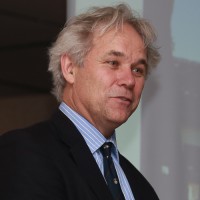
Mark Solms’ revision of Freud’s (1895) Project re-represents a dynamic, biologically plausible, mathematically tractable model of mind. “The intention is to furnish a psychology that shall be a nat...
As science continues to explore the mysteries of the unconscious, two critical questions remain. First, can unconscious impulses, desires, and feelings be willfully raised to the level of the conscious self?, and, if so, would the unveiling of unconscious mechanisms lead to genuine self‐knowledge or empowerment? Second, can we methodically tap into the unconscious to gear ourselves along more creative lines? If the unconscious is a source of intuitive and creative inspiration, how might a more expansive understanding of consciousness help us to flourish? How can we harness the intuitive parts of ourselves to think “outside the box,” transcending the limitations of preconceived categories? And along those same lines, how would an expanded view of the unconscious frame our spiritual experiences or offer spiritual nourishment? Writer Siri Hustvedt , historian of psychology Sonu Shamdasani , and neuropsychologist Mark Solms will tackle everything from noetic experiences and the role of intuition to the phenomenon of peak experience and Jung's “collective unconscious.”
As science continues to explore the mysteries of the unconscious, two critical questions remain. First, can unconscious impulses, desires, and feelings be willfully raised to the level of the conscious self?, and, if so, would the unveiling of unconscious mechanisms lead to genuine self-knowledge or empowerment? Second, can we methodically tap into the unconscious to gear ourselves along more creative lines? If the unconscious is a source of intuitive and creative inspiration, how might a more expansive understanding of consciousness help us to flourish? How can we harness the intuitive parts of ourselves to think “outside the box,” transcending the limitations of preconceived categories? And along those same lines, how would an expanded view of the unconscious frame our spiritual experiences or offer spiritual nourishment? Writer Siri Hustvedt , historian of psychology Sonu Shamdasani , and neuropsychologist Mark Solms will tackle everything from noetic experiences and the role of intuition to the phenomenon of peak experience and Jung's “collective unconscious.”
In this essay, I propose that memory and the imagination partake of the same mental processes: that they are driven by emotion and often take narrative form. Through reflective self-consciousness, human beings are not bound to the phenomenal present. They can recall themselves in the past, imagine themselves in the future, and inhabit fictive realms. Borrowing William James’s distinction between narrative thought and reasoning, as well as the difference between first- and third-person perspectives, I describe the varying approaches of fiction, psychoanalysis, and neuroscience to remembering and imagining. Conscious episodic memories are consolidated by emotion, but they are also reconsolidated—subject to Freud’s “deferred action”—to fictionalizing over time. Story organizes the affective material of memory into a temporal, linguistic schema that is necessarily dialogical: “I” implies “you.” As articulated representation, narrative recollection inevitably distances and cools past emotion. This is not true of involuntary and traumatic memories that are sensorimotor, affective replays of an event, are not codified in language, and cannot be located in a subjective time or space. Research into self-versus other-“processing” in the brain has largely failed to understand that at an explicit, representational level, there is no difference between memories and fantasies about self and other. Culling insights from Freud and research in neuroscience and phenomenology, I argue that a core bodily, affective, timeless self is the ground of the narrative, temporal self, of autobiographical memory, and of fiction and that the secret to creativity lies not in the so-called higher cognitive processes, but in dreamlike reconfigurations of emotional meanings that take place unconsciously.