In Papilionoideae legume, Lotus japonicus, the development of dorsal-ventral (DV) asymmetric flowers is mainly controlled by two TB1/CYCLOIDEA/PCF (TCP) genes, SQUARED STANDARD (SQU) and KEELED WINGS IN LOTUS (KEW), which determine dorsal and lateral identities, respectively. However, the molecular basis of how these two highly homologous genes orchestrate their diverse functions remains unclear. Here, we analyzed their expression levels, and investigated the transcriptional activities of SQU and KEW. We demonstrated that SQU possesses both activation and repression activities, while KEW acts only as an activator. They form homo-and heterodimers, and then collaboratively regulate their expression at the transcription level. Furthermore, we identified two types of post-transcriptional modifications, phosphorylation and ATP/GTP binding, both of which could affect their transcriptional activities. Mutations in ATP/GTP binding motifs of SQU and KEW lead to failure of phosphorylation, and transgenic plants bearing the mutant proteins display defective DV asymmetric flower development, indicating that the two conjugate modifications are essential for their diverse functions. Altogether, SQU and KEW activities are precisely modulated at both transcription and post-transcription levels, which might link DV asymmetric flower development to different physiological status and/or signaling pathways.
CYCLOIDEA (CYC)-like TCP genes play key roles in dorsoventral differentiation of zygomorphic flowers in Papilionoideae legumes. In this study, we analyzed the kew mutants whose flowers lost lateral identity, and investigated the diverse functions of three LjCYC genes during zygomorphic flower development in the model legume Lotus japonicus. We showed that kew1 and kew3 are allelic mutants of LjCYC3, a CYC-like TCP gene. Through transgenic experiments, it was shown that LjCYC1 possesses dorsal activity similar to LjCYC2, and that LjCYC3 alone is sufficient to confer lateral activity, and an epistatic effect between dorsal and lateral activities was identified. Sequence analysis revealed a striking alteration at the 3' end of the LjCYC3 open reading frame (ORF) in comparison with those of LjCYC1 and LjCYC2 ORFs. Furthermore, it was found that LjCYC proteins could interact with each other and possess different activities by means of a transcriptional activity assay. Our data demonstrate that the sequence variation and the subsequent alteration of protein property play important roles in the functional diversity of different LjCYC genes in controlling zygomorphic flower development in Lotus japonicus.
Previous studies have demonstrated that petal shape and size in legume flowers are determined by two separate mechanisms, dorsoventral (DV) and organ internal (IN) asymmetric mechanisms, respectively. However, little is known about the molecular mechanisms controlling petal development in legumes. To address this question, we investigated petal development along the floral DV axis in Lotus japonicus with respect to cell and developmental biology by comparing wild-type legumes to mutants. Based on morphological markers, the entire course of petal development, from initiation to maturity, was grouped to define 3 phases or 13 stages. In terms of epidermal micromorphology from adaxial surface, mature petals were divided into several distinct domains, and characteristic epidermal cells of each petal differentiated at stage 9, while epidermal cells of all domains were observed until stage 12. TCP and MIXTA-like genes were found to be differentially expressed in various domains of petals at stages 9 and 12. Our results suggest that DV and IN mechanisms interplay at different stages of petal development, and their interaction at the cellular and molecular level guides the elaboration of domains within petals to achieve their ideal shape, and further suggest that TCP genes determine petal identity along the DV axis by regulating MIXTA-like gene expression.
Floral zygomorphy (flowers with bilateral symmetry) has multiple origins and typically manifests two kinds of asymmetries, dorsoventral (DV) and organ internal (IN) asymmetries in floral and organ planes, respectively, revealing the underlying key regulators in plant genomes that generate and superimpose various mechanisms to build up complexity and different floral forms during plant development. In this study, we investigate the loci affecting these asymmetries during the development of floral zygomorphy in pea (Pisum sativum L.). Two genes, LOBED STANDARD 1 (LST1) and KEELED WINGS (K), were cloned that encode TCP transcription factors and have divergent functions to constitute the DV asymmetry. A previously undescribed regulator, SYMMETRIC PETALS 1 (SYP1), has been isolated as controlling IN asymmetry. Genetic analysis demonstrates that DV and IN asymmetries could be controlled independently by the two kinds of regulators in pea, and their interactions help to specify the type of zygomorphy. Based on the genetic analysis in pea, we suggest that variation in both the functions and interactions of these regulators could give rise to the wide spectrum of floral symmetries among legume species and other flowering plants.
Zygomorphic flowers, with bilateral (dorsoventral) symmetry, are considered to have evolved several times independently in flowering plants. In Antirrhinum majus, floral dorsoventral symmetry depends on the activity of two TCP-box genes, CYCLOIDEA (CYC) and DICHOTOMA (DICH). To examine whether the same molecular mechanism of floral asymmetry operates in the distantly related Rosid clade of eudicots, in which asymmetric flowers are thought to have evolved independently, we investigated the function of a CYC homologue LjCYC2 in a papilionoid legume, Lotus japonicus. We showed a role for LjCYC2 in establishing dorsal identity by altering its expression in transgenic plants and analyzing its mutant allele squared standard 1 (squ1). Furthermore, we identified a lateralizing factor, Keeled wings in Lotus 1 (Kew1), which plays a key role in the control of lateral petal identity, and found LjCYC2 interacted with Kew1, resulting in a double mutant that bore all petals with ventralized identity to some extents. Thus, we demonstrate that CYC homologues have been independently recruited as determinants of petal identities along the dorsoventral axis in two distant lineages of flowering plants, suggesting a common molecular origin for the mechanisms controlling floral zygomorphy.
 Jun Yang (杨军)合作论文数Department of Entomology and Nematology, University of California, Davis5
 Da Luo (罗达)合作论文数Northeast Institute of Geography and Agroecology, Chinese Academy of Sciences;University of Chinese Academy of Sciences;School of Life Sciences, Sun Yat-sen University5
 Xiaohe Hu合作论文数5Yonghai Luo合作论文数3
 Xianzhong Feng (冯献忠)合作论文数Northeast Institute of Geography and Agroecology, Chinese Academy of Sciences3Weng Lin合作论文数3Cao Xiangling合作论文数3Wang Zheng合作论文数2
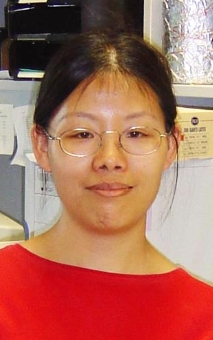 Zhaoxia Tian (田朝霞)合作论文数School of Life Sciences, Division of Life Sciences and Medicine, University of Science and Technology of China2Satoshi Tabata合作论文数Kazusa DNA Research Institute2
 Mike Ambrose合作论文数2SS Sato合作论文数1Zhiyong Xu合作论文数1Yumei Wang合作论文数1Jianghua Chen (陈江华)合作论文数中国科学技术大学生命科学学院1
 Genyun Chen (陈根云)合作论文数Shanghai Institutes for Biological Sciences, Chinese Academy of Sciences1
 Wei Xie (谢伟)合作论文数School of Life Sciences, Sun Yat-sen University;Moe Key Laboratory of Gene Function and Regulation, Sun Yat-sen University1
 Leiying Zheng (郑雷英)合作论文数中国科学院植物研究所1Wei Ma合作论文数1
 Shusei Sato (佐藤修正)合作论文数Department of Ecological Developmental Adaptability Life Sciences, Graduate School of Life Sciences, Tohoku University1Wang Liping合作论文数National Research Council Canada1
 Xizhi Guo (郭熙志)合作论文数School of Life Sciences and Biotechnology, Shanghai Jiao Tong University1
 Zhigang Cai (蔡志岗)合作论文数Yat-Sen School, Sun Yat-sen University;School of Physics, Sun Yat-sen University1Ling Yuan (袁凌)合作论文数1
 Junhua Luo (罗军华)合作论文数Fujian Institute of Research on the Structure of Matter, Chinese Academy of Sciences;University of Chinese Academy of Sciences1
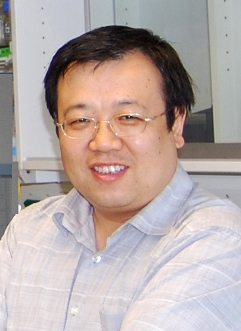 Zhong Zhao (赵忠)合作论文数Department of Life Sciences and Medicine, University of Science and Technology of China1
 Catherine Rameau合作论文数Génétique et Amélioration des Plantes, INRA1
 Hualing Mi (米华玲)合作论文数Center for Excellence in Molecular Plant Sciences, Chinese Academy of Sciences;University of Chinese Academy of Sciences1
 Xin Li (李昕)合作论文数School of Medicine, Sun Yat-Sen University1Chongrong Sun合作论文数1




