Wild insects pollinate numerous agricultural crops, but the role of nocturnal pollinators, while increasingly acknowledged, remains poorly understood. We examined nocturnal insect communities and pollination in agroforests of robusta coffee (Coffea canephora) - a crop that exhibits floral traits suggestive of nocturnal pollination - in India's Western Ghats mountains. Specifically, we (1) compared nocturnal insect communities of a shaded robusta coffee agroforest and a nearby secondary tropical rainforest using light screens, and (2) assessed nocturnal and diurnal pollination of coffee using floral exclosure experiments in the agroforest and in a former coffee agroforest located within the secondary rainforest. Nocturnal pollinators visiting light screens were 21 % fewer in the agroforest than the rainforest, mainly due to reduced numbers of Lepidoptera, Coleoptera, and Diptera in the former. Lepidoptera and Coleoptera differed in genus richness and composition between habitats, with the agroforest having fewer Lepidoptera and more Coleoptera genera than the rainforest. Coffee pollination success was largely attributable to diurnal pollinators in both the agroforest and rainforest. While nocturnal pollination effects were absent in the agroforest, we found some evidence of nocturnal pollination in the secondary rainforest, where coffee flowers accessible to diurnal and nocturnal pollinators had higher pollination success (60 %) than flowers accessible to diurnal pollinators alone (46 %). In summary, the nocturnal insect community of coffee agroforestry, which is distinct from the rainforest community, contributes little to coffee pollination. However, a greater contribution of nocturnal pollination under less intensive coffee cultivation is a possibility that warrants further exploration.
A growing body of research shows the potential of agroecology for enabling a shift to planet-friendly and socially just agrifood systems through context-specific transition pathways. We conduct a scoping review to identify and evaluate the potential of 42 existing agroecology adherence and/or agricultural performance assessment tools to generate credible, legitimate, salient and transferable evidence to inform these transitions. Results show that while multiple relevant tools exist, each of them can be strengthened in at least one area. While most tools are transferable (low time and resource requirements) and have legitimacy (open access with transparent methods), tools have variable saliency (holistic scope inclusive of local priorities) and credibility (use scientific design principles and quality assurance processes). For a subset of 11 tools collecting multidimensional performance data, analysis of 263 identified indicators showed there is a bias towards economic measures (notably income, yield, and resilience), while certain social (e.g. land tenure, traditional knowledge retention) and environmental (e.g. climate mitigation) aspects are regularly overlooked. Through a multidisciplinary process engaging experts across 8 countries, we develop a Holistic Localized Performance Assessment for agroecology (HOLPA) framework that integrates and builds on positive features of existing multidimensional agroecology performance assessments tools and overcomes key limitations. The HOLPA framework for analysis, agroecology indicators, key performance indicators, and low-cost localization process can be used to strengthen agroecology performance assessments, empowering landscape actors to identify evidence-based pathways towards agrifood systems where both people and nature can thrive.
Urbanization and industrial agriculture are a threat to wild and managed honey-bees, crucial pollinators of the natural- and agro-ecosystems components of the landscapes. Understanding bee colonies’ foraging behaviors within these landscapes is essential for managing human-bee conflicts and sustaining their vital pollination services. Objectives To understand how bees use their surroundings, researchers often decode bee waggle dances, a behavior that communicates navigational information about desirable foraging sites to their nest mates. This process is carried out manually, which is time-consuming, prone to human error and requires specialized skills. We aim at developing an automatic pipeline to detect and translate waggle dances in natural conditions. Methods We introduce a novel deep learning-based pipeline that automatically detects and measures waggle runs, the core movement of the waggle dance, under natural recording conditions for the first time. With this information we can estimate the spatial and temporal dynamics of bee foraging behavior. Results Comparison of our pipeline with analysis made by human experts revealed that our procedure is able to detect 100% of waggle runs on the testing dataset, with a run duration Root Mean Squared Error (RMSE) of less than a second, and a run angle RMSE of 0.21 radians. It is also generalizable to other recording conditions and bee species. Conclusion Our approach enables precise measurement of direction and duration, enabling the spatial and temporal analysis of bee foraging behavior on an unprecedented scale compared to traditional manual methods, contributing to preserving biodiversity and ecosystem services.
Proximity to natural habitat is known to enhance pollination services in large-scale agriculture, but it remains unclear whether this holds in tropical smallholder farms. These systems are embedded in ecologically complex landscapes, central to global food security, and depend heavily on biodiversity-derived ecosystem services. We conducted a systematic review and meta-analysis of 35 studies assessing the relationship between distance to natural habitat and pollinator abundance, species richness, and crop fruit set in tropical smallholder farms. We found no consistent patterns in pollinator abundance and crop fruit set with increasing distance, with relationships highly variable across studies. Similarly variable, yet slightly negative, was the relationship between distance and pollinator species richness. Our findings suggest limited support for the 'proximity to natural habitat' hypothesis in tropical smallholder farms, indicating that the inherent complexity of these landscapes may buffer negative effects of distance on pollination. This underscores the importance of maintaining and restoring landscape complexity to sustain biodiversity and ecosystem services such as crop pollination. We also highlight the need for greater methodological consistency and publicly available raw data in future studies to strengthen the evidence base and support management strategies for safeguarding pollination services in tropical smallholder farms.
1. Wild and managed honey bees, crucial pollinators for both agriculture and natural ecosystems, face challenges due to industrial agriculture and urbanization. Understanding how bee colonies utilize the landscape for foraging is essential for managing human-bee conflicts and protecting these pollinators to sustain their vital pollination services. To understand how the bees utilize their surroundings, researchers often decode bee waggle dances, which honey bee workers use to communicate navigational information of desirable food and nesting sites to their nest mates. This process is carried out manually, which is time-consuming, prone to human error and requires specialized skills. 2. We address this problem by introducing a novel deep learning-based pipeline that automatically detects and measures waggle runs, the core movement of the waggle dance, under natural recording conditions for the first time. We combined the capabilities of the action detector YOWOv2 and the DeepSORT tracking method, with the Principal Component Analysis to extract dancing bee bounding boxes and the angles and durations within waggle runs. 3. The presented pipeline works fully automatically with videos taken from wild Apis dorsata colonies in its natural environment, and can be used for any honey bee species. Comparison of our pipeline with analyses made by human experts revealed that our procedure was able to detect 93% of waggle runs on the testing dataset, with a run duration Root Mean Squared Error (RMSE) of less than a second, and a run angle RMSE of 0.14 radians. We also assessed the generalizability of our pipeline to previously unseen recording conditions, successfully detecting 50% of waggle runs performed by Apis mellifera bees from a colony managed in Tokyo, Japan. In parallel, we discovered the most appropriate values of the model’s hyperparameters for this task. 4. Our study demonstrates that a deep learning-based pipeline can successfully and automatically analyze the waggle runs of Apis dorsata in natural conditions and generalize to other bee species. This approach enables precise measurement of direction and duration, enabling the study of bee foraging behavior on an unprecedented scale compared to traditional manual methods contributing to preserving biodiversity and ecosystem services. ### Competing Interest Statement The authors have declared no competing interest.
The challenges of bee research in Asia are unique and severe, reflecting different cultures, landscapes, and faunas. Strategies and frameworks developed in North America or Europe may not prove applicable. Virtually none of these species have been assessed by the IUCN and there is a paucity of public data on even the basics of bee distribution. If we do not know the species present, their distribution and threats, we cannot protect them, but our knowledge base is vanishingly small in Asia compared to the rest of the world. To better understand and meet these challenges, this perspective conveys the ideas accumulated over hundreds of years of cumulative study of Asian bees by the authors, including academic, governmental, and other researchers from 13 Asian countries and beyond. We outline the special circumstances of Asian bee research and the current state of affairs, highlight the importance of highly social species as flagships for the lesser-known solitary bees, the dire need for further research for food security, and identify target research areas in need of further study. Finally, we outline a framework via which we will catalyze future research in the region, especially via governmental and other partnerships necessary to effectively conserve species.
The rapid urbanization observed in Asian tropics has resulted in extensive landscape transformations, giving rise to novel challenges such as conflicts of interest among citizens and threats to biodiversity. To facilitate informed urban management policies, there is a pressing need for contemporary land use and cover maps that provide precise insights into the evolving landscape. In this paper, we present the city of Bengaluru, India (covering an area of 365,879 ha) as a case study. We introduce an open-source-driven pipeline method capable of generating an updated 11-class land cover map at a high resolution of 10 m, achieving a global F1 score of 0.82. Notably, our proposed pipeline represents a pioneering solution that effectively addresses the persistent issue of cloud cover caused by monsoons, enhancing the utility of such maps for urban management, and planning in rapidly evolving regions.
With virtual information, cloud computing has made applications available to users everywhere. Efficient asset workload forecasting could help the cloud achieve maximum resource utilisation. The effective utilization of resources and the reduction of datacentres power both depend heavily on load forecasting. The allocation of resources and task scheduling issues in clouds and virtualized systems are significantly impacted by CPU utilisation forecast. A resource manager uses utilisation projection to distribute workload between physical nodes, improving resource consumption effectiveness. When performing a virtual machine distribution job, a good estimation of CPU utilization enables the migration of one or more virtual servers, preventing the overflow of the real machineries. In a cloud system, scalability and flexibility are crucial characteristics. Predicting workload and demands would aid in optimal resource utilisation in a cloud setting. To improve allocation of resources and the effectiveness of the cloud service, workload assessment and future workload forecasting could be performed. The creation of an appropriate statistical method has begun. In this study, a simulation approach and a genetic algorithm were used to forecast workloads. In comparison to the earlier techniques, it is anticipated to produce results that are superior by having a lower error rate and higher forecasting reliability. The suggested method is examined utilizing statistics from the Bit brains datacentres. The study then analyses, summarises, and suggests future study paths in cloud environments.
Ecological intensification has been embraced with great interest by the academic sector but is still rarely taken up by farmers because monitoring the state of different ecological functions is not straightforward. Modelling tools can represent a more accessible alternative of measuring ecological functions, which could help promote their use amongst farmers and other decision-makers. In the case of crop pollination, modelling has traditionally followed either a mechanistic or a data-driven approach. Mechanistic models simulate the habitat preferences and foraging behaviour of pollinators, while data-driven models associate georeferenced variables with real observations. Here, we test these two approaches to predict pollination supply and validate these predictions using data from a newly released global dataset on pollinator visitation rates to different crops. We use one of the most extensively used models for the mechanistic approach, while for the data-driven approach, we select from among a comprehensive set of state-of-the-art machine-learning models. Moreover, we explore a mixed approach, where data-derived inputs, rather than expert assessment, inform the mechanistic model. We find that, at a global scale, machine-learning models work best, offering a rank correlation coefficient between predictions and observations of pollinator visitation rates of 0.56. In turn, the mechanistic model works moderately well at a global scale for wild bees other than bumblebees. Biomes characterized by temperate or Mediterranean forests show a better agreement between mechanistic model predictions and observations, probably due to more comprehensive ecological knowledge and therefore better parameterization of input variables for these biomes. This study highlights the challenges of transferring input variables across multiple biomes, as expected given the different composition of species in different biomes. Our results provide clear guidance on which pollination supply models perform best at different spatial scales – the first step towards bridging the stakeholder–academia gap in modelling ecosystem service delivery under ecological intensification.
At the start of the UN Decade of Ecosystem Restoration (2021-2030), the restoration of degraded ecosystems is more than ever a global priority. Tree planting will make up a large share of the ambitious restoration commitments made by countries around the world, but careful planning is needed to select species and seed sources that are suitably adapted to present and future restoration site conditions and that meet the restoration objectives. Here we present a scalable and freely available online tool, Diversity for Restoration (D4R), to identify suitable tree species and seed sources for climate-resilient tropical forest landscape restoration. The D4R tool integrates (a) species habitat suitability maps under current and future climatic conditions; (b) analysis of functional trait data, local ecological knowledge and other species characteristics to score how well species match the restoration site conditions and restoration objectives; (c) optimization of species combinations and abundances considering functional trait diversity or phylogenetic diversity, to foster complementarity between species and to ensure ecosystem multifunctionality and stability; and (d) development of seed zone maps to guide sourcing of planting material adapted to present and predicted future environmental conditions. We outline the various elements behind the tool and discuss how it fits within the broader restoration planning process, including a review of other existing tools. Synthesis and applications. The Diversity for Restoration tool enables non-expert users to combine species traits, environmental data and climate change models to select tree species and seed sources that best match restoration site conditions and restoration objectives. Originally developed for the tropical dry forests of Colombia, the tool has now been expanded to the tropical dry forests of northwestern Peru-southern Ecuador and the countries of Burkina Faso and Cameroon, and further expansion is underway. Acknowledging that restoration has a wide range of meanings and goals, our tool is intended to support decision making of anyone interested in tree planting and seed sourcing in tropical forest landscapes, regardless of the purpose or restoration approach.
Seventy five percent of the world's food crops benefit from insect pollination. Hence, there has been increased interest in how global change drivers impact this critical ecosystem service. Because standardized data on crop pollination are rarely available, we are limited in our capacity to understand the variation in pollination benefits to crop yield, as well as to anticipate changes in this service, develop predictions, and inform management actions. Here, we present CropPol, a dynamic, open, and global database on crop pollination. It contains measurements recorded from 202 crop studies, covering 3,394 field observations, 2,552 yield measurements (i.e., berry mass, number of fruits, and fruit density [kg/ha], among others), and 47,752 insect records from 48 commercial crops distributed around the globe. CropPol comprises 32 of the 87 leading global crops and commodities that are pollinator dependent. Malus domestica is the most represented crop (32 studies), followed by Brassica napus (22 studies), Vaccinium corymbosum (13 studies), and Citrullus lanatus (12 studies). The most abundant pollinator guilds recorded are honey bees (34.22% counts), bumblebees (19.19%), flies other than Syrphidae and Bombyliidae (13.18%), other wild bees (13.13%), beetles (10.97%), Syrphidae (4.87%), and Bombyliidae (0.05%). Locations comprise 34 countries distributed among Europe (76 studies), North America (60), Latin America and the Caribbean (29), Asia (20), Oceania (10), and Africa (7). Sampling spans three decades and is concentrated on 2001-2005 (21 studies), 2006-2010 (40), 2011-2015 (88), and 2016-2020 (50). This is the most comprehensive open global data set on measurements of crop flower visitors, crop pollinators and pollination to date, and we encourage researchers to add more datasets to this database in the future. This data set is released for non-commercial use only. Credits should be given to this paper (i.e., proper citation), and the products generated with this database should be shared under the same license terms (CC BY-NC-SA).
Species distribution modelling is increasingly used to help identify conservation priorities and target field studies. We modeled the distribution of Sandalwood (Santalum album L.) in India and Indonesia, two key countries within the species natural range, and compared the results with land cover, protected area network and global ecoregions map. Land use change has significantly affected the potential distribution of Sandalwood in both India and Indonesia, with 79% and 60% of the species’ predicted suitable habitats converted to croplands, respectively, and approximately only 2% of the remaining natural habitats found in protected areas. Moreover, land use change has affected ecoregions unevenly, with some ecoregions having lost over 90% of suitable natural habitats of Sandalwood and along with them likely distinct adaptive traits of the species. Ecoregions in Indonesia’s East Nusa Tenggara province, regarded as a centre of diversity of Sandalwood, are of particular conservation concern due to the minimal remaining distribution area. Furthermore, we projected the modeled distribution to future climate conditions and the results indicated that climate change is not expected to affect the Sandalwood adversely across most of its range by 2050. Instead, the species would gain new suitable areas, especially in Central and Northern India. We conclude with recommendations for the conservation and sustainable management of Sandalwood resources in the two countries.
High-quality, suitably adapted tree seed at volume is a key component for the implementation and long-term success of forest landscape restoration (FLR). We analysed the tree seed systems in four Asian countries—the Philippines, Indonesia, Malaysia and India—which have committed to restore in total over 47.5 million hectares of degraded lands by 2030. We assessed the national seed systems using an established indicator framework, literature review and expert surveys and interviews. Additionally, we surveyed 61 FLR practitioners about their challenges in acquiring seed to understand how the strengths and weaknesses identified at the national level were reflected in FLR projects on the ground. Identified key constraints common to the studied countries are (i) a mismatch between the growing demand for priority native species and the limited seed supply in terms of quantity and quality, (ii) lack of effective quality control for seed of native species and (iii) lack of information about the effects of climate change on native species to guide species selection and seed sourcing and to improve the resilience of restored ecosystems. We discuss options to strengthen seed systems for native tree species both in terms of quality and volume to enable them to effectively respond to the national FLR commitments and make recommendations on promising technical solutions.
In 2013, Elmqvist et al. published Urbanization, Biodiversity and Ecosystem Services: Challenges and Opportunities, which described and analysed multiple dimensions of urbanization, focusing on how...
Today, the most recent paradigm to emerge is that of Cloud computing, which promises reliable services delivered to the end-user through next-generation data centres which are built on virtualized compute and storage technologies Consumer will be able to access desired service from a “Cloud” anytime anywhere in the world on the bases of demand. Computing services need to be highly reliable, scalable, easy accessible and autonomic to support ever-present access, dynamic discovery and computability, consumers indicate the required service level through Quality of Service (QoS) parameters, according to Service Level Agreements (SLAs) A suitable mdel for the prediction is being developed. Here Genetic Algorithm is chosen in combination with stastical model to do the workload prediction .It is expected to give better result by producing less error rate and more accuracy of prediction compared to the previous algorithm.
Pollination is an ecosystem service that directly contributes to agricultural production, and can therefore provide a strong incentive to conserve natural habitats that support pollinator populations. However, we have yet to provide consistent and convincing pollination service valuations to effectively slow the conversion of natural habitats. We use coffee in Kodagu, India, to illustrate the uncertainties involved in estimating costs and benefits of pollination services. First, we fully account for the benefits obtained by coffee agroforests that are attributable to pollination from wild bees nesting in forest habitats. Second, we compare these benefits to the opportunity cost of conserving forest habitats and forgoing conversion to coffee production. Throughout, we systematically quantify the uncertainties in our accounting exercise and identify the parameters that contribute most to uncertainty in pollination service valuation. We find the value of pollination services provided by one hectare of forest to be 25% lower than the profits obtained from converting that same surface to coffee production using average values for all parameters. However, our results show this value is not robust to moderate uncertainty in parameter values, particularly that driven by variability in pollinator density. Synthesis and applications. Our findings emphasize the need to develop robust estimates of both value and opportunity costs of pollination services that take into account landscape and management variables. Our analysis contributes to strengthening pollination service arguments used to help stakeholders make informed decisions on land use and conservation practices.
Agroforestry systems are refuges for biodiversity and provide multiple ecosystem functions and services. Diverse multispecies shade tree canopies are increasingly replaced by monospecific shade, often dominated by non-native tree species. The loss of tree diversity and the nature of the dominating tree can have strong implications for ecosystem functions, for example, nutrient cycling ultimately reducing crop production. To understand direct and indirect impacts of shade trees on nutrient cycling and crop production, we studied coffee agroforestry systems in India along a gradient from native multispecies canopies to Grevillea robusta (Proteaceae) -dominated canopy cover. We identified 25 agroforests, across a broad rainfall and management gradient and assessed litter quantity and quality, decomposition, nutrient release, soil fertility and coffee nutrient limitations. Increasing G. robusta dominance affected nutrient cycling predominantly by; (a) changing of litter phenology, (b) reducing phosphorus (P), potassium (K), magnesium (Mg), boron (B) and zinc (Zn) inputs via litterfall, decelerated litter decomposition and immobilization of P and Zn due to low-quality litter, (c) reducing soil carbon (C) and micronutrients (especially sulphur (S), Mg and B). Coffee plants were deficient in several nutrients (nitrogen (N), calcium (Ca), manganese (Mn), Mg and S in organic and B in conventional management). (d) Overall G. robusta-dominated agroforests were characterized by a reduction of P cycling due to low inputs, strong immobilization while decomposition and antagonistic effects on its release in litter mixtures with coffee. Synthesis and applications. The conversion of shade cover in coffee agroforestry systems from diverse tree canopies to canopies dominated by Grevillea robusta (Proteaceae) reduces the inputs and cycling of several micro- and macronutrients. Soil fertility is therefore expected to decline in Grevillea robusta-dominated systems, with likely impacts on coffee production. These negative effects might increase under the longer dry periods projected by regional climate change scenarios due to the pronounced litter phenology of Grevillea robusta. Maintaining diverse shade canopies can more effectively sustain micro- and macronutrients in a more seasonal climate.
Human land use threatens global biodiversity and compromises multiple ecosystem functions critical to food production. Whether crop yield-related ecosystem services can be maintained by a few dominant species or rely on high richness remains unclear. Using a global database from 89 studies (with 1475 locations), we partition the relative importance of species richness, abundance, and dominance for pollination; biological pest control; and final yields in the context of ongoing land-use change. Pollinator and enemy richness directly supported ecosystem services in addition to and independent of abundance and dominance. Up to 50% of the negative effects of landscape simplification on ecosystem services was due to richness losses of service-providing organisms, with negative consequences for crop yields. Maintaining the biodiversity of ecosystem service providers is therefore vital to sustain the flow of key agroecosystem benefits to society.
 Jaboury Ghazoul合作论文数Utrecht University;Department of Environmental Systems Science, ETH Zurich13
 Alexandra Maria Klein合作论文数Faculty of Environment and Natural Resources, Albert-Ludwigs-Universitat Freiburg10
 Virginie Boreux合作论文数9
 Lucas A Garibaldi合作论文数Laboratorio Ecotono, INIBIOMA-CONICET and CRUB-UNCOMA9
 Teja Tscharntke合作论文数Department of Crop Sciences, Georg-August-Universität Göttingen8
 Breno Magalhaes Freitas合作论文数Departamento de Zootecnia;Universidade Federal do Ceará;Departamento de Zootecnia, Universidade Federal do Ceará8
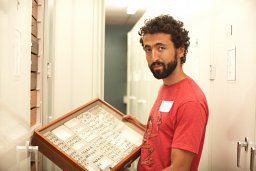 Ignasi Bartomeus合作论文数EBD, CSIC8
 Rundlöf Maj合作论文数Dept Biol, Lund Univ7
 Hisatomo Taki合作论文数7
 Simon Potts合作论文数Department of Sustainable Land Management, University of Reading7
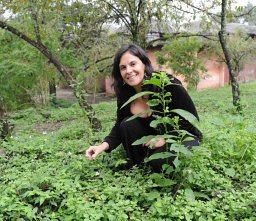 Natacha P. Chacoff合作论文数Laboratorio de Investigaciones;EcolÛgicas de las Yungas;Laboratorio de Investigaciones|EcolÛgicas de las Yungas7
 Claire Kremen合作论文数Institute for Resources, Environment and Sustainability, Faculty of Science, The University of British Columbia6
 Margaret Mayfield合作论文数School of BioSciences, University of Melbourne;Mayfield Community Ecology Lab, University of Melbourne6
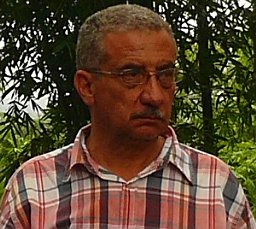 Carlos Hernan Vergara合作论文数Departamento de Ciencias Químico-Biológicas, Universidad de las Américas Puebla6
 Luisa Gigante Carvalheiro合作论文数Dept Ecol, Univ Brasilia6
 Mark Otieno合作论文数6
 Juliana Hipolito合作论文数6
 Ingolf Steffan-Dewenter合作论文数Department of Animal Ecology and Tropical Biology, University of Würzburg6
 Blandina Felipe Viana合作论文数federal university of bahia6Christof Schüepp合作论文数6
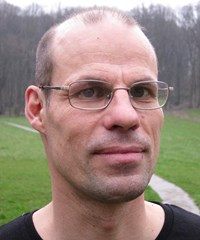 Riccardo Bommarco合作论文数Department of Ecology, Swedish University of Agricultural Sciences6Amber R. Sciligo合作论文数5
 Taylor Ricketts合作论文数Rubenstein School of Environment and Natural Resources, University of Vermont;Gund Institute for Environment, University of Vermont5
 Gagic Vesna合作论文数Department of Ecology, Swedish University of Agricultural Sciences5
 Marcelo A. Aizen合作论文数Centro Regional Universitario Bariloche, National University of Comahue5
 Saul Cunningham合作论文数Fenner School of Environment and Society, Australian National University5Andrea Holzschuh合作论文数5
 Michal Woyciechowski合作论文数5
 Chris J Kettle合作论文数Institute of Terrestrial Ecosystems, CHN G73.25
 M. P. D. Garratt合作论文数5
 Cheppudira G. Kushalappa合作论文数College of Forestry, University of Agricultural Sciences (Bangalore),5
 Maike Nesper合作论文数4
 Romina Rader合作论文数School of Environmental and Rural Science, University of New England4
 Björn K. Klatt合作论文数Agroecology, Georg-August-University Göttingen4
 Georg K. S. Andersson合作论文数Lund University, Lund University4
 Henrik G. Smith (Henrik Smith)合作论文数Centre for Environmental and Climate Science, Lund University4
 Kristin M. Krewenka合作论文数4
 Palatty Allesh Sinu合作论文数Ashoka Trust for Research in Ecology and the Environment4
 Iris Kormann nee Motzke合作论文数4
 Bo Dalsgaard合作论文数Globe Institute, Faculty of Health and Medical Sciences, University of Copenhagen3
 Pablo Cavigliasso合作论文数Programa Nacional Apícola, Instituto Nacional de Tecnología Agropecuaria3Shalene Jha合作论文数3Rebecca Stewart合作论文数3
 Sarah Cusser合作论文数Santa Barbara Botanic Garden3
 Lovisa Nilsson合作论文数Department of Ecology, Swedish University of Agricultural Sciences3
 Rachael Winfree合作论文数Department of Ecology, Evolution, and Natural Resources, School of Environmental and Biological Sciences, Rutgers, The State University of New Jersey3
 Brad G. Howlett合作论文数3
 Jeroen Scheper合作论文数Resource Ecol Grp, Wageningen Univ3
 Jessica Petersen合作论文数3




