Study on leaf nutrient status in the primary lowland dipterocarp forest has been carried out at Mulawarman University research forest, Lempake, Samarinda. Six elements i.e. N, P, K, Na, Ca and Mg were analyzed. Results show that the dominant species and family seemed to be controlling and maintenance the main mineral nutrients in this forest ecosystem. There were a variation of mineral nutrients between species and also a fluctuation of mineral nutrients in the different period.
The marked biogeographic difference between western (Malay Peninsula and Sumatra) and eastern (Borneo) Sundaland is surprising given the long time that these areas have formed a single landmass. A dispersal barrier in the form of a dry savanna corridor during glacial maxima has been proposed to explain this disparity. However, the short duration of these dry savanna conditions make it an unlikely sole cause for the biogeographic pattern. An additional explanation might be related to the coarse sandy soils of central Sundaland. To test these two nonexclusive hypotheses, we performed a floristic cluster analysis based on 111 tree inventories from Peninsular Malaysia, Sumatra, and Borneo. We then identified the indicator genera for clusters that crossed the central Sundaland biogeographic boundary and those that did not cross and tested whether drought and coarse-soil tolerance of the indicator genera differed between them. We found 11 terminal floristic clusters, 10 occurring in Borneo, 5 in Sumatra, and 3 in Peninsular Malaysia. Indicator taxa of clusters that occurred across Sundaland had significantly higher coarse-soil tolerance than did those from clusters that occurred east or west of central Sundaland. For drought tolerance, no such pattern was detected. These results strongly suggest that exposed sandy sea-bed soils acted as a dispersal barrier in central Sundaland. However, we could not confirm the presence of a savanna corridor. This finding makes it clear that proposed biogeographic explanations for plant and animal distributions within Sundaland, including possible migration routes for early humans, need to be reevaluated.
Four new prenylated flavonoids (1-4), a new stilbenoid (5), and nine known compounds were isolated from the twigs of Artocarpus rigida, collected in Indonesia. The structures of the new compounds were determined by analysis of their spectroscopic data, and the absolute configuration at C-12 of 1 and 2 and the known compounds artonin O (6), artobiloxanthone (7), and cycloartobiloxanthone (8) was determined from their CD and NMR spectroscopic data. Several of the compounds obtained were cytotoxic toward HT-29 human colon cancer cells, with the most potent being compound 2 and the known compounds 6 and 8. Of the substances obtained, compounds 1 and 7 were the most active in the NF-kappa B p50 and p65 assay, respectively.
Two new minor silvestrol analogues [2'''-episilvestrol (1) and 2''',5'''-diepisilvestrol (2)], together with a new 21-norbaccharane-type triterpene (3), two new 3,4-secodammarane triterpenes (4 and 5), and a new eudesmane sesquiterpene (6), as well as nine known compounds, were isolated from a large-scale re-collection of the CHCl(3)-soluble extract of the stem bark of Aglaia foveolata obtained in Kalimantan, Indonesia. The structures of the new compounds were established by interpretation of their spectroscopic data. All of the isolates were tested for cytotoxicity against HT-29 cells. The new silvestrol analogues, 1 and 2, were considerably less active as cytotoxic agents than silvestrol (7) and episilvestrol (5'''-episilvestrol) (8) against this cell line, showing the importance of the configuration at C-2''' in mediating such activity within this compound class. Several of the compounds isolated were also evaluated in a NF-κB (p65) inhibition assay.
Cytotoxicity-guided fractionation of a methanol extract of the leaves and twigs of Rolandra fruticosa using the HT-29 human colon cancer cell line led to the isolation of seven sesquiterpene lactones, including the hitherto unknown isorolandrolide, 13-methoxyisorolandrolide (1), and bourbonenolide, 2α,13-diacetoxy-4α-hydroxy-8α-isobutyroyloxybourbonen-12,6α-olide (2), as well as five known compounds, 13-acetoxyrolandrolide (3), 8-desacyl-13-acetoxyrolandrolide-8-O-tiglate (4), 2-epi-glaucolide E (5), 2α,13-diacetoxy-4α-hydroxy-8α-methacryloyloxybourbonen-12,6α-olide (6), and 2α,13-diacetoxy-4α-hydroxy-8α-tigloyloxybourbonen-12,6α-olide (7). The structures of the two sesquiterpenes were elucidated on the basis of spectroscopic methods. All isolates were evaluated for their cytotoxicity using the HT-29 cell line, and only 13-acetoxyrolandrolide (3) was found to possess a potent inhibitory effect against this cell line. Compounds 3, 5 and 6 were also tested in a NF-κB (p65) inhibition assay, and 3 was assessed in an in vivo hollow fiber assay.
A new biflavonoid (1), a new xanthone enantiomer (2), five new caged xanthones (3-7), and several known compounds were isolated from the stem bark of Garcinia lateriflora, collected in Indonesia. The structures of the new compounds were determined by analysis of spectroscopic data, and the absolute configuration of the caged xanthones was shown for the first time at carbons 5, 7, 8, 8a, 10a, and 27, by analysis of COSY and NOESY NMR and ECD spectra. The biflavonoids exhibited proteasome inhibitory activity, and the known compound, morelloflavone (8) was found to have the greatest potency (IC(50) = 1.3 muM). The caged xanthones were cytotoxic towards HT-29 cells, with the known compound, morellic acid (10) being the most active (ED(50) = 0.36 muM). However, when tested in an in vivo hollow fiber assay, it was inactive at the highest dose tested (20 mg/kg).
The hexane- and ethyl acetate-soluble extracts of the leaves of Brassaiopsis glomerulata (Blume) Regel (Araliaceae), collected in Indonesia, were found to inhibit aromatase, the rate-limiting enzyme in the production of estrogens from androgens, in both enzyme- and cell-based aromatase inhibition (AI) assays. Bioassay-guided fractionation led to the isolation of six known compounds of the steroid and triterpenoid classes (1–6) from the hexane extract, of which 6β-hydroxystimasta-4-en-3-one (5), was moderately active in the cell-based AI assay. Fractionation of the ethyl acetate extract afforded seven pure isolates (7–13) of the modified peptide, fatty acid, monoterpenoid, and benzenoid types, including six known compounds and the new natural product, N-benzoyl-l-phenylalanine methyl ester (9). The absolute stereochemistry of 9 and the other two peptides, 7 and 8, was determined by Marfey’s analysis. Linoleic acid (10) was found to be active in the enzyme-based AI assay, while 9 and (−)-dehydrololiolide (12) showed activity in the cell-based AI assay.
Bioassay-guided fractionation of a chloroform-soluble extract of Garcinia mangostana stem bark, using the HT-29 human colon cancer cell line and an enzyme-based ELISA NF-kappa B assay, led to the isolation of a new xanthone, 11-hydroxy-3-O-methyl-1-isomangostin (1). The structure of 1 was elucidated by spectroscopic data analysis. In addition, 10 other known compounds, 11-hydroxy-1-isomangostin (2), 11 alpha-mangostanin (3), 3-isomangostin (4), alpha-mangostin (5), beta-mangostin (6), garcinone D (7), 9-hydroxycalabaxanthone (8), 8-deoxygartanin (9), gartanin (10), and cratoxyxanthone (11), were isolated. Compounds 4-8 exhibited cytotoxicity against the HT-29 cell line with ED50 values of 4.9, 1.7, 1.7, 2.3, and 9.1 mu M, respectively. In an ELISA NF-kappa B assay, compounds 5-7, 9, and 10 inhibited p65 activation with IC50 values of 15.9, 12.1, 3.2 11.3, and 19.0 mu M, respectively, and 6 showed p50 inhibitory activity with an IC50 value of 7.5 mu M. alpha-Mangostin (5) was further tested in an in vivo hollow fiber assay, using HT-29, LNCaP, and MCF-7 cells, but it was found to be inactive at the highest dose tested (20 mg/kg).
Bioactivity-guided fractionation of the stem bark of Mitrephora glabra yielded nine compounds, comprising three ent-kaurenoids (1-3), five polyacetylenic acids/esters (4-8), and one aporphine alkaloid, liriodenine (9). The structures of the six new compounds (1-3, 5, 7, and 8) were determined by spectroscopic data interpretation. All compounds were evaluated for their inhibitory activities against a panel of cancer cell lines and a battery of microorganisms.
Activity-guided fractionation of hexanes- and CHCl 3-soluble extracts of Amomum aculeatum leaves, collected in Indonesia, led to the isolation of three new dioxadispiroketal-type ( 3- 5) and two new oxaspiroketal-type ( 6 and 7) derivatives. Nine semisynthetic derivatives ( 1a- 1h and 2a) of the parent compounds, aculeatins A ( 1) and B ( 2), were prepared. All isolates and semisynthetic compounds were tested against a small panel of human cell lines. Of these, aculeatin A ( 1; ED 50 0.2-1.0 microM) was found to be among the most cytotoxic of the compounds tested and was further evaluated in an in vivo hollow fiber assay; it was found to be active against MCF-7 (human breast cancer) cells implanted intraperitoneally at doses of 6.25, 12.5, 25, and 50 mg/kg. However, when 1 was tested using P388 lymphocytic leukemia and human A2780 ovarian carcinoma in vivo models, it was deemed to be inactive at the doses used.
KARTAWINATA, K., PURWANINGSIH, PARTOMIHARDJO, T., YUSUF, R., ABDULHADI, R. & RISWAN,S. 2008.Floristics and structure of a lowland dipterocarp forest at Wanariset Samboja, East Kalimantan, Indonesia.Reinwardtia 12(4): 301– 323. — The results of a floristic inventory of trees with DBH < 10 cm in a lowland dipterocarp forest in East Kalimantan show that 553 species of 192 genera in 62 families, represented by 5847 individuals, with the total basal 2 area of 350.01 m occurred in the plot of 10.5 hectare sampled. The two leading families in terms of number of species were Myrtaceae and Lauraceae while according to the total sum of importance values for families were Dipterocarpaceae and Euphorbiaceae. The forest had the second highest species richness in Indonesia. We recorded 225 species of dipterocarps , constituting 4.53 % of total species with basal area of 85.53 m . or 24.44 % of the total basal area in the plot. Shorea laevis (a diptererocarp) and Pholidocarpus majadum, (a palm) were the most prominent species occurring here and were two of the ten leading species. The species-area curve rose steadily even up to an area of 10.5 hectare, with a very slight indication of levelling off at about five hectares, indicating high heterogeneity of the forest. Three largest trees were Shorea pauciflora (DBH = 196.50 cm) Dipterocarpus cornutus (DBH = 170.90 cm), and Alstonia scholaris (DBH = 170.00 cm) , Some species could be identified as fruit trees and medicinal plants.
The previously known potent cytotoxic agent silvestrol (1) (0.002% w/w yield) and five new flavagline derivatives (2-6) were isolated from the leaves of Aglaia foveolata collected in Indonesia. The new compound 5 has an unprecedented cyclic amide moiety in its cyclopenta[b]benzopyran skeleton, while compound 6 is a novel benzo[b]oxepine derivative in which the oxepine ring is cleaved. Pyramidatine (7), a biogenetic precursor of the new flavaglines 2-6, was isolated from the leaf extract investigated. Silvestrol was also isolated from the stem bark of A. foveolata (yield of 0.02% w/w) along with a new baccharane-type triterpenoid (8). The structures of the new compounds were elucidated on the basis of their NMR and mass spectrometric data. All new compounds isolated were tested against a panel of cancer cell lines, but only compound 2 was cytotoxic (IC(50) range = 1.4-1.8 muM), and is the first member of the cyclopenta[b]benzopyran class found to exhibit this type of activity. Compound 2 also showed significant NF-kappaB inhibitory activity in an Elisa assay (IC(50) = 0.37 muM).
Four new compounds having an unusual 1,7-dioxadispiro[5.1.5.2]-12-ene-11-one tricyclic ring system (1-4), their potential precursor, 5R-hydroxy-1-(4-hydroxyl-phenyl)-eicosan-3-one (5), and two known compounds, aculeatins A (6) and B (7), have been isolated from Amomum aculeatum. All compounds were characterized by spectroscopic methods and the configurations were established by 2D NOE correlations. Compounds 1-4, 6 and 7 showed cytotoxic activity against several human cancer cell lines.
A C29-triterpene, beccaridiol (1), a dihydrochalcone natural product, 2',4'-dihydroxy-3-(4-methoxyphenyl)-propiophenone (2), as well as three known compounds, 4'-hydroxy-1',2'-dihydro-beta-ionone, 4'-O-methyldavidigenin (3), and ursolic acid, have been isolated from an EtOAc-soluble extract of the leaves of Diplectria beccariana. Beccaridiol (1) was characterized as an ursane-type 28-nortriterpene possessing an unusual aromatic E-ring by spectroscopic data interpretation. The relative configuration of this unusual isolate was established by analyzing the observed NOESY NMR correlations, and the absolute stereochemistry of 1 was then determined based on the circular dichroism (CD) spectrum of its 2,3-di-p-bromobenzoate (1b) derivative. All isolates were evaluated for their potential cancer chemopreventive properties utilizing a cell culture assay to determine quinone reductase induction.
Two new cyclopenta[b]benzofurans, aglaroxin A 1-O-acetate (2) and 3'-methoxyaglaroxin A 1-O-acetate (3), a new benzo[ b] oxepine, 19,20-dehydroedulisone A ( 4), and five new cyclopenta[bc] benzopyrans, edulirin A (5), edulirin A 10-O-acetate (6), 19,20-dehydroedulirin A (7), isoedulirin A (8), and edulirin B (9), were isolated from the bark of Aglaia edulis, along with one known cyclopenta[ b] benzofuran, aglaroxin A (1). Additionally, four new amides, aglamides A-D (10-13), as well as three known compounds, aglalactone, scopoletin, and 5-hydroxy-3,6,7,4'-tetramethoxyflavone, were isolated from the leaves and/or twigs of this species. The structures of the new compounds (2-13) were elucidated by interpretation of their spectroscopic data. All isolates obtained in this study were evaluated for cytotoxicity against both several human cancer cell lines (Lul, LNCaP, and MCF-7) and a nontumorigenic ( HUVEC) cell line. Among these isolates, the cyclopenta[b] benzofurans (1-3) exhibited potent in vitro cytotoxic activity (ED50 range 0.001 to 0.8 mu g/mL). Aglaroxin A 1-O-acetate (2) was further evaluated in the in vivo P388 lymphocytic leukemia model, by intraperitoneal injection, but found to be inactive in this model.
Cytotoxicity-guided fractionation of the stems of Helicteres hirsuta, of Indonesian origin, led to the isolation and identification of six lignans, namely, (+/-)-pinoresinol, (+/-)-medioresinol, (+/-)-syringaresinol, (-)-boehmenan, (-)-boehmenan H and (+/-)-trans-dihydrodiconiferyl alcohol. Of these isolates, (+/-)-pinoresinol exhibited potent cytotoxic effects when evaluated against a small panel of cancer cell lines.
Activity-guided fractionation of a CHCl3-soluble partition of the MeOH extract of the bark of Aglaia crassinervia collected in Indonesia led to the isolation of three new glabretal-type triterpenoids, aglaiaglabretols A-C (1-3), as well as nine known Compounds, 3-epi-cabraleahydroxylactone (4), cabraleahydroxylactone (5), rocaglaol (6), 2 beta,3 beta-dihydroxy-5 alpha-pregn-17(20)-(E)-16-one, scopoletin, and mixtures of cabraleadiol and epicotillol and of beta-sitosterol and stigmasterol. The Structures Of Compounds 1-3 were determined on the basis of spectroscopic and chemical methods. The structure of aglaiaglabretol A (1) was confirmed by single-crystal X-ray analysis, and the absolute stereochemistry of this isolate was established by the Mosher ester method. The cytotoxic activity of all isolates and several chemical transformation products obtained in the present Study was evaluated. The known cyclo-penta[b]benzofuran, rocaglaol (6), was found to be significantly active and comparable in potency to the positive controls, paclitaxel and camptothecin. Aglaiaglabretol B (2) was further tested in all in vivo hollow fiber model. (c) 2005 Elsevier Ltd. Ail rights reserved.
Indonesia is the second largest country in the world in terms of tropical rain forest areas, after Brazil in South America, which consist of many forest types and also very rich biological diversity. Indonesia is one of the main world centers for biodiversity and it can be said to have "mega diversity". The high pressure on tropical forest ecosystems in the form of natural and man-made disturbances, i. e. deforestation and other practices has caused the high rate of biodiversity losses on an unprecedented scale. To curtail this problem, we must be aware, do more research and act to save our biodiversity, which includes ecosystem, species and genetic diversity. Loss of biodiversity also means loss of human traditional knowledge on biodiversity. This paper will discuss awareness, research on biodiversity (government and nongovernment) and what kind action and regulation have been made by the Indonesian government, in connection with saving, protecting and conser ving biodiversity.
 A. Douglas Kinghorn合作论文数College of Pharmacy, The Ohio State University34
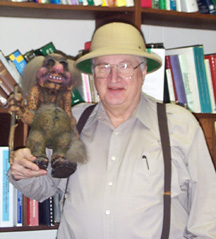 Norman R. Farnsworth合作论文数University of Illinois at Chicago College of Pharmacy28
 Chai Hee-Byung合作论文数25
 John Pezzuto合作论文数College of Pharmacy and Health Sciences, Western New England University17Steven M. Swanson合作论文数College of Pharmacy, University of Illinois at Chicago17Geoffrey A. Cordell合作论文数Department of Medicinal Chemistry and Pharmacognosy,University of Illinois at Chicago College of Pharmacy16Leonardus Broto Sugeng Kardono合作论文数16LBS Kardono合作论文数14Bao-Ning Su合作论文数14Munekazu Iinuma合作论文数12Johar J. Afriastini合作论文数9H Tosa合作论文数8Qiuwen Mi合作论文数8
 Tetsuro Ito合作论文数7Kuswata Kartawinata合作论文数5Cr Fairchild合作论文数5Hwang Bang Yeon合作论文数5
 Dongho Lee合作论文数Department of Biosystems and Biotechnology, Korea University5
 Toshiyuki Tanaka (田中利幸)合作论文数Department of Systems Science, Graduate School of Informatics, Kyoto University5
 Robert Wild合作论文数Departments of Translational Research, Biochemical and Cellular Pharmacology and In Vivo Pharmacology, OSI Pharmaceuticals, Inc.5
 Esperanza Carcache de Blanco合作论文数Division of Medicinal Chemistry & Pharmacognosy, College of Pharmacy, The Ohio State University5Ismail Rachman合作论文数4K Nakaya合作论文数4
 Young Won Chin合作论文数College of Pharmacy, Seoul National University4
 Mansukh C. Wani合作论文数Research Triangle Institute4Daniel D. Lantvit合作论文数4
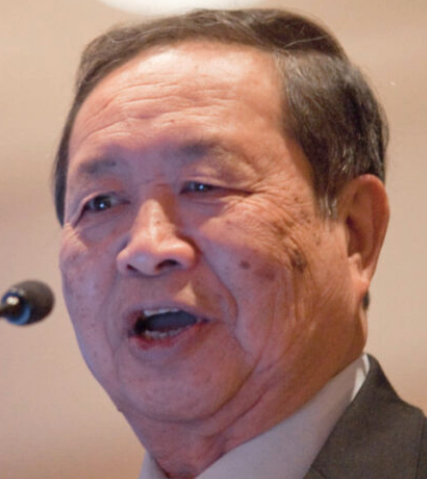 Harry Fong合作论文数Pharmacognosy Institute, College of Pharmacy, University of Illinois at Chicago;Department of Medicinal Chemistry and Pharmacognosy, College of Pharmacy, University of Illinois at Chicago4Fransisca M. Setyowati合作论文数4
 William P. Jones合作论文数Space Sciences Laboratory, NASA Marshall Space Flight Center4Rochadi Abdulhadi合作论文数3W C Rose合作论文数3Mesecar Andrew D合作论文数3
 Nicholas H. Oberlies合作论文数Oberlies Research Group, Department of Chemistry and Biochemistry, The University of North Carolina at Greensboro3
 Tyler Nelson Graf合作论文数Dept Chem & Biochem, Univ N Carolina3Fong Harry H S合作论文数3
 Joseph Falkinham合作论文数Department of Biological Sciences, Virginia Polytechnic Institute and State University3
 Bernard Santarsiero合作论文数College of Pharmacy, University of Illinois at Chicago3Esperanza J. Carcache-Blanco合作论文数3Harini Sangat-Roemantyo合作论文数3Gregory D. Vite合作论文数3Tukirin Partomihardjo合作论文数Research and Development Center for Biology Indonesian Institute of Sciences3Muriel Cuendet合作论文数3
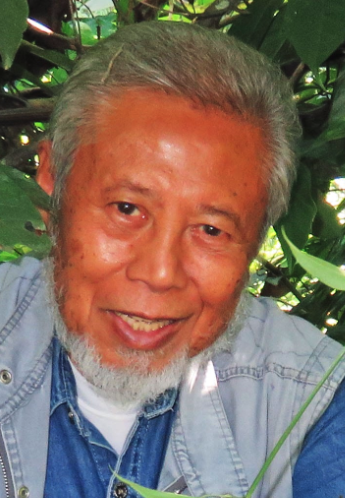 Djaja Djendoel Soejarto合作论文数Department of Pharmaceutical Sciences, College of Pharmacy, University of Illinois at Chicago3
 David Kroll合作论文数Department of Pharmaceutical Sciences, Skaggs School of Pharmacy and Pharmaceutical Sciences, University of Colorado;Calluna Communications LLC3A Ito合作论文数3
 Angela A Salim合作论文数College of Pharmacy, The Ohio State University3Soyoung Kim合作论文数2Djaja Doel Soejarto合作论文数2T. TANAKA合作论文数2




