In the study of quantum vacuum energy and the Casimir effect, it is desirable to model the conductor by a potential of the form [Formula: see text]. This “soft wall” model was proposed so as to avoid the violation of the principle of virtual work under ultraviolet regularization that occurs for the standard Dirichlet wall. The model was formalized for a massless scalar field, and the expectation value of the stress tensor has been expressed in terms of the reduced Green function of the equation of motion. In the limit of interest, [Formula: see text], which approximates a Dirichlet wall, a closed-form expression for the reduced Green function cannot be found, so piecewise approximations incorporating the perturbative and WKB expansions of the Green function, along with interpolating splines in the region where neither expansion is valid, have been developed. After reviewing this program, in this paper, we apply the scheme to the wall with [Formula: see text] and use it to compute the renormalized energy density and pressure inside the cavity for various values of the conformal parameter. The consistency of the results is verified by comparison to their numerical counterparts and verification of the trace anomaly and the conservation law. Finally, we use the approximation scheme to reproduce the energy density inside the quadratic wall, which was previously calculated exactly but with some uncertainty.
Classical field theory is about fields and how they behave in space–time. Quantum field theory, in practice, usually seems to be about particles and how they scatter. Nevertheless, classical fields must emerge from quantum field theory in appropriate limits, and Michael Duff showed how this happens for the Schwarzschild solution in perturbative quantum gravity. In a series of papers, we and others have shown how classical radiation from an accelerated charge emerges from quantum field theory when the Unruh thermal effect is taken into account. Here, we sharpen those conclusions by showing that, even at finite times, the quantum picture is meaningful and is in close agreement with the classical picture.
Although the thermal and radiative effects associated with a two-level quantum system undergoing acceleration are now widely understood and accepted, a surprising amount of controversy still surrounds the simpler and older problem of an accelerated classical charge. We argue that the analogy between these systems is more than superficial; there is a sense in which a "UD detector" in a quantized scalar field effectively acts as a classical source for that field if the splitting of its energy levels is so small as to be ignored. After showing explicitly that a detector with unresolved inner structure does behave as a structureless scalar source, we use that analysis to rederive the scalar version of a previous analysis of the accelerated electromagnetic charge, without appealing to the troublesome concept of "zero-energy particles." Then, we recover these results when the detector energy gap is taken to be zero from the beginning. This vindicates the informal terminology "zero-frequency Rindler modes" as a shorthand for "Rindler modes with arbitrarily small energy." In an Appendix, the mathematical behavior of the normal modes in the limit of small frequency is examined in more detail than before. The vexed (and somewhat ambiguous) question of whether coaccelerating observers detect the acceleration radiation can then be studied on a sound basis.
In this work, we consider a Casimir apparatus that is put into free fall (e.g., falling into a black hole). Working in 1 + 1D, we find that two main effects occur: First, the Casimir energy density experiences a tidal effect where negative energy is pushed toward the plates and the resulting force experienced by the plates is increased. Second, the process of falling is inherently nonequilibrium and we treat it as such, demonstrating that the Casimir energy density moves back and forth between the plates after being "dropped," with the force modulating in synchrony. In this way, the Casimir energy behaves as a classical liquid might, putting (negative) pressure on the walls as it moves about in its container. In particular, we consider this in the context of a black hole and the multiple vacua that can be achieved outside of the apparatus.
We calculate the Casimir forces in two configurations, namely, three parallel dielectric slabs and a dielectric slab between two perfectly conducting plates, where the dielectric materials are dispersive and inhomogeneous in the direction perpendicular to the interfaces. A renormalization scheme is proposed consisting of subtracting the effect of one interface with a single inhomogeneous medium. Some examples are worked out to illustrate this scheme. Our method always gives finite results and is consistent with the principle of virtual work; it extends the Dzyaloshinskii-Lifshitz-Pitaeveskii force to inhomogeneous media.
The interplay between acceleration and radiation harbors remarkable and surprising consequences. One of the most striking is that the Larmor radiation emitted by a charge can be seen as a consequence of the Unruh thermal bath. Indeed, this connection between the Unruh effect and classical bremsstrahlung was used recently to propose an experiment to confirm (as directly as possible) the existence of the Unruh thermal bath. This situation may sound puzzling in two ways: first, because the Unruh effect is a strictly quantum effect while Larmor radiation is a classical one, and second, because of the crucial role played by zero-frequency Rindler photons in this context. In this paper we settle these two issues by showing how the quantum evolution leads naturally to all relevant aspects of Larmor radiation and, especially, how the corresponding classical radiation is entirely built from such zero-Rindler-energy modes.
When ground-state atoms are accelerated and the field with which they interact is in its normal vacuum state, the atoms detect Unruh radiation. We show that atoms falling into a black hole emit acceleration radiation which, under appropriate initial conditions (Boulware vacuum), has an energy spectrum which looks much like Hawking radiation. This analysis also provides insight into the Einstein principle of equivalence between acceleration and gravity. The Unruh temperature can also be obtained by using the Kubo–Martin–Schwinger (KMS) periodicity of the two-point thermal correlation function, for a system undergoing uniform acceleration; as with much of the material in this paper, this known result is obtained with a twist.
The equivalence principle is a perennial subject of controversy, especially in connection with radiation by a uniformly accelerated classical charge, or a freely falling charge observed by a supported detector. Recently, related issues have been raised in connection with the Unruh radiation associated with accelerated detectors (including two-level atoms and resonant cavities). A third type of system, very easy to analyze because of conformal invariance, is a two-dimensional scalar field interacting with perfectly reflecting boundaries (mirrors). After reviewing the issues for atoms and cavities, we investigate a stationary mirror from the point of view of an accelerated detector in ‘Rindler space’. In keeping with the conclusions of earlier authors about the electromagnetic problem, we find that a radiative effect is indeed observed; from an inertial point of view, the process arises from a collision of the negative vacuum energy of Rindler space with the mirror. There is a qualitative symmetry under interchange of accelerated and inertial subsystems (a vindication of the equivalence principle), but it hinges on the accelerated detector’s being initially in its own ‘Rindler vacuum’. This observation is consistent with the recent work on the Unruh problem.
We find that uniformly accelerated motion of a mirror yields excitation of a static two-level atom with simultaneous emission of a real photon. This occurs because of virtual transitions with probability governed by the Planck factor involving the photon frequency ν and the Unruh temperature. The result is different from the Unruh radiation of an accelerated atom, which is governed by the frequency of the atom, ω, rather than frequency of the emitted photon. We also find that the excitation probability oscillates as a function of the atomic position because of interference between contributions from the waves incident on and reflected from the mirror.
The Pauli–Villars regularization procedure confirms and sharpens the conclusions reached previously by covariant point splitting. The divergences in the stress tensor of a quantized scalar field interacting with a static scalar potential are isolated into a three-parameter local, covariant functional of the background potential. These divergences can be naturally absorbed into coupling constants of the potential, regarded as a dynamical object in its own right; here, this is demonstrated in detail for two different models of the field-potential coupling. There is a residual dependence on the logarithm of the potential, reminiscent of the renormalization group in fully-interacting quantum field theories; these terms are finite, but numerically dependent on an arbitrary mass or length parameter, which is purely a matter of convention. This work is one step in a program to elucidate boundary divergences by replacing a sharp boundary by a steeply-rising smooth potential.
Continuing a program of examining the behavior of the vacuum expectation value of the stress tensor in a background which varies only in a single direction, we here study the electromagnetic stress tensor in a medium with permittivity depending on a single spatial coordinate, specifically, a planar dielectric half-space facing a vacuum region. There are divergences occurring that are regulated by temporal and spatial point splitting, which have a universal character for both transverse electric and transverse magnetic modes. The nature of the divergences depends on the model of dispersion adopted. And there are singularities occurring at the edge between the dielectric and vacuum regions, which also have a universal character, depending on the structure of the discontinuities in the material properties there. Remarks are offered concerning renormalization of such models, and the significance of the stress tensor. The ambiguity in separating "bulk" and "scattering" parts of the stress tensor is discussed.
We show that atoms falling from outside through a cavity into a black hole (BH) emit acceleration radiation which to a distant observer looks much like Hawking BH radiation. In particular, we find the entropy of the acceleration radiation via a simple laser-like analysis. We call this entropy Horizon Brightened Acceleration Radiation (HBAR) entropy to distinguish it from the BH entropy of Bekenstein and Hawking.
Recently, the inverse beta-decay rate calculated with respect to uniformly accelerated observers (experiencing the Unruh thermal bath) was revisited. Concerns have been raised regarding the compatibility of inertial and accelerated observers' results when neutrino mixing is taken into account. Here, we show that these concerns are unfounded by discussing the properties of the Unruh thermal bath with mixing neutrinos and explicitly calculating the decay rates according to both sets of observers, confirming thus that they are in agreement. The Unruh effect is perfectly valid for mixing neutrinos.
Gabriel Cozzella, ∗ Stephen A. Fulling, 3, † André G. S. Landulfo, ‡ George E. A. Matsas, § and Daniel A. T. Vanzella ¶ Instituto de F́ısica Teórica, Universidade Estadual Paulista, Rua Dr. Bento Teobaldo Ferraz, 271, 01140-070, São Paulo, São Paulo, Brazil Department of Physics, Texas A& M University, College Station, Texas, 77843-4242, USA Department of Mathematics, Texas A& M University, College Station, Texas, 77843-3368, USA Centro de Ciências Naturais e Humanas, Universidade Federal do ABC, Avenida dos Estados, 5001, 09210-580, Santo André, São Paulo, Brazil Instituto de F́ısica de São Carlos, Universidade de São Paulo, Caixa Postal 369, 13560-970, São Carlos, São Paulo, Brazil (Dated: September 2, 2018)
We show that atoms falling into a black hole (BH) emit acceleration radiation which, under appropriate initial conditions, looks to a distant observer much like (but is different from) Hawking BH radiation. In particular, we find the entropy of the acceleration radiation via a simple laser-like analysis. We call this entropy horizon brightened acceleration radiation (HBAR) entropy to distinguish it from the BH entropy of Bekenstein and Hawking. This analysis also provides insight into the Einstein principle of equivalence between acceleration and gravity.
As a model for the semiclassical analysis of quantum-mechanical systems with both potentials and boundary conditions, we construct the WKB propagator for a linear potential sloping away from an impenetrable boundary. First, we find all classical paths from point y to point x in time t and calculate the corresponding action and amplitude functions. A large part of space-time turns out to be classically inaccessible, and the boundary of this region is a caustic of an unusual type, where the amplitude vanishes instead of diverging. We show that this curve is the limit of caustics in the usual sense when the reflecting boundary is approximated by steeply rising smooth potentials. Then, to improve the WKB approximation we construct the propagator for initial data in momentum space; this requires classifying the interesting variety of classical paths with initial momentum p arriving at x after time t. The two approximate propagators are compared by applying them to Gaussian initial packets by numerical integration; the results show physically expected behavior, with advantages to the momentum-based propagator in the classically forbidden regime (large t).
Results of investigations of the divergent vacuum energy at reflecting boundaries in quantum field theory are summarized. The boundary is modeled by a soft rapidly increasing potential barrier such as a power wall. In the model without pressure anomaly and the principle of virtual work is fulfilled.
We show that atoms falling from outside through a cavity into a black hole (BH) emit acceleration radiation which to a distant observer looks much like Hawking BH radiation. In particular, we find the entropy of the acceleration radiation via a simple laser-like analysis. We call this entropy Horizon Brightened Acceleration Radiation (HBAR) entropy to distinguish it from the BH entropy of Bekenstein and Hawking.
We show that atoms falling into a black hole (BH) emit acceleration radiation which, under appropriate initial conditions, looks to a distant observer much like (but is different from) Hawking BH radiation. In particular, we find the entropy of the acceleration radiation via a simple laser-like analysis. We call this entropy horizon brightened acceleration radiation (HBAR) entropy to distinguish it from the BH entropy of Bekenstein and Hawking. This analysis also provides insight into the Einstein principle of equivalence between acceleration and gravity.
 Kim Milton合作论文数Homer L. Dodge Department of Physics and Astronomy, Dodge Family College of Arts and Sciences, University of Oklahoma12
 Prachi Parashar合作论文数7Leonard Parker合作论文数6
 Anatoly Svidzinsky合作论文数Department of Physics & Astronomy, College of Arts & Sciences, Texas A&M University;Institute for Quantum Science & Engineering, Texas A&M University6
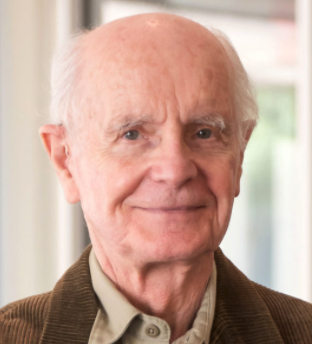 Marlan Scully (司嘉理)合作论文数Department of Physics and Astronomy, Texas A&M University;Princeton University6
 Justin H. Wilson合作论文数6
 George E. A. Matsas合作论文数Instituto de F ´ õsica Teorica;Universidade Estadual Paulista;Instituto de F ´ õsica Teorica, Universidade Estadual Paulista6PCW DAVIES合作论文数5f d mera合作论文数5
 Klaus Kirsten合作论文数Department of Mathematics, Baylor University5Jef Wagner合作论文数5
 Ricardo Estrada合作论文数Instituto Clodomiro Picado, Universidad de Costa Rica5
 Wolfgang P. Schleich合作论文数Institut für Quantenphysik, Universität Ulm5
 Jeffrey D. Bouas合作论文数4Goong Chen合作论文数Texas A&M University4
 Don N. Page合作论文数Faculty of Science, University of Alberta4
 Andre G. S. Landulfo合作论文数4
 K. V. Shajesh合作论文数Oklahoma Center for High Energy;Department of Physics and Astronomy;University of Oklahoma;Oklahoma Center for High Energy, University of Oklahoma4Cynthia S. Trendafilova合作论文数4
 Gabriel Cozzella合作论文数Inst Fis Teor, Univ Estadual Paulista3Lev Kaplan合作论文数Department of Physics;Tulane University;Department of Physics, Tulane University3
 Steven Christensen合作论文数El3August Romeo合作论文数3Francis J Narcowich合作论文数Texas A&M University3
 Xin Guo合作论文数2Ta Osborn合作论文数2T. E. Settlemyre合作论文数2
 Hamilton Carter合作论文数Mentor Graph Siemens Business, San Francisco, CA 94538 USA2David M Lee合作论文数2k thapa合作论文数2
 Celia Romero合作论文数Department of Psychology, University of Miami2
 William G. Unruh合作论文数Department of Physics & Astronomy, Faculty of Science, The University of British Columbia2Ben-Benjamin Jonathan S合作论文数Hunter College and Graduate Center, City University of New York2
 Bei Lok Hu (胡悲樂)合作论文数Department of Physics, College of Computer, Mathematical & Natural Sciences, University of Maryland2
 Berthold-Georg (Berge) Englert合作论文数Department of Physics, Faculty of Science, National University of Singapore;Centre for Quantum Technologies, National University of Singapore2
 Peter Kuchment合作论文数Department of Mathematics, Texas A&M University2T. S. Bunch合作论文数2Frank H Molzahn合作论文数2
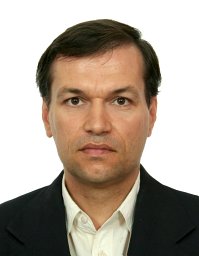 E. V. Gorbar合作论文数Bogolyubov Institute for Theoretical Physics2C. T. Romero合作论文数2Mark D. Pilloff合作论文数2
 Daniel Vanzella合作论文数2Brian G Wybourne合作论文数2
 Ronald Curtis King合作论文数Faculty of Mathematics Studies, University of Southampton2Hannah Day合作论文数1Joseph Merritt合作论文数1Fernando D. Mera合作论文数1Gerard Kennedy合作论文数1
 Taylor Murphy合作论文数1




