We theoretically investigate the performance of a compact matterwave vortex gyroscope formed by a two-component Bose-Einstein condensate in a toroidal potential. Unlike conventional atomic gyroscopes that rely on the Sagnac effect, the topological stability of the vortex state yields rotation sensitivity independent of the enclosed area, making the device robust against geometric drifts. Using fully quantum multimode simulations, we quantify two interaction-driven mechanisms that degrade performance: phase diffusion from one-axis-twisting and four-wave mixing from intercomponent scattering. We identify regimes where tuning interaction and trapping parameters produces a trade-off between these effects, and find that reducing the intercomponent scattering length can counterintuitively worsen sensitivity. Finally, we compare the vortex gyroscope to a guided Sagnac interferometer, demonstrating superior scaling, establishing it as a promising candidate for compact precision rotation sensing.
Global navigation satellite systems (GNSS) are often disrupted or unavailable at sea, and unaided inertial navigation systems (INS) drift without correction. Quantum-sensing-based gravity map matching offers a passive, infrastructure-free aid, but field demonstrations of GNSS-free quantum gravimetric navigation have not been reported. Here we perform gravity map matching and fine-resolution gravity survey with a mobile quantum gravimeter aboard a 29 m surface vessel. We hybridize an atomic sensor with a classical accelerometer for bias stabilization and independently mechanize a navigation-grade IMU, all installed in an uncontrolled cabin with no environmental stabilization or calibration. Operated in both gimbaled and strapdown configurations over identical traversals, the hybrid sensor corrected the inertial solution over an 83 km maritime trajectory by referencing locally measured gravity to a satellite-derived anomaly map. Gravity-aiding constrains INS drift and delivers bounded positioning at nautical-mile-level accuracy, with GNSS excluded throughout the measurement chain. In a separate GNSS-referenced mode, the same system surveyed coastal routes up to Sea State 4, achieving mGal-level agreement with gravimetric maps and sub-mGal repeatability and stability, with gimbaled and strapdown operation performing comparably. Resolved anomalies reach an along-track scale of 300 m, 50X finer than the satellite map's half-power wavelength. A 56 h stationary test shows atom referencing lowers long-term drift 70X versus the classical channel alone. These results provide the first same-instrument comparison of gimbaled and strapdown mobile quantum gravimetry and the first fully GNSS-independent gravity-map-matching navigation demonstration using a quantum gravimeter, pointing toward compact, autonomous-platform-ready quantum sensing for GNSS-denied maritime navigation and survey.
The spin dynamics of two alkali-metal atoms in an optical tweezer is driven by spin-changing collisions that couple the spin state of the atoms to their relative motion. This paper experimentally studies the resulting spin states when the relative motion is in a thermal state with kBT much larger than the energies of the spin states that take part in the dynamics. We find that an initially unentangled spin state can evolve into an entangled state. This is contrary to the common case when coupling a quantum system to hot degrees of freedom leads to loss of entanglement and not its generation. Moreover, we show that the generated entanglement is technologically useful as it, in principle, can enhance the sensitivity of measurements beyond the standard quantum limit. This may provide a promising avenue for robust entanglement generation for future technologies.
Modern navigation systems rely critically on GNSS, which in many cases is unavailable or unreliable (e.g. due to jamming or spoofing). For this reason there is great interest in augmenting backup navigation systems such as inertial navigation systems (INS) with additional modalities that reduce positioning error in the absence of reliable GNSS. Magnetic-anomaly navigation is one such approach, providing passive, non-jammable navigation through periodic position fixes obtained by comparing local measurements of Earth's crustal field against known anomaly maps. Despite its potential, existing MagNav efforts have been limited by magnetometer performance and platform noise; solutions addressing these problems have proven either too brittle or impractical for realistic deployment. Here we demonstrate a quantum-assured MagNav solution based on proprietary quantum magnetometers with by a novel denoising and map-matching algorithms. The system fits on fixed-wing drones or in the avionics bay of a commercial airliner. We present trials at altitudes up to 19000 feet, testing onboard and outboard quantum magnetometers comparing against a strategic-grade INS. Our MagNav solution achieves superior performance, delivering up to 46x better positioning error than the velocity-aided INS; the best final positioning accuracy we achieve is 22m or 0.006 11x advantage over the INS across varying conditions, altitudes, and flight patterns. The system learns model parameters online without special vehicle maneuvers providing robustness to various configuration changes (e.g. changing payload or latitude). Our trials also include the first successful MagNav performed in a ground vehicle using publicly-available anomaly maps, delivering bounded positioning error 7x lower than the INS, with both systems in strapdown configuration.
We theoretically investigate measurement-based feedback control over the motional degrees of freedom of an oblate quasi-2D atomic Bose-Einstein condensate (BEC) subject to continuous density monitoring. We develop a linear-quadratic-Gaussian (LQG) model that describes the multi-mode dynamics of the condensate's collective excitations under continuous measurement and control. Crucially, the multi-mode cold-damping feedback control we consider uses a realistic state-estimation scheme that does not rely upon a particular model of the atomic dynamics. We present analytical results showing that collective excitations can be cooled to below single-phonon average occupation (ground-state cooling) across a broad parameter regime and identify the conditions under which the lowest steady-state phonon occupation is asymptotically achieved. Further, we develop multi-objective optimization methods that explore the trade-off between cooling speed and the final energy of the cloud and provide numerical simulations demonstrating the ground-state cooling of the lowest ten motional modes above the condensate ground state. Our investigation provides concrete guidance on the feedback control design and parameters needed to experimentally realize a feedback-cooled BEC.
We investigate the use of an atomic Fabry-Perot interferometer (FPI) with a pulsed non-interacting Bose-Einstein condensate (BEC) source as a space-based acceleration sensor. We derive an analytic approximation for the device's transmission under a uniform acceleration, which we use to compute the device's attainable acceleration sensitivity using the classical Fisher information. In the ideal case of a high-finesse FPI and an infinitely narrow momentum width atomic source, we find that when the device length is limited, the atomic FPI can achieve greater acceleration sensitivity than a Mach-Zender (MZ) interferometer of equivalent device length. Under the more realistic case of a finite momentum width source, we identify the ideal cavity length for the best sensitivity. Although the MZ interferometer now offers enhanced sensitivity within currently achievable parameter regimes, our analysis demonstrates that the atomic FPI holds potential as a promising future alternative if narrow momentum width atomic sources can be engineered.
We experimentally demonstrate cavity-free feedback cooling of the three lowest-lying collective modes of a Bose-Einstein condensate in a prolate harmonic trap. Using shadowgraph imaging as an in situ probe of the atomic density, we measure the time-dependent centers of mass and widths of the condensate in two dimensions and use these measurements to damp oscillations in the two visible dipole modes and the low-frequency quadrupole mode. By inducing oscillations in the condensate, we show that we can efficiently damp the dipole modes to a final mean phonon occupancy per atom of <1.
We investigate the use of an atomic Fabry-Perot interferometer (FPI) with a pulsed non-interacting Bose-Einstein condensate (BEC) source as a space-based acceleration sensor. We derive an analytic approximation for the device's transmission under a uniform acceleration, which we use to compute the device's attainable acceleration sensitivity using the classical Fisher information. In the ideal case of a high-finesse FPI and an infinitely narrow momentum width atomic source, we find that when the total length of the device is constrained to small values, the atomic FPI can achieve greater acceleration sensitivity than a Mach-Zender (MZ) interferometer of equivalent total device length. Under the more realistic case of a finite momentum width atomic source, We identify the ideal cavity length that gives the best sensitivity. Although the MZ interferometer now offers enhanced sensitivity within currently-achievable experimental parameter regimes, our analysis demonstrates that the atomic FPI holds potential as a promising alternative in the future, provided that narrow momentum width atomic sources can be engineered.
We investigate the fundamental viability of cooling ultracold atomic gases with quantum feedback control. Our study shows that the trade-off between the resolution and destructiveness of optical imaging techniques imposes constraints on the efficacy of feedback cooling, and that rapid rethermalization is necessary for cooling thermal gases. We construct a simple model to determine the limits to feedback cooling set by the visibility of density fluctuations, measurement-induced heating, and three-body atomic recombination. We demonstrate that feedback control can rapidly cool high-temperature thermal clouds in quasi-2D geometries to degenerate temperatures with minimal atom loss compared to traditional evaporation. Our analysis confirms the feasibility of feedback cooling ultracold atomic gases, providing a pathway to new regimes of cooling not achievable with current approaches.
We demonstrate an atom interferometer measurement protocol compatible with operation on a dynamic platform. Our method employs two open interferometers, derived from the same atomic source, with different interrogation times to eliminate initial velocity dependence while retaining precision, accuracy, and long term stability. We validate the protocol by measuring gravitational tides, achieving a precision of 4.5 μGal in 2000 runs (6.7 h), marking the first demonstration of inertial quantity measurement with open atom interferometry that achieves long-term phase stability.
Dissipation of quantum vortex motion is fundamental to superfluid dynamics and quantum turbulence, yet there is currently a large gap between theory and experiments with ultracold atoms. Here we present a microscopic open quantum systems theory of thermally damped vortex motion in oblate atomic superfluids that includes previously neglected energy-damping interactions between superfluid and thermal atoms. This mechanism couples strongly to vortex core motion and causes dissipation of vortex energy due to mutual friction, as well as Brownian motion of vortices due to thermal fluctuations. We derive an analytic expression for the dimensionless mutual friction coefficient that gives excellent quantitative agreement with experimentally measured values, without any fitted parameters. Our work closes an existing two orders of magnitude gap between dissipation theory and experiments, previously bridged by fitted parameters, and provides a microscopic origin for the mutual friction and diffusion of quantized vortices in two-dimensional atomic superfluids.
Atom-interferometric quantum sensors could revolutionize navigation, civil engineering, and Earth observation. However, operation in real-world environments is challenging due to external interference, platform noise, and constraints on size, weight, and power. Here we experimentally demonstrate that tailored light pulses designed using robust control techniques mitigate significant error sources in an atom-interferometric accelerometer. To mimic the effect of unpredictable lateral platform motion, we apply laser-intensity noise that varies up to 20% from pulse-to-pulse. Our robust control solution maintains performant sensing, while the utility of conventional pulses collapses. By measuring local gravity, we show that our robust pulses preserve interferometer scale factor and improve measurement precision by 10× in the presence of this noise. We further validate these enhancements by measuring applied accelerations over a 200 μ g range up to 21× more precisely at the highest applied noise level. Our demonstration provides a pathway to improved atom-interferometric inertial sensing in real-world settings.
We capture individual rubidium-85 atoms in steerable optical tweezers with high efficiency to study atomic interactions with a known number of atoms. These tweezers allow us to capture and move individual atoms, and to prepare them in a specific quantum states. We show the usefulness of this platform to study atomic interactions like individual molecule formation and spin changing collisions.
AbstractWhile quantum accelerometers sense with extremely low drift and low bias, their practical sensing capabilities face at least two limitations compared with classical accelerometers: a lower sample rate due to cold atom interrogation time; and a reduced dynamic range due to signal phase wrapping. In this paper, we propose a maximum likelihood probabilistic data fusion method, under which the actual phase of the quantum accelerometer can be unwrapped by fusing it with the output of a classical accelerometer on the platform. Consequently, the recovered measurement from the quantum accelerometer is used to estimate bias and drift of the classical accelerometer which is then removed from the system output. We demonstrate the enhanced error performance achieved by the proposed fusion method using a simulated 1D accelerometer precision test scenario. We conclude with a discussion on fusion error and potential solutions.
Quantum sensors based on cold atoms have enormous potential to unlock new capabilities in GPS-denied navigation, civil engineering, intelligence, and Earth observation. But operating these devices in realistic environments is currently extremely challenging, and for the most part the advantages of choosing a quantum sensor over a conventional alternative are lost in the transition from laboratory to noisy field-based environments. In this work, we demonstrate for the first time in hardware that tailored light pulses, designed and implemented in software using robust control techniques, can substantially mitigate some of the most nefarious effects in a Bragg atom interferometer. We show experimentally that embedding robust control into sensor operation can improve the signal-to-noise ratio of a state-of-the-art Bragg-pulse cold-atom interferometric sensor by a factor of 4× under ideal conditions. In the presence of laser-intensity noise that varies up to 20% from shot-to-shot, commensurate with common platform vibrations, we show experimentally that using the same robust control solutions preserves fringe visibility with minimal degradation while the utility of the primitive Gaussian pulses collapses, delivering an at least 8× improvement in phase-estimation uncertainty compared with primitive pulse schemes. Across all observations, robust control delivers better performance in a noisy environment than the native hardware performance with primitive pulses under approximately ideal conditions. Finally, building on this demonstration we present a validated theoretical concept to extend this performance improvement to compact devices using concatenated sequences of robust pulses designed to enhance the sensor’s scale factor. Time-domain simulations reveal up to 10× performance enhancement in the presence of realistic atomic-cloud effects at 102ℏk momentum separation. These results show for the first time that software-defined quantum sensor operation can deliver useful performance in environmental regimes where primitive operation is impossible, providing a pathway to augment the performance of current and next generation portable cold-atom inertial sensors in real fielded settings.
Degenerate quantum gases are instrumental in advancing many-body quantum physics and underpin emerging precision sensing technologies. All state-of-the-art experiments use evaporative cooling to achieve the ultracold temperatures needed for quantum degeneracy, yet evaporative cooling is extremely lossy: more than 99.9% of the gas is discarded. Such final particle number limitations constrain imaging resolution, gas lifetime, and applications leveraging macroscopic quantum coherence. Here we show that atomic Bose gases can be cooled to quantum degeneracy using real-time feedback, an entirely new method that does not suffer the same limitations as evaporative cooling. Through novel quantum-field simulations and scaling arguments, we demonstrate that an initial low-condensate-fraction thermal Bose gas can be cooled to a high-purity Bose-Einstein condensate (BEC) by feedback control, with substantially lower atomic loss than evaporative cooling. Advantages of feedback cooling are found to be robust to imperfect detection, finite resolution of the control and measurement, time delay in the control loop, and spontaneous emission. Using feedback cooling to create degenerate sources with high coherence and low entropy enables new capabilities in precision measurement, atomtronics, and few- and many-body quantum physics.
While quantum accelerometers sense with extremely low drift and low bias, their practical sensing capabilities face two limitations compared with classical accelerometers: a lower sample rate due to cold atom interrogation time, and a reduced dynamic range due to signal phase wrapping. In this paper, we propose a maximum likelihood probabilistic data fusion method, under which the actual phase of the quantum accelerometer can be unwrapped by fusing it with the output of a classical accelerometer on the platform. Consequently, the proposed method enables quantum accelerometers to be applied in practical inertial navigation scenarios with enhanced performance. The recovered measurement from the quantum accelerometer is also used to re-calibrate the classical accelerometer. We demonstrate the enhanced error performance achieved by the proposed fusion method using a simulated 1D inertial navigation scenario. We conclude with a discussion on fusion error and potential solutions.
We theoretically investigate the stochastic decay of persistent currents in a toroidal ultracold atomic superfluid caused by a perturbing barrier. Specifically, we perform detailed three-dimensional simulations to model the experiment of Kumar et al. in [Phys. Rev. A 95 021602 (2017)], which observed a strong temperature dependence in the timescale of superflow decay in an ultracold Bose gas. Our ab initio numerical approach exploits a classical-field framework that includes thermal fluctuations due to interactions between the superfluid and a thermal cloud, as well as the intrinsic quantum fluctuations of the Bose gas. In the low-temperature regime our simulations provide a quantitative description of the experimental decay timescales, improving on previous numerical and analytical approaches. At higher temperatures, our simulations give decay timescales that range over the same orders of magnitude observed in the experiment, however, there are some quantitative discrepancies that are not captured by any of the mechanisms we explore. Our results suggest a need for further experimental and theoretical studies into superflow stability.
Quantum entanglement has been generated and verified in cold-atom experiments and used to make atom-interferometric measurements below the shot-noise limit. However, current state-of-the-art cold-atom devices exploit separable (i.e. unentangled) atomic states. This perspective piece asks the question: can entanglement usefully improve cold-atom sensors, in the sense that it gives new sensing capabilities unachievable with current state-of-the-art devices? We briefly review the state-of-the-art in precision cold-atom sensing, focusing on clocks and inertial sensors, identifying the potential benefits entanglement could bring to these devices, and the challenges that need to be overcome to realize these benefits. We survey demonstrated methods of generating metrologically-useful entanglement in cold-atom systems, note their relative strengths and weaknesses, and assess their prospects for near-to-medium term quantum-enhanced cold-atom sensing.
 Simon A. Haine合作论文数Centre for Quantum-Atom Optics, Australian;Department of Physics;Australian National University;Australian Centre for Quantum-Atom Optics, Australian National University20
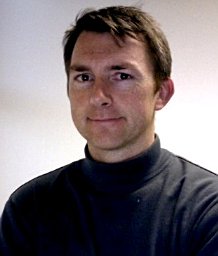 Joseph Hope合作论文数Department of Physics;Theoretical Physics;Australian National University;Department of Physics, Australian National University15
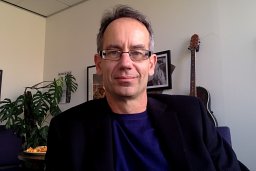 J. D. Close合作论文数Centre for Quantum Atom Optics, Australian;Department of Physics;Australian National University;Australian Centre for Quantum Atom Optics, Australian National University11
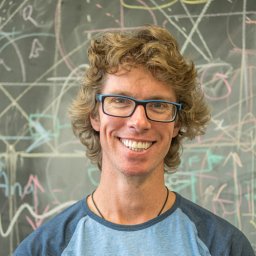 N. P. Robins合作论文数School of Physics and Engineering, Research10
 Michael Hush合作论文数Q-CTRL10
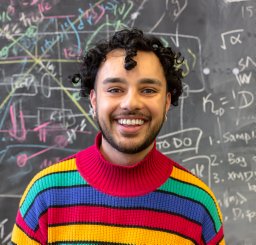 Zain Mehdi合作论文数Dept Quantum Sci & Technol, Australian Natl Univ7
 P. B. Wigley合作论文数Dept Quantum Sci, Australian Natl Univ7
 Kyle S. Hardman合作论文数Quantum Sensors & Atomlaser Lab, Australian Natl Univ7
 Ashton S. Bradley合作论文数Centre for Quantum Technology;Department of Physics;University of Otago;Centre for Quantum Technology, University of Otago7
 Matthew Davis合作论文数School of Mathematics and Physics, Faculty of Science, The University of Queensland6
 Andre R. R. Carvalho合作论文数5
 Tyler Neely合作论文数School of Mathematics and Physics, Faculty of Science, The University of Queensland5
 Mark Baker合作论文数EUQS, The University of Queensland5
 Bell Thomas A合作论文数5
 Halina Rubinsztein-Dunlop合作论文数Australian Institute for Bioengineering and Nanotechnology, University of Queensland;Centre for Biophotonics and Laser Science, School of Physical Sciences, University of Queensland;Bose-Einstein Condensation laboratory, School of Mathematics and Physics, Faculty of Science, University of Queensland5
 Mikkel Andersen合作论文数5
 samuel p nolan合作论文数LENS4
 Matthew T. Reeves合作论文数Jack Dodd Centre for Quantum Technology, University of Otago4
 Russell Paul Anderson合作论文数Idaho National Engineering and Environmental Laboratory4P. Manju合作论文数3
 Matthew L. Goh合作论文数3P. J. Everitt合作论文数3
 Guillaume Gauthier合作论文数Australian Res Council Ctr Excellence Engn Quantu, Univ Queensland3M Weyland合作论文数3E. Schwartz合作论文数LIGO Livingston Observ, Livingston, LA 70754 USA3
 Gordon McDonald合作论文数3
 John E. Debs合作论文数School of Physics and Engineering, Research3Pimonpan Sompet合作论文数3
 Michael Biercuk合作论文数ARC Centre of Excellence for Engineered Quantum Systems;The Quantum Control Laboratory, The University of Sydney;Faculty of Science, The University of Sydney;Q-CTRL3M A Sooriyabandara合作论文数2Kyle Talbot合作论文数2
 Pia Astone合作论文数Istituto Nazionale di Fisica Nucleare;Department of Physics, La Sapienza University;Facoltà Di Ingegneria Dell'informazione, Informatica E Statistica, Sapienza Università di Roma2K. Gill合作论文数2Chris Freier合作论文数2Alexander Rischka合作论文数Max Planck Inst Nucl Phys, Heidelberg, Germany2Jack Saywell合作论文数Sch Phys & Astron, Univ Southampton2Max Carey合作论文数Sch Phys & Astron, Univ Southampton2
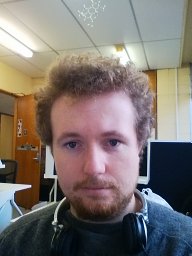 Samuel Legge合作论文数Dept Quantum Sci, Australian Natl Univ2
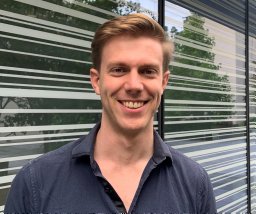 Alistair Milne合作论文数ARC Ctr Excellence Engn Quantum Syst, Univ Sydney2Behnam Tonekaboni合作论文数2Nathanial Wilson合作论文数2Simon Williams合作论文数Department of Electrical and Electronic Engineering, School of Electrical, Mechanical and Infrastructure Engineering, Faculty of Engineering and Information Technology, The University of Melbourne2
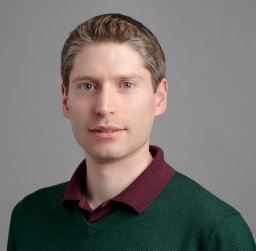 Christopher Gilliam合作论文数School of Engineering, RMIT University2
 Xuezhi Wang合作论文数School of Science, RMIT University;School of Electrical and Computer Engineering, RMIT University2Thomas R合作论文数Institute for Quantum Science and Technology, University of Calgary2
 William Moran合作论文数Department of Electrical and Electronic Engineering, University of Melbourne2
 Carlton M. Caves合作论文数Center for Quantum Information and Control, Department of Physics and Astronomy, University of New Mexico2
 Allison Kealy合作论文数School of Science, STEM College, RMIT University;International Association of Geodesy2
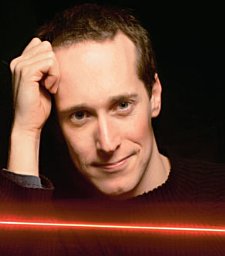 Lincoln D Turner合作论文数School of Physics;University of Melbourne;School of Physics, University of Melbourne2




