We present a Bayesian framework to account for the magnification bias from both strong and weak gravitational lensing in estimates of high-redshift galaxy luminosity functions (LFs). We illustrate our method by estimating the z ∼ 8 UV LF using a sample of 97 Y-band dropouts (Lyman break galaxies) found in the Brightest of Reionizing Galaxies (BoRG) survey and from the literature. We find the LF is well described by a Schechter function with characteristic magnitude of M ⋆ = − 19.85 − 0.35 + 0.30 ?> , faint-end slope of &agr; = − 1.72 − 0.29 + 0.30 ?> , and number density of log 10 &PSgr; ⋆ ( Mpc − 3 ) = − 3.00 − 0.31 + 0.23 ?> . These parameters are consistent within the uncertainties with those inferred from the same sample without accounting for the magnification bias, demonstrating that the effect is small for current surveys at z ∼ 8, and cannot account for the apparent overdensity of bright galaxies compared to a Schechter function found recently by Bowler et al. and Finkelstein et al. We estimate that the probability of finding a strongly lensed z ∼ 8 source in our sample is in the range ∼3–15% depending on limiting magnitude. We identify one strongly lensed candidate and three cases of intermediate lensing in BoRG (estimated magnification μ > 1.4) in addition to the previously known candidate group-scale strong lens. Using a range of theoretical LFs we conclude that magnification bias will dominate wide field surveys—such as those planned for the Euclid and WFIRST missions—especially at z > 10. Magnification bias will need to be accounted for in order to derive accurate estimates of high-redshift LFs in these surveys and to distinguish between galaxy formation models.
We present a Stokes I, Q and U survey at 189 MHz with the Murchison Widefield Array 32 element prototype covering 2400 deg2. The survey has a 15.6 arcmin angular resolution and achieves a noise level of 15 mJy beam−1. We demonstrate a novel interferometric data analysis that involves calibration of drift scan data, integration through the co-addition of warped snapshot images, and deconvolution of the point-spread function through forward modeling. We present a point source catalog down to a flux limit of 4 Jy. We detect polarization from only one of the sources, PMN J0351-2744, at a level of 1.8% ± 0.4%, whereas the remaining sources have a polarization fraction below 2%. Compared to a reported average value of 7% at 1.4 GHz, the polarization fraction of compact sources significantly decreases at low frequencies. We find a wealth of diffuse polarized emission across a large area of the survey with a maximum peak of ∼13 K, primarily with positive rotation measure values smaller than +10 rad m−2. The small values observed indicate that the emission is likely to have a local origin (closer than a few hundred parsecs). There is a large sky area at α ⩾ 2h30m where the diffuse polarized emission rms is fainter than 1 K. Within this area of low Galactic polarization we characterize the foreground properties in a cold sky patch at (α, δ) = (4h, −27.°6) in terms of three-dimensional power spectra.
The number of strong (equivalent width >1 angstrom) Mg II absorbers observed toward gamma-ray bursts (GRBs) has been found to be statistically larger than the number of strong absorbers toward quasi-stellar objects (QSOs). We formalize this "Mg II problem" and present a detailed explanation of the statistical tools required to assess the significance of the discrepancy. We find that the problem exists at the 4 sigma level for GRBs with high-resolution spectra. It has been suggested that the discrepancy can be resolved by the combination of a dust obscuration bias toward QSOs, and a strong gravitational lensing bias toward GRBs. We investigate one of the two most probable lensed GRBs that we presented in our previous work (GRB020405) and find that it is not strongly gravitationally lensed, constraining the percentage of lensed GRBs to be <35% (2 sigma). Dust obscuration of QSOs has been estimated to be a significant effect with dusty Mg II systems removing similar to 20% of absorbed objects from flux-limited QSO samples. We find that if similar to 30% of the strong Mg II systems toward QSOs are missing from the observed samples, then GRBs and QSOs would have comparable numbers of absorbers per unit redshift. Thus, strong gravitational lensing bias is likely to make only a modest contribution to solving the Mg II problem. However, if the dust obscuration bias has been slightly underestimated, the Mg II problem would no longer persist.
The formation and growth processes of supermassive black holes (SMBHs) are not well constrained. SMBH population models, however, provide specific predictions for the properties of the gravitational-wave background (GWB) from binary SMBHs in merging galaxies throughout the Universe. Using observations from the Parkes Pulsar Timing Array, we constrain the fractional GWB energy density with 95% confidence to be ${\Omega}_{GW}(H_0/73 {\rm km} {\rm s}^{-1} {\rm Mpc}^{-1})^2 < 1.3 \times 10^{-9}$ at a frequency of 2.8 nHz, which is approximately a factor of six more stringent than previous limits. We compare our limit to models of the SMBH population and find inconsistencies at confidence levels between 46% and 91%. For example, the standard galaxy formation model implemented in the Millennium simulations is inconsistent with our limit with 50% probability.
In this paper, we explore for the first time the relative magnitudes of three fundamental sources of uncertainty, namely, foreground contamination, thermal noise, and sample variance, in detecting the Hi power spectrum from the epoch of reionization (EoR). We derive limits on the sensitivity of a Fourier synthesis telescope to detect EoR based on its array configuration and a statistical representation of images made by the instrument. We use the Murchison Widefield Array (MWA) configuration for our studies. Using a unified framework for estimating signal and noise components in the Hi power spectrum, we derive an expression for and estimate the contamination from extragalactic point-like sources in three-dimensional k-space. Sensitivity for EoR Hi power spectrum detection is estimated for different observing modes with MWA. With 1000 hr of observing on a single field using the 128 tile MWA, EoR detection is feasible (S/N > 1 for k less than or similar to 0.8 Mpc(-1)). Bandpass shaping and refinements to the EoR window are found to be effective in containing foreground contamination, which makes the instrument tolerant to imaging errors. We find that for a given observing time, observing many independent fields of view does not offer an advantage over a single field observation when thermal noise dominates over other uncertainties in the derived power spectrum.
The Murchison Widefield Array (MWA) is a new low-frequency, wide-field-of-view radio interferometer under development at the Murchison Radio-astronomy Observatory in Western Australia. We have used a 32 element MWA prototype interferometer (MWA-32T) to observe two 50 degrees diameter fields in the southern sky, covering a total of similar to 2700 deg(2), in order to evaluate the performance of the MWA-32T, to develop techniques for epoch of reionization experiments, and to make measurements of astronomical foregrounds. We developed a calibration and imaging pipeline for the MWA-32T, and used it to produce similar to 15' angular resolution maps of the two fields in the 110-200 MHz band. We perform a blind source extraction using these confusion-limited images, and detect 655 sources at high significance with an additional 871 lower significance source candidates. We compare these sources with existing low-frequency radio surveys in order to assess the MWA-32T system performance, wide-field analysis algorithms, and catalog quality. Our source catalog is found to agree well with existing low-frequency surveys in these regions of the sky and with statistical distributions of point sources derived from Northern Hemisphere surveys; it represents one of the deepest surveys to date of this sky field in the 110-200 MHz band.
It is commonly thought that stars are responsible for reionizing the universe. However, deep searches for star-forming galaxies during the epoch of reionization have not yet found sufficient galaxies to provide the necessary ionizing flux. Fast accretion shocks associated with gravitational infall of baryons during the formation of galaxies have recently been proposed as an alternative method of generating the required ionizing photons. Here we assess the contribution to hydrogen reionization from shocked gas associated with gravitational infall. We find that shocks can ionize no more than a few percent of the cosmic hydrogen by z ∼ 6. However, the small fraction of ionizing radiation produced by fast accretion shocks would be significantly more biased than that associated with stars, leading to a modification of the luminosity weighted source clustering by ∼10%. This modification of the bias may be measurable with future precision experiments utilizing the redshifted 21 cm line to study the distribution of hydrogen during the reionization era.
Measurement of the spatial distribution of neutral hydrogen via the redshifted 21-cm line promises to revolutionize our knowledge of the epoch of reionization and the first galaxies, and may provide a powerful new tool for observational cosmology from redshifts 1<z<4. In this review we discuss recent advances in our theoretical understanding of the epoch of reionization (EoR), the application of 21-cm tomography to cosmology and measurements of the dark energy equation of state after reionization, and the instrumentation and observational techniques shared by 21-cm EoR and postreionization cosmology machines. We place particular emphasis on the expected signal and observational capabilities of first generation 21-cm fluctuation instruments.
Population III star formation (SF) is thought to be quenched when the metallicity of the star-forming gas has reached a critical level. At high redshift, when the general intergalactic medium (IGM) was enriched with metals, the fraction of primordial gas that had already collapsed in minihalos was significantly larger than the fraction of primordial gas that had already been involved in Population III SF. We argue that this reservoir of minihalo gas remained largely in a metal-free state until these minihalos merged into large systems and formed stars. As a result, the era of Population III SF was significantly prolonged, leading to a total integrated Population III SF an order of magnitude larger than expected for an abrupt transition redshift. We find that the contribution of Population III SF to the reionization of hydrogen could have been significant until z ~ 10 and may have extended to redshifts as low as z ~ 6. Our modeling allows for gradual enrichment of the IGM, feedback from photoionization, and screening of reionization by minihalos. Nevertheless, the extended epoch of Population III SF may result in complex reionization histories. The relative contribution of Population III stars to reionization can be quantified and will be tested by three-year WMAP results, showing (1) if Population III stars do not contribute to reionization, τes ≤ 0.05-0.06 and a rapid reionization at z ~ 6 are expected, with the mean neutral fraction quickly exceeding 50% at z ~ 8; (2) if the product of star formation efficiency and escape fraction for Population III stars is significantly larger than that for Population II stars, then a maximum τes = 0.21 is achievable; and (3) where the product of star formation efficiency and escape fraction for Population III stars is comparable to that for Population II stars, τes = 0.09-0.12, with reionization histories characterized by an extended ionization plateau from z = 7-12, where the mean neutral fraction stays in a narrow range of 0.1-0.3.
The relationship between the mass of a black-hole and the circular velocity of its host dark-matter halo is fundamental to the clustering length of quasars. The slow evolution of the clustering length with redshift inferred in the 2dF quasar redshift survey strongly favors a scenario where the central black-holes comprise a larger fraction of the host galaxy mass at higher redshifts. In a scenario where quasars are triggered by halo mergers, this scaling, in combination with observed number counts imply that quasars have an episodic lifetime that is set by the dynamical time of a galactic disk rather than by the Salpeter time.
The Lyα absorption spectrum of the highest redshift quasars indicates that they are surrounded by giant H II regions, a few megaparsecs in size. The neutral gas around these H II regions should emit 21 cm radiation in excess of the cosmic microwave background and enable future radio telescopes to measure the transverse extent of these H II regions. At early times, the H II regions expand with a relativistic speed. Consequently, their measured sizes along the line of sight (via Lyα absorption) and transverse to it (via 21 cm emission) should have different observed values due to relativistic time delay. We show that the combined measurement of these sizes would directly constrain the neutral fraction of the surrounding intergalactic medium (IGM) as well as the quasar lifetime. Based on current number counts of luminous quasars at z ≳ 6, an instrument like LOFAR should detect ≳2 redshifted 21 cm shells per field (with a radius of 11°) around active quasars as bright as those already discovered by Sloan Digital Sky Survey, and ≳200 relic shells of inactive quasars per field. We show that Lyα photons from the quasar are unable to heat the IGM or to couple the spin and kinetic temperatures of atomic hydrogen beyond the edge of the H II region. The detection of the IGM in 21 cm emission around high-redshift quasars would therefore gauge the presence of a cosmic Lyα background during the reionization epoch.
 Miguel F. Morales合作论文数Department of Physics, College of Arts & Sciences, University of Washington4
 b b kincaid合作论文数3ronald j koenig合作论文数3E. Kratzenberg合作论文数3J. Stevens合作论文数3
 Randall Wayth合作论文数Curtin Institute of Radio Astronomy, School of Electrical Engineering, Computing and Mathematical Sciences, Faculty of Science and Engineering, Curtin University;SKA Observatory3
 Bryna Hazelton合作论文数eScience Institute, University of Washington;Department of Physics, University of Washington3
 Steven J Tingay合作论文数International Centre for Radio Astronomy Research, Curtin University3David Emrich合作论文数3Daniel A. Mitchell合作论文数Australia Telescope Natl Facil, CSIRO Astron & Space Sci3
 Edward Morgan合作论文数Kavli Institute for Astrophysics and Space Research, Massachusetts Institute of Technology3
 Ravi Subrahmanyan合作论文数Raman Research Institute3Frank H Briggs合作论文数3
 Bryan M Gaensler合作论文数Division of Physical and Biological Sciences, University of California, Santa Cruz;Department of Astronomy and Astrophysics, University of California, Santa Cruz3Robert J. Sault合作论文数School of Physics;University of Melbourne;School of Physics, University of Melbourne3Stephen R. Mcwhirter合作论文数3
 Colin J. Lonsdale合作论文数Massachusetts Institute of Technology Haystack Observatory3
 David Kaplan合作论文数Department of Physics, College of Letters & Science, University of Wisconsin-Milwaukee3Alan E. E. Rogers合作论文数3
 Justin C. Kasper合作论文数Climate and Space Sciences and Engineering Department, College of Engineering, University of Michigan;High Energy Astrophysics Division, Smithsonian Astrophysical Observatory, Harvard-Smithsonian Center for Astrophysics;Astronomy Department, Harvard University;BWX Technologies Inc3K. S. Srivani合作论文数3
 Prabu Thiagaraj合作论文数Raman Research Institute3Stephen Mark Ord合作论文数Swinburne University of Technology;Centre for Astrophysics and Supercomputing;Centre for Astrophysics and Supercomputing, Swinburne University of Technology3Joseph E. Salah合作论文数3
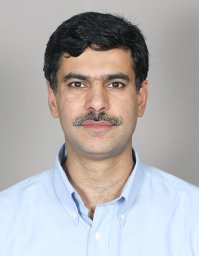 Divya Oberoi合作论文数Tata Institute of Fundamental Research National Centre for Radio Astrophysics3
 Ronald A. Remillard合作论文数Kavli Institute for Astrophysics and Space Research, Massachusetts Institute of Technology3
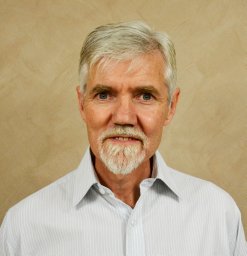 John D Bunton合作论文数Australia Telescope National Facility3W. Arcus合作论文数ICRAR, Curtin Univ3L Desouza合作论文数3
 David E. Herne合作论文数3
 Udaya Shankar Narayana Rao合作论文数Raman Research Institute3
 Mervyn J. Lynch合作论文数CSIRO Division of Atmospheric Research3
 Rachel Webster合作论文数School of Physics, University of Melbourne3Brian E. Corey合作论文数3
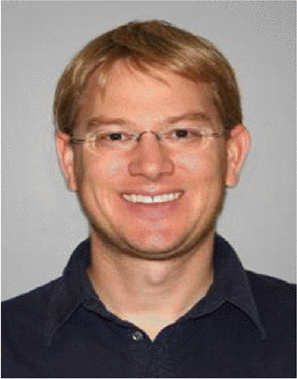 Judd Bowman合作论文数LoCo Lab, School of Earth and Space Exploration, Arizona State University;College of Liberal Arts and Sciences, Arizona State University3
 Andrew John Williams合作论文数3
 Joseph Pathikulangara合作论文数commonwealth scientific and industrial research organisation3
 Lincoln J. Greenhill合作论文数Department of Astronomy, Faculty of Arts and Sciences, Harvard University;Smithsonian Astrophysical Observatory3
 Jacqueline N. Hewitt合作论文数Department of Physics, Massachusetts Institute of Technology3Christopher L. Williams合作论文数2m waterson合作论文数2Bernardi Gianni合作论文数2Robert F. Goeke合作论文数2
 Avi Loeb合作论文数Department of Astronomy, Faculty of Arts and Sciences, Harvard University2
 Avinash A. Deshpande合作论文数Raman Res Inst2
 D. Anish Roshi合作论文数Raman Research Institute2
 Rigel Cappallo合作论文数Haystack Observatory, Massachusetts Institute of Technology2
 A. De Oliveira-Costa合作论文数Department of Physics, Massachusetts Institute of Technology2
 David G. Barnes合作论文数Centre for Astrophysics and Supercomputing;Swinburne University of Technology;Centre for Astrophysics and Supercomputing, Swinburne University of Technology2




