This letter introduces a physics-informed self-supervised framework for sonar image despeckling that reformulates despeckling as residual consistency in the homomorphic log domain. By constraining the log-ratio residual to obey multiplicative speckle statistics, the proposed method eliminates the need for clean supervision while preventing degenerate identity solutions. A variance-targeted statistical loss combined with edge-aware structural regularization and median-guided curriculum stabilization enables effective speckle suppression with preserved structural fidelity. This formulation along with a lightweight neural network achieves state-of-the-art performance across multiple real sonar datasets and demonstrates excellent cross-dataset robustness, while remaining suitable for real-time deployment.
Image denoising under additive white Gaussian noise (AWGN) is a classical inverse problem, in which the noise variance directly determines the curvature of the data fidelity term. However, most modern deep denoisers are trained without explicitly modeling this noise-curvature relationship. As a result, they must implicitly relearn it from the data, leading to large, overparameterized, and less interpretable models. We propose DK-SSN, a K-stage Semi-Smooth Newton (SSN) network for AWGN denoising with explicit noise-level guidance. From a variational model, we derive a noise-aware SSN update in which the noise level directly controls the data terms and curvature gating. This is achieved through a compact, unrolled design with lightweight convolutions and spectral refinement. Despite having only 0.38M parameters, DK-SSN achieves state-of-the-art performance among lightweight AWGN denoisers and stays competitive with larger models such as DRUNet. The results demonstrate that an SSN with explicit noise statistics provides an efficient and interpretable alternative to heavy data-driven models, supporting both known and estimated noise levels.
Single-image dehazing is commonly modeled by the atmospheric scattering model, where accurate recovery depends critically on the transmission map and atmospheric light. However, estimating these terms from a single hazy image is ill-posed and becomes unstable under dense haze, often causing color shift, over-enhancement, or residual veil. We present a physics-guided dehazing framework that explicitly separates physical parameter estimation from image refinement. A lightweight TauNet predicts a non-negative hazethickness map, which is mapped to transmission via a learnable exponential attenuation, while a compact atmospheric-light estimator predicts global atmospheric light conditioned on the hazy image and the estimated thickness. These estimates yield a closed-form physics reconstruction that serves as a reliable baseline. To suppress inversion artifacts and recover fine details, we employ a compact refiner that predicts a residual correction and blends it with the physics reconstruction through a learnable gate, preventing over-correction in low-transmission regions. With only 2.43M parameters, the proposed method achieves the best PSNR among compared methods on SateHaze1k across thin, moderate, and thick haze, maintains competitive SSIM, and shows consistent gains on RSID and NID.
Coherent imaging modalities such as Synthetic Aperture Radar (SAR) and Synthetic Aperture Sonar (SAS) are inherently affected by multiplicative speckle, making noise-free reference data impractical. Supervised despeckling methods trained on synthetic datasets often fail to generalize to real measurements due to mismatched noise statistics. We propose a fully self-supervised despeckling strategy that operates directly on observed sonar data by exploiting statistical properties of log-domain speckle residuals. A lightweight isotropic ConvNeXt-based network predicts the speckle component without requiring clean supervision. Training is driven by a variance-constrained statistical loss that enforces residual consistency with dataset-specific speckle statistics, while a median-guided warm-up stabilizes early optimization and prevents degenerate solutions. The method avoids paired data and synthetic pretraining, enabling practical deployment in real coherent imaging systems. Experiments on the KLSG and DEBRIS sonar datasets demonstrate effective speckle suppression, improved radiometric fidelity, and achieves the lowest reported M-score on both datasets.
Real-time SONAR image classification on embedded platforms is critical for autonomous underwater monitoring and inspection. However, developing reliable classifiers for such deployments remains challenging due to severe speckle noise, limited annotated training data, and strict computational constraints on edge devices. To address these challenges, we propose a noise-aware training strategy for SONAR image classification that generates additional training samples by jointly exploiting noisy and despeckled image representations. By exposing the classifier to intermediate noise conditions between noisy and despeckled observations, the proposed strategy effectively enlarges the training distribution and promotes stable feature learning across varying noise levels. This formulation improves robustness in data-scarce SONAR imaging scenarios without increasing inference complexity. Experimental results on the 18-class Marine Debris Turntable Dataset improve MobileNet accuracy from 72.5% to 89.8% and SqueezeNet accuracy from 72.4% to 86.4%. The resulting lightweight classification pipeline is deployed on a Raspberry Pi 5 using ONNX Runtime and INT8 quantization, achieving inference latencies as low as 2.29 ms while reducing model size by up to 74.8%. The proposed method further achieves 100% classification accuracy on the 12-class Marine Debris configuration, demonstrating its effectiveness for robust SONAR image classification on resource-constrained edge devices.
In this work, we address the challenge of limited labeled training data in deep learning-based under-water SONAR applications. We highlight the importance of transfer learning as a solution to mitigate this issue. Our methodology involves pretraining a classification model on data from alternative sources, such as Synthetic Aperture Radar (SAR) imagery, and subsequently fine-tuning the model on a target underwater SONAR dataset. By trans-ferring the critical features learned during pretraining, our approach significantly enhances classification accuracy on the SONAR dataset. Experimental results confirm the effectiveness of this approach, demonstrating the potential of transfer learning to improve performance in underwater sensing and enable more accurate detection of underwater objects.
This paper introduces a framework to enhance the performance of the Stochastic Matched Filter (SMF) through an efficient noise estimation process. Unlike traditional approaches that rely on fixed or heuristic noise assumptions, our method models the noise characteristics directly from the data, utilizing the inherent properties of the environment for more accurate filtering. By integrating data-driven noise estimation, the proposed approach optimizes the SMF for improved robustness in low signal-to-noise ratio (SNR) conditions. Furthermore, the method achieves a good pulse compression, enabling precise signal localization and enhanced resolution. To demonstrate its practical relevance, we apply the proposed technique to the challenging task of Antarctic Blue Whale (ABW) call detection, showing its effectiveness in minimizing false detections while maintaining high accuracy. This highlights its utility in bioacoustic monitoring and other applications in dynamic acoustic environments.
Image deblurring is a critical area of research, traditionally focused on scenarios where blurred images are formed by convolving a clean image with a blur kernel and adding white Gaussian noise. However, real-world images often suffer from non-uniform and non-stationary noise, which presents additional challenges that current methods struggle to address effectively. In this paper, we investigate the performance of the state-of-the-art techniques for handling non-uniform noise. Our simulation results show that these methods are not designed to handle the complexities associated with non-stationary noise. To overcome these limitations, we propose a novel technique that utilizes the estimated noise standard deviation map for better reconstruction. Through simulation results, we demonstrate that our proposed method significantly outperforms the state-of-the-art image deblurring methods in the presence of non-stationary noise.
Imaging through highly diffusive media is challenging because of the extensive spreading of light propagation in both time and space. The most advanced technique utilizes an expensive time-of-flight imaging system. Here, we present a simple and efficient approach for computational diffuse optical tomography. A typical CMOS camera captures the transmission light through an object buried between two thick diffusive media. Multiple illumination points provide more information, allowing reconstruction of the hidden object at a higher quality than computational time-of-flight diffuse optical tomography. The demonstration shows a low-cost diffuse optical tomography with high accuracy and low computational complexity.
Acoustic imaging SONAR systems have diverse applications in marine technology, encompassing mapping the seabed, locating shipwrecks, identifying potential areas for resource extraction, monitoring the marine environment, facilitating underwater navigation, and aiding in obstacle avoidance. The technology has witnessed significant advancements with deep neural networks in recent years. However, numerous challenges arise in the automatic, deep learning-based underwater SONAR image classification due to poor resolution, low contrast, sub-stantial interference, serious speckle noise, and insufficient data availability. Integrating deep neural networks into underwater SONAR image classification can enable real-time decision-making, crucial in marine resource exploration, environmental protection, and navigation. SONAR image classification is a vital tool for navigation, detection, and scientific research in aquatic environments. Classifying SONAR images is a challenging task compared to other image classification tasks. In this work, our focus is on reducing the noise in SONAR images that seriously limits the classifier's performance. The noise in SONAR images arises from various factors, such as marine life, water turbulence, and sensor limitations, leading to ambiguous and unclear images. This complexity makes it difficult to distinguish among different features and objects. Leveraging the denoised SONAR images during the training of the classifier improves classification accuracy. Extensive simulations using different classifiers validate the effectiveness of the proposed framework.
Extending super-resolution imaging techniques to objects hidden in strongly scattering media potentially revolutionize the technical analysis for much broader categories of samples, such as biological tissues. The main challenge is the media's inhomogeneous structures which scramble the light path and create noise-like speckle patterns, hindering the object's visualization even at a low-resolution level. Here, we propose a computational method relying on the object's spatial and temporal fluctuation to visualize nanoscale objects through scattering media non-invasively. The fluctuating object can be achieved by random speckle illumination, illuminating through dynamic scattering media, or flickering emitters. The optical memory effect allows us to derive the object at diffraction limit resolution and estimate the point spreading function (PSF). Multiple images of the fluctuating object are obtained by deconvolution, then super-resolution images are achieved by computing the high order cumulants. Non-linearity of high order cumulant significantly suppresses the noise and artifacts in the resulting images and enhances the resolution by a factor of $\sqrt{N}$, where $N$ is the cumulant order. Our non-invasive super-resolution speckle fluctuation imaging (NISFFI) presents a nanoscopy technique with very simple hardware to visualize samples behind scattering media.
The image deblurring problem is an active area of research in image processing. The Fast Iterative Shrinkage Thresholding Algorithm (FISTA) has garnered significant attention for solving deblurring problems with l(1)- based sparsity constraints. This paper proposes a new l(1)- based algorithm called Enhanced FISTA (EFISTA) that incorporates accelerated gradient descent and an appropriate proximal operation. We have studied the impact of accelerated gradient descent in noisy conditions, which helps us identify the importance of a well-designed proximal operation to mitigate noise interference. The experimental results show that EFISTA exhibits superior execution speed while maintaining reconstruction performance comparable to its predecessors. This highlights the robustness and efficiency of EFISTA in addressing image deblurring challenges, particularly at high noise levels.
Photon-limited deblurring is a complex and demanding problem encountered in various applications where low-light conditions prevail. The scarcity of photons in such situations leads to the introduction of shot noise, resulting in a degradation of image quality. Solving this problem with Neural networks often involves constructing models empirically, making the behavior of the underlying architecture challenging to comprehend. A recent technique known as algorithm unrolling has enabled the connection of iterative algorithms with neural networks, where the Convolutional Neural Network (CNN) acts as a denoiser. This paper introduces a reduced parameter denoiser to enhance image quality and preserve finer details or avoid over-smoothing of the image during reconstruction. As a result, the unrolled model surpasses existing deblurring methods for improving image quality in low-light conditions. The proposed denoiser reduces the number of parameters by a factor of 3.84 and preserves the finer details while reconstructing. Our model improves computational efficiency and storage requirements compared to the state-of-the-art.
Deep learning (DL) has been extensively employed to imaging or classify objects through scattering media. However, the performance of a trained network degrades dramatically when it is tested at scattering conditions statistically differing from those in the training. Therefore, how to retain DL’s generalization capacity is still a challenging task, with imaging or classification through untrained (unseen) scatters is highly desired. Here, we introduce physical model approach for network training, which enables generalization capability via learning from sufficiently large amount of model-based synthetic speckles. By mimicking the point spread function (PSF) of an incoherent scattering system, and diversifying the scattering realizations with random phasers, a generalized neural network is obtained. Object classification through unseen scatters is experimentally demonstrated. The random phasers prohibit DL from converging to a specific training medium, which is crucial to the creation of a generalized neural network. Unlike traditional data-driven DL that has nearly zero predicting accuracy, our model-trained network is generalized and being able to classify objects through untrained scattering media with accuracy as high as 60%. Neither the experimental scenes nor system geometry is required in creating the synthetic speckles, our method represents a genuine approach in data generation for DL training, paving the way to a highly generalized neural network for inverse scattering problems.
We proposed a super-resolution imaging through scattering media technique by using speckle fluctuation. The camera captures many fluctuating speckle frames from fluctuating speckle illumination objects. By analyzing the higher-order cumulants of deconvolution frames, the noise artifacts are suppressed and resolution is enhanced.
Performing geometry-resolved simulations of flows over rough and porous walls is highly expensive due to their multiscale characteristics. Effective models that circumvent this difficulty are often used to investigate the interaction between the free-fluid and such complex walls. These models, by construction, employ an intrinsic averaging process and capture only macroscopic physical processes. However, physical experiments or direct simulations yield micro- and macroscale information, and isolating the macroscopic effect from them is crucial for rigorously validating the accuracy of effective models. Despite the increasing use of effective models, this aspect received the least attention in the literature. This paper presents an efficient averaging technique to extract macroscopic interface data from the flow field obtained via direct simulations or physical experiments. The proposed methodology employs a combination of signal processing and polynomial interpolation techniques to capture the macroscopic information. Results from the ensemble averaging are used as the reference to quantify the accuracy of the proposed method. Compared to the ensemble averaging, the proposed method, while retaining accuracy, is cost-effective for rough and porous walls. To the best of our knowledge, this is the only averaging method that works for poroelastic walls, for which the ensemble averaging fails. Moreover, it applies equally to viscous- and inertia-dominated flows over irregular surfaces.
The linear inverse problem emerges from various real-world applications such as Image deblurring, inpainting, etc., which are still thrust research areas for image quality improvement. In this paper, we have introduced a new algorithm called the Enhanced fast iterative shrinkage thresholding algorithm (EFISTA) for linear inverse problems. This algorithm uses a weighted least square term and a scaled version of the regularization parameter to accelerate the objective function minimization. The image deblurring simulation results show that EFISTA has a superior execution speed, with an improved performance than its predecessors in terms of peak-signal-to-noise ratio (PSNR), particularly at a high noise level. With these motivating results, we can say that the proposed EFISTA can also be helpful for other linear inverse problems to improve the reconstruction speed and handle noise effectively.
Super-resolution imaging has been revolutionizing technical analysis in various fields from biological to physical sciences. However, many objects are hidden by strongly scattering media such as biological tissues that scramble light paths, create speckle patterns and hinder object's visualization, let alone super-resolution imaging. Here, we demonstrate non-invasive super-resolution imaging through scattering media based on a stochastic optical scattering localization imaging (SOSLI) technique. After capturing multiple speckle patterns of photo-switchable point sources, our computational approach utilizes the speckle correlation property of scattering media to retrieve an image with a 100-nm resolution, an eight-fold enhancement compared to the diffraction limit. More importantly, we demonstrate our SOSLI to do non-invasive super-resolution imaging through not only static scattering media, but also dynamic scattering media with strong decorrelation such as biological tissues. Our approach paves the way to non-invasively visualize various samples behind scattering media at nanometer levels of detail.
 Cuong Dang合作论文数School of Electrical and Electronic Engineering, Nanyang Technological University24
 Anamitra Makur合作论文数School of Electrical & Electronic Engineering, Nanyang Technological University12
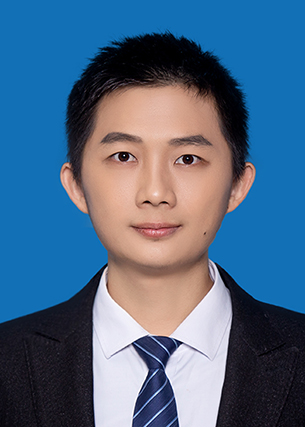 Dongliang Tang (汤东亮)合作论文数School of Physics & Electronics, Hunan University9
 Dong Wang (王东)合作论文数College of Physics and Optoelectronics, Taiyuan University of Technology8
 Vinh The Tran合作论文数6
 S. Sathiya Narayanan合作论文数Vellore Institute of Technology6Xiangwen Zhu合作论文数5Giorgio Adamo合作论文数4Huy Quoc Lam合作论文数4Dayan Li合作论文数3
 Zhang Dao Hua合作论文数Centre of Excellence for Semiconductor Lighting and Displays, School of Electrical and Electronic Engineering, Nanyang Technological University3
 Philippe Courmontagne合作论文数Dept. de Physique, Maison des Technologies3
 Landobasa Y M Tobing合作论文数Nanyang Technological University3Koyyada Dinesh Kumar合作论文数2
 Wenmiao Lu合作论文数University of Illinois at Urbana-Champaign2Vedanth Narayan Kuchibhotla合作论文数1Nguyen Huu Cong合作论文数1
 Niyan Marchon合作论文数Padre Conceicao Coll Engn1Aurelien Bonvard合作论文数1
 Pham Quy Muoi合作论文数University of Danang, University of Science and Education1
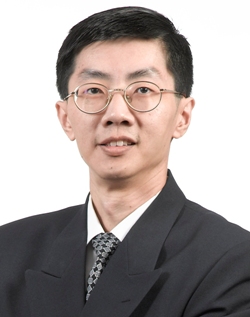 Ng Beng Koon合作论文数School of Electrical and Electronic Engineering, College of Engineering, Nanyang Technological University1
 Avinash Kumar Seth合作论文数1
 Avinash Kumar合作论文数UC Irvine1Desok Kim合作论文数1
 Dinh Nho Hào合作论文数Hanoi Institute of Mathematics1
 Mengling 'Mornin' Feng合作论文数Saw Swee Hock School of Public Health, National University of Singapore;Yong Loo Lin School of Medicine, National University of Singapore;National University Hospital Study;Lab for Computational Physiology, Harvard-MIT Health Sciences and Technology Division1Y. Sudhakar合作论文数1Bogdan J. Falkowski合作论文数School of Electrical and Electronics Engineering1
 Tadeusz Łuba合作论文数1
 Changfeng Wu (吴长锋)合作论文数Department of Biomedical Engineering, College of Engineering, Southern University of Science and Technology1Sintiani Dewi Teddy合作论文数Nanyang Technol. Univ.1




