Abstract Cloud computing offers cost-effective and on-demand remote access to computing, storage and networking resources. But it faces major technical challenges in resource management and task scheduling due to dynamic and heterogeneous resource configurations. Effective task scheduling is essential to optimize the virtualized or physical resources usage and to avoid overutilization or underutilization of the resources. This work addresses the load balancing problem in cloud environment by scheduling tasks on virtual machines using genetic algorithm. In this work, we have considered makespan and resource wastage as the main objectives. To solve this, a genetic algorithm-based optimization model is proposed for efficient task scheduling and workload distribution. The proposed metaheuristic uses a roulette wheel selection strategy, one-point crossover, mutation and elitism operators to get high-quality solutions. The performance of the proposed approach is evaluated using the simulation study conducted on real-world the Cloud-Fog computing datasets containing heterogeneous AWS EC2 VM configurations. We have performed the comparative study of the proposed method by comparing it with Particle Swarm Optimization, Artificial Bee Colony Optimization, Black Widow Optimization and other baseline methods. The results demonstrate that the proposed algorithm is effective and superior to the compared metaheuristic techniques. Specifically, on average, it achieves reductions of up to 16.04% in makespan and 32.52% in resource wastage, making it suitable for integration into cloud systems.
Plant diseases are a major problem for farmers around the world, reducing crop yields. The absence of expertise makes plant disease detection difficult and complicated. Plant disease detection is made easier by deep learning algorithms; however, they are computationally demanding and need huge training datasets. This research work proposes a novel Conv-7 DCNN model with modified ParNet attention layer to classify plant leaves into distinct categories with improved accuracy. Because of its architecture, the proposed network can identify leaf diseases with more accuracy by extracting the wider range of features from the images. The proposed Conv-7 DCNN model classifies the leaf diseases of three plants such as tomato, potato, and pepper-bell into fifteen categories. The CNN model is trained using publicly accessible Kaggle dataset, utilising image augmentation techniques. It is evident from the simulation results that the proposed model outperforms several pre-trained, and other trending deep learning models. Proposed model achieves 99.18% classification accuracy with an average precision of 99.17% and area under the curve (AUC) of 1, making this model highly effective in leaf diseases detection. Additionally, Conv-7 DCNN achieved high FPS of 112.49, low inference time of 18.34 s, and low GFLOPS of 13.98, making it suitable for real-time applications in smart agriculture systems.
The widespread adoption of Internet-of-Things (IoT) technologies across multiple fields emphasizes the crucial need for strong communication security methods to protect data integrity and confidentiality. This research looks at lightweight cryptographic methods designed primarily for resource-constrained IoT environments. We conducted an intensive exploratory study to assess the performance and applicability of various encryption algorithms, taking into account parameters such as throughput, CPU consumption, avalanche effect, and encryption and decryption time. Our investigation focuses on common cryptographic algorithms such as symmetric ciphers (AES, Blowfish), stream ciphers (RC4, ChaCha20), and block ciphers (ARIA). Furthermore, we address the obstacles of implementing cryptography in IoT networks, emphasizing the importance of efficient and safe solutions. The findings of this study provide important insights into selecting appropriate encryption algorithms for safeguarding IoT communication, paving the way for improved data protection in IoT ecosystems.
This study develops prediction models for healthcare access and outcomes that leverage deep learning with bias-attenuating modelling approaches across axes of socioeconomic and demographic diversity. It integrates fairness-aware learning techniques, applies data augmentation strategies, and uses hyperparameter optimization to enhance prediction accuracy while minimizing disparities. Moreover, we conduct extensive simulations to assess the trade-offs between model complexity, fairness, and computational efficiency. Our findings show that fairness-aware predictive models are able to significantly reduce prediction bias, often whilst achieving high accuracy for various demographics. The proposed method achieves better fairness and interpretability than conventional models. That study offers critical insights into the potential of AI-enabled health equity solutions and their implications for policy interventions and clinical decision making. Longitudinal studies can further the adaptability and transparency of predictive models for health care. The model maintained consistently high performance across varying levels of healthcare access, with an AUC ranging from 0.94 to 0.99, indicating reduced bias compared to conventional models.
Sixth-generation (6G) technology signifies a major leap in mobile communications, offering ultra-reliable, low-latency, and high-throughput connectivity. This review investigates the foundational technologies underpinning 6G, including Terahertz (THz) communication and ultra-massive multiple input, multiple output (MIMO), and explores their capabilities in enabling high-speed, consistent, and scalable communication infrastructures. A key focus of this study is the application of machine learning (ML) and deep learning (DL) in optimizing network slicing and addressing security challenges within 6G networks. While network slicing allows for flexible, service-specific logical network partitions, it also introduces technical challenges such as dynamic resource allocation, secure slice isolation, and real-time threat detection. To mitigate these, we assess ML-driven approaches—including reinforcement learning (RL), federated learning, and anomaly detection models—that facilitate intelligent orchestration and adaptive security. Furthermore, we highlight practical deployment barriers such as data privacy concerns, computational limitations at the edge, and the need for interpretable models and standardization. This comprehensive review provides insights into the current state, challenges, and potential solutions for integrating ML-based mechanisms to enhance the efficiency, scalability, and security of next-generation communication systems.
The rapid growth of metropolitan populations and large public gatherings has increased the need for intelligent surveillance systems capable of ensuring public safety. This study proposes a novel framework, Intelligent Anomaly Detection and Localization with Crowd Density Estimation (IADL-CDE), which jointly addresses crowd density classification and anomaly detection in real-time. Leveraging the ShanghaiTech dataset for crowd density estimation and the UCSD Pedestrian Database for anomaly detection, the framework integrates a Robust Maximum Correntropy Kalman Filter (RMCKF) for effective image pre-processing, followed by a Self-Modulating Convolutional Neural Network (SMCNN) that accurately classifies crowd density levels into sparse, medium, and dense categories. Subsequently, a Pixel-Associated Auto Encoder (PAAE) is employed to detect and localize anomalies such as cycling, skateboarding, and unauthorized vehicles in pedestrian environments. Experimental results demonstrate that the proposed IADL-CDE model achieves significant improvements in accuracy, precision, recall, F1-Score and Cohen’s Kappa Coefficient compared to the baseline methods. These findings highlight the model’s effectiveness and robustness in enhancing public safety through intelligent crowd monitoring and anomaly detection.
Anomaly detection refers to recognition of events different from normal ones for example road accident, fight, robbery, arsenal etc. Anomaly identification in real world surveillance videos is an important application of computer vision. The work proposed in the paper detects anomalous events in surveillance videos dataset and is based upon semi supervised deep learning model. We trained the model using UCF Crime dataset that consists of 950 normal videos and 950 anomalous videos. The anomaly videos in the dataset consists of 13 different types of anomalies such as Abuse, arrest, explosion, fight etc. that generally occur in real life. The anomaly in the dataset is labelled at video level and not at a specific frame in a video to define the semi supervised nature of learning paradigm. The extracted 3D features from dataset are fed into the multilayered deep learning model. Experimental results show that our approach has significant improvement over state-of-the-art approaches for anomaly detection in surveillance videos. The accuracy of model comes out to be 83.96 percent, that is improvement over other methods.
Kinship verification has been a challenging problem for generations, technology has been trying to resolve the same last two decades, without any success. It determines the blood relation between two people with help of their given pair of images. This problem has attracted significant attention in various fields, such as biometrics, forensic research, and social media, but age and gender differences make this problem more complicated, especially when we want to find the relationship between Descendants with skipped levels like grandparents and grandsons/daughters. In this paper, we proposed a novel approach by formulating kinship data as a finite discrete structure (FDS), which provides a mathematical model of kinship relations. We represent the data as a graph, where nodes denote individuals, and edges determine the relationships among them. This structured representation serves as the foundation for learning relational patterns. Using this Finite Discrete Structure framework, we employ Relational Graph Convolutional Networks (RGCN) to extract and analyze the complex relational dependencies in kinship verification. Initially EfficientNet is used to extract facial features, these feature vectors along with relations, form the graph structure. RGCN processes this graph to derive kin relations and effectively capture complex patterns within the discrete structured space. To improve model’s ability for enhancing Class-wise discriminability we used ArcFace and Center loss functions to enforce feature separability and robust kinship classification. We evaluate our approach on the FIW dataset, achieving an accuracy of 89.45%, demonstrating that our method effectively addresses the kinship verification problem within the framework of finite discrete structures. This work highlights the potential of graph-based models in analyzing and classifying complex relationships in structured, discrete domains.
The evolution toward 6G networks introduces unprecedented opportunities for high-speed, ultra-reliable, and low-latency communication, largely enabled through intelligent network slicing. This study proposes a novel hybrid deep learning framework (CHHO-CNN+LSTM) that leverages Convolutional Neural Networks (CNN) for spatial feature extraction, Long Short-Term Memory (LSTM) networks for temporal learning, and Crisscross Harris Hawks Optimization (CHHO) for robust hyperparameter tuning. Using the Unicauca IP Flow Version 2 dataset, the proposed model significantly enhances network slice classification accuracy and efficiency. Evaluation results demonstrate the model’s superiority over conventional techniques with an accuracy of 95.48%, a precision of 94.11%, recall of 87.45%, and an F1-score of 93.87%. The integration of CHHO improves convergence speed and learning stability. These findings confirm the effectiveness of the proposed hybrid model in enabling intelligent, adaptive network slicing within 6G environments.
The most significant driving factor in the automotive sector is vehicle electrification. The engineers want fast vehicles, good for the environment, and desirable to their customers, this is a very difficult task. Artificial intelligence (AI) is playing a major role in the development and improvement of smart and intelligent machines. It provides a modular, low-cost solution to complex automotive industry issues. The one-stop solution to emerging issues is AI. As the world faces tremendous disasters such as air pollution and environmental change, people need to switch to electric vehicles (EVs). The capabilities, efficacy, and accuracy of AI in manufacturing, as well as its ability to reduce energy use and lead the mass production of EVs, are all examples. The adoption of EVs on a large scale is seen as a driver for lowering CO2 emissions and fostering the growth of smarter transportation networks, in addition to the progress of intelligent power grids. EVs play a significant role in optimizing the utilization of energy derived from unpredictable renewable sources. They also allow users to recharge their vehicles at various locations by storing energy at specific points within the grid and redistributing it elsewhere. The transition to electric power in public transportation is praised as a solution to reducing global greenhouse gas emissions and decreasing reliance on unsustainable energy resources. In this chapter, we concentrate on the systems that make EVs more intelligent through the use of AI. This chapter outlines the recent progress in EVs and the infrastructure that supports them, primarily made possible by AI, which has made EVs a more appealing choice for consumers. The integration of EVs with the smart grid (SG), the improvement of EVs, and the facilitation of EV charging stations all benefit from AI's application. This chapter reviews the existing literature on AI−empowered modern EVs in SG systems. In addition, the chapter presents a detailed analysis of the techniques used for the integration of EVs and SGs in AI. This chapter also focuses on the applications of AI in SGs and self-driving EVs, ions, challenges in AI−powered autonomous vehicles (AV) and the challenges of applying AI to SGs. We also focus on the difficulties in implementing AI in SGs and obstacles in AI-powered AV in this chapter. The authors also provide an analysis of the effectiveness of AI-driven optimization in managing EV charging within a SG to minimize costs and reduce peak demand. This study demonstrates the significant advantages of AI-empowered EV charging within a SG context. It reduces costs, enhances grid stability, promotes renewable energy integration, and improves the overall user experience.
Plant diseases reduce yields, directly affecting domestic and global food production systems. Using image classification and early prediction of plant diseases can help us to manage yield production properly. This study evaluated the deep learning models VGG19 and ResNet50 for potato leaf disease classification and prediction. The performance of deep learning models VGG19 and Resnet50 is recorded based on performance metrics such as confusion matrix, precision, recall, accuracy, f1-score, and ROC/AUC. The models VGG19 and Resnet50 achieved the highest accuracy at 93
Crowd count refers detecting and estimating the arbitrarily sized human heads in clearly visible sparse and highly cluttered densely populated scenes. Computer vision based deep networks such as convolutional neural network are used in state-of-the-art approaches for counting individuals in highly congested images. Convolutional neural network involves the convolve operation that depends upon the filter size. We proposed a deep convolutional operation neural network based architecture that integrates the information obtained from various receptive fields by using different filter size in the conv operation. In this way, model learns the importance of each extracted features from different locations within image, thus improving the accuracy. Our method uses VGG16 network as frontend and a convolutional neural network having different filter size with dilation rate as backend network to extract rich features form congested scene image. Using this architecture we can generate high quality density map, integrating over which results in count estimation. The proposed model was experimented with state of art ShanghaiTech dataset and able to estimate count in highly congested scenes with higher accuracy.
Image security in the context of Internet of Things (IoT) has gained significant attention due to the increasing demand for timely and effective protection against unauthorized access and tampering. This paper presents a systematic literature review (SLR) that comprehensively examines the advancements in machine learning (ML) techniques for real-time image security in IoT, with a specific attention on the integration of blockchain technology. The SLR follows a rigorous methodology, including search strategy, study selection, data analysis, and quality assessment, to identify and evaluate relevant research papers. The findings of the SLR reveal the potential of ML techniques, coupled with blockchain, in enhancing image security in IoT. The reviewed papers demonstrate advancements in data perturbation, data leakage and privacy concerns, IoT data vulnerability, medical data encryption, network security, cyber manufacturing system risks, diagnosis precision, privacy issues in centralized architectures, and various image security attacks. The paper also discusses the limitations and future directions of research in this field, such as the need for addressing scalability, integration with existing systems, and regulatory considerations. The implications for research and practice emphasize the importance of bridging the gap between theoretical advancements and practical implementations, as well as the ethical and legal implications associated with image security in IoT.
Machine learning (ML) is an approach driven by data, wherein computers acquire knowledge from information without requiring human interference. Artificial intelligence (AI) and machine learning (ML) have made significant contributions across diverse research domains, leading to enhanced outcomes. Clustering is defined as a fundamental challenge in various data-driven fields, representing an unsupervised learning model. Unsupervised learning methods and algorithms encompass the Apriori algorithm, ECLAT algorithm, frequent pattern growth algorithm, k-means clustering, and principal components analysis. Unsupervised learning methods have achieved notable success in fields such as machine vision, speech recognition, the development of autonomous vehicles, and natural language processing. This chapter provides a brief explanation of unsupervised clustering approaches. It also discusses literature review, intriguing challenges, and future prospects in the realm of unsupervised deep clustering.
This paper provides a state-of-art review on healthcare-IoT infrastructure, prominently focusing on protocol standards, enabling technologies, wireless body area network (WBAN) architectures and implementation issues. Internet of Things enchains the seamless healthcare devices from an actuate-sense-communicate (ASC) network in a proliferative channel in order to develop an operationally connected healthcare environment (OCHE). Sensors and actuators are the essential components of any IoT system that generates enormous data, and this data is communicated across the network concerning elementary statuses and stored in a distributed cloud platform. This paper begins by providing a brief horizontal overview of the IoT system. The enhanced technical details pertaining to healthcare scenarios such as WBAN architecture, layered healthcare IoT architecture, and enabling technologies are described in the forthcoming fragments of the paper. Authors have then provided a brief summary of the most anticipated protocol stacks and design issues that allows researchers and healthcare professionals to understand swiftly how the numerous protocols put together to attain desired functionalities without having to get through standards and RFCs. Authors have also explored recent state-of-art to identify some of the key challenges of the healthcare IoT domain and a short summary of each related research is presented. Moreover, the relation between Healthcare IoT and other disruptive technologies such as Blockchain and Big Data is being described. Finally, the authors explicated the detailed use-case scenarios to demonstrate how the numerous protocols and architectures presented in the paper could put together to attain desired healthcare services.
Device authentication is essential for protecting IIoT networks due to the industrial internet of things (IIoT) rise in connected devices. This work presents a novel protocol for IIoT device authentication using XOR and hash functions, two simple cryptographic techniques. Our protocol makes use of authentication and session key generation to increase the security of IIoT devices in IIoT networks. In our proposed protocol, IIoT devices send a message to a server requesting authentication, and the server responds with session keys. In order to maintain a secure connection, the IIoT device refreshes the session key and stores it for use in upcoming communications. We used the AVISPA (automated validation of internet security protocols and applications) and ProVerif tools to assess our proposed protocol. The outcomes of our proposed protocol demonstrate that this protocol provides a low-overhead, secure, and effective mechanism for IIoT device authentication. Our proposed protocol uses the least amount of energy, making it simple to implement in a real-time context.
The proliferation of cloud computing infrastructure has increased the energy demand remarkably. Energy-efficient resource management is essential for running a cost effective and environment friendly data center. Virtual Machine (VM) consolidation is a well-accepted method for reducing the energy consumption of the cloud data center. Quality of service is an equally important aspect of cloud services. VM migrations caused by consolidation often cause degradation in QoS. These two parameters have been dealt with individually in most research and very few addressed both energy efficiency and QoS simultaneously. We have proposed a new Energy and QoS Efficient (EQSE) VM selection and placement method for improving the energy efficiency along with quality of service (QoS). VM selection and placement are two critical steps of VM consolidation. EQSE uses Resource Gap Minimization (RGM) algorithm for VM selection and Utilization-Aware Best-Fit Decreasing (UABFD) algorithm for placement of these VMs. EQSE along with dynamic thresholds reduces energy consumption and improves the quality of service by reducing the number of VM migrations. CloudSim simulation performed on PlanetLab data establishes the superiority of the proposed method compared to the existing state of the art methods of VM consolidation.
The present study was proposed to identify stakeholders involved in the formation of FPCs, as related to the dairy-based farmer producer companies. The proposed study was conducted in Uttar Pradesh, Rajasthan, and Madhya Pradesh, as these three states are the major milk-producing states of India as well as have the highest number of dairy-based farmer producers. Four farmer producer companies from each state were selected randomly, based on three criterias. The sample size was 90 (60 officials of FPCs and 30 experts) for the study. The data were collected from primary and secondary sources. A semi-structured interview schedule based on the Satty,s nine continuum scale was developed to collect data related to stakeholder analysis. The study reported that 12 stakeholders were actively involved in the formation of FPCs. The farmers were the most important stakeholder and got the first rank in the AHP priority ranking.The linkage among the stakeholders were found medium to strong. Interest influence matrix categorized stakeholders into Key players, Context setters, Subjects and Crowd. The study suggests that there is a huge need to enhance and coordinate the backward and forward linkage among stakeholders for developing a sustainable ecosystem for the long-term viability of FPCs.
 Vijaypal Singh Dhaka合作论文数Manipal Univ Jaipur, Dept Comp & Commun Engn, Jaipur, Rajasthan, India9
 Deevesh Chaudhary合作论文数6
 Sanjay Kumar Sharma合作论文数Banasthali Vidyapith6
 Shally Vats合作论文数5
 Vijay Sharma合作论文数4
 Vidyadhar Aski合作论文数Dept Comp & Commun Engn, Manipal Univ Jaipur4Shaktidev Mukherjee合作论文数4
 Anubha Parashar合作论文数3Divyani Jigyasu合作论文数2
 Prabhu Govindasamy合作论文数Crop Prod Div, ICAR Indian Grassland & Fodder Res Inst2
 Mahendra Prasad合作论文数Crop Prod Div, ICAR Indian Grassland & Fodder Res Inst2L. Muralikrishnan合作论文数1Bandana Kumari合作论文数1D. Palanivel Rajan合作论文数1
 Punit Gupta合作论文数1Rahul Srivastava合作论文数1
 S. R. Kantwa合作论文数1
 Manoj Chaudhary合作论文数1
 Gopal Sankhala合作论文数ICAR Natl Dairy Res Inst1
 Debalin Sarangi合作论文数Department of Plant Sciences, University of Wyoming1
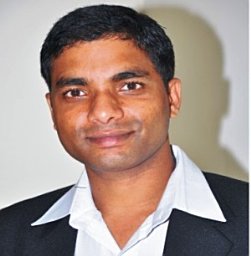 Vinod Kumar Wasnik合作论文数ICAR-Indian Grassland and Fodder Research Institute1
 Sudeshna Chakraborty合作论文数Dept Comp Sci & Engn, Lloyd Inst Engn & Technol1
 Sonu Kumar Mahawer合作论文数Crop Production Division, ICAR-Indian Grassland and Fodder Research Institute1
 Romen Sharma Phurailatpam合作论文数Nagaland Ctr, ICAR Res Complex NEH Reg1
 Priyajoy Kar合作论文数ICAR Indian Inst Maize Res1
 Bishwa Bhaskar Choudhary合作论文数ICAR-Indian Grassland and Fodder Research Institute1
 Nuzhat Fatema合作论文数Fac Business & Management, Univ Sultan Zainal Abidin UniSZA1
 Deepak Upadhyay合作论文数Indian Vet Res Inst, ICAR1P. Divya合作论文数1
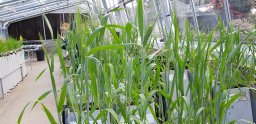 Vijay Pooniya合作论文数ICAR Indian Agr Res Inst IARI1Daniel Brunner合作论文数1
 Shikha Sharma合作论文数Poornima College of Engineering1Vaishali Yadav合作论文数1
 R. Srinivasan合作论文数Crop Production Division, ICAR-Indian Grassland and Fodder Research Institute1
 Priyanka Singh合作论文数1Usha Jain合作论文数1
 Gaurendra Gupta合作论文数Division of Agronomy, ICAR-Indian Agricultural Research Institute (IARI)1
 Hanamant M. Halli合作论文数Seed Sci & Technol, ICAR Indian Grassland & Fodder Res Inst1
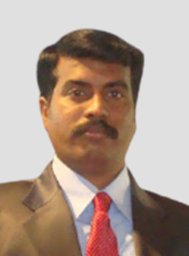 Sendhil Ramadas合作论文数ICAR Indian Inst Wheat & Barley Res1Mamta Jain合作论文数Department of Computer Science and Engineering, Mody University1
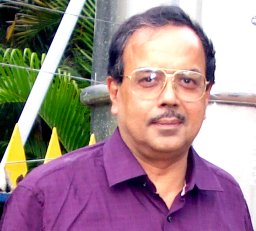 Pawan Kumar Lal Das合作论文数Mol Cell Biol Lab, Indian Inst Chem Biol1
 Pramod Singh Rathore合作论文数Dept. of C.S, Gov. Eng. Coll., Ajmer, India;c;Dept. of C.S, Gov. Eng. Coll., Ajmer, India|c|1
 Das, T.K.合作论文数1Desai, J.合作论文数1
 Sushabhan Choudhury合作论文数1
 Gireesh Kumar合作论文数1
 Vinay Chamola合作论文数Department of Electrical & Electronics Engineering, Birla Institute of Technology and Science Pilani1
 Purushottam Sharma合作论文数School of Pharmaceutical Sciences, Shobhit University1
 Mohsen Guizani合作论文数Mohamed bin Zayed University of Artificial Intelligence1




