Cold atom experiments show that a mobile impurity particle immersed in a weakly interacting Bose-Einstein condensate forms a well-defined quasiparticle (Bose polaron) for weak to moderate impurity-boson interaction strengths, whereas a significant line broadening is consistently observed for strong interactions. Motivated by this, we introduce a phenomenological theory based on the assumption that the most relevant states are characterized by the impurity correlated with at most one boson, since they have the largest overlap with the uncorrelated states to which the most common experimental probes couple. These experimentally relevant states can, however, decay to lower energy states characterized by correlations involving multiple bosons, and we model this using a minimal variational wave function combined with a complex impurity-boson interaction strength. We first motivate this approach by comparing to a more elaborate theory that includes correlations with up to two bosons. Our phenomenological model is shown to recover the main results of two recent experiments probing both the spectral and the nonequilibrium properties of the Bose polaron. Our work offers an intuitive framework for analyzing experimental data and highlights the importance of understanding the complicated problem of the Bose polaron decay in a many-body setting.
Spontaneous symmetry breaking, driven by competing interactions and quantum fluctuations, is fundamental to understanding ordered electronic phases. Although electrically neutral, optical excitations like excitons can interact through their dipole moment, raising the possibility of optically active ordered phases. The effects of spontaneous ordering on optical properties remains underexplored. The excitonic Mott insulating state recently observed in semiconducting moiré crystals may help clarify this question. Here we present evidence for an in-plane ferroelectric phase of dipolar moiré excitons driven by strong exciton-exciton interactions. We reveal a speed-up of photon emission at late times and low densities in excitonic decay. This counterintuitive behaviour is attributed to collective radiance, linked to the transition between disordered and symmetry-broken ferroelectric phases of moiré excitons. Our findings provide evidence for strong dipolar intersite interactions in moiré lattices, demonstrate collective photon emission as a probe for moiré quantum materials and a path for exploring cooperative optical phenomena in strongly correlated systems.
Dicke superradiance by an ensemble of quantum emitters produces a collective burst of radiation, but no entanglement in the mixed state of the emitters. We show that adding a local kinetic constraint between the emitters generates extensive mixed-state entanglement, while otherwise preserving all key features of Dicke superradiance. Specifically, for any local Boolean constraint, we analytically derive a lower bound for the emission rate which implies a peak intensity ∝ N^2 and a peak time ∝ (log N)/N with number of spins N. This effect enables the superradiantly accelerated preparation of entangled dark states. Hereby, Hilbert-space fragmentation of the Dicke ladder leads to an exponentially branching decay tree that generates a hierarchy of dark states. Importantly, these disconnected manifolds include exponentially many long-range entangled singlet dark states. The explored kinetic constraints and superradiant dynamics can be realized in neutral-atom arrays coupled to an optical cavity, and we suggest a simple and accessible witness to detect the predicted mixed-state entanglement in such experiments. Moreover, we show that entanglement generation is robust against atomic decay and collective dephasing, and should be observable under recently reported experimental conditions. Our results, thereby, offer a general framework and experimentally viable approach for the dissipative engineering of entangled dark states enhanced by superradiance.
The strong, tunable dipolar interactions of ultracold molecules make them a powerful platform for quantum many-body physics, but reaching degeneracy by evaporative cooling requires suppressing inelastic collisions. Microwave collisional shielding has enabled the preparation of degenerate Fermi gases and Bose-Einstein condensates of polar molecules, whereas static electric field shielding has been limited to fermionic species, which are less prone to inelastic loss. We demonstrate static-field Förster shielding of bosonic ^23Na^87Rb molecules, suppressing two-body loss by up to four orders of magnitude. Within a bound-state-free electric-field window, three-body loss is also strongly suppressed, enabling efficient evaporation. Evaporating with an efficiency of 2.09(9), we increase the phase-space density of the gas by two orders of magnitude, reaching degeneracy with 7200(1000) molecules. We observe self-bound droplets at the end of evaporation over a wide range of field strengths, emerging from either degenerate or non-degenerate parent gases. We perform Path Integral Monte Carlo simulations, which suggest that the observed droplets are filamentary in nature, and find good agreement with the experimentally observed droplet formation temperatures. Our results establish Förster shielding as a single-field route to prepare degenerate gases and self-bound droplets of bosonic polar molecules.
Continuous time crystals, i.e., nonequilibrium phases with a spontaneously broken continuous time-translational symmetry, have been studied and recently observed in the long time dynamics of open quantum systems. Here, we investigate a lattice of interacting three-level particles and find two distinct time-crystal phases that cannot be described within mean-field theory. Remarkably, one of them emerges only in the presence of correlations, upon accounting for beyond-mean-field effects. Our findings extend explorations of continuous time-translational symmetry breaking in dissipative systems beyond the classical phenomenology of periodic orbits in a low-dimensional nonlinear system. The proposed model applies directly to the laser-driven dynamics of interacting Rydberg states in neutral-atom arrays and suggests that the predicted time-crystal phases are observable in such experiments.
We describe an approach to achieve near-perfect unidirectional light-matter coupling to an effective quantum emitter that is formed by a subwavelength array of atoms in the Rydberg-blockade regime. The nonlinear reflection and transmission of such two-dimensional superatoms are exploited in different interferometric setups for the deterministic generation of tunable single photons and entangling two-photon operations with high fidelities, ℱ≳0.999. The described setup can function as a versatile nonlinear optical element in a free-space photonic quantum network with simple linear elements and without the need of additional mode confinement, optical resonators, or optical isolators.
Recent advances in molecular cooling have enabled the realization of strongly dipolar Bose–Einstein condensates (BECs) of molecules, and BECs of many different molecular species may become experimentally accessible in the near future. Here, we explore the unique properties of such BECs and the new insights they may offer into dipolar quantum fluids and many-body physics. We explore which parameter regimes can realistically be achieved using currently available experimental techniques, discuss how to implement these techniques, and outline which molecular species are particularly well suited to explore exotic new states of matter. We further determine how state-of-the-art beyond mean-field theories, originally developed for weakly dipolar magnetic gases, can be pushed to their limits and beyond, and what other long-standing questions in the field of dipolar physics may realistically come within reach using molecular systems.
We investigate the physics of ultracold dipolar molecules using path-integral quantum Monte Carlo simulations, and construct the complete phase diagram extending from weak to strong interactions and from small to mesoscopic particle numbers. Our calculations predict the formation of self-bound quantum droplets at interaction strengths lower than previously anticipated. For stronger interactions, the droplet continuously loses superfluidity as correlations develop, and is eventually found to undergo a transition to a crystalline monolayer that remains self-bound without external confinement. The spontaneous formation of such two-dimensional phases from a three-dimensional quantum gas is traced back to the peculiar anisotropic form of the dipole-dipole interaction generated by microwave-dressing of rotational molecular states. For sufficiently large particle numbers, crystallization takes place for comparably low interaction strengths that do not promote two-body bound states and should thus be observable in ongoing experiments without limitations from three-body recombination.
The physics of impurities in a bosonic quantum environment is a paradigmatic and challenging many-body problem that remains to be understood in its full complexity. Here, this problem is investigated for impurities with strong repulsive interactions based on Ramsey interferometry in a quantum degenerate gas of 39K atoms. We observe an oscillatory signal that is consistent with a quantum beat between two co-existing coherent quasiparticle states: the attractive and repulsive polarons. The interferometric signal allows us to extract the polaron energies for a wide range of interaction strengths, complimenting earlier spectroscopic measurements. We furthermore identify several dynamical regimes towards the formation of the Bose polaron in good agreement with theory. Our results improve the understanding of quantum impurities interacting strongly with a bosonic environment, and demonstrate how quasiparticles as well as short-lived non-equilibrium many-body states can be probed using Ramsey interferometry.
We describe an approach to achieve near-perfect unidirectional light-matter coupling to an effective quantum emitter that is formed by a subwavelength array of atoms in the Rydberg-blockade regime. The nonlinear reflection and transmission of such two-dimensional superatoms are exploited in different interferometric setups for the deterministic generation of tunable single photons and entangling two-photon operations with high fidelities, F greater than or similar to 0.999. The described setup can function as a versatile nonlinear optical element in a free-space photonic quantum network with simple linear elements and without the need of additional mode confinement, optical resonators, or optical isolators. Published by Optica Publishing Group under the terms of the Creative Commons Attribution 4.0 License. Further distribution of this work must maintain attribution to the author(s) and the published article's title, journal citation, and DOI.
Spontaneous symmetry breaking, arising from the competition of interactions and quantum fluctuations, is fundamental to understanding ordered electronic phases. Although electrically neutral, optical excitations like excitons can interact through their dipole moment, raising the possibility of optically active ordered phases. The effects of spontaneous ordering on optical properties remain largely unexplored. Recent observations of the excitonic Mott insulating state in semiconducting moiré crystals make them promising for addressing this question. Here, we present evidence for an in-plane ferroelectric phase of dipolar moiré excitons driven by strong exciton-exciton interactions. We discover a surprising speed-up of photon emission at late times and low densities in excitonic decay. This counterintuitive behavior is attributed to collective radiance, linked to the transition between disordered and symmetry-broken ferroelectric phases of moiré excitons. Our findings provide first evidence for strong dipolar inter-site interactions in moiré lattices, demonstrate collective photon emission as a probe for moiré quantum materials, and pave the way for exploring cooperative optical phenomena in strongly correlated systems.
Non-Hermitian quantum mechanics with parity-time (PT) symmetry offers a powerful framework for exploring the complex interplay of dissipation and coherent interactions in open quantum systems. While PT-symmetry breaking has been studied in various physical systems, its observation on a quantum many-body level remains elusive. Here, we experimentally realize a non-Hermitian XY model in a strongly-interacting Rydberg-atom array. By measuring the Loschmidt Echo of a fully polarized state, we observe distinct dynamical signatures of a PT-symmetry-breaking phase transition. Dipole interactions are found to play a crucial role, not only determining the transition point but also triggering a non-Hermitian many-body blockade effect that protects the Loschmidt Echo from decay with a non-monotonic dependence on the system size. Our results reveal intricate interaction-induced effects on PT-symmetry breaking and open the door for exploring non-Hermitian many-body dynamics beyond single-particle and mean-field paradigms.
Moiré lattices created in two-dimensional heterostructures exhibit rich many-body physics of interacting electrons and excitons and, at the same time, suggest promising optoelectronic applications. Here, we study the cooperative radiance of moiré excitons that is demonstrated to emerge from the deep subwavelength nature of the moiré lattice and the strong excitonic on-site interaction. In particular, we show that the static dipole-dipole interaction between interlayer excitons can strongly affect their cooperative optical properties, suppressing superradiance of disordered states while enhancing superradiance of ordered phases of moiré excitons. Moreover, we show that doping permits direct control of optical cooperativity, e.g., by generating superradiant dynamics of otherwise subradiant states of excitons. Our results show that interlayer moiré excitons offer a unique platform for exploring cooperative optical phenomena in strongly interacting many-body systems, thus holding promise for applications in quantum nonlinear optics.
We investigate the physics of ultracold dipolar molecules using path-integral quantum Monte Carlo simulations, and construct the complete phase diagram extending from weak to strong interactions and from small to mesoscopic particle numbers. Our calculations predict the formation of self-bound quantum droplets at interaction strengths lower than previous estimates for molecular condensates. Strikingly, we observe that, for stronger interactions, the oblate quantum droplet transitions to a two-dimensional sheet or superfluid membrane with a thickness of a single molecule. As interactions are increased further the system continually loses superfluidity while correlations develop, and is eventually found to undergo a transition to a crystalline monolayer that remains self-bound without external confinement. The spontaneous formation of such two-dimensional phases from a three-dimensional quantum gas is traced back to the peculiar anisotropic form of the dipole-dipole interaction generated by microwave dressing of rotational molecular states. For sufficiently large particle numbers, crystallization takes place for comparably low interaction strengths that do not promote two-body bound states and should thus be observable in ongoing experiments without limitations from three-body recombination.
In this paper we study metastable states in single- and two-component dipolar Bose-Einstein condensates. We show that this system supports a rich variety of states that are remarkably stable despite not being ground states. In a parameter region where striped phases are ground states, we find such metastable states that are energetically favorable compared to triangular and honeycomb lattices. Among these metastable states we report a peculiar ring-lattice state, which is led by the competition between triangular and honeycomb symmetries and rarely seen in other systems. In the case of dipolar mixtures we show that via tuning the miscibility these states can be stabilized in a broader domain by utilizing interspecies interactions.
For multi-level systems in hot atomic vapors the interplay between the Doppler shift due to atomic motion and the wavenumber mismatch between driving laser fields strongly influences transmission and absorption properties of the atomic medium. In a three-level atomic ladder-system, Doppler broadening limits the visibility of electromagnetically-induced transparency (EIT) when the probe and control fields are co-propagating, while EIT is recovered under the opposite condition of counter-propagating geometry and kp<kc , with kp and kc being the wavenumbers of the probe and control fields, respectively. This effect has been studied and experimentally demonstrated as an efficient mechanism to realize non-reciprocal probe light transmission, which may enable applications as magnetic-field free optical isolators. Here, we describe the basics of this effect and discuss a simple picture for the underlying mechanism. We illustrate how the non-reciprocity scales with wavelength mismatch and show how to experimentally demonstrate the effect in a simple Rydberg-EIT system using thermal Rubidium atoms.
Subwavelength arrays of quantum emitters offer an efficient free-space approach to coherent light-matter interfacing, using ultracold atoms or two-dimensional solid-state quantum materials. The combination of collectively suppressed photon losses and emerging optical nonlinearities due to strong photon coupling to mesoscopic numbers of emitters holds promise for generating nonclassical light and engineering effective interactions between freely propagating photons. While most studies have thus far relied on numerical simulations, we describe here a diagrammatic Green's function approach that permits analytical investigations of nonlinear processes. We illustrate the method by deriving a simple expression for the scattering matrix that describes photon-photon interactions in an extended two-dimensional array of quantum emitters and reproduces the results of numerical simulations of coherently driven arrays. The approach yields intuitive insights into the nonlinear response of the system and offers a promising framework for the systematic development of a theory for interacting photons and many-body effects on collective radiance in two-dimensional arrays of quantum emitters.
We analyse the finite-temperature phase diagram of a dipolar Bose Einstein Condensate confined in a tubular geometry. The effect of thermal fluctuations is accounted for by means of Bogoliubov theory employing the local density approximation. In the considered geometry, the superfluid-supersolid phase transition can be of first- and second-order. We discuss how the corresponding transition point is affected by the finite temperature of the system.
The notion of spontaneous symmetry breaking has been well established to characterize classical and quantum phase transitions of matter, such as condensation, crystallization or quantum magnetism. Generalizations of this paradigm to the time dimension can lead to a time crystal phase, which spontaneously breaks the time-translation symmetry of the system. Although the existence of a continuous time crystal at equilibrium has been challenged by no-go theorems, this difficulty can be circumvented by dissipation in an open system. Here we report the experimental observation of such a dissipative time-crystalline order in a room-temperature atomic gas, where ground-state atoms are continuously driven to Rydberg states. The emergent time crystal is revealed by persistent oscillations of the photon transmission, and we show that the observed limit cycles arise from the coexistence and competition between distinct Rydberg components. The non-decaying autocorrelation of the oscillation, together with the robustness against temporal noises, indicates the establishment of true long-range temporal order and demonstrates the realization of a continuous time crystal. The observation of continuous time crystals has been hindered by atom loss in the ultracold regime. Long-range time-crystalline order has now been demonstrated in a dissipative Rydberg gas at room temperature.
 Jan-Michael Rost合作论文数Max-Planck-Institute for the Physics of Complex Systems23
 Thomas Pattard合作论文数22
 Valentin Walther合作论文数Aarhus Univ, Dept Phys & Astron, Ny Munkegade 120, DK-8000 Aarhus C, Denmark15
 Thomas C. Killian合作论文数Department of Physics and Astronomy, Wiess School of Natural Sciences, Rice University15
 Georg Bruun合作论文数Department of Physics and Astronomy, Aarhus University15
 Fabian Maucher合作论文数Max Planck Institute for the Physics of Complex Systems Nöthnitzer Str. 38 01187 Dresden Germany11
 Yong-Chang Zhang (张永昌)合作论文数School of Physics, Xi’an Jiaotong University10
 Robin Kaiser合作论文数Institut de Physique de Nice, Université Céte d'Azur10Hossein Sadeghpour合作论文数Center for Astrophysics, Department of Astronomy, Harvard University10
 Alexey Gorshkov合作论文数Joint Quantum Institute;Department of Physics, University of Maryland;Institute for Advanced Computer Studies, University of Maryland;Quantum Measurement Division, National Institute of Standards and Technology10Patrick Mcquillen合作论文数9
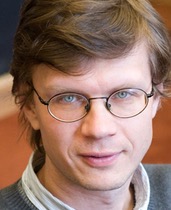 Mikhail Lukin合作论文数Lyman Laboratory, Department of Physics, Harvard University9c ates合作论文数8K. Knakkergaard Nielsen合作论文数8
 Daniel Vrinceanu合作论文数School of Physics;Georgia Institute of Technology;School of Physics, Georgia Institute of Technology8Thomas Langin合作论文数8G. Labeyrie合作论文数8Bannasch G合作论文数7
 Christian Groß合作论文数Physikalisches Institut, Faculty of Science, Eberhard Karls Universität Tübingen;Max-Planck-Institute for Quantum Optics7Arturo Camacho-Guardian合作论文数7
 Werner O. Ebeling合作论文数Department of Physics, Humboldt University of Berlin7
 Immanuel Bloch合作论文数Quantum Many-Body Systems Division, Ludwig-Maximilians-Universitat Munchen;Max-Planck-Institute of Quantum Optics;Fakultät für Physik, Ludwig-Maximilians-Universitat Munchen7Trevor Strickler合作论文数6Callum R. Murray合作论文数6
 Fan Yang (杨帆)合作论文数School of Physics, Southeast University6
 Zeiher Johannes合作论文数Max-Planck-Institut für Quantenoptik, 85748 Garching, Germany.6
 Jose Antonio Castro Nieto合作论文数6
 Klaus Mølmer合作论文数Niels Bohr Institutet, Københavns Universitet6Sebastian Hofferberth合作论文数Physikalisches Institut, Universität Heidelberg6N Henkel合作论文数5
 Luis A. Peña Ardila合作论文数Inst Theoret Phys, Leibniz Univ Hannover5
 Peter Schauß合作论文数Max-Planck-Institut für Quantenoptik, 85748 Garching, Germany.5Hild Sebastian合作论文数Max-Planck-Institut für Quantenoptik, 85748 Garching, Germany.5
 van Bijnen Rick合作论文数Eindhoven University of Technology5
 Sevilay Sevinçli合作论文数Max-Planck-Institut für Physik komplexer Systeme Nöthnitzer Str. 38 01187 Dresden Germany5
 Giovanni Luca Gattobigio合作论文数LCAR5
 J. Arlt合作论文数Clarendon Laboratory;Department of Physics;University of Oxford;Clarendon Laboratory, University of Oxford5
 Tommaso Macri合作论文数5
 Charles Stuart Adams合作论文数Department of Physics, Durham University5
 Tim Langen合作论文数4Marius Gaudesius合作论文数4
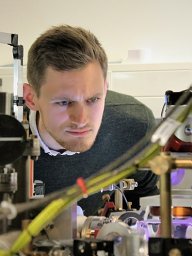 N B Jørgensen合作论文数Ctr Complex Quantum Syst, Aarhus Univ4
 Qiyu Liang合作论文数Department of Physics and Research Laboratory of Electronics, Massachusetts Institute of Technology, Cambridge, Massachusetts 02139, USA4Lida Zhang合作论文数Dept Phys & Astron, Texas A&M Univ4
 Weibin Li合作论文数School of Physics & Astronomy, Faculty of Science, University of Nottingham4
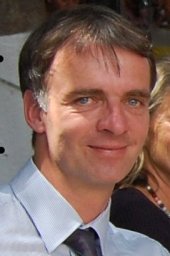 Michael Fleischhauer合作论文数State Research Center for Optics and Material Sciences, University of Kaiserslautern;Department of Physics, University of Kaiserslautern4
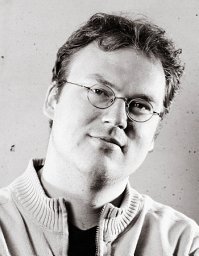 Stefan Skupin合作论文数Département de Physique;Théorique et Appliquée;Département de Physique|Théorique et Appliquée4
 Vladan Vuletić合作论文数Department of Physics, Massachusetts Institute of Technology;Research Laboratory of Electronics, Massachusetts Institute of Technology;QuEra Computing Inc.4
 Wieslaw Krolikowski合作论文数Department of Quantum Science & Technology, Research School of Physics, College of Science, Australian National University, Canberra4




