Vision-based end-to-end (E2E) driving has garnered interest in the research community due to its scalability and synergy with multimodal large language models (MLLMs). However, current E2E driving benchmarks primarily feature nominal scenarios paired with existing open-loop evaluation metrics that fall short in capturing the multimodal nature of driving or effectively evaluating performance in long-tail scenarios. To address these gaps, we introduce the Rare Events Dataset for End-to-End Driving (Rare-E2E). Rare-E2E contains 4,021 driving segments (approximately 12 hours), specifically curated for challenging long-tail scenarios that that are rare in daily life with an occurring frequency of less than 0.03%. Each segment in Rare-E2E includes the high-level routing information, ego states, and 360-degree camera views from 8 surrounding cameras. To evaluate E2E driving performance on these long-tail situations, we propose a novel open-loop evaluation metric: Rater Feedback Score (RFS). Unlike conventional distance-based metrics, RFS measures how closely a predicted trajectory matches rater-annotated trajectory preference labels. Rare-E2E includes rater preference labels for validation, and a separate held out test set is used for the 2025 Rare-E2E benchmark leaderboard.
In autonomous driving, mapping is critical for motion planning but remains an under-utilized resource for perception tasks like 3D object detection. Maps can provide robust structural priors of the static environment, suited to resolving ambiguities and correcting for sensor data sparsity or noise — issues especially prevalent for distant objects or during adverse weather conditions. However, conventional High-Definition (HD) maps are resource-intensive to obtain and maintain, which presents a challenge for achieving efficient, large-scale deployment. In this paper, we propose a scalable solution to systemically leverage mapping to improve 3D detection by overcoming two primary challenges. First, we introduce a pipeline to automatically build dense mapping priors from aggregated sensor data, eliminating the need for human labeling. Second, we design a novel Mapping Prior Augmented 3D detection (MPA3D) framework to effectively integrate the mapping priors with the distinct modalities of sensor data. Our extensive experiments on the Waymo Open Dataset demonstrate that our approach achieves new state-of-the-art results, and proving the effectiveness of using scalable, reconstructed scene priors to enhance 3D detection.
Model scaling has demonstrated remarkable success through large-scale training on diverse datasets. It remains an open question whether the same paradigm would apply to autonomous driving perception systems due to unique challenges, such as fusing heterogeneous sensor data and the need for sophisticated 3D spatial understanding. To bridge this gap, we present a comprehensive study on systematically analyzing the impact of scale on these systems. We develop our STELLAR model based on Sparse Window Transformer, by extending the input modalities to include LiDAR, radar, camera, and map prior. We train the model on a large-scale dataset of 50 million driving examples with up to 500 million parameters. Our large-scale experiments reveal empirical scaling trends that connect model performance to model size, data, and compute. The resulting model establishes a new state-of-the-art on the Waymo Open Dataset challenge, outperforming prior arts by a large margin. Our work demonstrates that large-scale training is a highly promising path for advancing the capabilities of perception models for autonomous driving.
Robust training and validation of Autonomous Driving Systems (ADS) require massive, diverse datasets. Proprietary data collected by Autonomous Vehicle (AV) fleets, while high-fidelity, are limited in scale, diversity of sensor configurations, as well as geographic and long-tail-behavioral coverage. In contrast, in-the-wild data from sources like dashcams offers immense scale and diversity, capturing critical long-tail scenarios and novel environments. However, this unstructured, in-the-wild video data is incompatible with ADS expecting structured, multi-modal sensor inputs for system validation and training purposes. To bridge this data gap, we propose Sensor2Sensor, a novel generative modeling paradigm that translates in-the-wild monocular dashcam videos into a high-fidelity, multi-modal sensor suite that we refer to as the AV log, which includes multi-view camera images and LiDAR point clouds. A core challenge that arises is the lack of paired training data. We address this by converting real AV logs into dashcam-style videos via 4D Gaussian Splatting (4DGS) reconstruction and novel-view rendering. Sensor2Sensor then utilizes a diffusion architecture to perform the generative conversion. We perform a comprehensive set of quantitative evaluations on the fidelity and realism of the generated sensor data. We demonstrate Sensor2Sensor's practical utility by converting challenging in-the-wild internet and dashcam footage into realistic, multi-modal data formats, further unlocking vast external data sources for AV development.
Simulation is crucial for developing and evaluating autonomous vehicle (AV) systems. Recent literature builds on a new generation of generative models to synthesize highly realistic images for full-stack simulation. However, purely synthetically generated scenes are not grounded in reality and have difficulty in inspiring confidence in the relevance of its outcomes. Editing models, on the other hand, leverage source scenes from real driving logs, and enable the simulation of different traffic layouts, behaviors, and operating conditions such as weather and time of day. While image editing is an established topic in computer vision, it presents fresh sets of challenges in driving simulation: (1) the need for cross-camera 3D consistency, (2) learning "empty street" priors from driving data with foreground occlusions, and (3) obtaining paired image tuples of varied editing conditions while preserving consistent layout and geometry. To address these challenges, we propose SceneCrafter, a versatile editor for realistic 3D-consistent manipulation of driving scenes captured from multiple cameras. We build on recent advancements in multi-view diffusion models, using a fully controllable framework that scales seamlessly to multi-modality conditions like weather, time of day, agent boxes and high-definition maps. To generate paired data for supervising the editing model, we propose a novel framework on top of Prompt-to-Prompt [15] to generate geometrically consistent synthetic paired data with global edits. We also introduce an alpha-blending framework to synthesize data with local edits, leveraging a model trained on empty street priors through novel masked training and multi-view repaint paradigm. SceneCrafter demonstrates powerful editing capabilities and achieves state-of-the-art realism, controllability, 3D consistency, and scene editing quality compared to existing baselines.
The goal of traffic simulation is to augment a potentially limited amount of manually-driven miles that is available for testing and validation, with a much larger amount of simulated synthetic miles. The culmination of this vision would be a generative simulated city, where given a map of the city and an autonomous vehicle (AV) software stack, the simulator can seamlessly simulate the trip from point A to point B by populating the city around the AV and controlling all aspects of the scene, from animating the dynamic agents (e.g., vehicles, pedestrians) to controlling the traffic light states. We refer to this vision as CitySim, which requires an agglomeration of simulation technologies: scene generation to populate the initial scene, agent behavior modeling to animate the scene, occlusion reasoning, dynamic scene generation to seamlessly spawn and remove agents, and environment simulation for factors such as traffic lights. While some key technologies have been separately studied in various works, others such as dynamic scene generation and environment simulation have received less attention in the research community. We propose SceneDiffuser++, the first end-to-end generative world model trained on a single loss function capable of point A-to-B simulation on a city scale integrating all the requirements above. We demonstrate the city-scale traffic simulation capability of SceneDiffuser++ and study its superior realism under long simulation conditions. We evaluate the simulation quality on an augmented version of the Waymo Open Motion Dataset (WOMD) with larger map regions to support trip-level simulation.
The latest advancements in multi-modal large language models (MLLMs) have spurred a strong renewed interest in end-to-end motion planning approaches for autonomous driving. Many end-to-end approaches rely on human annotations to learn intermediate perception and prediction tasks, while purely self-supervised approaches—which directly learn from sensor inputs to generate planning trajectories without human annotations—often underperform the state of the art. We observe a key gap in the input representation space: end-to-end approaches built on MLLMs are often pretrained with reasoning tasks in 2D image space rather than the native 3D space in which autonomous vehicles plan. To this end, we propose S4-Driver, a scalable self-supervised motion planning algorithm with spatio-temporal visual representation, based on the popular PaLI [9] multimodal large language model. S4-Driver uses a novel sparse volume strategy to seamlessly transform the strong visual representation of MLLMs from perspective view to 3D space without the need to finetune the vision encoder. This representation aggregates multi-view and multi-frame visual inputs and enables better prediction of planning trajectories in 3D space. To validate our method, we run experiments on both nuScenes and Waymo Open Motion Dataset (with in-house camera data). Results show that S4-Driver performs favorably against existing supervised multi-task approaches while requiring no human annotations. It also demonstrates great scalability when pretrained on large volumes of unannotated driving logs.
Recent advances in generative models have sparked exciting new possibilities in the field of autonomous vehicles. Specifically, video generation models are now being explored as controllable virtual testing environments. Simultaneously, end-to-end (E2E) driving models have emerged as a streamlined alternative to conventional modular autonomous driving systems, gaining popularity for their simplicity and scalability. However, the application of these techniques to simulation and planning raises important questions. First, while video generation models can generate increasingly realistic videos, can these videos faithfully adhere to the specified conditions and be realistic enough for E2E autonomous planner evaluation? Second, given that data is crucial for understanding and controlling E2E planners, how can we gain deeper insights into their biases and improve their ability to generalize to out-of-distribution scenarios? In this work, we bridge the gap between the driving models and generative world models (Drive Gen) to address these questions. We propose novel statistical measures leveraging E2E drivers to evaluate the realism of generated videos. By exploiting the controllability of the video generation model, we conduct targeted experiments to investigate distribution gaps affecting E2E planner performance. Finally, we show that synthetic data produced by the video generation model offers a cost-effective alternative to real-world data collection. This synthetic data effectively improves E2E model generalization beyond existing Operational Design Domains, facilitating the expansion of autonomous vehicle services into new operational contexts.
Current autonomous driving systems rely on specialized models for perceiving and predicting motion, which demonstrate reliable performance in standard conditions. However, generalizing cost-effectively to diverse real-world scenarios remains a significant challenge. To address this, we propose Plug-and-Forecast (PnF), a plug-and-play approach that augments existing motion forecasting models with multimodal large language models (MLLMs). PnF builds on the insight that natural language provides a more effective way to describe and handle complex scenarios, enabling quick adaptation to targeted behaviors. We design prompts to extract structured scene understanding from MLLMs and distill this information into learnable embeddings to augment existing behavior prediction models. Our method leverages the zero-shot reasoning capabilities of MLLMs to achieve significant improvements in motion prediction performance, while requiring no fine-tuning -- making it practical to adopt. We validate our approach on two state-of-the-art motion forecasting models using the Waymo Open Motion Dataset and the nuScenes Dataset, demonstrating consistent performance improvements across both benchmarks.
Simulation with realistic and interactive agents represents a key task for autonomous vehicle (AV) software development in order to test AV performance in prescribed, often long-tail scenarios. In this work, we propose SceneDiffuser, a scene-level diffusion prior for traffic simulation. We present a singular framework that unifies two key stages of simulation: scene initialization and scene rollout. Scene initialization refers to generating the initial layout for the traffic in a scene, and scene rollout refers to closed-loop simulation for the behaviors of the agents. While diffusion has been demonstrated to be effective in learning realistic, multimodal agent distributions, two open challenges remain: controllability and closed-loop inference efficiency and realism. To this end, to address controllability challenges, we propose generalized hard constraints, a generalized inference-time constraint mechanism that is simple yet effective. To improve closed-loop inference quality and efficiency, we propose amortized diffusion, a novel diffusion denoising paradigm that amortizes the physical cost of denoising over future simulation rollout steps, reducing the cost of per physical rollout step to a single denoising function evaluation, while dramatically reducing closed-loop errors. We demonstrate the effectiveness of our approach on the Waymo Open Dataset, where we are able to generate distributionally realistic scenes, while obtaining competitive performance in the Sim Agents Challenge, surpassing the state-of-the-art in many realism attributes.
We introduce EMMA, an End-to-end Multimodal Model for Autonomous driving. Built on a multi-modal large language model foundation, EMMA directly maps raw camera sensor data into various driving-specific outputs, including planner trajectories, perception objects, and road graph elements. EMMA maximizes the utility of world knowledge from the pre-trained large language models, by representing all non-sensor inputs (e.g. navigation instructions and ego vehicle status) and outputs (e.g. trajectories and 3D locations) as natural language text. This approach allows EMMA to jointly process various driving tasks in a unified language space, and generate the outputs for each task using task-specific prompts. Empirically, we demonstrate EMMA's effectiveness by achieving state-of-the-art performance in motion planning on nuScenes as well as competitive results on the Waymo Open Motion Dataset (WOMD). EMMA also yields competitive results for camera-primary 3D object detection on the Waymo Open Dataset (WOD). We show that co-training EMMA with planner trajectories, object detection, and road graph tasks yields improvements across all three domains, highlighting EMMA's potential as a generalist model for autonomous driving applications. However, EMMA also exhibits certain limitations: it can process only a small amount of image frames, does not incorporate accurate 3D sensing modalities like LiDAR or radar and is computationally expensive. We hope that our results will inspire further research to mitigate these issues and to further evolve the state of the art in autonomous driving model architectures.
Widely adopted motion forecasting datasets substitute the observed sensory inputs with higher-level abstractions such as 3D boxes and polylines. These sparse shapes are inferred through annotating the original scenes with perception systems' predictions. Such intermediate representations tie the quality of the motion forecasting models to the performance of computer vision models. Moreover, the human-designed explicit interfaces between perception and motion forecasting typically pass only a subset of the semantic information present in the original sensory input. To study the effect of these modular approaches, design new paradigms that mitigate these limitations, and accelerate the development of end-to-end motion forecasting models, we augment the Waymo Open Motion Dataset (WOMD) with large-scale, high-quality, diverse LiDAR data for the motion forecasting task. The new augmented dataset WOMD-LiDAR consists of over 100,000 scenes that each spans 20 seconds, consisting of well-synchronized and calibrated high quality LiDAR point clouds captured across a range of urban and suburban geographies (https://waymo.com/open/data/motion/). Compared to Waymo Open Dataset (WOD), WOMD-LiDAR dataset contains 100x more scenes. Furthermore, we integrate the LiDAR data into the motion forecasting model training and provide a strong baseline. Experiments show that the LiDAR data brings improvement in the motion forecasting task. We hope that WOMD-LiDAR will provide new opportunities for boosting end-to-end motion forecasting models.
3D object detectors for point clouds often rely on a pooling-based PointNet to encode sparse points into grid-like voxels or pillars. In this paper, we identify that the common PointNet design introduces an information bottleneck that limits 3D object detection accuracy and scalability. To address this limitation, we propose PVTransformer: a transformer-based point-to-voxel architecture for 3D detection. Our key idea is to replace the PointNet pooling operation with an attention module, leading to a better point-to-voxel aggregation function. Our design respects the permutation invariance of sparse 3D points while being more expressive than the pooling-based PointNet. Experimental results show our PVTransformer achieves much better performance compared to the latest 3D object detectors. On the widely used Waymo Open Dataset, our PVTransformer achieves state-of-the-art 76.5 mAPH L2, outperforming the prior art of SWFormer by +1.7 mAPH L2.
Tracking objects in three-dimensional space is critical for autonomous driving. To ensure safety while driving, the tracker must be able to reliably track objects across frames and accurately estimate their states such as velocity and acceleration in the present. Existing works frequently focus on the association task while either neglecting the model’s performance on state estimation or deploying complex heuristics to predict the states. In this paper, we propose STT, a Stateful Tracking model built with Transformers, that can consistently track objects in the scenes while also predicting their states accurately. STT consumes rich appearance, geometry, and motion signals through long term history of detections and is jointly optimized for both data association and state estimation tasks. Since the standard tracking metrics like MOTA and MOTP do not capture the combined performance of the two tasks in the wider spectrum of object states, we extend them with new metrics called S-MOTA and MOTP S that address this limitation. STT achieves competitive real-time performance on the Waymo Open Dataset.
Modern ConvNets typically use ReLU activation function. Recently smooth activation functions have been used to improve their accuracy. Here we study the role of smooth activation function from the perspective of adversarial robustness. We find that ReLU activation function significantly weakens adversarial training due to its non-smooth nature. Replacing ReLU with its smooth alternatives allows adversarial training to find harder adversarial training examples and to compute better gradient updates for network optimization. We focus our study on the large-scale ImageNet dataset. On ResNet-50, switching from ReLU to the smooth activation function SILU improves adversarial robustness from 33.0% to 42.3%, while also improving accuracy by 0.9% on ImageNet. Smooth activation functions also scale well with larger networks: it helps EfficientNet-L1 to achieve 82.2% accuracy and 58.6% robustness, largely outperforming the previous state-of-the-art defense by 9.5% for accuracy and 11.6% for robustness. Models are available at https://rb.gy/qt8jya.
Recent advances in machine learning have leveraged dramatic increases in computational power, a trend expected to continue in the future. This paper introduces the first Hyperscale Hardware Optimized Neural Architecture Search (H2O-NAS) to automatically design accurate and performant machine learning models tailored to the underlying hardware architecture. H2O-NAS consists of three key components: a new massively parallel “one-shot” search algorithm with intelligent weight sharing, which can scale to search spaces of O(10280) and handle large volumes of production traffic; hardware-optimized search spaces for diverse ML models on heterogeneous hardware; and a novel two-phase hybrid performance model and a multi-objective reward function optimized for large scale deployments. H2O-NAS has been implemented around state-of-the-art machine learning models (e.g. convolutional models, vision transformers, and deep learning recommendation models) and deployed at zettaflop scale in production. Our results demonstrate significant improvements in performance (22% ∼ 56%) and energy efficiency (17% ∼25%) at same or better quality. Our solution is designed for largescale deployment, streamlining privacy and security processes and reducing manual overhead. This facilitates a smooth and automated transition from research to production.
We propose a late-to-early recurrent feature fusion scheme for 3D object detection using temporal LiDAR point clouds. Our main motivation is fusing object-aware latent embeddings into the early stages of a 3D object detector. This feature fusion strategy enables the model to better capture the shapes and poses for challenging objects, compared with learning from raw points directly. Our method conducts late-to-early feature fusion in a recurrent manner. This is achieved by enforcing window-based attention blocks upon temporally calibrated and aligned sparse pillar tokens. Leveraging bird's eye view foreground pillar segmentation, we reduce the number of sparse history features that our model needs to fuse into its current frame by 10x. We also propose a stochastic-length FrameDrop training technique, which generalizes the model to variable frame lengths at inference for improved performance without retraining. We evaluate our method on the widely adopted Waymo Open Dataset and demonstrate improvement on 3D object detection against the baseline model, especially for the challenging category of large objects.
Recent developments in multimodal training methodologies, including CLIP and ALIGN, obviate the necessity for individual data labeling. These approaches utilize pairs of data and corresponding textual information found online as a form of weak supervision signal. However, models employing this kind of weak supervision are not as competitive as their supervised and semi-supervised counterparts when sufficient labeled data is accessible. This performance gap constrains the applicability of weekly supervised models. In this paper, we narrow the gap by proposing a combined scaling method, named BASIC, that achieves 85.7% top-1 accuracy on the ImageNet ILSVRC-2012 validation set without learning from any labeled ImageNet example. This accuracy surpasses best-published similar models, CLIP and ALIGN, by 9.3%. Our BASIC model also shows significant improvements in robustness benchmarks. For instance, on 5 test sets with natural distribution shifts such as ImageNet-{A,R,V2,Sketch} and ObjectNet, our model achieves 84.3% top-1 average accuracy, only a small drop from its original ImageNet accuracy. To achieve these results, we first develop a theoretical framework which shows that larger contrastive batch sizes lead to smaller generalization gaps for image-text models such as CLIP and ALIGN. Based on this theoretical result, we scale up the contrastive learning framework of CLIP and ALIGN in three dimensions (data size, model size, and batch size) by proposing a new method using gradient checkpointing and model parallelism. As a result, our dataset has 6.6B noisy image-text pairs, which is 4x larger than ALIGN, and 16x larger than CLIP. Our largest model has 3B weights, which is 3.75x larger in parameters and 8x larger in FLOPs than ALIGN and CLIP. Finally, our batch size is 65536 which is 2x more than CLIP and 4x more than ALIGN.
Data augmentations are important for training high-performance 3D object detectors that use point clouds. Despite recent efforts on designing new data augmentations, perhaps surprisingly, most current state-of-the-art 3D detectors only rely on a few simple data augmentations. In particular, different from 2D image data augmentations, 3D data augmentations need to account for different representations of input data and require being customized for different models, which introduces significant overhead. In this paper, we propose LidarAugment, a practical and effective data augmentation strategy for 3D object detection. Unlike previous methods, which require tuning all augmentation policies in an exponentially large search space, we propose to factorize and align the search space of each data augmentation, which cuts down the 20+ hyperparameters to 2, and significantly reduces the search complexity. We show LidarAugment can be easily adapted to different model architectures with different input representations by a simple 2D grid search, and consistently improve a range of detectors including both convolution-based UPillars/StarNet/RSN and transformer-based SWFormer. Furthermore, LidarAugment mitigates overfitting and enables 3D detectors to scale up to larger capacities. When combined with the latest 3D detectors, LidarAugment achieves a new state-of-the-art 74.8 mAPH L2 on the Waymo Open Dataset.
Lidars and cameras are critical sensors that provide complementary information for 3D detection in autonomous driving. While prevalent multi-modal methods [34], [36] simply decorate raw lidar point clouds with camera features and feed them directly to existing 3D detection models, our study shows that fusing camera features with deep lidar features instead of raw points, can lead to better performance. However, as those features are often augmented and aggregated, a key challenge in fusion is how to effectively align the transformed features from two modalities. In this paper, we propose two novel techniques: InverseAug that inverses geometric-related augmentations, e.g., rotation, to enable accurate geometric alignment between lidar points and image pixels, and LearnableAlign that leverages cross-attention to dynamically capture the correlations between image and lidar features during fusion. Based on InverseAug and LearnableAlign, we develop a family of generic multi-modal 3D detection models named DeepFusion, which is more accurate than previous methods. For example, DeepFusion improves Point-Pillars, CenterPoint, and 3D-MAN baselines on Pedestrian detection for 6.7,8.9, and 6.2 LEVEL_2 APH, respectively. Notably, our models achieve state-of-the-art performance on Waymo Open Dataset, and show strong model robustness against input corruptions and out-of-distribution data. Code will be publicly available at https://github.com/tensorflow/lingvo.
 Quoc V. Le合作论文数Google30
 Dragomir Anguelov合作论文数Waymo21
 Zhaoqi Leng合作论文数Waymo research11
 Zhiru Zhang合作论文数Computer Systems Laboratory, School of Electrical and Computer Engineering, College of Engineering, Cornell University10
 Daiyi Peng合作论文数Google9
 Xu Cheng (程旭)合作论文数University of Chinese Academy of Sciences;School of Computer Science, Peking University;Microprocessor Research and Development Center, Peking University9
 Xianhua Liu (刘先华)合作论文数北京大学信息科学技术学院9
 Barry (Xuanyi) Dong (董宣毅)合作论文数Meta;Stealth AI Startup8
 Hanxiao Liu (刘寒骁)合作论文数7
 Adams Wei Yu合作论文数Google DeepMind6
 Jiyu Zhang (张吉豫)合作论文数Renmin University of China Law School6
 Pei Sun合作论文数Meta6
 Ruoming Pang (庞若鸣)合作论文数OpenAI6
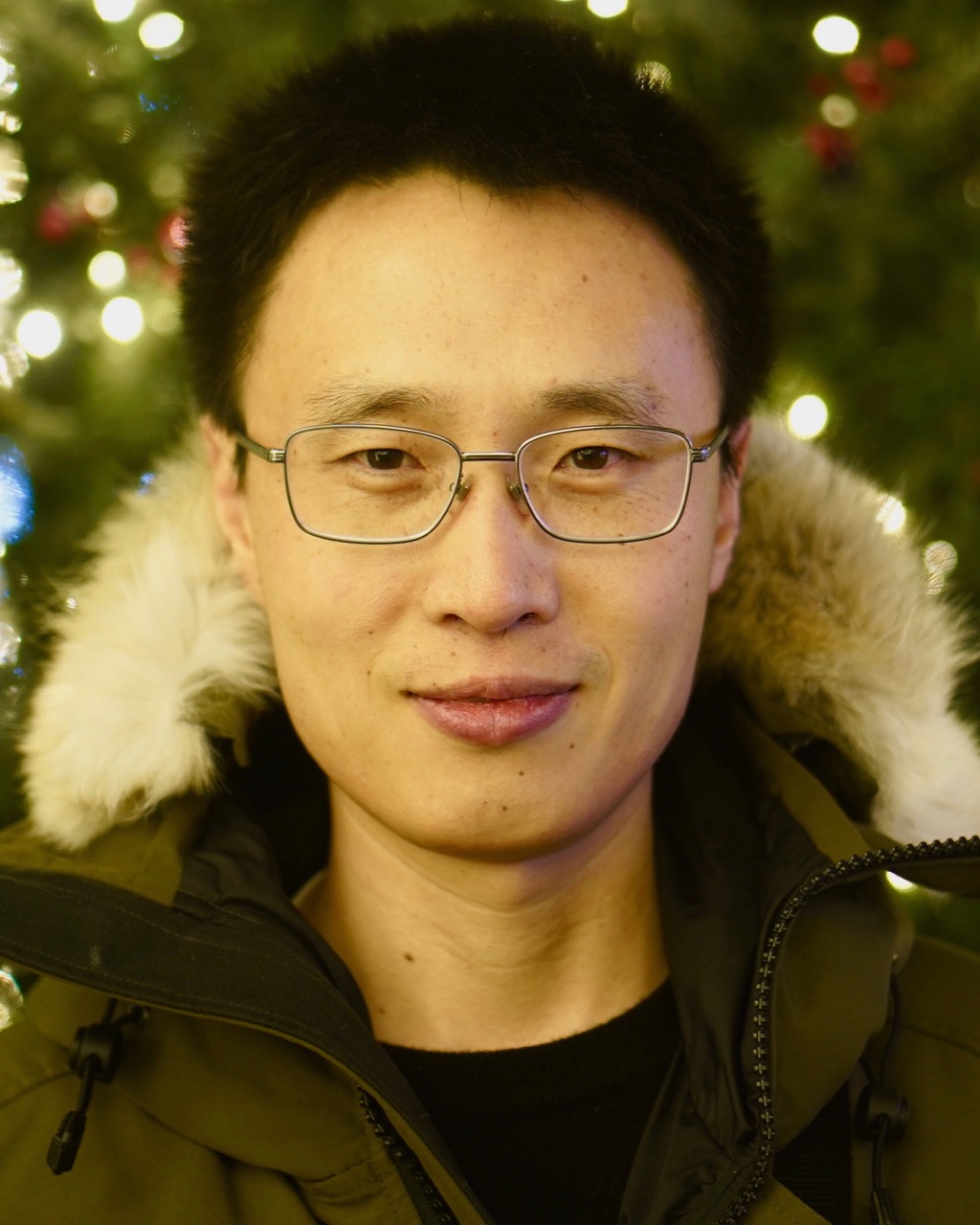 Boqing Gong合作论文数Google6
 Steve Dai合作论文数NVIDIA6
 Alan L. Yuille合作论文数Department of Cognitive Science, Krieger School of Arts & Sciences, Johns Hopkins University5
 Gai Liu合作论文数Google5
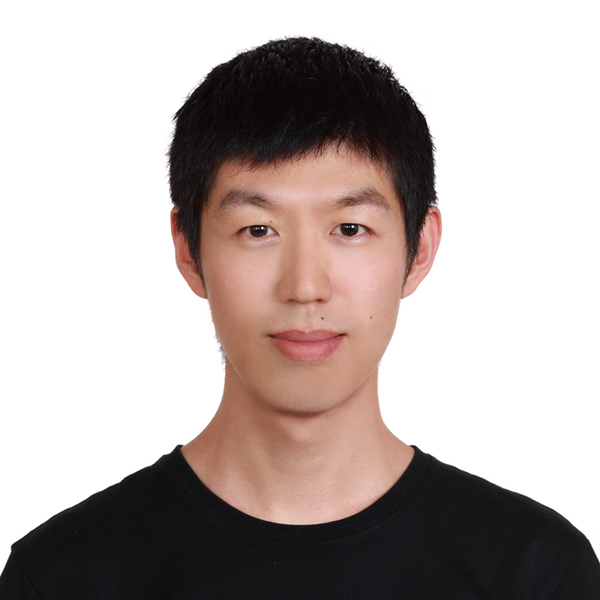 Yingwei Li合作论文数Department of Computer Science, Johns Hopkins University5
 Chenxi Liu合作论文数5
 Tianjian Meng (孟天健)合作论文数Microsoft5
 Cihang Xie合作论文数Vision · Learning · Assured Autonomy Lab, Department of Computer Science and Engineering, Baskin School of Engineering, University of California, Santa Cruz5
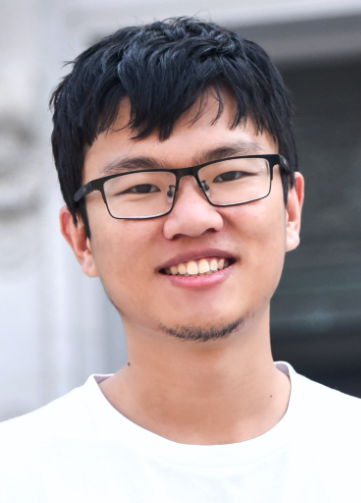 Chiyu Max Jiang (蒋驰宇)合作论文数Waymo5
 Yifeng Lu合作论文数Google DeepMind4
 Bo Chen合作论文数DJI4
 Weiyue Wang (王薇月)合作论文数Meta4
 Shuyang Cheng合作论文数Waymo4
 Yin Zhou合作论文数Guangzhou Automobile Group Co., Ltd.4
 Hieu Pham合作论文数Augment4Xiaodan Song合作论文数4
 Berkin Akin合作论文数Carnegie Mellon University4
 Gabriel Bender合作论文数Google4Golnaz Ghiasi合作论文数Google Brain4Da Huang合作论文数3
 Yanqi Zhou合作论文数Google Deepmind3
 Ritchie Zhao合作论文数NVIDIA3
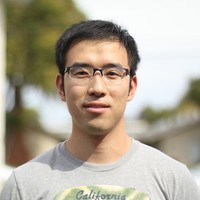 Pengchong Jin合作论文数Google Research3
 Amir Yazdanbakhsh合作论文数Google DeepMind3
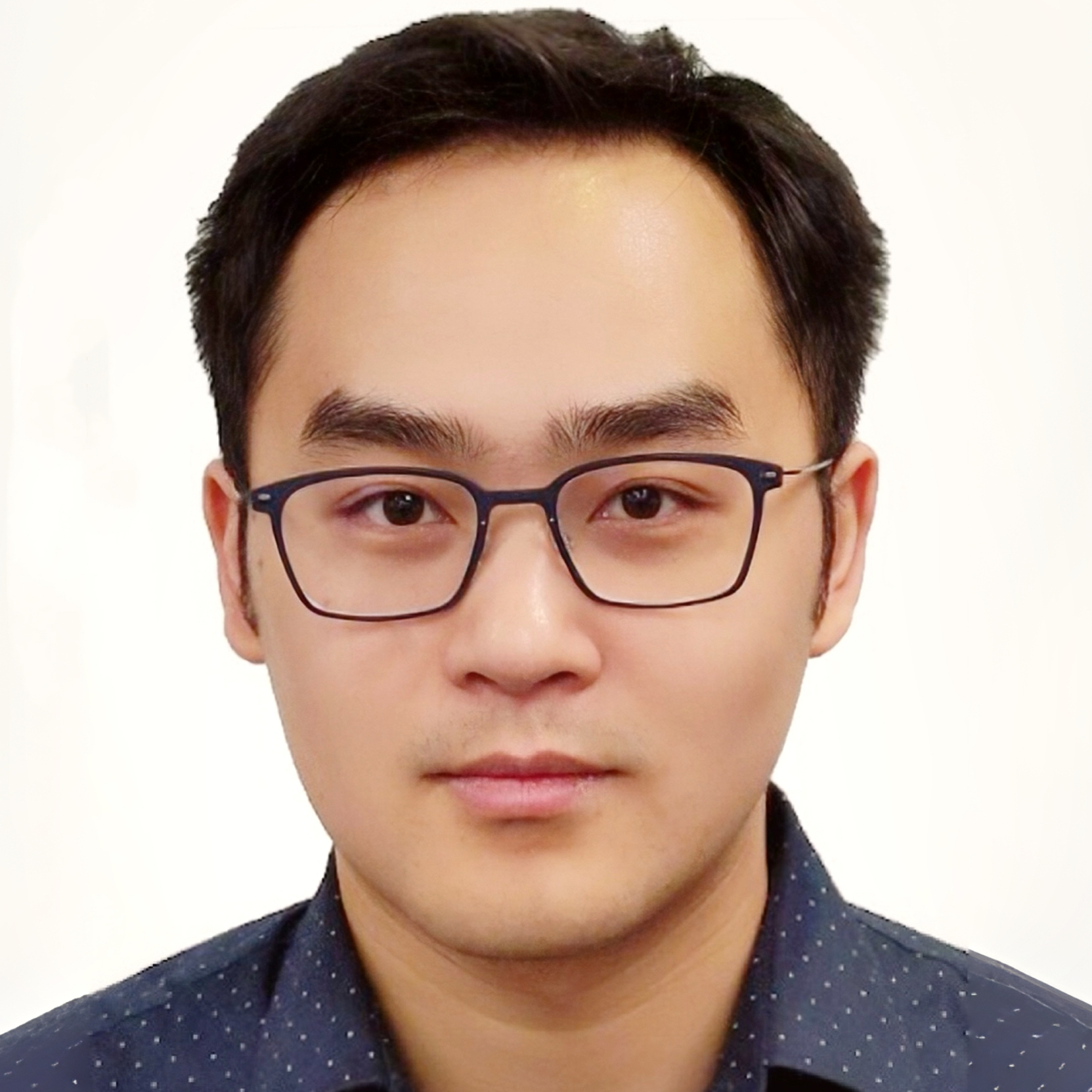 Jiahui Yu合作论文数Meta3
 Zihang Dai (戴自航)合作论文数Google Brain3
 Tong He (贺通)合作论文数Shanghai AI Lab3
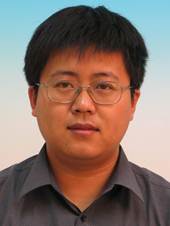 Dong Tong (佟冬)合作论文数Micro Processor Research and Development Center, School of Computer Sclence, Peking University3
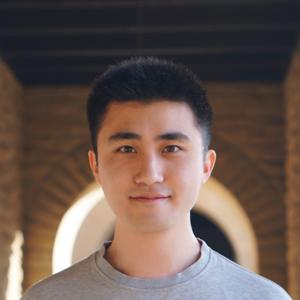 Jingwei Ji合作论文数Waymo3
 James Laudon合作论文数Anthropic3
 Chen Liang 合作论文数Google Brain3
 Bogdan Gabrys合作论文数Advanced Analytics Institute, Faculty of Engineering and IT, University of Technology Sydney;The Data Science Institute, University of Technology Sydney3
 Vijay Vasudevan合作论文数Lutra AI3
 Yunyang Xiong合作论文数Facebook Reality Lab2Wei-Chih Hung合作论文数2