Chemical fluxes between immiscible liquids trigger interfacial stirring flows, but their mechanistic origin long remained elusive. In 1959, Sternling and Scriven showed that solute fluxes induce interfacial ‘turbulence’ through local gradients of interfacial tension, paving the way for the modern understanding of a wide range of chemical engineering processes.
The separation of colloidal particles from fluids is essential to ensure a safe global supply of drinking water, yet in the case of microscopic particles, it remains a highly energy-intensive process when using traditional filtration methods. Water cleaning through diffusiophoresis, spontaneous colloid migration in chemical gradients, effectively circumvents the need for physical filters, representing a promising alternative. This separation process is typically realized in internal flows, where a cross-channel electrolyte gradient drives particle accumulation at walls, with colloid separation slowly increasing in the streamwise direction. However, the maximum separation efficiency, achieved sufficiently downstream as diffusiophoretic migration (driving particle accumulation) is balanced by Brownian motion (inducing diffusive spreading), has not yet been characterized. In this work, we develop an asymptotic theory to predict colloid separation in this limit, deriving expressions for the water recovery, defined as the fraction of clean water that can be obtained from the suspension. We find that the mechanism by which the chemical permeates in the channel and the reaction kinetics governing its dissociation into ions play key roles in the process. Moreover, we identify four distinct regimes in which separation is controlled by different scaling laws involving Damköhler and Péclet numbers, which measure the ratios of reaction kinetics to ion diffusion and diffusiophoresis to Brownian motion, respectively. We also confirm the scaling of one of these regimes using microfluidic experiments where separation is driven by CO2 gradients. Our results shed light on pathways toward new, more efficient separations and are also applicable to quantify colloidal accumulation in the presence of chemical gradients in more general situations.
Selenium is a vital trace element for living organisms but also a contaminant released from industrial runoff. Conventional methods of removing selenium from solutions are complex and expensive due to low discharge limits and large volumes of wastewater. In this study, we developed and tested a wood-based reactive evaporator that offers a one-pot solution to simultaneously reduce wastewater volume in tailings ponds and recover selenium. The wood-based evaporator achieves a rapid evaporation rate of 2.6 LMH and 96 % selenium recovery by converting whole solar energy spectrum for photothermal water evaporation and photocatalytic selenium reduction. Additionally, the acidic nature of the wood provides a preferred pH environment for selenium reduction even with alkaline water sources, and the photocatalytic reaction can be sustained without additional hole scavengers. Furthermore, our evaporator has shown success in recovering other heavy metals and can be adjusted for selectivity. The wood-based reactive evaporator leverages lignocellulosic porosity and surface functional groups to evaporatively concentrate wastewater and redox-capture selenium at 96 % recovery, markedly reducing effluent volume.
Motivated by microfluidic applications, we investigate drag reduction in laminar pressure-driven flows in channels with streamwise-periodic superhydrophobic surfaces (SHSs) contaminated with soluble surfactant. We develop a model in the long-wave and weak-diffusion limit, where the streamwise SHS period is large compared with the channel height and the Péclet number is large. Using asymptotic and numerical techniques, we determine the influence of surfactant on drag reduction in terms of the relative strength of advection, diffusion, Marangoni effects and bulk–surface exchange. In scenarios with strong exchange, the drag reduction exhibits a complex dependence on the thickness of the bulk-concentration boundary layer and surfactant strength. Strong Marangoni effects immobilise the interface through a linear surfactant distribution, whereas weak Marangoni effects yield a quasi-stagnant cap. The quasi-stagnant cap has an intricate structure with an upstream slip region, followed by intermediate inner regions and a quasi-stagnant region that is mediated by weak bulk diffusion. The quasi-stagnant region differs from the immobile region of a classical stagnant cap, observed for instance in surfactant-laden air bubbles in water, by displaying weak slip. As exchange weakens, the bulk and interface decouple: the surfactant distribution is linear when the surfactant is strong, whilst it forms a classical stagnant cap when the surfactant is weak. The asymptotic solutions offer closed-form predictions of drag reduction across much of the parameter space, providing practical utility and enhancing understanding of surfactant dynamics in flows over SHSs.
Understanding the dynamics of fluid transport and trapping within microscale cavities is important for a range of environmental, industrial, and research applications. Using PDMS microfluidic channels, we explore the displacement and retention of (wetting) oil by an invading flow of (nonwetting) water at low Reynolds number (Re << 1) in noncontiguous pores, and examine the influence of trapping velocity, viscosity ratio, and pore aspect ratio. We find that increasing capillary numbers lead to a greater amount of oil trapped per cavity. This is contrary to findings for interconnected porous media in which the availability of multiple pathways for fluid flow leads to more displacement with increased flow rates. This result can be attributed to a dynamic transition from a meniscus displacement to a viscous fingering displacement, by which the advancing water front shifts from a discrete triple contact line at channel walls to a continuous layer of oil enveloping the water. Data from all pore geometries can be collapsed onto a single trend by subtracting the amount of oil captured in the zero capillary number limit, indicating that increased oil retention at higher values of capillary number is not dependent on pore geometry. A model for steady-state, three-dimensional flow based on the long-wave approximation was developed to analyze the amount of fluid retained as a function of capillary number and viscosity ratio. Model predictions are qualitatively consistent with several experimental observations, including the shape of the interface of the trapped oil and the trend that increasing capillary number leads to greater oil trapping per pore. Our results highlight the need to quantitatively investigate the transient dynamics of fluid invasion in multiphase systems that exhibit localized entrapment.
Experiments have shown that surfactant introduced to a liquid-filled maze can find the solution path. We reveal how the maze-solving dynamics arise from interactions between the added surfactant and endogenous surfactant present at the liquid surface. We simulate the dynamics using a nonlinear model solved with a discrete mimetic scheme on a graph. Endogenous surfactant transforms local spreading into a non-local problem with an omniscient view of the maze geometry, key to the maze-solving dynamics. Our results offer insight into surfactant-driven transport in complex networks such as lung airways.
Recognising that surfactants can impede the drag reduction resulting from superhydrophobic surfaces (SHSs), we investigate the impact of spatio-temporal fluctuations in surfactant concentration on the drag-reduction properties of SHSs. We model the unsteady transport of soluble surfactant in a channel flow bounded by two SHSs. The flow is laminar, pressure-driven, and the SHSs are periodic in the streamwise and spanwise directions. We assume that the channel length is much longer than the streamwise period, the streamwise period is much longer than the channel height and spanwise period, and bulk diffusion is sufficiently strong for cross-channel concentration gradients to be small. By combining long-wave and homogenisation theories, we derive an unsteady advection-diffusion equation for surfactant-flux transport over the length of the channel, which is coupled to a quasi-steady advection-diffusion equation for surfactant transport over individual plastrons. As diffusion over the length of the channel is typically small, the surfactant flux is governed by a nonlinear wave equation. In the fundamental case of the transport of a bolus of surfactant, we predict its propagation speed and describe its nonlinear evolution via interaction with the SHS. The propagation speed can fall below the average streamwise velocity as the surfactant adsorbs and rigidifies the plastrons. Smaller concentrations of surfactant are advected faster than larger ones, so that wave-steepening effects can lead to shock formation in the surfactant-flux distribution. Our asymptotic results reveal how unsteady surfactant transport can affect the spatio-temporal evolution of the slip velocity, drag reduction and effective slip length in SHS channels.
The Marangoni flow induced by an insoluble surfactant on a fluid-fluid interface is a fundamental problem investigated extensively due to its implications in colloid science, biology, the environment and industrial applications. Here, we study the limit of a deep liquid subphase with negligible inertia (low Reynolds number, Re << 1), where the two-dimensional problem has been shown to be described by the complex Burgers equation. We analyse the problem through a self-similar formulation, providing further insights into its structure and revealing its universal features. Six different similarity solutions are found. One of the solutions includes surfactant diffusion, whereas the other five, which are identified through a phase-plane formalism, hold only in the limit of negligible diffusion (high surface Peclet number Pe(s) >> 1). Surfactant 'pulses', with a locally higher concentration that spreads outward, lead to two similarity solutions of the first kind with a similarity exponent beta = 1/2. On the other hand, distributions that are locally depleted and flow inwards lead to similarity of the second kind, with two different exponents that we obtain exactly using stability arguments. We distinguish between 'dimple' solutions, where the surfactant has a quadratic minimum and beta = 2, from 'hole' solutions, where the concentration profile is flatter than quadratic and beta = 3/2. Each of these two cases exhibits two similarity solutions, one valid prior to a critical time t(*) when the derivative of the concentration is singular, and another one valid after t(*). We obtain all six solutions in closed form, and discuss predictions that can be extracted from these results.
Superhydrophobic surfaces (SHSs) can reduce the friction drag in turbulent flows. In the laminar regime, it has been shown that trace amounts of surfactant can negate this drag reduction, at times rendering these surfaces no better than solid walls (Peaudecerf et al., Proc. Natl. Acad. Sci. USA 114(28), 7254-9, 2017). However, surfactant effects on the drag-reducing properties of SHSs have not yet been studied under turbulent flow conditions, where predicting the effects of surfactant in direct numerical simulations remains expensive by today’s standards. We present a model for turbulent flow inclusive of surfactant, in either a channel or boundary-layer configuration, over long but finite-length streamwise ridges that are periodic in the spanwise direction, with period P and gas fraction ϕ. We adopt a technique based on a shifted log law to acquire an expression for the drag reduction. The average streamwise and spanwise slip lengths are derived by introducing a local laminar model within the viscous sublayer, whereby the effect of surfactant is modelled by modifying the average streamwise and spanwise slip lengths. Our model agrees with available laboratory experimental data from the literature when conditions are clean (surfactant-free), or when there are low surfactant levels. However, we find an appreciable drag increase for larger background surfactant concentrations that are characteristic of turbulent flows over SHSs for marine applications.
Recent experimental and computational investigations have shown that trace amounts of surfactants, unavoidable in practice, can critically impair the drag reduction of superhydrophobic surfaces (SHSs), by inducing Marangoni stresses at the air-liquid interface. However, predictive models for realistic SHS geometries do not yet exist, which has limited the understanding and mitigation of these adverse surfactant effects. To address this issue, we derive a model for laminar, three-dimensional flow over SHS gratings as a function of geometry and soluble surfactant properties, which together encompass 10 dimensionless groups. We establish that the grating length g is the key geometric parameter and predict that the ratio between actual and surfactant-free slip increases with g2. Guided by our model, we perform synergistic numerical simulations and microfluidic experiments, finding good agreement with the theory as we vary surfactant type and SHS geometry. Our model also enables the estimation, based on velocity measurements, of a priori unknown properties of surfactants inherently present in microfluidic systems. For SHSs, we show that surfactant effects can be predicted by a single parameter, representing the ratio between the grating length and the interface length scale beyond which the flow mobilizes the air-water interface. This mobilization length is more sensitive to the surfactant chemistry than to its concentration, such that even trace-level contaminants may significantly increase drag if they are highly surface active. These findings advance the fundamental understanding of realistic interfacial flows and provide practical strategies to maximize superhydrophobic drag reduction.
Although superhydrophobic surfaces (SHSs) show promise for drag reduction applications, their performance can be compromised by traces of surfactant, which generate Marangoni stresses that increase drag. This question is addressed for soluble surfactant in a three-dimensional laminar channel flow, with periodic SHSs made of long finite-length longitudinal grooves located on both walls. We assume that bulk diffusion is sufficiently strong for cross-channel concentration gradients to be small. Exploiting long-wave theory and accounting for the difference between the rapid transverse and slower longitudinal Marangoni flows, we derive a one-dimensional model for surfactant transport from the full three-dimensional transport equations. Our one-dimensional model allows us to predict the drag reduction and surfactant distribution across the parameter space. The system exhibits multiple regimes, involving competition between Marangoni effects, bulk and interfacial diffusion, bulk and interfacial advection, shear dispersion and surfactant exchange between the bulk and the interface. We map out asymptotic regions in the high-dimensional parameter space, and derive explicit closed-form approximations of the drag reduction, without any fitting or empirical parameters. The physics underpinning the drag reduction effect and the negative effect of surfactant is discussed through analysis of the velocity field and surfactant concentrations, which show both uniform and non-uniform stress distributions. Our theoretical predictions of the drag reduction compare well with results from the literature solving numerically the full three-dimensional transport problem. Our atlas of maps provides a comprehensive analytical guide for designing surfactant-contaminated channels with SHSs, to maximise the drag reduction in applications.
Limited lithium supply is hindering the global transformation towards electrification and decarbonization. Current lithium mining can be energy, chemical and land intensive. Here we present an efficient and self-concentrating crystallization method for the selective extraction of lithium from both brine and seawater. The sequential and separable crystallization of cation species with different concentrations and solubilities was enabled by a twisted and slender 3D porous natural cellulose fibre structure via capillary and evaporative flows. The process exhibited an evaporation rate as high as 9.8 kg m − 2 h −1 , and it selectively concentrated lithium by orders of magnitude. The composition and spatial distribution of crystals were characterized, and a transport model deciphered the ion re-distribution process in situ. We also demonstrated system scalability via a 100-crystallizer array.
We introduce an approach for solving the incompressible Navier-Stokes equations on a forest of Octree grids in a parallel environment. The methodology uses the p4est library of Burstedde et al. (2011) [15] for the construction and the handling of forests of Octree meshes on massively parallel distributed machines and the framework of Mirzadeh et al. (2016) [54] for the discretizations on Octree data structures. We introduce relevant additional parallel algorithms and provide performance analyses for individual building bricks and for the full solver. We demonstrate strong scaling for the solver up to 32,768 cores for a problem involving O (6.1 x 10(8)) computational cells. We illustrate the dynamic adaptive capabilities of our approach by simulating flows past a stationary sphere, flows due to an oscillatory sphere in a closed box and transport of a passive scalar. Without sacrificing accuracy nor spatial resolution in regions of interest, our approach successfully reduces the number of computational cells to (at most) a few percents of uniform grids with equivalent resolution. We also perform a numerical simulation of the turbulent flow in a superhydrophobic channel with unparalleled wall grid resolution in the streamwise and spanwise directions. (c) 2020 Elsevier Inc. All rights reserved.
CORRESPONDENCEa consensus on sampling, methodologies for clinical measurement, and cutoff values to guide the treatment of severe COVID-19 patients with endothelialstabilizing agents, such as statins, glucocorticoids, and anticoagulants.Moreover, endothelial function measurement is a possible alternative method for the early detection of cardiovascular sequelae.
Past experiments demonstrated SARS-CoV-2 inactivation by simulated sunlight; models have considered exclusively mechanisms involving UVB acting directly on RNA. However, UVA inactivation has been demonstrated for other enveloped RNA viruses, through indirect mechanisms involving the suspension medium. We propose a model combining UVB and UVA inactivation for SARS-CoV-2, which improves predictions by accounting for effects associated with the medium. UVA sensitivities deduced for SARS-CoV-2 are consistent with data for SARS-CoV-1 under UVA only. This analysis calls for experiments to separately assess effects of UVA and UVB in different media, and for including UVA in inactivation models. Lay summary Recent experiments have demonstrated that SARS-CoV-2 is inactivated by simulated sunlight; however, there are still many unknowns, including the mechanism of action and which part of the light spectrum is principally responsible. Our analysis indicates the need for targeted experiments that can separately assess the effects of UVA and UVB on SARS-CoV-2, and that sunlight inactivation models may need to be expanded to also include the effect of UVA. A first UVA-inclusive model is also proposed here. These findings have implications for how to improve the safety of the built environment, and for the seasonality of COVID-19.
 Paolo Luzzatto-Fegiz合作论文数Sibley School of Mechanical and Aerospace Engineering, Cornell University20
 Julien Landel合作论文数Department of Mathematics, School of Natural Sciences, Faculty of Science and Engineering, The University of Manchester19
 Frederic Gibou合作论文数Department of Mechanical Engineering, University of California, Santa Barbara;Department of Computer Science, University of California, Santa Barbara;Department of Mathematics, University of California, Santa Barbara16
 Francois Peaudecerf合作论文数School of Engineering and Applied Sciences, Kavli Institute for Bionano Science and Technology8
 Scott Smith合作论文数6
 Howard A. Stone合作论文数Department of Mechanical and Aerospace Engineering, School of Engineering and Applied Science, Princeton University6Jean‐Philippe Steyer合作论文数5
 Oliver E. Jensen合作论文数Department of Mathematics, University of Manchester5
 Julie A. Mcmurry合作论文数EpiVax, Inc.4Samuel D. Tomlinson合作论文数3Arthur Guittet合作论文数3Yangying Zhu合作论文数3Jean-Philippe Steyer合作论文数3Charles Cleret de Langavant合作论文数2
 Meiqi Yang合作论文数2
 Sunxiang Zheng合作论文数Co-first author.2
 Paul Kaneelil合作论文数Dept Mech & Aerosp Engn, Princeton Univ2
 Ray Goldstein合作论文数Goldstein Lab, Department of Applied Mathematics and Theoretical Physics, University of Cambridge2
 Maxime Theillard合作论文数Department of Mechanical Engineering, University of California2
 Zhiyong Jason Ren合作论文数Department of Civil and Environmental Engineering, School of Engineering and Applied Science, Princeton University;Andlinger Center for Energy and the Environment, Princeton University1
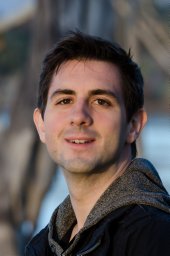 Raphael Egan合作论文数Department of Mechanical Engineering, University of California1Xi Chen (陈熹)合作论文数1
 Qi Dong合作论文数1
 Nan Yao合作论文数Imaging and Analysis Center, Princeton University;Princeton Materials Institute, Princeton University;School of Engineering and Applied Science, Princeton University1Mohsen S. Yeganeh合作论文数1
 Steffen Hardt合作论文数Institut für Nano- und Mikroprozesstechnik, Leibniz Universität Hannover1Andrew R. Konicek合作论文数Department of Physics, University of Wisconsin-Madison1
 Carsten Burstedde合作论文数Institute for Computational Engineering and Sciences;University of Texas at Austin;Institute for Computational Engineering and Sciences, University of Texas at Austin1
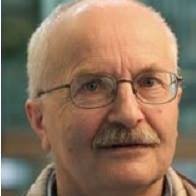 Jan Szymanski合作论文数1
 Arben Jusufi合作论文数1
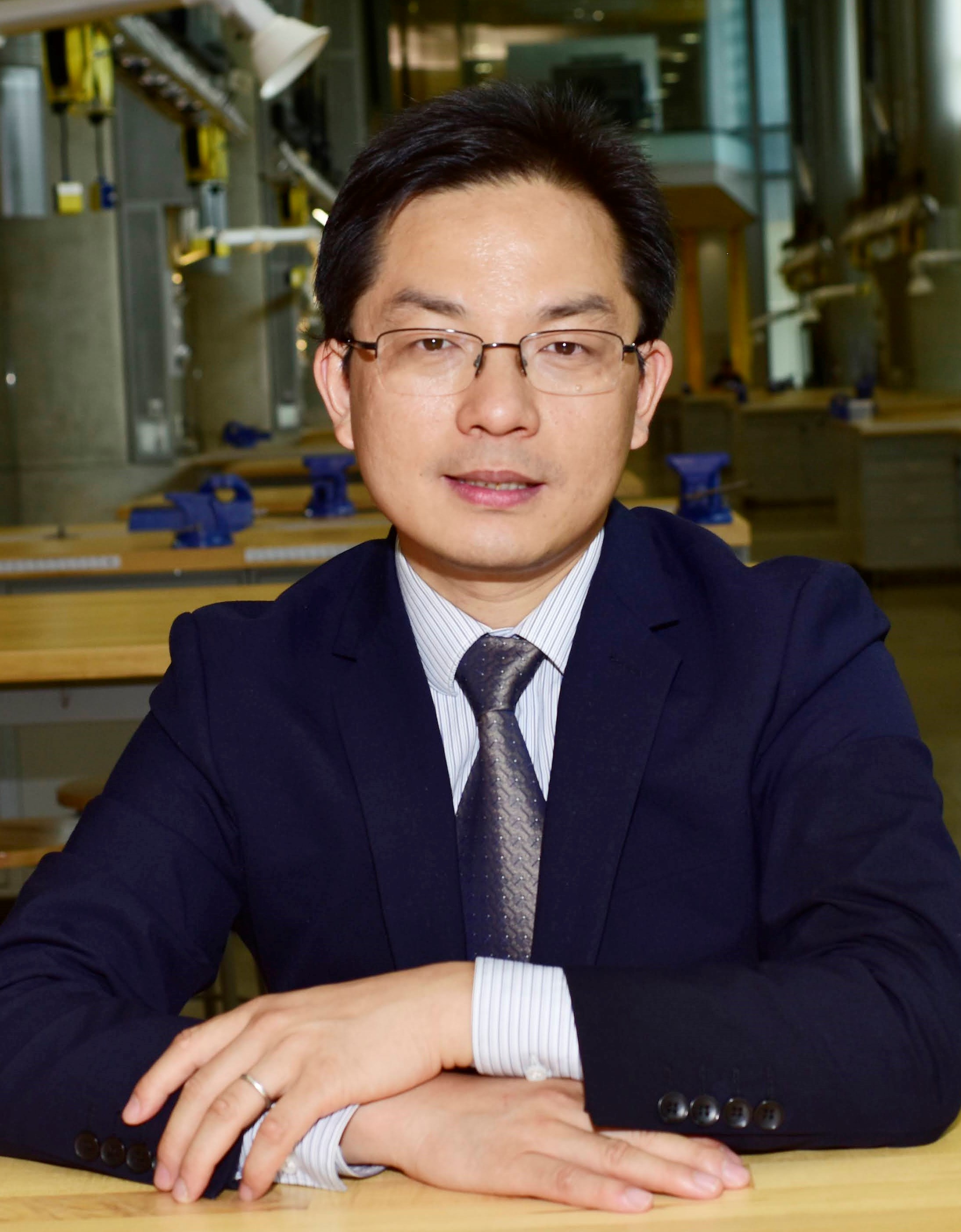 Liangbing Hu合作论文数Department of Materials Science and Engineering, A. James Clark School of Engineering, University of Maryland;Yale University1
 Guangming Cheng合作论文数Institute of Metal Research, Chinese Academy of Sciences1
 Tobin Isaac合作论文数School of Computational Science and Engineering, College of Computing, Georgia Institute of Technology1
 Juan Perez-Mercader合作论文数Department of Earth and Planetary Sciences, Harvard University;Rowland Institute, Harvard University1




