The German Society of Anesthesiology and Intensive Care Medicine (DGAI) commissioneda revision of the S2 guidelines on "positioning therapy for prophylaxis or therapy of pulmonary function disorders" from 2008. Because of the increasing clinical and scientificrelevance the guidelines were extended to include the issue of "early mobilization"and the following main topics are therefore included: use of positioning therapy and earlymobilization for prophylaxis and therapy of pulmonary function disorders, undesired effects and complications of positioning therapy and early mobilization as well as practical aspects of the use of positioning therapy and early mobilization. These guidelines are the result of a systematic literature search and the subsequent critical evaluation of the evidence with scientific methods. The methodological approach for the process of development of the guidelines followed the requirements of evidence-based medicine, as defined as the standard by the Association of the Scientific Medical Societies in Germany. Recently published articles after 2005 were examined with respect to positioning therapy and the recently accepted aspect of early mobilization incorporates all literature published up to June 2014.
Anamnesis: A 18-year-old woman suffered from severe multi-trauma in combination with acute brain injury (Glasgow Coma Scale Score = 4) after road accident. After prolonged rescue measures and emergency stabilisation the patient was transferred by helicopter to the emergency department of our clinic.Investigations: Cranial computertomography showed a severe general cerebral edema and a marked reduction in cerebral perfusion. Additionally, blunt abdominal injury, severe chest injury and multiple fractures were seen. Due to the severe and diffuse brain injury, a neurosurgical intervention was not possible. The patient was transferred to the intensive care unit.Therapy and course: Intensive supportive therapy was started (artificial ventilation, massive transfusion, volume replacement, insertion of a chest tube, renal replacement therapy). Control cerebral computertomography indicated a complete destruction of the cerebral parenchyma and infarction. Sedation was stopped. After 48-hours of intensive care therapy brain death was stated and the approval for organ donation was given by the next of kin. Heart and kidneys were explanted and transplanted successfully.Conclusion: Even under conditions of limited organ functions early identification and maximal supportive therapy may help to supply organ donation. Under certain condition, multiorgan failure may be reversible in possible organ donors.
ANAMNESIS:A 18-year-old woman suffered from severe multi-trauma in combination with acute brain injury (Glasgow Coma Scale Score = 4) after road accident. After prolonged rescue measures and emergency stabilisation the patient was transferred by helicopter to the emergency department of our clinic.INVESTIGATIONS:Cranial computer tomography showed a severe general cerebral edema and a marked reduction in cerebral perfusion. Additionally, blunt abdominal injury, severe chest injury and multiple fractures were seen. Due to the severe and diffuse brain injury, a neurosurgical intervention was not possible. The patient was transferred to the intensive care unit.THERAPY AND COURSE:Intensive supportive therapy was started (artificial ventilation, massive transfusion, volume replacement, insertion of a chest tube, renal replacement therapy). Control cerebral computer tomography indicated a complete destruction of the cerebral parenchyma and infarction. Sedation was stopped. After 48-hours of intensive care therapy brain death was stated and the approval for organ donation was given by the next of kin. Heart and kidneys were explanted and transplanted successfully.CONCLUSION:Even under conditions of limited organ functions early identification and maximal supportive therapy may help to supply organ donation. Under certain condition, multiorgan failure may be reversible in possible organ donors.
Thermal decomposition in a shallow bed of iron pentacarbonyl adsorbed on NaY-zeolite is achieved under vacuum already at 370 K with low heating rates. Decomposition under fast heating in inert gas and fluidized shallow bed conditions can be completed within a few minutes at ca. 500 K. Zeolite supported iron clusters obtained by these techniques are characterized via evaluation of the respective magnetic isotherms taken with a Foner magnetometer at 4.2 K. Low temperature/vacuum as well as high temperature/inert gas thermolysis gives iron cluster systems with at least 70 to 90 wt-% smaller than 1 nm.
The reaction of isobutene as well as butene-2 on reduced NiNaY zeolite was studied by the microcatalytic pulse technique. The induction periods for the product propene and C5 olefins were found to be always identical in the investigated temperature region (520–720 K), whereas deviating changes of yield with the number of pulses could be observed for all other products. The results favor a proton catalyzed disproportionation mechanism for C5 olefin formation rather than a paring reaction.
Abstract The adsorption isotherms of Fe(CO) 5 on NaY and HY zeolites obtained in McBain balances show micropore adsorption, the saturation at p/p 0 = 0.5 being 39 and 42% per dry wt, respectively. IR results indicate a restricted mobility of the encaged complex. Nevertheless it can thermally be desorbed to a great extend in vacuum. For the first time, well distinguishable decomposition phases of zeolite- adsorbed Fe(CO) 5 , are found by thermogravimetric analysis. These phases are associated with species bearing 2(4) and 1/4(1) CO ligands per Fe in the case of NaY(HY). New evidence is found for the intermediate Fe 3 (CO) 12 . The slow decomposition reaction in inert atmosphere is completed already between 70 and 90°C, providing an iron content of 10.5 ± 0.5 wt%.
 schmidt friedrich georg dr合作论文数2P. Jacobs合作论文数2Schlitt H J合作论文数2Aiman Obed合作论文数2M. Bischoff合作论文数1M. Max合作论文数1k gebhardt合作论文数1
 Monika Judith Nothacker合作论文数1Hermes Carsten合作论文数1Klaus Lewandowski合作论文数1Uwe Bernd Bruckner合作论文数1
 Peter J. Plath合作论文数1
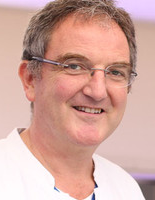 Steffen Weber-Carstens合作论文数Klinik für Anästhesiologie und Intensivmedizin, Charité – Universitätsmedizin Berlin;Department of Anesthesiology and Operative Intensive Care Medicine, Charité – Universitätsmedizin Berlin1
 Michael Tryba合作论文数1
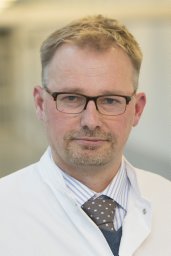 Hermann Wrigge合作论文数Department of Anesthesiology and Intensive Care Medicine, University Hospital Bonn1
 Dietrich Henzler合作论文数1G. Schulz-Ekloff合作论文数1




