Deposition of 1000 eV pure carbon ions onto Si(001) held at 800 degrees C led to direct nucleation of diamond crystallites, as proven by high-resolution transmission electron microscopy and electron energy loss spectroscopy. Molecular dynamic simulations show that diamond nucleation in the absence of hydrogen can occur by precipitation of diamond clusters in a dense amorphous carbon matrix generated by subplantation. Once the diamond clusters are formed, they can grow by thermal annealing consuming carbon atoms from the amorphous matrix. The results are applicable to other materials as well.
An overview about the characteristic structure of metal chalcogenide nanotubes is given in this paper. On the basis of atomistic calculations, parameters for a model are derived, describing the stability of tubular structures. Especially the interplay between the strain energy in the tubes and the energy due to unsaturated (dangling) bonds in layer stripes and the role of the van der Waals interaction in multilayer stripes and tubes are discussed. In agreement with experimental observations it is shown that nanotubes with a diameter larger than about 6 nm are more stable than stripes of a corresponding width. The van der Waals interaction stabilizes multilayered stripes, leads to multiwalled nanotubes, and can explain the nonexistence of single-wall metal chalcogenide nanotubes.
A model for diamond nucleation by energetic species (for example, bias-enhanced nucleation) is proposed. It involves spontaneous bulk nucleation of a diamond embryo cluster in a dense, amorphous carbon hydrogenated matrix; stabilization of the cluster by favorable boundary conditions of nucleation sites and hydrogen termination; and ion bombardment-induced growth through a preferential displacement mechanism. The model is substantiated by density functional tight-binding molecular dynamics simulations and an experimental study of the structure of bias-enhanced and ion beam-nucleated films. The model is also applicable to the nucleation of other materials by energetic species, such as cubic boron nitride.
We present the results of the first molecular dynamics simulations under realistic conditions pertinent to the incubation period of the bias enhanced nucleation process of diamond, based on the experimentally obtained average energies of CH, and C,H,, at different bias voltages. It was found that the energies measured at a bias where the nucleation enhancement sets in are critical for the subplantation of both types of ions. In the case of the typically applied bias voltages, acetylene plays the dominant role. The molecule breaks up and the average final penetration depth of the carbon atoms is -5 Angstrom. The bombardment causes a significant increase of the mass density and the sp(3) content in the range 4-8 Angstrom below the surface despite the elevated temperature. The depth obtained for the main structural changes agrees well with the width of the amorphous carbon layer observed at the end of the incubation period for epitaxial nucleation. (C) 2002 Elsevier Science B.V. All rights reserved.
Abstract A novel route is reported for the processing of nanocomposites consisting of multi-walled carbon nanotubes (MWNT) embedded in amorphous SiO2. SiO2 is used for the sintered composite matrix and SiOx either for the unsintered or for the interface region with the MWNT. The material has been characterized by high-resolution transmission electron microscopy, high-resolution electron energy loss spectroscopy and thermal gravimetric analysis. Based on our observations, theoretical simulations were performed which were based on tight binding calculations. Models are proposed which acount for a stable SiOx/tube interface.
In this paper we demonstrate, using density-functional tight-binding theory, that certain classes of silicon-based tubular nanostructures are stable and energetically viable. Specifically, we consider silicide and SiH nanotubes. The structures adopted by these nanotubes are very similar to those of previously reported phosphorus nanotubes. As in that case, the Si-based nanotubes have a semiconducting gap, which in contrast to carbon nanotubes is largely independent of the tube diameter and chirality. We further report on the mechanical properties of the Si-based nanotubes and suggest possible routes towards their synthesis.
New tetragonal phases of crystalline carbon nitride (CN) and their atomic structures have been identified using a self-consistent-charge density-functional tight-binding method. A tetragonal rocksalt structure provides theoretical support to recent experimental evidence for a stoichiometric CN phase with tetragonal symmetry. A body-centered tetragonal CN phase with 1:1 stoichiometry is predicted to be highly stable and of interesting atomic structure with complicated C-C and N-N dimerizations along the $c$ axis. The cubic-to-tetragonal transitions are carefully examined to understand the underlying mechanism.
Theoretical investigations (Density-Functional Tight-Binding-DFTB) about the functionalization of single wall carbon nanotubes (SWNTs) by fluorination are reported. It is shown that side-wall modified nanotubes may show a wide variety of electronic properties, but may open also possibilities for tailoring solubility and assembling properties of nanotubes.
Using density-functional tight-binding theory we demonstrate that silicon-based tubular nanostructures in the form of siloxenes are stable and energetically viable. The structures studied here have a semiconducting gap which is independent of the chirality, but showing an increase of the gap size with increasing diameter towards that of the corresponding siloxene layer. The Si-based nanotubes are less stiff than tubes of other chemical compositions so far studied, but having Young's modulus of a magnitude similar to the bulk modulus of diamond silicon.
The structure and electronic properties of different fluorinated forms of carbon are investigated using density-functional based tight-binding (DFTB) calculations. For graphite, the F interstitial disturbs conduction paths in the carbon plane. This explains the experimentally observed drop in conductivity during intercalation of graphite with F. In the case of tetrahedrally bonded amorphous carbon (ta-C), fluorination does not lead to improvement of the doping capabilities, in contrast to the amorphous hydrogenated silicon system. Moreover, F addition causes a degradation of the structure and there is no correlation between stress indicators on a microscopic scale and F content up to 11 at.%. Regarding the single-wall carbon nanotubes (SWNTs), sidewall functionalization yields tubes with a wide variety of electronic properties, ranging from insulators over semiconductors to metallic forms. A chemical derivative of such tubes opens perspectives for tailoring their electronic properties.
A novel route to nanocomposites consisting of multi-walled carbon nanotubes (MWNTs) embedded in amorphous SiOx is reported; the material has been characterised by high resolution transmission electron microscopy (HRTEM) and high resolution electron energy loss spectroscopy (HREELS); for the first time, and based on our observations, we propose theoretical models accounting for stable SiOx/tube interfaces using density functional based tight binding (DFTB).
Theoretical investigations (density-functional tight binding) about the changes of the properties of single-wall carbon nanotubes (SWNTs) by fluorination are reported. It is shown that a sidewall functionalization of SWNTs may lead to tubes with a wide variety of electronic properties, ranging from insulating over semiconducting to a metallic-like behavior. Therefore, a chemical derivatization of SWNTs may open possibilities for tailoring the electronic properties of nanotubes, providing nanoscale wires, capacitors, and solenoids.
We describe the present status of molecular-dynamics modelling of amorphous carbon materials and the atomic level insights, particulary for the electronic structure, that such investigations have provided. The main factors influencing chemical bonding will be discussed, namely the atomic density, the annealing time for structural relaxation and the incorporated hydrogen fraction. By comparing the π-orbital characteristics, such as HOMO-LUMO gaps and defect states, we define the conditions for high quality amorphous carbon materials that would be promising for both shallow p- and n-type doping. We investigate doping by substitution of nitrogen and boron into existing high-density tetrahedrally bonded amorphous carbon (ta-C) models. Additionally, we present first results on N-defects in ta-C which naturally develope during simulated annealing of a liquid carbon-nitrogen mixture at varying N concentration between 3 and 12%.
We discuss the properties of nitrogen impurities inside tetrahedral amorphous carbon, ta-C. In contrast to previous studies on this subject, we have incorporated the N atoms in the disordered structure during evolution of the amorphous system, which is studied by simulated annealing of a high-temperature carbon-nitrogen phase at various N concentrations between 3 and 11 at. %. We find two- and threefold coordinated nondoping N sites that become stabilized by saturation of lone pair orbitals. These configurations appear to be isoenergetic with other local geometries, which potentially could act as dopants. The latter are either ${\mathrm{sp}}^{2}$-bonded nitrogen atoms with two \ensuremath{\sigma}-single and one \ensuremath{\pi}-double bond to next-nearest neighbors or ${\mathrm{sp}}^{3}$-hybridized atoms, which develop four \ensuremath{\sigma}-single bonds. Doping through these configurations is too difficult to control and should have a low efficiency, since the donated extra electrons can easily migrate to remote \ensuremath{\pi}-bonded clusters in the carbon host matrix. Increasing dopant concentration promotes the formation and growth of such clusters which counteracts the desired doping behavior.
Density-functional based tight-binding molecular-dynamics and semiempirical molecular orbital calculations are applied to identify the 1.9 eV luminescence center in SiOx. The identification is made possible by an 890 cm−1 vibrational line that is correlated to the luminescence peak. Two possible models are examined: (i) Si6 rings in substituted siloxenes are known to show 1.8 eV emission. A model SiO crystal is built based upon Si rings interconnected by bridging O atoms. The structure is found to be stable up to 1000 K, but the correlated vibration is not observed. (ii) a-SiO is exposed to simulated annealing and the quenched amorphous structure is analysed for occurance of Si rings and the previously proposed non-bridging oxygen hole centers (NBOHCs). Localized stretching vibrations of the NBOHCs are found to be in the experimentally detected frequency range, thus explaining the correlation with the observed and calculated photoluminescence peak.
Crystalline and molecular silicon-oxygen compounds are investigated using a simplified LCAO-LDA scheme for the construction of a nonorthogonal tight-binding Hamiltonian within a two-centre approximation. The repulsive part of the potential is derived as a universal short-range pair potential from fitting the difference between the band structure energy of proper molecular systems and the corresponding SCF-LDA cohesive energy curves. The method allows, under consideration of the electronic states, molecular dynamics simulations of large finite as well as condensed systems. The applicability of this method to the important class of silicon oxides and related molecules is demonstrated. In particular, the properties of the equilibrium structure of α-quartz and several siloxane molecules are calculated and are found to agree well with both experiment and self-consistent calculations. To obtain such a good agreement, it is necessary to also include the unoccupied 3d states of Si into the LCAO basis of the wave functions.
We present a density-function-based non-orthogonal tight-binding scheme for molecular dynamics simulations of complex boron and carbon nitride systems. We describe the equilibrium configurations of various molecules, including their interaction with hydrogen, and determine the energetic stability of the known crystalline phases. As a first application we calculate the vibrational densities of states of the most stable phases. To address further theoretical studies of the formation of cubic boron nitride (c-BN) we investigate the reconstruction behavior of c-BN (100) and (111) surfaces. Furthermore, we verify the stability of the interface between hexagonal and cubic BN, in support of experimental findings, and discuss the implications for c-BN nulceation.
We present a density-functional based non-orthogonal tight-binding (DF-TB) Hamiltonian in application to silicon carbide. The Kohn-Sham orbitals of the system are represented by a linear combination of atomic orbital (LCAO) equation with respect to a minimal basis of the localized valence electron orbitals of all atoms. Within a two-centre approach all Hamiltonian and overlap matrix elements are derived in a parameter-free way Yin the construction of pseudo-atomic orbitals and potentials by self-consistent single-atom calculations using the local-density approximation (LDA). This is in favour of a tabulation of the corresponding Slater-Koster integrals vs. distance. Making use of a non-self-consistent solution of the Kohn-Sham equations for the many-atom structure and an adjustment of the universal short-range repulsive two-particle potentials with respect, to self-consistent held (SCF)-LDA results in the method becoming sufficiently accurate to obtain the total energy of all-scale silicon carbide structures and this is transferable and efficient for predictive molecular-dynamics simulations. We present results for the energetic stability and properties of various microclusters and molecules including interactions with hydrogen. We give proof of the stability of the solid-state modifications and calculate the vibrational density of states for the most stable zinc blende structure. In addressing further applications to surface properties, we discuss the (1 x 1) reconstruction of the (110) SiC surface.
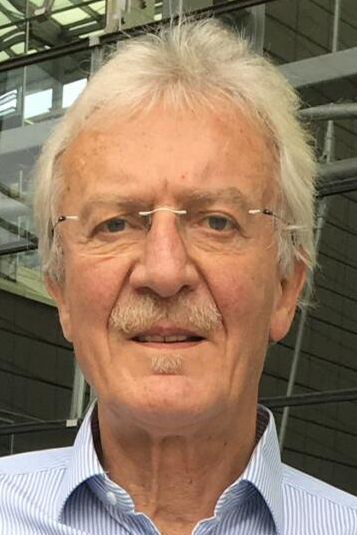 Frauenheim Thomas合作论文数Beijing Computational Science Research Center;Bremen Center for Computational Material Sciences, University of Bremen26
 Gotthard Seifert合作论文数Fakultät Chemie und Lebensmittelchemie, Technische Universität Dresden14
 Dirk V Porezag合作论文数8Gerd Jungnickel合作论文数8M. Suffert合作论文数5h koch合作论文数5U. Raich合作论文数5Alexandra Kreissl合作论文数5M. Chardalas合作论文数5Helmut Poth合作论文数5
 Dorothee Rohmann合作论文数5S. Dedoussis合作论文数5T. Von Egidy合作论文数5A. D. Hancock合作论文数5Th. Frauenheim合作论文数4A. Nilsson合作论文数4
 Andreas Wolf合作论文数Max-Planck-Institut fur Kernphysik4W. Kanert合作论文数4Peter Blaudeck合作论文数4F. J. Hartmann合作论文数4G. Schmidt合作论文数3L. Tauscher合作论文数3
 Mark R. Pederson合作论文数Department of Physics, The University of Texas at El Paso3J. Reidy合作论文数3H. Daniel合作论文数2c findeisen合作论文数2T. Seeger合作论文数2
 Z. Hajnal合作论文数Microsystems Laboratory, ELKH EK MFA2
 Peter Deák合作论文数Bremen Center for Computational Materials Science, University of Bremen2U. Stephan合作论文数2
 Ruiqin Zhang (張瑞勤)合作论文数Department of Physics, City University of Hong Kong;Department of Materials Science and Engineering, City University of Hong Kong2Hansjorg Plendl合作论文数2G. Büche合作论文数2W. Plötner合作论文数2Ursltla Steinike合作论文数2M. Haase合作论文数2Staffan Carius合作论文数2J. Widany合作论文数2
 Yeshayahu Lifshitz合作论文数Freiburg Institute for Advanced Studies, Albert-Ludwigs-Universitat Freiburg;Russell Berrie Nanotechnology Institute, Technion- Israel Insitute of Technology2Stef Charalambous合作论文数2D.-Chr. Uecker合作论文数2
 Nicole Grobert合作论文数Department of Materials, University of Oxford;Materials Corpus Christi College, University of Oxford;Bio-Nano Electronics Research Centre, Toyo University2
 Manfred Rühle合作论文数Max-Planck-Institut für Metallforschung2
 Mauricio Terrones合作论文数Department of Materials Science and Engineering, College of Earth and Mineral Sciences, Penn State University2t m burke合作论文数1L. Poteau合作论文数1andrew alan quong合作论文数1d w huxley合作论文数1




