Blue carbon ecosystems buffer climate change via sediment carbon capture, gaining elevation and mitigating sea level rise in the process. Carbon sequestration and accretion estimates share a common methodology, whereby dry masses are converted to volume using densities. However, our analysis of 23,302 tidal marsh sediment cohorts shows that these methods overestimate carbon contribution to long‐term sequestration and accretion because they incorporate both dissolved and mineral‐associated organic matter. Neither dissolved nor mineral‐associated organic matter contributes to sediment volume; thus, the volumetric budgets underlying estimates of organic matter contribution to predicted marsh resilience are inflated by up to 380% in the top 25‐cm. This “volumeless” organic matter in surficial, uncompacted sediments is 36% greater than deeper sediments, suggesting that some carbon thought to be sequestered is lost and does not contribute to long‐term storage. Combined, we demonstrate that traditional methods overestimate organic matter contributions to blue carbon stocks and accretion.
Determining whether both hemispheres warmed synchronously during the last deglaciation is important for identifying mechanisms for ice-age terminations. Here, we show that intermediate waters in the southwestern Pacific Ocean warmed simultaneously with some of the upper ocean waters in the Atlantic during Heinrich Stadial 1. In both regions, proxy records from benthic foraminifera show warming to interglacial temperatures beginning ~18,000 years ago and concluding by ~15,000 years ago. Our observations require a mechanism capable of producing rapid warming in these nearly antipodal ocean basins. We propose that some of the oceanic warming signal co-registered between these sites can be explained by a shift of the Southern Hemisphere Westerly Winds, which increased the temperature of intermediate water masses produced in the Southern Ocean. Taken together with results from Earth-system modeling experiments, we suggest that the Southern Hemisphere climate system played a role in regulating interhemispheric oceanic heat transport at millennial timescales. Intermediate waters in the southwestern Pacific Ocean warmed simultaneously with upper ocean waters in the Atlantic during Heinrich Stadial 1, possibly due to a southward shift of the Southern Hemisphere Westerly Winds, according to analyses of benthic foraminifera proxy records
Ocean radiocarbon ( 14 C) is a proxy for air-sea exchange, vertical and horizontal mixing, and water mass identification. Here, we present five pre- to post-bomb coral Δ 14 C records from West Flower Garden Bank and Santiaguillo reefs in the Gulf of Mexico, Boca de Medio, and Isla Tortuga near the Cariaco Basin north of Venezuela. To assess basin-wide Δ 14 C variability, we compiled the Atlantic Ocean reef-building surface coral Δ 14 C records (24 corals and 28 data sets in total) with these new records. Cumulatively, the Δ 14 C records, on their independent age models, reveal the onset of post-bomb Δ 14 C trends in 1958 ±1 to 2 years. A general decrease in maximum Δ 14 C values occurs with decreasing latitude reflecting the balance between air-sea gas exchange and surface water residence time, vertical mixing, and horizontal advection. A slightly larger atmospheric imprint in the northern sites and relatively greater vertical mixing and/or advection of low- 14 C waters influence the southern Caribbean and eastern Atlantic sites. The eastern Atlantic sites, due to upwelling, have the lowest post-bomb Δ 14 C values. Equatorial currents from the eastern Atlantic transport low Δ 14 C water towards the western South Atlantic and southern Caribbean sites. Decadal Δ 14 C averages for the pre-bomb interval (1750–1949) for the low latitude western Atlantic are relatively constant within analytical (3–5‰) and chronological uncertainties (∼1–2 years) due to mixing and air-sea exchange. The compiled Δ 14 C records provide updated regional marine Δ 14 C values for marine reservoir corrections.
Decadal-scale climate variability drives important fluctuations in nutrient availability and productivity in highly productive eastern boundary current upwelling ecosystems, but the relatively brief duration of most monitoring efforts limits understanding of these dynamics. When applied to high-resolution paleoarchives such as deep-sea proteinaceous coral skeletons, stable carbon and nitrogen isotope (delta C-13 and delta N-15) analysis can provide useful new insight into biogeochemical and ecological changes beyond the instrumental record. However, interpretation of bulk delta C-13 and delta N-15 records is often complicated by multiple possible drivers of variability. Here, we addressed these challenges by applying both bulk and compound-specific amino acid delta N-15 and delta C-13 analysis to two bamboo coral specimens from Sur Ridge on the central California margin, generating sub-decadal resolution records spanning c. 1810 to present. Our overarching goals were to first test amino acid delta C-13 and delta N-15 proxies in proteinaceous deep-sea bamboo coral archives, and second to investigate links between climate forcing and biogeochemical responses on the California margin over the Anthropocene. Together, comparison of deep-sea coral amino acid trophic position results to local sediment traps and endmember mixing analysis indicate that bamboo coral feed directly on exported sinking particles, which are comprised primarily of zooplankton fecal pellets (>70 %). This new evidence contradicts some past work based on bulk delta N-15 analysis alone and validates bamboo coral as archives of euphotic zone processes. Amino acid delta N-15 proxies also reveal that trophic position, not baseline delta N-15 of nitrate or phytoplankton production, is the primary driver of bulk delta N-15 variability in these coral records from a highly-productive coastal upwelling environment. Our approximately 200-year reconstruction shows overall long-term ecosystem stability since the pre-industrial period, overlain by major multidecadal-scale fluctuations in bamboo coral trophic position and delta C-13 of primary production. Relatively high (low) trophic position and low (high) delta C-13 values of primary production occurred during negative (positive) phases of the Pacific Decadal Oscillation over the 20th century. Counter to expectations, these results suggest lower primary production likely occurred during past periods of high nitrate availability in our study region. Modern satellite chlorophyll-a observations corroborate this finding. We hypothesize that offshore transport and subduction of nutrients and phytoplankton and/or precipitation-mediated changes in iron availability may link climate variability and planktic ecosystem dynamics in this region.
Lowland Central America, a biodiversity hotspot in the northern Neotropics, is a region where the climate is influenced by the location and expansion-contraction of the Intertropical Convergence Zone (ITCZ) on seasonal to millennial timescales. Paleo-records from the Caribbean Sea and the eastern equatorial and subtropical Pacific Ocean illustrate the response of regional precipitation to fluctuations in global temperature, driven by glacialinterglacial cyclicity over the past 500 kyr. Here, we present a paleoclimate and paleoenvironment record from Lake Peten Itza, lowland Guatemala, which spans the last 413 kyr. Sediment in the lake recorded lacustrine and terrestrial ecosystem responses to large-scale climate variability. Precipitation patterns during MIS11-9 ( 413-304 ka BP) align with the latitudinal position of the ITCZ, with superimposed effects from the strength of the Caribbean Low-Level Jet (CLLJ). A sediment hiatus, likely attributable to mass removal processes in the lake's shallower areas, spans the period from MIS8 (starting at 304 ka BP) to the end of MIS6 (at 149 ka BP). MIS6 was characterized by humid conditions, perhaps ascribable to a more southerly extension of cold fronts and intensification of the CLLJ. During MIS5, pronounced fluctuations among all sediment variables, accompanied by an abrupt decline in precipitation, may correspond with cold events inferred from North Atlantic Ocean sediment cores. Although discontinuous, the Lake Peten Itza sediment record provides a window into late Quaternary climate and environmental change in lowland Central America.
We have reconstructed baseline δ15N and δ13C of export production at Kingman Reef in the Central Equatorial Pacific (CEP) at sub-decadal resolution, nearly continuously over the last 2000 years. The changes in δ15N reflects the strength of the North Equatorial Counter Current (NECC) relative to the South Equatorial Current (SEC), and to a lesser extent, the North Equatorial Current (NEC). Seasonal to multi-decadal variation in the strength of these currents, through the redistribution of heat, have global climate impacts and influence marine and terrestrial ecosystems. We use modern El Niño-La Nina dynamics and the Tropical Pacific Decadal Variability (TPDV) pattern, which is defined in the CEP, as a framework for analyzing the isotopic data. The CEP δ15N and δ13C records exhibit multi-decadal (50–60 year) variability consistent with TPDV. A large multi-centennial feature in the CEP δ15N data, within age-model uncertainties, is consistent with one of the prolonged dry-pluvial sequences in the American west at the end of the Medieval Climate Anomaly, where low TPDV is correlated with drier conditions. This unique record shows that the strength of the NECC, as reflected in baseline δ15N and δ13C, has at quasi-predictable intervals throughout the late Holocene, toggled the phytoplankton community between prokaryotes and picoplankton versus eukaryotes.
Abstract Photosynthesis in the surface ocean converts atmospheric CO2 into organic particles, with the fraction sinking to depth representing a major part of the ocean's biological pump. Although sinking particles are known to be altered by attached‐bacteria during transit, most prior organic geochemical data indicated only minor replacement of plankton‐derived particles by bacterial material. We exploit bacteria‐specific biomarkers (d‐amino acids) in a multi‐year sediment trap in the Pacific Ocean (1,200 m) and suggest a different view. Major d‐amino acids were consistently measured at abundance demonstrating widespread accumulation of bacterial material in sinking particles. Bacterial detritus was estimated to account for up to 19% of particulate organic carbon and up to 36% of particulate nitrogen, much higher than cell count‐based values. The bacterial relative contribution increased with decreasing export production. Our results indicate that bacterial material constitutes an underappreciated component of the biological pump, a role expected to rise as the ocean warms.
Decadal and multidecadal changes in the meridional overturning circulation may originate from either the subpolar North Atlantic or the Southern Hemisphere. New records of carbon and oxygen isotopes from an eastern Martinique Island (Lesser Antilles) coral reveal irregular, decadal, double-step events of low ∆ 14 C and enhanced vertical mixing, high δ 18 O and high δ 13 C values starting in 1885. Comparison of the new and published ∆ 14 C records indicates that the last event (1956–1969) coincides with a widespread, double-step ∆ 14 C low of South Atlantic origin from 32°N to 18°S, associated with a major slowdown of the Caribbean Current transport between 1963 and 1969. This event and the past Martinique ∆ 14 C lows are attributed to pulses of northward advection of low ∆ 14 C Sub-Antarctic Mode Waters into the tropical Atlantic. They are coeval with changes of the tropical freshwater budget and likely driven by meridional overturning circulation changes since ~1880.
Lake Petén Itzá (Guatemala) possesses one of the longest lacustrine sediment records in the northern Neotropics, which enabled study of paleoclimate variability in the region during the last ∼400 000 years. We used geochemical (Ti, Ca/(Ti+Fe) and Mn/Fe) and mineralogical (carbonates, gypsum, quartz, clay) data from sediment core PI-2 to infer past changes in runoff, lake evaporation, organic matter sources and redox conditions in the water column, caused by hydrological changes in the northern Neotropics during Marine Isotope Stages (MISs) 3–2. From 59 to 39 cal ka BP climate conditions were relatively wet, and the lake was marked by higher primary productivity and anoxic bottom waters. This wet environment was interrupted for two periods of possible low water level at 52 and 46 cal ka BP, when our data suggest higher evaporation, high terrestrial organic matter input and persistent oxic conditions. Between 39 and 23 cal ka BP, evaporation and input of terrestrial organic matter increased considerably, lake level declined, and lake bottom waters generally became oxic. These conditions reversed during the Last Glacial Maximum (23.5–18.0 cal ka BP), when runoff and lake productivity increased, and rising lake level caused bottom waters to again become anoxic. Comparison of our hydrologic proxy data with sea surface temperature anomalies between the eastern Pacific and the Caribbean suggests that changes in the intensity of the Caribbean Low-Level Jet (CLLJ) may have influenced long-term changes in runoff during MISs 3–2. Higher intensity of the CLLJ during the onset of MIS 3 and the LGM might have led to greater runoff into the lake, whereas the MIS 3–2 transition experienced a weaker CLLJ and consequently less runoff. A refined, high-resolution age–depth model for the PI-2 sediment core enabled us to identify millennial-scale Greenland interstadials (GIs) 14–2, Greenland stadials (GSs) 14–2 and Heinrich stadials (HSs) 5–1. In general, HSs and GSs were characterized by drier conditions. In contrast to GSs and HSs, GIs were characterized by greater runoff and overall wetter conditions, with the most pronounced GI peaks between 40 and 30 cal ka BP. Whereas GSs 9, 8, 7 and 6 began with abrupt increases in evaporation and ended with gradual increases in humidity, GSs 11 and 10 showed reversed patterns. The Lake Petén Itzá paleohydrology record, along with other regional paleoclimate records, led us to conclude that shifts in the position of the Intertropical Convergence Zone (ITCZ) altered moisture delivery to the lake on millennial timescales. During GSs and HSs, high evaporation from Petén Itzá (dry climate conditions) was associated with a more southerly position of the ITCZ, whereas wetter GIs prevailed during a more northerly ITCZ position. Although abrupt millennial-scale shifts in ITCZ and hydroclimate between GSs/HSs and GIs can be linked to instabilities in the Atlantic Meridional Overturning Circulation (AMOC), longer-term changes were additionally influenced by changes in atmospheric convection linked to modulations of the CLLJ in response to ΔSST between the equatorial Pacific and tropical Atlantic.
Abstract Since the 1700 CE Cascadia Subduction Zone earthquake and associated coseismic subsidence and tsunami, vegetated intertidal habitats have reestablished across Pacific Northwest estuaries, yet timescales and mechanisms of recovery are uncertain. We investigated the timescale of salt marsh reestablishment in Netarts Bay, Oregon following the 1700 CE earthquake using a combination of excess 210Pb, 14C, stratigraphic constraints, and Bayesian age‐depth modeling. Coseismic subsidence lowered the area to low/mid marsh, which persisted for 200 years before transition to modern high marsh. The modern high marsh now appears in dynamic equilibrium with modern sea level rise. In addition to serving as a methodological proof of concept for dating the past 300 years, these results provide insight into intertidal morphodynamic response to large perturbations along tectonically active margins.
ABSTRACT The importance of studying the radiocarbon content of dissolved inorganic carbon (DI14C) in the oceans has been recognized for decades. Starting with the GEOSECS program in the 1970s, 14C sampling has been a part of most global survey programs. Early results were used to study air-sea gas exchange while the more recent results are critical for helping calibrate ocean general circulation models used to study the effects of climate change. Here we summarize the major programs and discuss some of the important insights the results are starting to provide.
Paleoproxy records in deep-sea proteinaceous coral skeletons can reconstruct past ocean conditions on centennial to millennial time scales. Commonly recovered subfossil specimens could potentially extend these archives through the Holocene. However, protein matrix stability and integrity of stable isotope proxies over multi-millennial timescales in such specimens have never been examined. Here we compare amino acid (AA) composition together with bulk and AA compound-specific carbon (delta C-13) and nitrogen (delta N-15) isotopes in live-collected and subfossil (similar to 9.6-11.6 kyrs BP) Kulamanamana haumeaae deep-sea coral specimens from the central Pacific to understand the effects of long-duration benthic oxic exposure on primary coral chemistry. We find large coupled shifts in bulk delta N-15 (similar to 7%) and delta C-13 (similar to 2%) in the outermost portion (0-10 mm) of the subfossil coral, coincident with extensive alteration of the protein matrix. Microstructural changes in skeletal texture coincide with higher C/N ratios (+0.8) and isotope-based amino acid degradation parameters (e.g. Sigma V >= 3), indicating extensive degradation of seawater-exposed gorgonin. However, interior gorgonin (>10 mm) retained amino acid molecular compositions (with exception of major Glycine loss) and bulk and amino acid-specific isotopic values that were similar to live-collected specimens. These results indicate that compound-specific isotope analysis of amino acids can reconstruct paleo-oceanographic biogeochemical and ecosystem information in subfossil corals beyond a clear diagenetic horizon, which is easily identifiable from an evaluation of C/N ratios together with the Sigma V degradation proxy. (C) 2022 The Authors. Published by Elsevier Ltd. This is an open access article under the CC BY license (http://creativecommons.org/licenses/by/4.0/).
ABSTRACT Many organisms living in the ocean create tests, shells, or related physical structures of calcium carbonate (CaCO 3 ). As this is most often from dissolved inorganic carbon, using organisms that create calcium carbonate structures for climate research and dating purposes requires knowledge of the origin of carbon that is incorporated. Here, we give a short overview of research on marine carbonates over the last 60 years, especially that based on shell and coral samples. Both shells and corals exhibit annual growth patterns, like trees, and therefore offer possibilities for yearly resolution of past radiocarbon ( 14 C) variations. We concentrate on their evolution in 14 C dating including difficulties in determining reservoir ages as well as the possibilities they offer for archaeological dating, oceanography, calibration purposes as well as environmental research in general.
Abstract. We inferred hydrological changes in Lake Petén Itzá (Guatemala) during Marine Isotope Stages (MIS) 3-2 using geochemical (Ti, Ca/Ti+Al+Fe ratio and Mn/Fe) and mineralogical (carbonates, gypsum, quartz, clay) data from sediment core PI-2 to reconstruct changes in runoff, lake evaporation, organic matter sources and potential oxic/anoxic conditions associated with variations in water-level during the last ~59 cal ka BP. Early MIS3 (57.0–52.5 cal ka BP) was dominated by relatively wet conditions, higher lake primary productivity and anoxic waters, which persisted into the subsequent interval (52.5–39.0 cal ka BP), except for two periods of possible low water-level at 52 and 46 cal ka BP when our data suggest higher evaporation, high terrestrial organic matter input and persistent oxic conditions. Towards the end of MIS3 and start of MIS2 (39.0–23.0 cal ka BP), lake evaporation increased considerably, as did inputs of terrestrial organic matter, and waters became more oxic as water-levels dropped and the site moved from the hypolimnion to the epilimnion. These conditions reversed during the Last Glacial Maximum (23.0–18.0 cal ka BP) when runoff and lake productivity increased and waters again became anoxic as a result of rising water-levels. Refining the age-depth model for the Site PI-2 also allowed the correlation to Greenland Interstadials (GI14-2), Greenland Stadial (GS14-2) and Heinrich Stadials (HS5-1). HS and GS were characterized by increases in Ca/Ti+Al+Fe ratios and gypsum content generally indicative of drier conditions. GS13, 9 and 5 showed the driest conditions associated with the contemporaneous establishment of HS5-3, respectively. In contrast, GI show high Ti values which suggests relatively greater runoff and overall wetter conditions compared with GS and HS, with the most marked GI peaks between 40 and 30 cal ka BP. This runoff variability is in accord with shifts in the average position of the Intertropical Convergence Zone and strength of the Atlantic Meridional Oceanic Circulation during the Late Pleistocene.
Abstract. Climate change will alter the balance between frozen and thawedconditions in Arctic systems. Increased temperatures will make the extensivenorthern permafrost carbon stock vulnerable to decomposition andtranslocation. Production, cycling, and transport of dissolved organiccarbon (DOC) are crucial processes for high-latitude ecosystem carbon lossthat result in considerable export off the Arctic landscape. To identifywhere and under what conditions permafrost DOC is mobilized in an Arcticheadwater catchment, we measured radiocarbon (14C) of DOC and assessed DOC composition with ultraviolet–visible spectroscopy (UV–Vis) of surfacewaters and shallow and deep subsurface porewaters from 17 drainages in theBarrow Environmental Observatory in Alaska. Samples were collected in Julyand September 2013 to assess changes in age and chemistry of DOC over time. DOC age was highly variable ranging from modern (19 ‰ Δ14C) to approximately 7000 BP (−583 ‰ Δ14C). DOC age increased with depth, over the summer as theactive layer deepened, and with increasing drainage size. DOC qualityindicators reflected a DOC source rich in high molecular-weight and aromaticcompounds, characteristics consistent with vegetation-derived organic matterthat had undergone little microbial processing, throughout the summer and aweak relationship with DOC age. In deep porewaters, DOC age was alsocorrelated with several biogeochemical indicators (including dissolvedmethane concentration, δ13C, and the apparent fractionationfactor), suggesting a coupling between carbon and redox biogeochemistryinfluencing methane production. In the drained thawed lake basins includedin this study, DOC concentrations and contributions of vegetation-derivedorganic matter declined with increasing basin age. The weak relationshipbetween DOC age and chemistry and consistency in DOC chemical indicatorsover the summer suggest a high lability of old DOC released by thawingpermafrost.
We have revisited the well‐trod VM28‐122 core retrieved from the deep Colombian Basin, which includes sediments that reflect modern Upper North Atlantic Deep Water and extends through the last deglaciation into the last glacial period when the site was bathed in Glacial North Atlantic Intermediate Water. Here, we leverage the nearby Cariaco Basin's surface water radiocarbon reconstruction (reservoir age, and Δ R ) on the IntCal20 timescale to recast the period of the last deglaciation with a newly constrained age model. Based on the revised age model, we observe that the multimillennial decrease in benthic δ 13 C and B/Ca (which record δ 13 C of dissolved inorganic carbon and Δ[CO 3 −2 ], respectively) began at 18,100 ± 240 (95% CI) calibrated years BP, synchronous with Termination 1, as identified by changes in the Antarctic Ice Sheet composite and by the onset of rapid glacier recession in the Southern Hemisphere (Denton et al., 2010, https://doi.org/10.1126/science.1184119 ; Denton et al., 2021, https://10.1016/j.quascirev.2020.106771 ). The beginning of the decrease in benthic δ 18 O is concurrent with the changes in carbon chemistry or at most, a few hundred years later. It is no later than 17,700 ± 300 (95% CI) yrs BP in our record, at the putative start of Heinrich Stadial 1. With sufficient data density (more than 2–3 control points per kyr) and an independent record of past surface water radiocarbon variations, it is possible to achieve late glacial and deglacial chronologies with fidelities similar to those of ice cores. Doing so in more oceanographic locations should shed light more broadly on the mechanisms instrumental to abrupt climate change.
Recent work using compound-specific stable isotopes of amino acids (CSI-AA) in proteinaceous deep-sea corals opens a new realm of high-fidelity reconstruction for biogeochemical and ecological changes in the ocean. However, underlying these CSI-AA paleoceanographic applications are a series of fundamental assumptions, which hold first that baseline-proxy AA isotope values fixed at the base of food webs represent integrated δ13C and δ15N values of primary production, and second they are unaltered during subsequent export and incorporation from particles into corals. We explored long-term δ13C and δ15N CSI-AA data on a sediment trap time series together with contemporaneous, geographically close deep-sea bamboo corals (Isidella sp.) in the California margin, directly testing these assumptions for the first time. Our data show that isotope values of essential (δ13CEAA) and source AAs (δ15NPhe) in sinking particles quantitatively track bulk δ13C and δ15N values of export production. These CSI-AA baseline proxies varied independently of carbon flux, trophic position (TPCSI-AA) and microbial alteration, suggesting that they were well preserved in the sinking particles consumed by corals. Paired comparisons between sinking particles and corals revealed minor elevations of δ13CEAA (by ∼2‰) and δ15NPhe (by ∼1‰) in available coral specimens. We hypothesize that the difference in δ13CEAA is due to the geographic offset in δ13C values of primary production expected between the (more offshore) sediment trap site and (more onshore) coral specimens, whereas the δ15NPhe offset is likely related to expected minor trophic fractionation. Using empirical models derived from the sediment trap time series, we demonstrate for the first time that CSI-AA in proteinaceous deep-sea corals can reconstruct known bulk δ15N values of export production, source nitrogen δ15N values, and exported TPCSI-AA values with very good fidelity. Together, these findings represent a major advance in our understanding of AA isotope behavior in modern and paleoarchives, and can be used to underpin the rapidly evolving use of CSI-AA-based tools in multiple paleoceanographic studies and archives.
In a zonally averaged and simplified sense, there exists an upper oceanic Hadley Cell in the Pacific: during the winter season subduction occurs in the subtropics and extra-tropics and this water ventilates the tropical thermocline where it upwells and returns to the subducting regions through surface flow (e.g., Wyrtki & Kilonsky, 1984). Significant interior pycnocline exchange occurs between the subtropics and tropical thermocline (Johnson & McPhaden, 1999). Building on the observational evidence of Deser et al., (1996), it has been hypothesized that temperature anomalies originating at the sea-surface in the subtropics can be propagated via this subsurface pathway and interact with the equatorial thermocline, changing the character and sensitivity of the El NiñoSouthern Oscillation (ENSO) (Gu & Philander, 1997; Zhang et al., 1998). Tritium and He tracer data indicate that the ventilation time-scale of the tropical thermocline is on the order of decades (Fine et al., 2001; Jenkins, 1996). It is therefore a logical extension to hypothesize that the intergyre exchange between the extra-tropical subduction zones and the tropical thermocline could determine the decadal-scale climate character of the tropical Pacific (Gu & Philander, 1997), as well as other important processes.
The composition and cycling dynamics of marine dissolved organic carbon (DOC) have received increased interest in recent years; however, little research has focused on the refractory, low molecular weight (LMW) component that makes up the majority of this massive C pool. We measured stable isotopic (delta C-13), radioisotopic (Delta C-14), and compositional (C/N,C-13 solid-state NMR) properties of separately isolated high molecular weight (HMW) and LMW DOC fractions collected using a coupled ultrafiltration and solid phase extraction approach from throughout the water column in the North Central Pacific and Central North Atlantic. The selective isolation of LMW DOC material allowed the first investigation of the composition and cycling of a previously elusive fraction of the DOC pool. The structural composition of the LMW DOC material was homogeneous throughout the water column and closely matched carboxylic-rich alicyclic material that has been proposed as a major component of the marine refractory DOC pool. Examination of offsets in the measured parameters between the deep waters of the two basins provides the first direct assessment of changes in the properties of this material with aging and utilization during ocean circulation. While our direct measurements largely confirm hypotheses regarding the relative recalcitrance of HMW and LMW DOC, we also demonstrate a number of novel observations regarding the removal and addition of DOC during global ocean circulation, including additions of fresh carbohydrate-like HMW DOC to the deep ocean and large-scale removal of both semilabile HMW and recalcitrant LMW DOC.
 John R. Southon合作论文数School of Physical Sciences, University of California, Irvine32
 Robert B. Dunbar合作论文数Department of Earth System Science, Doerr School of Sustainability, Stanford University26Matthew D. McCarthy合作论文数24
 Heather Graven合作论文数Department of Physics, Faculty of Natural Sciences, Imperial College London22
 Ron W Reimer合作论文数University Belfast21
 Paula Reimer合作论文数School of Natural and Built Environment, Queen's University Belfast21
 Elisabeth L. Sikes合作论文数AGSO20J. Warren Beck合作论文数Department of Physics;University of Arizona;Department of Physics, University of Arizona20
 Ralph Keeling合作论文数Geosciences Research Division, Scripps Institution of Oceanography, University of California, San Diego19Michael Friedrich合作论文数19
 David A. Hodell合作论文数Godwin Laboratory for Palaeoclimate Research, Department of Earth Sciences, University of Cambridge19
 Edouard Bard合作论文数College de France;CEREGE19
 E. Brendan Roark合作论文数Department of Geography;University of California-Berkeley;Department of Geography, University of California-Berkeley19Bernd Kromer合作论文数Klaus Tschira Laboratory of Scientific Dating18
 Tessa M. Hill合作论文数Department of Earth and Planetary Sciences, University of California, Davis18
 Scott J. Lehman合作论文数Laboratory for AMS Radiocarbon Preparation and Research, Institute of Arctic and Alpine Research, University of Colorado Boulder;Center for the Geochemical Analysis of the Global Environment, Institute of Arctic and Alpine Research, University of Colorado Boulder17
 Paul Blackwell合作论文数School of Mathematics and Statistics, Faculty of Science, The University of Sheffield17
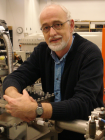 Hans Plicht合作论文数Leiden University;Isotope Research — Energy and Sustainability Research Institute Gron, Faculty of Science and Engineering, University of Groningen16
 John B. Miller合作论文数Cooperative Institute for Research in Environmental Science, University of Colorado Boulder;Global Monitoring Laboratory, National Oceanic & Atmospheric Administration16
 Jason H. Curtis合作论文数Department of Geology, University of Florida16
 Caitlin E. Buck合作论文数Department of Probability and Statistics;University of Sheffield;Department of Probability and Statistics, University of Sheffield16
 Christopher Bronk Ramsey合作论文数School of Archaeology, University of Oxford;Merton College, University of Oxford16
 Alan G. Hogg合作论文数Radiocarbon Dating Laboratory, University of Waikato16
 Owen Sherwood合作论文数Department of Earth and Environmental Sciences, Faculty of Science, Dalhousie University;Institute of Arctic and Alpine Research, University of Colorado, Boulder16
 Konrad A. Hughen合作论文数Woods Hole Oceanographic Institution;Department of Marine Chemistry & Geochemistry;Department of Marine Chemistry & Geochemistry, Woods Hole Oceanographic Institution16Brian W. Lafranchi合作论文数Department of Chemistry, University of Vermont16
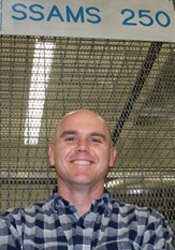 Stewart J. Fallon合作论文数Center for Accelerator Mass Spectrometry, Lawrence Livermore National Laboratory16
 Mark Brenner合作论文数Department of Geological Sciences, University of Florida14
 Sturt Manning合作论文数Department of Classics, The College of Arts Sciences, Cornell University;Cornell Tree Ring Laboratory, Cornell University14Karen L. Steelman合作论文数Department of Chemistry, Texas A&M University14
 Richard Lawrence Edwards (艾思本)合作论文数Department of Geology and Geophysics,University of Minnesota13
 Daniel Schrag合作论文数Department of Earth and Planetary Sciences, Faculty of Arts and Sciences, Harvard University;John A. Paulson School of Engineering and Applied Sciences, Harvard University;Harvard Kennedy School, Harvard University;Belfer Center for Science and International Affairs, Harvard University13Constanze E Weyhenmeyer合作论文数12Richard G. Fairbanks合作论文数Columbia University in the City of New York12
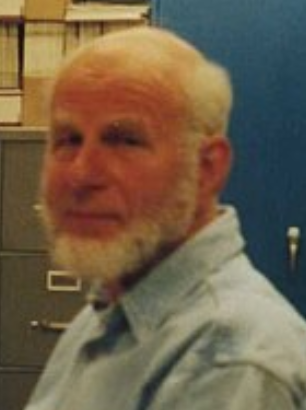 Minze Stuiver合作论文数Quaternary Research Center, University of Washington12
 Howie Spero合作论文数Department of Earth and Planetary Sciences, College of Letters and Sciences, University of California Davis;Coastal and Marine Sciences Institute, Department of Evolution and Ecology, College of Biological Sciences, University of California Davis12
 Philip Cameron-Smith合作论文数12
 George Burr合作论文数11
 Jocelyn Turnbull合作论文数GNS Science;University of Colorado at Boulder11
 Karis Jensen Mcfarlane合作论文数Department of Forest Engineering, Oregon State University11Gerry McCormac合作论文数10Thomas a Brown合作论文数10
 Daniel Ariztegui合作论文数10
 Dorothy M Peteet合作论文数Goddard Institute for Space Studies, NASA;Paleoecology Division, New Core Lab, Lamont Doherty Earth Observatory of Columbia;Department of Earth and Environmental Sciences, Columbia University10
 Marc Fischer合作论文数Atmospheric Science Department, Energy Analysis & Environmental Impacts Division, Lawrence Berkeley National Laboratory;Air Quality Research Center, University of California, Davis10
 Arlyn Andrews合作论文数Global Monitoring Laboratory, National Oceanic and Atmospheric Administration10
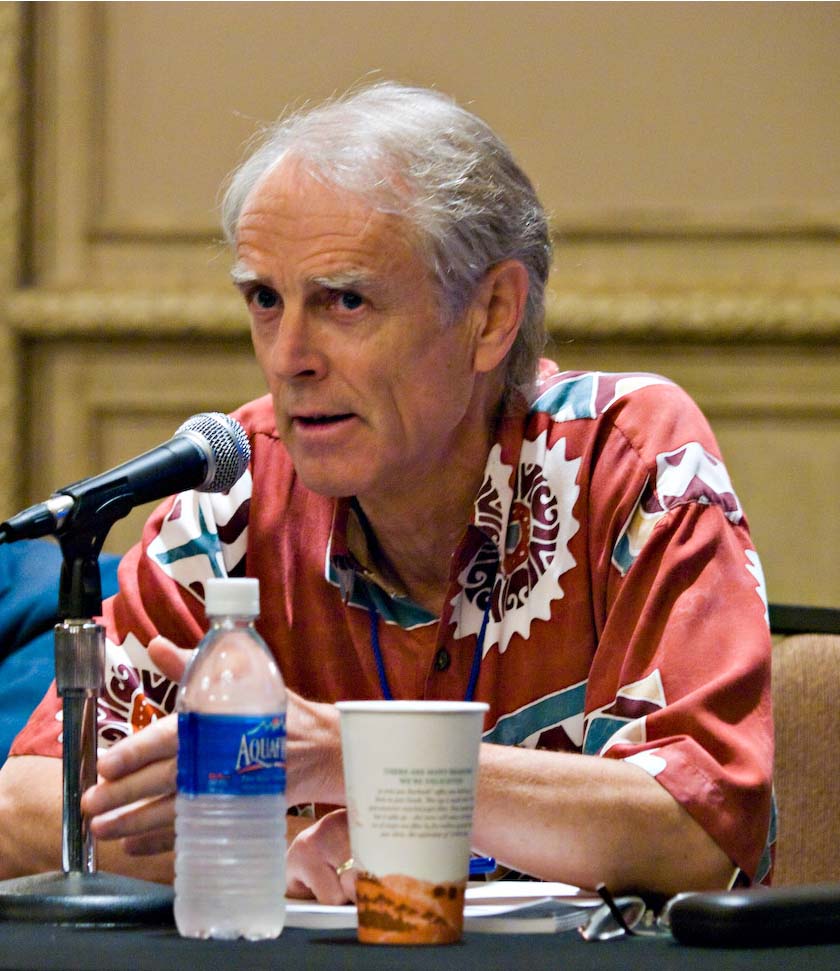 Pieter Tans合作论文数Global Monitoring Laboratory, National Oceanic & Atmospheric Administration;Institute of Arctic and Alpine Research, University of Colorado Boulder9Flavio S. Anselmetti合作论文数Geological Institute9
 Brett D. Walker合作论文数9




