Satellite gravimetry missions have been providing a global measure of Earth's mass transport for more than 20 years. This provides insights into the solid Earth, cryosphere, ocean dynamics and hydrology. Planned NASA and ESA missions will continue this observation well into the 2030s. They are likely to be based on the technology currently used on the GRACE-FO mission, with some further developments, e.g. in laser ranging technology. A higher temporal and spatial resolution of these gravity field products, currently limited to a few hundred km for 1 cm equivalent water height, is required to meet future user need.One of the limitations is related to instrumental effects, of which the accelerometer is a major aspect. Quantum-based accelerometers are a potential improvement for future missions, but the required technology readiness level (TRL) for key technologies currently precludes deployment. A European pathfinder mission is planned to increase the TRL and demonstrate the technology in space.Under the Horizon Europe funding programme, technology development and maturation are being promoted and "the [Quantum Space Gravimetry] Pathfinder mission shall be launched within this decade, paving the way for the deployment of an EU [Quantum Space Gravimetry] mission within the next decade". Within this framework, the Cold Atom Rubidium Interferometer in Orbit for Quantum Accelerometer - Pathfinder Mission Preparation (CARIOQA-PMP) project is the first step in the design and preparation of the Pathfinder mission. It identifies user needs, prepares simulation tools and develops an engineering model of the quantum accelerometer.This presentation will give an overview of the scientific activities within CARIOQA-PMP, including the link between hardware design and specification, as well as the planning for the Pathfinder mission and a future gravimetry mission. The focus will be on the elements and workflow of the simulation of the quantum sensor on a satellite platform, combining the efforts of the physics and geodesy partners.CARIOQA-PMP is a joint European project, including experts in satellite instrument development (Airbus, Exail SAS, TELETEL, LEONARDO), quantum sensing (LUH, SYRTE, LP2N, LCAR, ONERA, FORTH), space geodesy, Earth sciences and users of gravity field data (LUH, TUM, POLIMI, DTU), as well as in impact maximisation and assessment (PRAXI Network/FORTH, G.A.C. Group), coordinated by the French and German space agencies CNES and DLR under CNES lead. Funded by the European Union
We present the results of an optical link to a corner cube on board a tethered balloon at 300 m altitude including a Tip/Tilt compensation for the balloon tracking. Our experiment measures the carrier phase of a 1542 nm laser, which is the useful signal for frequency comparison of distant clocks. An active phase noise compensation of the carrier is implemented, demonstrating a fractional frequency stability of 8x10-19 after 16 s averaging, which slightly (factor ~3) improves on best previous links via an airborne platform. This state-of-the-art result is obtained with a transportable set-up that enables a fast field deployment.
A strong potential gain for space applications is expected from the anticipated performances of inertial sensors based on cold atom interferometry (CAI) that measure the acceleration of freely falling independent atoms by manipulating them with laser light.In this context, CNES and its partners initiated a phase 0 study, called CARIOQA, in order to develop a Quantum Pathfinder Mission unlocking key features of atom interferometry for space and paving the way for future ambitious space missions utilizing this technology.As a cornerstone for the implementation of quantum sensors in space, the CARIOQA phase 0 aimed at defining the Quantum Pathfinder Mission's scenario and associated performance objectives.To comply with these objectives, the payload architecture has been designed to achieve long interrogation time and active rotation compensation on a BEC-based atom interferometer.A study of the satellite architecture, including all the subsystems, has been conducted.Several technical solutions for propulsion and attitude control have been investigated in order to guarantee optimal operating conditions (limitation of micro-vibrations, maximization of measurement time).A preliminary design of the satellite platform was performed.
We study the effects of rotations on a cold atom accelerometer onboard a Nadir pointing satellite. A simulation of the satellite attitude combined with a calculation of the phase of the cold atom interferometer allow us to evaluate the noise and bias induced by rotations. In particular, we evaluate the effects associated to the active compensation of the rotation due to Nadir pointing. This study was realized in the context of the preliminary study phase of the CARIOQA Quantum Pathfinder Mission.
We summarise the discussions at a virtual Community Workshop on Cold Atoms in Space concerning the status of cold atom technologies, the prospective scientific and societal opportunities offered by their deployment in space, and the developments needed before cold atoms could be operated in space. The cold atom technologies discussed include atomic clocks, quantum gravimeters and accelerometers, and atom interferometers. Prospective applications include metrology, geodesy and measurement of terrestrial mass change due to, e.g., climate change, and fundamental science experiments such as tests of the equivalence principle, searches for dark matter, measurements of gravitational waves and tests of quantum mechanics. We review the current status of cold atom technologies and outline the requirements for their space qualification, including the development paths and the corresponding technical milestones, and identifying possible pathfinder missions to pave the way for missions to exploit the full potential of cold atoms in space. Finally, we present a first draft of a possible road-map for achieving these goals, that we propose for discussion by the interested cold atom, Earth Observation, fundamental physics and other prospective scientific user communities, together with the European Space Agency (ESA) and national space and research funding agencies.
Atomic interference experiments test the universality of the coupling between matter-energy and gravity at different spacetime points, thus being in principle able to probe possible violations of the universality of the gravitational redshift (UGR). In this contribution, we introduce a UGR violation model and then discuss UGR tests performed by atomic clocks and atom interferometers on the same footing. We present a large class of atom-interferometric geometries which are sensitive to violations of UGR.
We report on an ongoing development of a compact and transportable iodine frequency stabilized laser setup, based on compact and fibered Telecom components with a high technological readiness level (TRL). This laser system is being planned as a compact and easily transportable ultra-stable frequency reference for ground tests of the payload of LISA mission (Laser Interferometer Space Antenna) as part of the SYRTE laboratory contribution to the French activities carried out by a consortium of several partners lead by the French Space Agency (CNES) for assembly-integration and tests (AIVT) of the payload of LISA. This frequency reference will match the LISA requirements in terms of both residual frequency and intensity noise. The target residual frequency noise for this stabilized laser is below the nominal requirement for LISA, which is currently 30 Hz/ Hz. Thus, we propose to provide a tandem of 1064 nm laser sources phase-locked to an iodine stabilized Telecom laser operating at 1596 nm. The frequency gap between the telecom domain and the green range is bridged using a frequency tripling process based on two cascaded PPLN crystals, fully fibered. The compact design of the whole setup will make it easily transportable to different sites and could be readily used for ground tests of the LISA payload.
The emergence of quantum technologies, including cold atom-based accelerometers, offers an opportunity to improve the performances of space geodesy missions. In this context, CNES initiated an assessment study called GRICE (GRadiométrie à Interféromètres quantiques Corrélés pour l’Espace) in order to evaluate the contribution of cold atom technologies to space geodesy and to the end users of geodetic data. In this paper, we present mission scenario for gravity field mapping based on a long baseline gradiometer. The mission is based on a constellation of two satellites, flying at an altitude of 373 km, each equipped with a cold atom accelerometer with a sensitivity of 6 × 10^-10 m s^-2 τ ^-1/2 . A laser link measures the distance between the two satellites and couples these two instruments in order to produce a correlated differential acceleration measurement. The main parameters, determining the performances of the payload, have been investigated. We carried out a general study of satellite architecture and simulations of the mission performances in terms of restitution of the gravity field. The simulations show that this concept would give its best performance in terms of monthly gravity fields recovery under 1000 km resolution. In the resolution band between 1000 and 222 km, the improvement of the GRICE gradient approach over the traditional range-rate approach is globally in the order of 10 to 25
Timescale comparison between optical atomic clocks over ground-to-space and terrestrial free-space laser links will have enormous benefits for fundamental and applied sciences. However, atmospheric turbulence creates phase noise and beam wander that degrade the measurement precision. Here we report on phase-stabilized optical frequency transfer over a 265 m horizontal point-to-point free-space link between optical terminals with active tip-tilt mirrors to suppress beam wander, in a compact, human-portable set-up. A phase-stabilized 715 m underground optical fiber link between the two terminals is used to measure the performance of the free-space link. The active optical terminals enable continuous, cycle-slip free, coherent transmission over periods longer than an hour. In this work, we achieve residual instabilities of 2.7 × 10⁻⁶ rad2 Hz-1 at 1 Hz in phase, and 1.6 × 10⁻¹⁹ at 40 s of integration in fractional frequency; this performance surpasses the best optical atomic clocks, ensuring clock-limited frequency comparison over turbulent free-space links.
The flight model of the laser-cooled cesium atomic clock, PHARAO, has been qualified for operation in space. The clock has passed the vibration, thermal and electromagnetic compatibility tests required to fly in low Earth orbit (400 km). On the ground, the clock realized a typical frequency stability of 3.0 x 10(-13)tau(-1/2)with an estimated accuracy of 2.3 x 10(-15). Frequency comparisons with the SYRTE primary frequency standard FOM agree within their stated accuracies. Because PHARAO is optimized for the longer interaction times possible in microgravity, we expect a frequency stability of 1.1 x 10(-13)tau(-1/2)and a frequency accuracy of 1.1 x 10(-16)for operation in space. The clock has been delivered to the European Space Agency for the assembly of the ACES payload and is scheduled to be launched into space in 2021.
We present a high performance, low cost, simple setup for long term temperature stabilization of a 2 m optical fiber ring cavity for laser frequency stabilization applications thanks to birefringence of the fiber and its dependence on temperature. The fiber temperature is controlled, at millisecond time scale by LED (light emissive diode) illumination. This allows reaching a temperature stability of 0.1 μK at 100 seconds for the 2 m long PM ring fiber cavity. This is a reduction of the fiber temperature by a factor of 2×10⁵ (from 20 mK to 0.1 μK) and 5×10⁵ (from 300 mK to 0.6 μK), at 100 seconds and at 105 seconds, respectively, with respect to the ambient temperature variations.
The emergence of quantum technologies, including cold atom based accelerometers, offers an opportunity to improve the performances of space geodesy missions. In this context, CNES initiated an assessment study called GRICE (GRadiometrie a Interferometres quantiques Correles pour l'Espace) in order to evaluate the impact of cold atom technologies to space geodesy and to the end users of the geodetic data. In this paper, we present a specific mission scenario for gravity field mapping based on a twin satellite concept. The mission uses a constellation of two satellites each equipped with a cold atom accelerometer. A laser link measures the distance between the two satellites and couples these two instruments in order to produce a correlated differential acceleration measurement. The main parameters, determining the performances of the payload, have been investigated. In addition, a preliminary study of mass, consumption and volume has been conducted to ensure the onboard feasibility of these instruments. A general study of the satellite architecture, including all the subsystems, has also been realized and is presented here.
We report on a compact optical frequency standard (OFS) based on a Telecom laser diode operating at similar to 1542 nm, frequency stabilized to a narrow iodine transition located in the green range of the visible domain (similar to 514 nm), after a highly efficient frequency tripling process. We use two cascaded waveguide Lithium Niobate nonlinear crystals for the third harmonic generation process (THG), resulting in a harmonic power of 300 mW in the green range (@ 3 omega) using 800 mW of infrared power (@ omega). This result corresponds to an optical conversion efficiency P-3 omega/P-omega > 36 % which is -to our knowledge- the best result ever reported for a third harmonic process in continuous wave regime ( CW). This process uses only 20 W of total consumption power, which can be drastically reduced, knowing that less than 10% of that green power level is needed for the iodine Doppler free spectroscopy, and consequently for the frequency stabilization purpose. We have already demonstrated a frequency stability of 2.9 x10(-14) tau(-1/2) conferred to a laser diode operating at similar to 1542 nm, using the a(1) hyperfine component of the R34 [44-0] located at similar to 514 nm. This corresponds to an amplitude spectral density of the residual frequency fluctuations < 10 Hz/root Hz.We plan to extend this approach to set up a new OFS by using a narrow linewidth fiber-laser emitting at similar to 1597 nm, which will be used for the phase-locking of a 1064 nm laser. Thus, this OFS, compact and mainly fibered, will perform the same role as that of a rigid optical cavity, widely used to stabilize 1064 nm lasers, involved in various terrestrial applications or space missions. The compact design of the whole setup will make it easily transportable to different sites and could be readily used as an ultra-stable frequency reference.
We have achieved distributed feedback laser diode line narrowing by simultaneously acting on the diode current via a feed-back loop and on an external electrooptic phase modulator in feed-forward actuator. This configuration turns out to be very efficient in reaching large bandwidth in the phase correction: up to 15 MHz with commercial laser control units. About 98% of the laser power undergoes narrowing. The full width at half maximum of the narrowed optical spectrum is of less than 4 kHz. This configuration appears to be very convenient as the delay in the feed-forward control electronics is easily compensated for by a 20 m optical fiber roll.
We lead the development of an optical frequency standard (OFS) operating in the C-band of Telecom domain, with demonstrated residual frequency instability of 4.8 × 10 −14 τ −1/2 and a minimum value of 6 × 10 −15 from 50 s to 100 s. The frequency stabilization is fulfilled using Doppler free spectroscopy of 127 I 2 iodine vapor, associated to modulation transfer spectroscopy technique. The iodine hyperfine line used to stabilize the 1542 nm laser diode exhibits a quality factor at 514 nm (Q ∼10 9 ). An efficient third harmonic generation (THG) process is developed to bridge the frequency gap between IR and visible ranges of the optical domain. The efficiency of the THG operation is P 3w /P w > 36%. A more compact-fully fibered OFS is under development, using frequency modulation technique associated to third harmonic of the iodine saturation line. This approach could meet the needs of various space projects requiring high precision length measurement between independent spacecrafts, or stabilization of the long distance optical links.
We report on a Telecom laser diode (LD) frequency stabilization to a narrow iodine hyperfine line in the green range, after frequency tripling process using fibered nonlinear waveguide PPLN crystals. We have generated up to 300 mW optical power in the green range (~514 nm) from 800 mW of infrared power (~1542 nm), corresponding to a nonlinear conversion efficiency h = P3?/P? ~ 36%. Less than 10 mW of the generated green power are used for Doppler-free spectroscopy of 127I2 molecular iodine, and –therefore- for the frequency stabilization purpose. The frequency tripling optical setup is very compact (< 5 l), fully fibered, and could operate over the full C-band of the Telecom range (1530 nm – 1565 nm). Several thousands of hyperfine iodine lines may thus be interrogated in the 510 nm – 521 nm range. We build up an optical bench used at first in free space configuration, using the well-known modulation transfer spectroscopy technique (MTS), in order to test the potential of this new frequency standard based on the couple “1.5 ?m laser / iodine molecule”. We have already demonstrated a preliminary frequency stability of 4.8 x 10⁻¹⁴ ? -1/2 with a minimum value of 6 x 10-15 reached after 50 s of integration time, conferred to a laser diode operating at 1542.1 nm. We focus now our efforts to expand the frequency stability to a longer integration time in order to meet requirements of many space experiments, such earth gravity missions, inters satellites links or space to ground communications. Furthermore, we investigate the potential of a new approach based on frequency modulation technique (FM), associated to a 3rd harmonic detection of iodine lines to increase the compactness of the optical setup.
We report the main characteristics and performances of the first - to our knowledge - prototype of an ultra-stable cavity designed and produced by industry with the aim of space missions. Finite element modeling was performed in order to minimize thermal and vibration sensitivities. The system was designed to be transportable, acceleration tolerant (up to several g) and temperature range compatible (ΔT ~ 40 K). The optical axis of the 100 mm long cavity is vertical. The spacer is made from Ultra-Low Expansion (ULE) glass and mirrors substrate from fused silica to reduce the thermal noise limit to 4×10-16. The axial vibration sensitivity was evaluated at (4 ± 0.5) ×10-11 /(ms-2), while the transverse one is <; 1×10-11 /(ms-2). The fractional frequency instability is ~ 1×10-15 from 0.1 to few seconds.
PHARAO (Projet d'Horloge Atomique par Refroidissement d'Atomes en Orbite), which is being developed by the French space agency CNES, is the first primary frequency standard specially designed for operation in space. PHARAO is the main instrument of the ESA mission ACES (Atomic Clock Ensemble in Space) [1]. ACES payload will be installed on-board the International Space Station to perform fundamental physics experiments. Last year [2], some results on two flight model (FM) sub-systems have been presented: Microwave Source performances and Cesium Tube operating as a cold atom clock by using the other engineering model sub-systems. All the FM sub-systems have now passed the qualification process and the whole FM of the cold cesium clock, PHARAO, has been assembled and will undergo extensive tests during the first semester of 2014. The results on the cold atoms manipulation and the metrological evaluation are presented.
Nous présentons la nouvelle expérience de gyromètre à atomes froids du SYRTE mise en oeuvre depuis 2009.Cette expérience utilise une configuration en fontaine atomique et un interféromètre atomique à quatre impulsions lumineuses pouvant permettre d'atteindre une aire Sagnac d'au moins 11 cm 2 .Nous avons démontré une stabilité de 3 nrad•s -1 après 1 000 s de temps d'intégration, ce qui représente l'état de l'art pour un gyromètre à atomes froids.Nous décrivons ici les éléments essentiels de l'expérience et les principales perspectives d'amélioration prévues à court et moyen terme.
 Arnaud Landragin合作论文数SYRTE14
 Franck Pereira dos Santos合作论文数SYRTE12
 A. Gauguet合作论文数Department of Physics;Durham University;Department of Physics, Durham University10
 Baptiste Battelier合作论文数7
 Jacky Estublier合作论文数French National Centre for Scientific Research;Grenoble University7
 Philippe Bouyer合作论文数Institute of Physics, University of Amsterdam;Eindhoven University of Technology;Institut d'optique Graduate School;MuQuans;Laboratoire Photonique, Numérique et Nanosciences6
 Antonio Cicchetti合作论文数Mälardalen University6
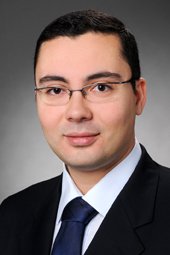 Naceur Gaaloul合作论文数Institut für Quantenoptik, Fakultät für Mathematik und Physik, Leibniz University of Hanover6
 Didier Massonnet合作论文数Centre National d’Etudes Spatiales, CNES6
 Federico Ciccozzi合作论文数Mälardalen University6
 Fallet Clément合作论文数5
 Ernst Maria Rasel合作论文数Institute for Quantum Optics, Faculty of Mathematics and Physics, Leibniz Universität Hannover5
 Peter Wolf合作论文数5Quentin Beaufils合作论文数4R. Le Goff合作论文数4W. Chaibi合作论文数4Grosjean Olivier合作论文数4Faure B合作论文数4
 Christian Schubert合作论文数Instituto de F ´ õsica y Matematicas;Universidad Michoacana de San Nicolas de Hidalgo;Instituto de F ´ õsica y Matematicas, Universidad Michoacana de San Nicolas de Hidalgo4R. Le Targat合作论文数4
 Séverine Sentilles合作论文数Mälardalen University4
 Carlos L. Garrido Alzar合作论文数LCFIO4David Holleville合作论文数4Michel Lours合作论文数4
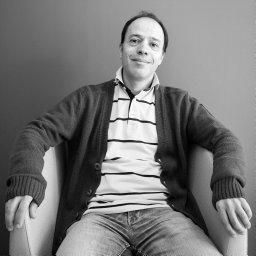 German Vega合作论文数France / Grenoble-INP, France / UPMF-Grenoble24S. Bize合作论文数3f x esnault合作论文数3
 O. Acef合作论文数3ph laurent合作论文数3
 Francoisxavier Esnault合作论文数3Morić Igor合作论文数3
 Philippe Lalanda合作论文数University Grenoble-Alpes3
 Giorgio Santarelli合作论文数Laboratoire Photonique, Numerique et Nanosciences, CNRS3Fabrice Buffe合作论文数3
 Etienne Borde合作论文数THALES Land and Joint Systems, France and TelecomParisTech3
 Benjamin Canuel合作论文数European Gravitational Observatory;Laboratoire Photonique, Numérique et Nanosciences3
 Jan Carlson合作论文数Mälardalen University3Vivian Bernard合作论文数2S. Bourgogne合作论文数2b argence合作论文数2
 Charles Philippe合作论文数2Baptiste Allard合作论文数2D-H. Phung合作论文数2Ph. Bouyer合作论文数2J-P Coulon合作论文数2Jm Lemoine合作论文数2serge beraud合作论文数2
 Matthieu Meunier合作论文数Cailabs2
 Christine Guerlin合作论文数2




