prisoner's dilemma (PD) portrays the fundamental challenge of social interaction and ranks among the most-important models in the social sciences. Over the past two decades, the study of the PD has experienced a resurgence due to the introduction of concepts and techniques from statistical physics. In this Perspective, we recount the history of the substantive narrative underlying the PD to physicists who may not have encountered it yet and we show -on the narrative's 75th anniversary-that the original PD narrative hinted at a solution to the very problem of cooperation that it sought to describe. These hints at a solution to the PD foreshadowed a fascinating stream of contemporary research, thus further establishing the richness of the PD's narrative: 75 years after its inaugural articulation, the PD's substantive narrative continues to impart new wisdom. perspective Copyright c 2026 EPLA All rights, including for text and data mining, AI training, and similar technologies, are reserved.
Altruism underlies cooperative behaviours that facilitate social complexity. In late 2022 and early 2023, we tested whether particular large language models-then in widespread use-generated completions that simulated altruism when prompted with text inputs similar to those used in 'dictator game' experiments measuring human altruism. Here we report that one model in our initial study set-OpenAI's text-davinci-003-consistently generated completions that simulated payoff maximization in a non-social decision task yet simulated altruism in dictator games. Comparable completions appeared when we replicated our experiments, altered prompt phrasing, varied model parameters, altered currencies described in the prompt and studied a subsequent model, GPT-4. Furthermore, application of explainable artificial intelligence techniques showed that results changed little when instructing the system to ignore past research on the dictator or ultimatum games but changed noticeably when instructing the system to focus on the needs of particular participants in a simulated social encounter.
This Viewpoint discusses the managerial and organizational challenges that could result from the use of artificial intelligence systems in psychiatric research and care.
Theoretical models suggest a relationship between cooperation and the prime numbers. In environments where agents play multiple one-shot prisoner’s dilemma games per generation, cooperators evolve to fixation more frequently when cooperating on a cyclical schedule with a prime-number period length. This finding parrots classic predator–prey models showing selection for prime-number prey life cycles. Here, I report an empirical test of the former models using previously published data concerning humans playing one-shot public goods games across multiple time points—i.e. an analogue to multiple one-shot prisoner’s dilemma games. I find very modest evidence of cyclicality at prime-numbered time intervals, though results indicate rough agreement between theoretical predictions and observed rates of full cooperation across time points. Analyses of individual decisions find increased contributions to the public good at prime-number time points and separate placebo tests indicate a 4-in-1000 chance of spuriously estimating this effect. However, when exploratory analyses exclude low-value prime-numbered time points, the magnitude of the estimated effect decreases and the hypothesis of no effect cannot be rejected, implying that low-value, prime-number time points drive estimates, contrary to theoretical model predictions. These findings cast doubt on the hypothesis of increased cooperation at prime-number time points—at least among humans playing public goods games.
Will advanced artificial intelligence (AI) language models exhibit trust toward humans? Gauging an AI model's trust in humans is challenging because-absent costs for dishonesty-models might respond falsely about trusting humans. Accordingly, we devise a method for incentivizing machine decisions without altering an AI model's underlying algorithms or goal orientation and we employ the method in trust games between an AI model from OpenAI and a human experimenter (namely, author TJ). We find that the AI model exhibits behavior consistent with trust in humans at higher rates when facing actual incentives than when making hypothetical decisions-a finding that is robust to prompt phrasing and the method of game play. Furthermore, trust decisions appear unrelated to the magnitude of stakes and additional experiments indicate that they do not reflect a non-social preference for uncertainty.
AI developers and policy makers need to devise methods of commercial model deprecation that balance developers’ reasonable interest in restricting access to outdated models with the value of preserving technological developments and enabling ongoing scientific research across versions.
Ulam’s spiral reveals patterns in the prime numbers by presenting positive integers in a right-angled whorl. The classic spatial prisoner’s dilemma (PD) reveals pathways to cooperation by presenting a model of agents interacting on a grid. This paper brings these tools together via a deterministic spatial PD model that distributes cooperators at the prime-numbered locations of Ulam’s spiral. The model focuses on a narrow boundary game variant of the PD for ease of comparison with early studies of the spatial PD. Despite constituting an initially small portion of the population, cooperators arranged in Ulam’s spiral always grow to dominance when (i) the payoff to free-riding is less than or equal to 8/6 (≈1.33) times the payoff to mutual cooperation and (ii) grid size equals or exceeds 23 × 23. As in any spatial PD model, particular formations of cooperators spur this growth and here these formations draw attention to rare configurations in Ulam’s spiral.
Members of various species engage in altruism--i.e. accepting personal costs to benefit others. Here we present an incentivized experiment to test for altruistic behavior among AI agents consisting of large language models developed by the private company OpenAI. Using real incentives for AI agents that take the form of tokens used to purchase their services, we first examine whether AI agents maximize their payoffs in a non-social decision task in which they select their payoff from a given range. We then place AI agents in a series of dictator games in which they can share resources with a recipient--either another AI agent, the human experimenter, or an anonymous charity, depending on the experimental condition. Here we find that only the most-sophisticated AI agent in the study maximizes its payoffs more often than not in the non-social decision task (it does so in 92% of all trials), and this AI agent also exhibits the most-generous altruistic behavior in the dictator game, resembling humans' rates of sharing with other humans in the game. The agent's altruistic behaviors, moreover, vary by recipient: the AI agent shared substantially less of the endowment with the human experimenter or an anonymous charity than with other AI agents. Our findings provide evidence of behavior consistent with self-interest and altruism in an AI agent. Moreover, our study also offers a novel method for tracking the development of such behaviors in future AI agents.
The development of methods to identify prime numbers spans centuries and includes models of physical and biological systems that spot primes. This paper adds to the latter research genre by reporting a prisoner's dilemma model that identifies prime numbers greater than 2. Albeit containing unconventional features and arguable assumptions, the model nonetheless confirms a previously hypothesized connection between prime numbers and the cross-disciplinary puzzle of how cooperation evolved. In a companion paper (part II), the features and assumptions of the analytic model reported here are explored in a finite-population, computational model.
A prominent line of cultural evolutionary theory hypothesizes that religiously inspired prosocial behavior enhances the fecundity of pious groups, causing them to outcompete non-religious communities and spread their prosocial values. We present evidence concerning contemporary workplace safety, in the United States, that unexpectedly tested implications of this cultural evolutionary hypothesis. Avoiding workplace injury requires cooperation and injury influences fitness, thus cultural evolutionary theory would anticipate that religious communities should exhibit fewer workplace injuries. Indeed, we find that the proportion of a community adhering to a religion correlates negatively with rates of workplace injury in its private-sector establishments. This correlation emerges primarily when secular workplace safety authorities are not prominent, thus echoing evidence that religiously inspired prosocial behavior mainly occurs absent "earthly" sanctioning authorities. Furthermore, the percent of religiously affiliated individuals in a community correlates with safety investments, suggesting that workplace injury reductions in religious communities result from individually costly, group-benefitting cooperation.
•The paper reports a model of a finite population of agents constrained to strategies that alternate between activity and inactivity (a.k.a. temporal partitioning) in a social environment where multiple one-shot prisoner's dilemma games occur across discrete, intra-generational time points.•Numerical simulation of the model indicates that cooperators reach fixation with far greater frequency when using schedules with prime-number period lengths.•Simulation results dovetail with the findings of a recent analytic model that confirmed a longstanding, hypothesized link between the prime numbers and the evolution of cooperation.•The findings suggest that schedules with prime-number period lengths constitute a new mechanism for the evolution of cooperation.•Viewed in concert with the findings of past-predator prey models, the results raise the possibility that cyclical behavior with prime-number period lengths might serve as an adaptive solution to a range of challenges that lifeforms face.
Emotions coordinate our behavior and physiological states during survival-salient events and pleasurable interactions. Even though we are often consciously aware of our current emotional state, such as anger or happiness, the mechanisms giving ...Emotions are often felt in the body, and somatosensory feedback has been proposed to trigger conscious emotional experiences. Here we reveal maps of bodily sensations associated with different emotions using a unique topographical self-report method. In ...
We study a spatial, one-shot prisoner’s dilemma (PD) model in which selection operates on both an organism’s behavioral strategy (cooperate or defect) and its decision of when to implement that strategy, which we depict as an organism’s choice of one point in time, out of a set of discrete time slots, at which to carry out its PD strategy. Results indicate selection for cooperators across various time slots and parameter settings, including parameter settings in which cooperation would not evolve in an exclusively spatial model—as in work investigating exogenously imposed temporal networks. Moreover, in the presence of time slots, cooperators’ portion of the population grows even under different combinations of spatial structure, transition rules, and update dynamics, though rates of cooperator fixation decline under pairwise comparison and synchronous updating. These findings indicate that, under certain evolutionary processes, merely existing in time and space promotes the evolution of cooperation.
Researchers have identified numerous mechanisms that make cooperation in the prisoner's dilemma possible, yet recent research has proposed what ranks among the most basic of mechanisms: the presence of time. When organisms in spatial models can interact at multiple points in time within a generation, cooperation can evolve in a wider range of settings than in spatial models in which interaction occurs at a single moment. Here we further explore this mechanism via an analytic model that studies the effect of time on cooperation when no spatial dimension is present. The model shows that the mere presence of two or more points in time at which social interaction can occur creates an opportunity for mutant cooperators to invade a well-mixed population of defectors playing the one-shot prisoner's dilemma under the replicator dynamics. These invasions lead to a nonequilbrium cycling of strategies in which cooperation consistently reemerges at alternating time points.
Over the last few decades, social scientists have experienced the causal revolution, the replication crisis, and, now in just a matter of months, another epoch: the era of coronavirus disease 2019 (COVID-19) research. According to Google Scholar, approximately 142,000 COVID-19–related articles have appeared since 2020. That amounts to about 389 articles per day, or, roughly, one article every 4 minutes. Many of these articles are in the social sciences—that is, concerned not directly with medical outcomes but rather with COVID-19’s impact on social, behavioral, and economic outcomes. Thus far, most of this research has had a direct focus on managing COVID-19, yet a growing number of articles enlist the pandemic to study basic questions about financial investment, education, politics, learning, crime, and other aspects of social life. As COVID19 research in the social sciences moves toward basic science, we anticipate that it will increasingly intersect with the recent scholarly trends in the social sciences: the “causal revolution,” which shifted social scientists toward research designs that could establish causal relations between study variables instead of mere correlations, and the “replication crisis,” which focused
To reduce transmission of COVID-19, public officials must help their communities resolve a series of novel social dilemmas. For instance, when social distancing becomes widespread, the likelihood of COVID-19 exposure decreases, thus tempting individuals to leave their homes while others stay sheltered. Yet, if all indulge that temptation, then rates of transmission will increase: everyone would have fared better by cooperatively staying at home. Past research has studied such social dilemmas to understand why cooperation occurs despite incentives that conspire against it. In this narrative review, we select relevant insights from this literature to inform COVID-19 response and we structure those insights around the response stages that government officials face. Together, the measures that we identify can ameliorate the social dilemmas born from the COVID-19 pandemic.
As globally important forested areas situated in a context of dramatic socio-economic changes, Siberia and the Russian Far East (RFE) are important regions to monitor for anthropogenic land-use trends. Therefore, we compiled decadal Landsat-derived land-cover and land-use data for eight dominantly rural case study sites in these regions and focused on trends associated with settlements, agriculture, logging, and roads 1975–2010. Several key spatial–temporal trends emerged from the integrated landscape-scale analyses. First, road building increased in all case study sites over the 35-year period, despite widespread socio-economic decline post-1990. Second, increase in settlements area was negligible over all sites. Third, increased road building, largely of minor roads, was especially high in more rugged and remote RFE case study sites not associated with greater agriculture extent or settlement densities. High demands for wood export coupled with the expansion of commercial timber harvest leases starting in the mid-1990s are likely among leading reasons for an increase in roads. Fourth, although fire was the dominant disturbance over all sites and dates combined, logging exerted a strong land-use pattern, serving as a reminder that considering local anthropogenic landscapes is important, especially in Siberia and the RFE, which represent almost 10% of the Earth’s terrestrial land surface. The paper concludes by identifying remaining research needs regarding anthropogenic land use in the region: more frequent moderate spatial resolution imagery and greater access to more finely resolved statistical and other spatial data will enable further research. Social media abstract Landsat reveals long-term anthropogenic land-use trends in Siberia and Russian Far East
According to its designers, the U.S. merit system centered on a "pivotal idea": The civil service would use "open, fair, honest, impartial, competitive examination" to find the people "best fitted to discharge the duties of the position." Officials would announce job openings to the widest-possible applicant pool and assess that pool on uniformly applied, job-relevant criteria. Over time, however, alternative hiring mechanisms have increased in popularity as means to improve the speed or flexibility the hiring process, with limited research on their impact on the federal service. To understand their effects, we examine all federal, nondefense employees hired between 1983 and 2013 to assess whether four alternative hiring procedures affect the educational attainment (a proxy for qualifications) and career advancement (a proxy for quality) of new hires. We find that employees hired through competitive examinations possess more education upon entry than employees selected through two of those alternative procedures; however, employees hired through all four alternative procedures advance in their careers at least as rapidly as those selected via competitive examinations.
Strong gravitational lensing of astrophysical sources by foreground galaxies is a powerful cosmological tool. While such lens systems are relatively rare in the Universe, the number of detectable galaxy-scale strong lenses is expected to grow dramatically with next-generation optical surveys, numbering in the hundreds of thousands, out of tens of billions of candidate images. Automated and efficient approaches will be necessary in order to find and analyze these strong lens systems. To this end, we implement a novel, modular, end-to-end deep learning pipeline for denoising, deblending, searching, and modeling galaxy-galaxy strong lenses (GGSLs). To train and quantify the performance of our pipeline, we create a dataset of 1 million synthetic strong lensing images using state-of-the-art simulations for next-generation sky surveys. When these pretrained modules were used as a pipeline for inference, we found that the classification (searching GGSL) accuracy improved significantly—from 82% with the baseline to 90%, while the regression (modeling GGSL) accuracy improved by 25% over the baseline.
 Oleg Smirnov合作论文数Dept Polit Sci, SUNY Stony Brook14
 Christopher Dawes合作论文数University of California , San Diego8
 Dalton Clark Conley合作论文数Department of Sociology, Princeton University7
 James H. Fowler合作论文数Department of Political Science, University of California, San Diego7
 Jowei Chen合作论文数Department of Political Science, College of Literature, Science, and the Arts, University of Michigan-Ann Arbor6
 Richard McElreath合作论文数Department of Human Behavior, Ecology and Culture, Max Planck Institute for Evolutionary Anthropology6
 John J. Voorhees合作论文数Department of Dermatology, University of Michigan Medical School in Ann Arbor5
 Gary J. Fisher合作论文数Department of Dermatology, Medical School, University of Michigan5
 Monique Verhaegen合作论文数5
 Andrzej A. Dlugosz合作论文数Department of Dermatology, University of Michigan Medical School;Rogel Cancer Center, University of Michigan4
 Jeffrey S. Orringer合作论文数Department of Dermatology, Medical School, University of Michigan4
 Christopher K. Bichakjian合作论文数Department of Dermatology, University of Michigan Medical School4
 Nick Obradovich合作论文数Center for Humans and Machines, Max Planck Institute for Human Development4
 Gopa Majmudar合作论文数3C Hammerberg合作论文数3T. Hamilton合作论文数3
 Sona Kang合作论文数Nutritional Sciences & Toxicology, College of Natural Resources, University of California, Berkeley3
 von Helversen Bettina合作论文数Dept Psychol, Univ Basel3Karimipour Darius J合作论文数3
 Adam Bonica合作论文数Department of Political Science, Stanford University, Stanford, California.3
 Weick Jack W合作论文数Department of Dermatology, University of Michigan School of Medicine3Br Nelson合作论文数2
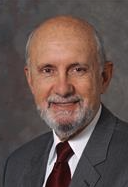 Ralph Green合作论文数Department of Pathology and Laboratory Medicine, School of Medicine, University of California, Davis2
 Gabriele Schmid-Muhlbauer合作论文数2Burghard F. Klapp合作论文数2
 Suzanne Hendrix合作论文数Pentara Corporation2John M. Orbell合作论文数2Edward S. Horton合作论文数2
 Lon Schneider合作论文数Keck School of Medicine, University of Southern California;Leonard Davis School of Gerontology, University of Southern California2Timothy C. Jensen合作论文数2
 Sangick Jeon合作论文数Department of Political Science, Stanford University2
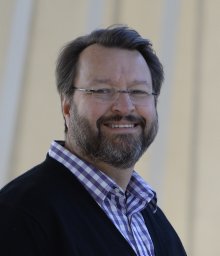 Kenton Zavitz合作论文数Myriad Pharmaceuticals Inc.2
 Mikhail Myagkov合作论文数University of Oregon2
 Caile Spear合作论文数Boise State University2
 Amanda Lea Robinson合作论文数2
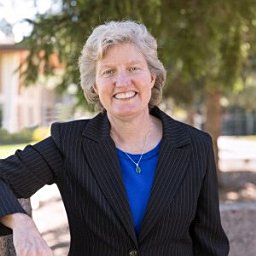 Lynda B Ransdell合作论文数Department of Kinesiology, Boise State University2M. E. Young合作论文数1A. Durham合作论文数1D Fader合作论文数1B. Sunkara合作论文数1D. R. Kramer合作论文数1D J Fader合作论文数1A Punturieri合作论文数1Craig Hammerberg合作论文数1Sw Kang合作论文数1Y. Li合作论文数1
 Douglas Quint合作论文数1Y. Liu合作论文数1Han Il Chang合作论文数1




