We propose an LFG treatment for mixed agreement patterns in Asturian, where a given controller can at the same time control two agreement patterns. Under certain specific conditions, adjectives and pronouns show an ending in ‘-o’ in opposition to masculine and feminine endings in ‘-u’ and ‘-a’. This third ending has been previously considered a neuter gender inherited from Latin. We show this is not a third gender but a separate ending that is superimposed on the gender system and is based on the countability of the nuclear term. We propose an analysis based on the INDEX and CONCORD distinction by formulating agreement constraints that are sensitive to the count/mass distinction directly. We show that the basis for the choice for a given target is not linearisation based and propose a category based solution by which prenominal attributive elements are of category  and agree in CONCORD and postnominal attributive and predicative elements are of category A and agree in INDEX. 1 Asturian: some general characteristics Asturian is a Romance language spoken in Asturias, a region in northwestern Spain. Even though it is not the official language of the region –Spanish is–, its use is protected and regulated by law. This language has been catalogued as definitely endangered by UNESCO with an estimated figure of 100,000 native speakers (PROEL)1. There are three main dialectal areas: western, central and eastern. The standard variety is regulated by the Academy of the Asturian Language2 and is based on the central area. In general terms, Asturian is similar to other Iberian Romance languages. It shows mainly SVO order, with optionally overt subjects and is predominantly head initial: (1) a. (Yo) I atopé’l find.PST.1SG=the.M.SG xatu calf na in.the.F.SG caleya path ‘I found the calf on the path.’ b. El the.M.SG páxaru bird.M roxu red.M.SG ‘The red bird’ †I thank Louisa Sadler for extremely valuable comments and insight and Doug Arnold for thoughtful input. Many thanks to all the informants that provided data and judgements, especially Xulio Viejo. This paper benefited greatly from discussion at the SE-LFG22 meeting in London and the LFG17 Conference in Konstanz. I also thank the editors and the reviewers for helpful comments and suggestions. Note that this –possibly generous– figure includes not only the area that is now Asturias, but also some other areas of Cantabria to the East, and as far as Extremadura to the South or even Portugal in which it has been labelled as the Astur-Leonese family. Some might consider these varieties distinct enough to merit consideration; however, it is beyond the scope of this study to investigate the different varieties and so we will focus only on data from Asturias itself. http://www.academiadelallingua.com
In this paper I present the crucial aspects of an LFG (and XLEimplementable) analysis of the major types of Hungarian verbal modifiers (VMs). In accordance with the general approach outlined in Laczkó (2014a), I assume that focussed constituents, VMs and the (verb-adjacent) question phrase are in complementary distribution in [Spec,VP]. I distinguish two major types of VMs: particles (a.k.a. preverbs) belong to the first type, and the rest of VMs to the other type. On the basis of Laczkó’s (2013) analysis, I treat both compositional and non-compositional PVCs lexically, with both the verb and particle having their respective lexical forms with appropriate functional annotations and cross-referencing (including the use of CHECK features). The particle and the verb are analyzed as functional coheads in both PVC types. All the other VMs, with their own grammatical functions, are lexically selected by their verbs in these verbs’ lexical forms. Depending on the nature of the VM involved, the verb can impose various constraints on it.
The aim of this paper is to provide a preliminary characterisation of locality constraints on distance distributivity in Polish. The generalisations are encoded using the propositional variant of glue and demonstrate its usefulness. An extension to distribution over events is sketched.
Existing approaches to the notion of syntactic category in L exical-Functional Grammar are either formally explicit but theoretically ina dequate (Kaplan, 1987), or detailed but ill-integrated in the correspondence archite tur (Bresnan, 2001; Toivonen, 2003). This paper develops a third approach, excising s y tactic categories from the c-structure, modeling them as sets of privative feature s, and situating them in a corresponding x-structure. This allows for the eliminatio n of X′ levels as theoretical primitives, while maintaining straightforward definition s of the notion of syntactic projection, of non-projecting words (Toivonen, 2003), and of endocentric structure– function mappings (Bresnan, 2001). An application of the sy stem in the domain of paradigmatic morphology (Stump, 2001) is also suggested. 1 What’s in a syntactic category The internal structure of syntactic categories in LexicalFunctional Grammar is a topic which has received some attention in the literature. We find h i ts about the nature of this internal structure in Kaplan (1987: 351), writing about lev els of representation: There’s the constituent phrase structure, which varies acr oss languages, where you have traditional surface structure [. . . ] and parts of sp eech labeling categories,perhaps a feature system on those categories (although in the case of LFG if there is one it’s a very weak one ). [emphasis added — JPM] Kaplan does not exploit the possibility he alludes to in the q uote above: in §2, following a short presentation of his formal model of LFG, I review his ex positionally expedient adoption of atomic categorial symbols, and conclude that it is in adequate because it lacks the properties needed to define the notion of syntactic projecti on as currently understood. In this paper, after reviewing previous LFG models of syntacti c categories, I take up Kaplan’s idea by formulating a weak feature system for them, and explo ring its consequences. There are at least two distinct LFG-specific kinds of attempt s at giving syntactic categories an internal structure: complex categories (Butt et al., 1999; Crouch et al., 2008) and the X theory of Bresnan (2001) and Toivonen (2003). In §3, I argue t hat complex categories are more a solution to an engineering problem tha n a theoretically interesting model. In §4, I point out that the X -theoretic categories defined by Bresnan and Toivonen are both somewhat baroque and ill-integrated in the corresp ondence architecture. In §5 I introduce the level of x-structure, from which X -type relations can be derived, and infuse it with three privative categorial featur es. These features serve to define lexical and functional syntactic categories, and restate B resnan and Toivonen’s X ′ theory: c-structure rules, category types, combinatorial constra ints on these categories, and universal endocentric structure–function mapping principles. H owever some problems remain, in particular an inability to distinguish between the funct ional categories I and C. I demonstrate in §6 that a tweak of the formal properties of xstructure, with a slightly different assortment of categorial features, allows this d eficiency to be remedied, with the ability to specify distinctions between inflectional ca tegories as a side-effect; I offer speculation that this is a beneficial outcome. 2 The correspondence architecture of Lexical-Functional Grammar This section recapitulates some foundational design princ i les of Lexical-Functional Grammar, setting up an apparatus for subsequent formal gymnasti cs. In his exposition of the formal underpinnings of the LFG arch itecture, Kaplan (1987) proposes to model the grammatical mapping between sound and meaning as a function Γ from a form to a meaning: (1) form ● ✲ ● meaning Γ The mapping is obviously complex, and stating it explicitly requires making generalizations of various types, which are best modeled in struc tu al levels with congenial formal properties. Formally, we can assume that Γ is the composition of functions which state correspondences between intermediate structural le vels, for example: (2) form ● ✲ ● ✲ ● ✲ ● meaning π φ ψ Γ = ψ ○ φ ○ π ❥ The precise assortment of correspondence functions and the structural levels they mediate is to be determined based on careful linguistic argume ntation over relevant generalization types. As such we need a c-structure tree for mod eling generalizations about constituency, linear order, and syntactic category; we nee d an f-structure for modeling generalizations about grammatical function, agreement, long -distance dependencies, binding, control, raising, etc.; and we need correspondence functio ns o serve as interfaces between these structural levels. Essentially, we factor generaliz ations out ofΓ and allocate them to structural levels according to their formal type and relati onship to other generalizations. 2.1 Structural description Trees and attribute–value matrices are merely visually per spicuous ways of displaying consistentSTRUCTURAL DESCRIPTIONS. Thus the cand f-structures in (3) are perspicuous visualizations the structural descriptions in (4).
English benefactive NPs pattern with arguments in some ways and with adjuncts in others. This paper proposes an analysis of benefactive NPs that accounts for this dual behavior. In particular, I argue that benefactive NPs are generally not included in the basic argument structure of verbs. Instead, they are added by an argument structure rule. In other words, English benefactive NPs are derived arguments, in the sense of Needham and Toivonen (2011).
This paper revisits the question of whether optional, non-core participant PPs are to be treated as arguments or as adjuncts in linguistic theory in general and in LFG grammars in particular. I argue that a number of considerations converge on pointing towards the latter option.
We present an analysis of sentence initial object es ‘it’ in German. The weak pronoun es may only realize such an object under specific information structural conditions. We follow recent work suggesting these conditions are exactly those that licence the use of the presentational construction, marked by a sentence initial dummy es. We propose that the initial objects are an example of function amalgamation, show that only objects that may also appear in the clause-internal postverbal domain can participate in this fusion and make this precise in LFG. We end the paper with a contrastive discussion.
This paper describes INESS-Search, a new search tool for con stituency, dependency and LFG treebanks. The tool is derived from TIGER Search and has been extended to encompass full first-order predicate lo gic over node variables. In addition, several operators have been implem ented that are specific for querying cand f-structures. The original TIGERSe arch syntax has been extended and considerably simplified, thus making a gra phic l query input device less necessary. The search index is dynamicall y updated when the treebank is modified. The INESS-Search tool is usable via a Web interface as an integrated part of INESS, the Norwegian Infrastru ctu e for the Exploration of Syntax and Semantics.
I present data from Tolaki, an Austronesian language of Central Indonesia, which challenges the notion that grammatical functions form discrete categories. I argue that current models of grammatical functions within Lexical Functional Grammar cannot account for the data we find. If we were to posit discrete categories for grammatical functions on the basis of different behaviour under different morpho-syntactic tests, we would be forced to posit a minimum of nine categories in order to account for the results; nearly double the number of categories currently provided for by LFG. A better way of analysing the data we find in Tolaki is to posit a continuum of grammatical functions between the most and least privileged grammatical functions, subject and adjunct. Participants are located along this continuum and are either more subject-like or more adjunct-like.
This paper investigates the syntax of clefts in Wolof and proposes an analysis based on the Lexical Functional Grammar (LFG) formalism. Wolof clefts illustrate an interaction between morphology, syntax and information structure. In particular, they vary morphosyntactically depending on what item is clefted. Structurally, the clefts lack the cleft pronoun, are mono-clausal at the phrasal level, however, bi-clausal at the functional level. Furthermore, they relate to copular constructions in that both instantiate the same form. Thus, an understanding of these constructions is a prerequisite for understanding how clefting works. In this paper, I review different approaches towards copula predication within LFG and present my analysis of Wolof data. I propose a parallel syntactic approach that assumes a close-complement (PREDLINK) for copular and cleft clauses. In addition, I posit an i(nformation)-structure projection to allow for extra-syntactic analysis.
In this paper, we present an investigation of the argument/a djunct distinction in the context of LFG. We focus on those cases where certain gr mmatical functions that qualify as arguments according to all standa rd tests (Needham and Toivonen, 2011) are only optionally realized. We argue f or an analysis first proposed by Blom et al. (2012), and we show how we can m ke it work within the machinery of LFG. Our second contribution re gards how we propose to interpret a specific case of optional arguments, o p ional objects. In this case we propose to generalize the distinction betwee n transitive and intransitive verbs to a continuum. Purely transitive and in tra sitive verbs represent the extremes of the continuum. Other verbs, while lea ning towards one or the other end of this spectrum, show an alternating behavi or between the two extremes. We show how our first contribution is capable of accounting for these cases in terms of exceptional behavior. The key ins ight we present is that the verbs that exhibit the alternating behavior can b est e understood as being capable of dealing with an exceptional context. In o ther words they display some sort of control on the way they compose with thei r context. This will prompt us also to rethink the place of the notion of subca tegorization in the LFG architecture
The paper investigates the grammar of two types of inflecting spatial particles in Hungarian. We argue that the attested synchronic variation in the grammar of the particle-verb constructions discussed can directly be correlated with distinct stages of a diachronic grammaticalization path that different particles have trodden to different degrees. We provide an LFGtheoretic analysis and its XLE implementation that captures this variation qua variation in c-structure and f-structure encoding.
In this paper I develop an LFG account of second position clit ic placement in R . gvedic Sanskrit. Clitic phenomena in this language are both more complicated and more ambiguous than (supposedly) in Serbia n/Croatian/ Bosnian, whose second position clitic data were recently tr eated by Bögel et al. (2010). I develop a formal treatment of clitic ‘moveme nt’ which partly builds on Bögel et al.’s approach but which differs in certai n fundamentals of formalism, maintaining a strict division between the synta ctic and prosodic components of the grammar.
This paper investigates the grammar of two types of spatial particles in Hungarian. We provide an analysis in the framework of Lexical-Functional Grammar (LFG), which has been successfully implemented on the Xerox Linguistic Environment (XLE) platform of the Parallel Grammar international project. We propose that, in the productive cases, syntactic predicate composition of a special sort takes place via XLE’s restriction operator. We treat the non-productive cases by dint of appropriate specifications in the (distinct) lexical entries of verbs and particles in combination with XLE’s concatenation template.
Polysynthetic languages pose special challenges for the morphologysyntax interface because information otherwise associated with words, phrases and clauses is encoded in a single morphological word. In this paper, I am concerned with the implementation of the verbal structure of the polysynthetic language Murrinh-Patha and the questions this raises for the morphology-syntax interface.
This paper investigates the distributive pluralizer taq (PL) of K’ichee’ Mayan. As a nominal pluralizer, the non-bound morpheme taq barely registers in the Mayanist literature, while the distributive taq (DISTR) is virtually non-existent. Semantically the distributive pluralizer taq pluralizes nominals that are ambiguous between collective and distributive readings. Morphosyntactically the distributive pluralizer taq is a phrasal particle that (left) adjoins to stringadjacent constituents. This contrasts with the morphosyntax of the distributive taq that I argue elsewhere is a non-projecting particle that (right) head-adjoins to verbs only. Using Optimality Theoretic Lexical-Functional Grammar (OTLFG), the complex phrasal distribution of the distributive pluralizer taq, which is unaccountable using phrase-structure rules alone, can be straightforwardly modeled using a modest number of universal constraints. This paper investigates the distributive pluralizer taq (PL) of K’ichee’ Mayan. 2 While little has been said about the non-bound morpheme taq as a nominal pluralizer in the grammars and dictionaries of the K’ichee’an language family, virtually nothing has been said about its use as a distributive (DISTR). The only substantive description of the morpheme taq is in Willson (2004, 2005), where it is interpreted as a distributive and a pluralizer. As a distributive, taq associates with verbs. As a pluralizer, taq follows adjectives, possessed nouns, relational nouns, prepositions, and ‘splits’ compound nouns. Judgment is reserved about whether taq is one morpheme with two uses, or two morphemes each with its own use. As for word type, Willson provisionally interprets taq as a clitic. Employing a variety of data and linguistic constructions, I demonstrate conventional use of the distributive pluralizer taq and show the categories of words that it associates with and the positions that it occupies in the phrase. As a nominal pluralizer (PL), I indicate that taq is used with wh-interrogatives, NPs, (possessive) DPs, relational nouns, QPs, PPs, and non-verbal predicates. I propose that the distributive pluralizer taq pluralizes nominals that are semantically ambiguous between collective and distributive readings. I argue that the distributive pluralizer taq is a phrasal particle that (left) adjoins to string-adjacent constituents. † I wish to thank George Aaron Broadwell for his assistance, and Ronald Kaplan and Michael Wescoat for their helpful comments. I am greatly indebted to my K’ichee’ Maya consultants, in particular Felipe and Juan Barreno García of Totonìcapán, Guatemala. All the usual disclaimers apply. 1 All K’ichee’ data are from the author’s field work, except (36). First, second, third person = 1, 2, 3, absolutive agreement marker = ABS, animate pluralizer (ee) = PLU, antipassive = AP, completive = COM, determiner = D(ET), distributive (taq) = DISTR, distributive pluralizer (taq) = PL, ergative agreement marker = ERG, incompletive aspect = INC, independent pronoun = PRO, interrogative = INT, irrealis = IRR, negative = NEG, nominalizing suffix = NOM, particle = PT, possessive = POS, transitive/intransitive phrase final marker = T/IPF, plural = -PL, preposition = P(REP), singular = S. 2 The distributive taq (DISTR) is not fully addressed in this paper due to space considerations. I propose elsewhere that the distributive taq (DISTR) is a non-projecting word, that it right head-adjoins to verbal predicates only, and that its semantics is representative of distributives cross-linguistically. The paper’s title reflects my hypothesis that the non-bound morpheme taq actually represents two words, that, although homophonous, differ in terms of semantics, word type, distribution, and syntax. 3 The exception is: ‘partícula que sirve para distribuir el efecto de un verbo, adjetivo, o preposición a las varias entitades de un sustantivo plural’ from García Hernández and Yac Sam (1980:144).
In this paper we examine clitic placement in Medieval Spanish (MedSp) and Renaissance Spanish (RenSp) as well as the Person Case Constraint (PCC) in Modern Spanish (ModSp), arguing that a natural explanation for these phenomena can be given once we assume clitics to be the encoding of calcified processing strategies of an earlier freer word order system ( Bouzouita 2008a, 2008b, 2008c; Kempson et al. 2008; Kempson & Cann 2007; Kempson & Chatzikyriakidis 2009; Chatzikyriakidis forthcoming). We show that the availability of different parsing strategies being possible for one and the same string, led to cases where reanalysis in terms of the parser gave rise to syntactic change. Assuming that each clitic in effect matches one of the four different parsing strategies of the earlier Latin scrambling system, the PCC facts are straightforwardly accounted for. Assuming that syncretized and dative clitics involve the projection of an unfixed node with no form of update, any combination of 1st/2nd clitics or a 3rd dative plus a 1st/2nd clitic is predicted to be illicit by a very general constraint on tree-growth, the fact that no more than one unfixed node with the same underspecified address can be present in the tree structure, since by definition these two will collapse into one by means of tree-node identity.
It is a well-known typological universal that long distance reflexives are generally monomorphemic and complex reflexives tend to be licensed only locally. I argue in this paper that the Hungarian body part reflexive maga ‘himself’ and its more complex counterpart önmaga ‘himself, his own self’ represent a non-isolated pattern that adds a new dimension to this typology. Nominal modification of a highly grammaticalized body part reflexive may reactivate the dormant underlying possessive structure, thereby granting the more complex reflexive variant an increased level of referentiality and syntactic freedom. In particular, the reactivation of the possessive structure in önmaga is shown to be concomitant with the possibility of referring to representations of the self, as well as a preference for what appears to be coreferential readings and the loss or dispreference of bound-variable readings.
In this paper, we present the implementation in the German ParGram LFG of verb phrase (VP) coordinations involving conjunction reduction and/or right node raising. We show how the computationally expensive approach proposed by Maxwell & Manning (1996) can be adopted for VP coordinations in a computationally efficient way so that many of these coordinations, which previously did not receive a correct analysis, are now analyzed soundly. We also show that the new rules obviate the need for a recursive right-branching VP rule and make it possible to define a flat VP rule instead. This is desirable for a number of reasons, including the definition of both hard and soft constraints on constituent order in the VP domain (needed in particular for generation).
This paper presents a novel architecture for specifying rich morphosyntactic representations and learning the associated grammars from annotated data. The key idea underlying the architecture is the application of the traditional notion of a “paradigm” to the syntactic domain. N-place predicates associated with paradigm cells are viewed as relational networks that are realized recursively by combining and ordering cells from other paradigms. The complete morphosyntactic representation of a sentence is then viewed as a nested integrated structure interleaving function and form by means of realization rules. This architecture, called Relational-Realizational, has a simple instantiation as a generative probabilistic model of which parameters can be statistically learned from treebank data. An application of this model to Hebrew allows for accurate description of word-order and argument marking patterns familiar from Semitic traditional grammars. The associated treebank grammar can be used for statistical parsing and is shown to improve state-of-the-art parsing results for Hebrew. The availability of a simple, formal, robust, implementable and statistically interpretable working model opens new horizons in computational linguistics — at least in principle, we should now be able to quantify typological trends which have so far been stated informally or only tacitly reflected in corpus statistics.
 Tibor Laczkó合作论文数Károli Gáspár University of the Reformed Church in Hungary4
 Miriam Butt合作论文数Department of Linguistics, University of Konstanz4
 Gyorgy Rakosi合作论文数University of Debrecen3
 Miriam Butt合作论文数2Melanie Seiss合作论文数2
 Maia Andreasson合作论文数1Jean-Philippe Marcotte合作论文数1
 Helge Julius Jakhelln Dyvik合作论文数Department of Linguistic, Literary and Aesthetic Studies, University of Bergen1Gianluca Giorgolo合作论文数1Douglas Ball合作论文数1
 Adam Przepiórkowski合作论文数Institute of Philosophy, University of Warsaw;Institute of Computer Science, Polish Academy of Sciences;W Jednostce Zakład Semiotyki Logicznej, University of Warsaw1
 Nadine Theiler合作论文数Dept Linguist, Univ Connecticut1Cheikh M. Bamba Dione合作论文数1
 Rune Sætre合作论文数Norwegian University of Science and Technology (NTNU)1
 Ronald M. Kaplan合作论文数Information Sciences and Technologies Laboratory, Xerox Palo Alto Research Center;Linguistics Department, Stanford University1
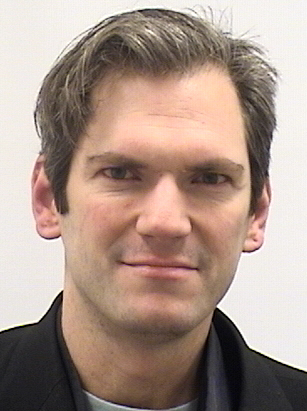 Philipp Koehn合作论文数Department of Computer Science, Johns Hopkins University;Omniscien Technologies1
 Mohammed Abdelmoneem Attia合作论文数Dublin City University1
 Qin Gao合作论文数Apple1
 Stephan Vogel合作论文数Language Technologies Institute,Carnegie Mellon University;QCRI1
 Daniel Flickinger合作论文数School of Humanities and Sciences, Stanford University1
 Yusuke Miyao (宮尾祐介)合作论文数Department of Information Science, Graduate School of Information Science and Technology, University of Tokyo;Department of Computer Science, Graduate School of Information Science and Technology, University of Tokyo1
 Lawrence Hunter合作论文数Department of Pediatrics, The University of Chicago;Strategic Associates, Inc.1Bruce Mayo合作论文数1
 Joana Paulo Pardal合作论文数1David Hardcastle合作论文数1
 Michael Gamon合作论文数Microsoft1
 Martha Palmer合作论文数Department of Linguistics, College of Arts and Sciences, University of Colorado Boulder;Department of Computer Science, College of Arts and Sciences, University of Colorado Boulder1Stefanie Dipper合作论文数Institute of Natural Language Processing (IMS), Stuttgart University1
 Ash Asudeh合作论文数Stanford University;National Technical University of Athens;Stanford University, National Technical University of Athens1
 Frédérique Segond合作论文数Xerox Research Centre Europe1
 Jonas Kuhn合作论文数Institute for Natural Language Processing, University of Stuttgart1
 Gert Webelhuth合作论文数University of G1
 Ida Toivonen合作论文数University of Rochester1
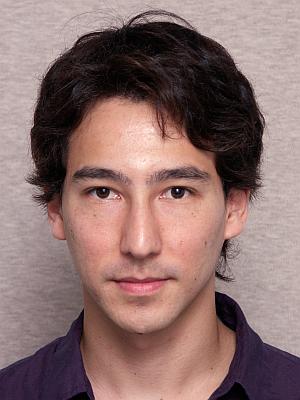 Kenji Sagae合作论文数Department of Linguistics, University of California, Davis1Paul Meurer合作论文数1
 Mary Dalrymple合作论文数Faculty of Linguistics, Philology and Phonetics, University of Oxford1
 Miriam Bouzouita合作论文数Institut für Romanistik, Sprach- und literaturwissenschaftliche Fakultät, Humboldt-Universität zu Berlin;Ghent University1
 Farrell Ackerman合作论文数UC San Diego1Christian Fortmann合作论文数1
 Henriette De Swart合作论文数University of California1Reut Tsarfaty合作论文数University of Amsterdam1
 Stergios Chatzikyriakidis合作论文数1Gerlof Bouma合作论文数Center for Language and Cognition;Rijksuniversiteit Groningen;Center for Language and Cognition, Rijksuniversiteit Groningen1pedro arez合作论文数1
 Christian Rohrer合作论文数University of Stuttgart1Richard Power合作论文数Information Technology Research Institute;University of Brighton1
 Martin Völk合作论文数Institute of Computational Linguistics, University of Zurich1Martin Forst合作论文数1




