Criminologists rarely read W. E. B. Du Bois's The Philadelphia Negro: A Social Study (1899), a classic of enduring relevance. Rectifying that disciplinary blind spot requires an understanding of Du Bois's remarkable life, from a Massachusetts boyhood to Fisk, Harvard, Berlin, and ultimately Philadelphia. White philanthropists, led by Susan P. Wharton, and University of Pennsylvania officials selected him to investigate "the Negro problem" in the city's Seventh Ward. Building on Charles Booth's London study and Jane Addams/Hull-House Residents' Chicago study, Du Bois conducted 2,500 house-to-house surveys with 9,675 Black respondents. The project challenged racial stereotypes and showed that crime was the consequence of past and present discrimination. Much that he learned was specifically criminological. Decades before other scholars, Du Bois documented problems with official statistics and identified stable urban crime patterns. His insights on racial oppression lay the foundation for Black Criminology. The Philadelphia Negro has been interpreted differently across time and neglected for more than 125 years. The time has come to move it into the criminological canon and make it required reading.
Criminological rational choice theory is blighted by tautology—that if a crime occurs, then by definition the benefits must exceed the costs. The current analysis details the nature of this tautology as well as its theoretical and philosophical implications concerning the circumstances under which offenders make rational (thoughtful and reflective) or irrational (habitual, intuitive, or instinctual) choices. In short, rational choice theorists appear to side-step the problems presented by this tautology by attempting to coerce observations and theorizing to conform with assumptions about cost–benefit rationality. This essay concludes by setting forth an agenda for the continued empirical investigation of the rational choice perspective—one where the perceived cost/benefit analysis itself for criminal behavior is treated as the outcome of interest.
Bringing together cutting-edge theory and research that bridges academic disciplines from criminology and criminal justice, to developmental psychology, sociology, and political science, Thinking About Victimization offers an authoritative, comprehensive, and refreshingly accessible overview of scholarship on the nature, sources, and consequences of victimization. Written in a lively style with sharp storytelling and an appreciation of international research on victimization, this book is rooted in a healthy respect for criminological history and the foundational works in victimization studies. It provides a detailed account of how different data sources can influence our understanding of victimization; of how the sources of victimization—individual, situational, and contextual—are complicated and varied; and of how the consequences of victimization—personal, legal, and political—are just as complex. This book also engages with contemporary issues such as cybervictimization, intimate partner violence and sexual victimization, prison violence and victimization, and terrorism and state-sponsored violence. Thinking About Victimization is essential reading for advanced courses in victimization offered in criminology, criminal justice, sociology, social work, and public policy departments. With its unapologetic reliance on theory and research combined with its easy readability, undergraduate and graduate students alike will find much to learn in these pages.
Citation-based indicators of scholarly impact are controversial in the sciences. Although they are often used in rankings of institutions, scholarly works, and scholars themselves, they have been criticized for their failure to capture a wider spectrum of "scholarly impact." Much like the "five tools" that baseball players can use to influence the outcome of a baseball game, there are a lot of different ways that scholars can have an impact with their work. Accordingly, this article discusses multiple dimensions of impact-research (publications and citations), student mentorship, institutional and programmatic development, community engagement, and the discipline at large-where scholars can make a difference in people's lives. In the end, the broader message is that, while there will inevitably be few players like Roberto Clemente or Willie Mays in the sciences, there are still several important ways that scholars can make an impact.
Francis T. "Frank" Cullen has never himself calculated a statistical effect size estimate between two variables. That fact has not, however, stopped him from becoming one of the most influential criminologists in the world when it comes to meta-analysis and the organization of knowledge in criminology and criminal justice. Accordingly, this chapter traces Frank's career with meta-analysis and research synthesis. It begins with his early efforts at knowledge organization in the late 1970s while still in graduate school, and then moves on to his work with Canadian scholars on the effectiveness of correctional interventions in the early 1990s, to his decades-long work synthesizing the research testing various criminological theories, to his current use of meta-analytic techniques to encourage scholars to engage in "organized skepticism." It concludes with his current meta-analytic work that exposes the foolishness of "swift-certain-fair" approaches to corrections and that examines the sources of school violence.
School violence is a significant social concern. To better understand its sources, a comprehensive meta-analysis of the school violence and victimization literature was undertaken. Across 761 studies, the relative effects of 30 different individual, school, and community level correlates were assessed (8,790 effect size estimates). Violence and victimization were conceptualized broadly to include various forms of aggression and crime at school. The results revealed that the strongest correlates of school violence perpetration were antisocial behavior, deviant peers, antisocial attitudes, victimization, and peer rejection; and that the strongest correlates of school victimization were prior/other victimization, social competence, risk avoidance, antisocial behavior, and peer rejection. Extracurricular activities and school security devices had among the weakest associations in the meta-analysis, and several traditional criminological predictors did not perform well in the school context. We conclude with recommendations for theory, future research, and policy.
Few schemes for monetizing stolen credit card data are as bold as the fuel theft scam. Skimming devices embedded inside gas pumps steal credit card data from customers which can be used to engage in any manner of illegal economic activities, however, empirical research on gas pump skimming is virtually non-existent. This study uses data from the State of Texas to examine the patterning of gas pump skimming, focusing on changes in prevalence in the months prior and the year following COVID-19 lockdowns being lifted in June 2020. Our findings suggest that (1) skimmer hits significantly increased after COVID-19 lockdowns and (2) that this “COVID effect” persisted even when controlling for other structural characteristics, including theoretically-relevant factors such as the average price of gas.
It was not Francis T. “Frank” Cullen’s childhood dream to become a criminologist. He did, however, eventually end up there. This chapter traces the path that Frank took to become the well-known and respected criminologist this volumes honors. It offers a unique glimpse into his journey from being a wide-eyed Boston kid to his status as an esteemed scholar. We interviewed him about his life and his career to understand how he became Thee Francis T. Cullen in his own words. Reflecting back over seven decades of Frank’s life, this chapter is organized into four parts: (1) his early education and how he ended up going to graduate school, (2) his intellectual transition into the field of criminology, (3) how he views the path, scope, and consequences of his career, and (4) what his thoughts are looking forward into the future of criminology as a discipline.
Essays in Honor of the Criminological Legacy of Francis T Cullen honors the vast scholarly contributions of Francis T. "Frank" Cullen as well as the immeasurable Influence that he has had on the field for over 40 years.With over 500 publications and more than 67,000 citations to his work, Frank Cullen has left an undeniable mark on the fields of criminology and criminal justice.Although best known for his work on rehabilitation and criminological theory, Frank also has profusely published in and shaped the areas of white-collar crime, the use of meta-analytic techniques to organize knowledge, the sexual victimization of college women, and public opinion on crime and punishment.However, Frank's legacy on the field is not limited to his scholarly contributions: He has served as a mentor to countless students, colleagues, and others in the field, helping support and guide the next generation of scholars.Thus, the current volume is organized to recognize both his scholarly work and mentoring, as well as to provide an opportunity for Frank to reflect on his career "in his own words."The result is a collection of essays from Frank's former students, colleagues, and friends written to pay homage to the more than 40 years of work he has done to advance criminological knowledge and shape the field.
Meta-analyses are appearing more frequently in the criminological literature. Yet the methods typically used are guided by a methodological paradigm that risks producing meta-analyses of limited value. Here we outline three key methodological issues that meta-analysts face and we present a methodological challenge to the dominant meta-analysis paradigm. We focus specifically on: (1) inclusion criteria, (2) analysis of bivariate versus multivariate effect sizes, and (3) methods for handling statistical dependence. Issues of reproducibility and recommendations for moving forward are discussed.
 Jillian J Turanovic合作论文数Coll Criminol & Criminal Justice, Florida State Univ53
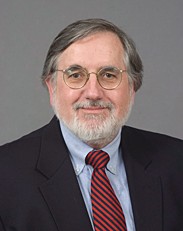 Francis T. Cullen合作论文数School of Criminal Justice, University of Cincinnati22
 Michael D. Reisig合作论文数School of Criminology and Criminal Justice, Arizona State University12
 Alexis Piquero合作论文数Department of Sociology & Criminology, College of Arts and Sciences, University of Miami;School of Social Sciences, Monash University;Center for Violence and Injury Prevention, George Warren Brown School of Social Work, Washington University in St. Louis10
 Kevin A. Wright合作论文数8
 Kristy Holtfreter合作论文数School of Criminology & Criminal Justice, Arizona State University7
 Kulig Teresa C合作论文数6
 Nicholas Lovrich合作论文数Washington State University6
 Jacinta M. Gau合作论文数Program in Criminal Justice, Washington State University6
 Clayton James Mosher合作论文数6
 Christopher T. Lowenkamp合作论文数Criminal Justice University of Cincinnati Cincinnati6
 Jean Marie Mcgloin合作论文数Department of Criminology and Criminal Justice, University of Maryland6
 Christopher J. Sullivan合作论文数Critical Care, Fairview Hospital System5
 Edward J. Latessa合作论文数Division of Criminal Justice;University of Cincinnati;Division of Criminal Justice, University of Cincinnati5
 Dina Perrone合作论文数4
 Cheryl Lero Jonson合作论文数University of Cincinnati4
 Kristin Lloyd合作论文数Department of Criminal Justice and Criminology, Georgia Southern University3
 Kyle Mclean合作论文数Coll Criminol & Criminal Justice, Florida State Univ3
 Amanda Graham合作论文数Truth Initiative Innovations Department, Washington, DC, USA3
 Barnes J C合作论文数School of Economic, Political and Policy Sciences, The University of Texas at Dallas3
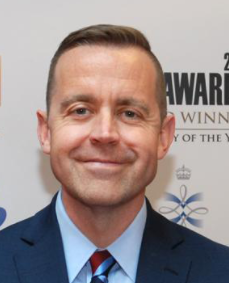 Matthew DeLisi合作论文数Department of Sociology and Criminal Justice, College of Liberal Arts and Sciences, Iowa State University3
 Satenik Margaryan合作论文数3
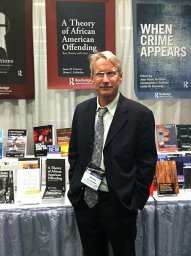 James D. Unnever合作论文数Department of Criminology, University of South Florida-Sarasota3
 Michael J. Gaffney合作论文数Washington State University3
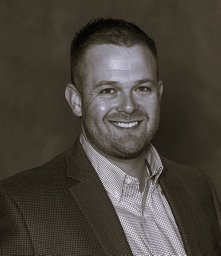 Scott E. Wolfe合作论文数University of Louisville3Teresa May合作论文数2
 Damon M. Petrich合作论文数Sch Criminal Justice, Univ Cincinnati2
 Wesley Myers合作论文数Coll Criminol & Criminal Justice, Florida State Univ2
 Cortney A. Franklin合作论文数Washington State University2
 Noelle E. Fearn合作论文数2Timothy W Godsey合作论文数2Leah E. Daigle合作论文数University of North Texas2
 Travis W. Franklin合作论文数Washington State University2
 Michael Turner合作论文数2Leana A. Bouffard合作论文数2
 John L. Worrall合作论文数Dept. of Criminal Justice, California State University2
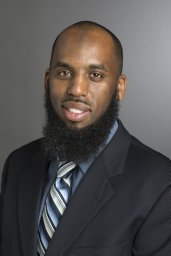 Irshad Altheimer合作论文数Faculty Administration, Wayne State University2Jeff Maahs合作论文数1
 Tonisha R. Jones合作论文数1Charles L. Johnson合作论文数1Rachel M. Kail合作论文数1jana benson合作论文数1Tasha Kunzi合作论文数1Kathleen Mullan合作论文数1
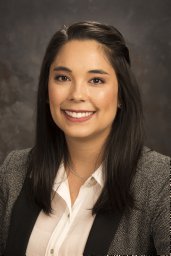 Katelyn Golladay合作论文数Dept Criminal Justice & Sociol, Univ Wyoming1
 Ryan D. Mays合作论文数Sch Criminol & Criminal Justice, Arizona State Univ1
 Peter T. Tanksley合作论文数Population Research Center, The University of Texas at Austin1
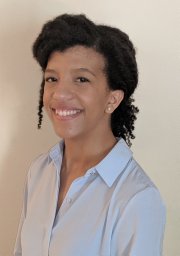 Leah C. Butler合作论文数6001




